When Kentucky Coyotes First Arrived
For many of us who grew up hunting here, it feels like coyotes have always been a part of Kentucky's landscape. Yet, it's a surprising reality that these adaptable canids are actually relatively recent arrivals, gradually colonizing our beloved Bluegrass State over the past several decades. This guide aims to pull back the curtain on when and how coyotes established their foothold in Kentucky, helping you understand their journey and what it means for our hunting traditions today.
Kentucky's Original Predator Landscape Before Coyotes
Before the eastern coyote became the ubiquitous presence we know today, Kentucky's wild spaces were home to a very different set of top predators. The landscape, both physically and ecologically, was configured around these native species, and their eventual decline paved the way for the coyote's remarkable expansion. It's easy to assume things have always been this way, but stepping back in time reveals a fascinating ecological shift.
Native Predators and Their Decline
Historically, Kentucky was part of the eastern range of both gray wolves and their smaller cousins, the red wolves. These apex predators played a crucial role in maintaining ecological balance, primarily by regulating deer and elk populations. Imagine the forests of early Kentucky, bustling with large herbivores, with wolves patrolling the ridges and hollows. The presence of these powerful hunters would have shaped the behavior of all other wildlife, from the biggest deer to the smallest rabbit. Sadly, as European settlers pushed westward, these wolves were systematically hunted, trapped, and poisoned, largely due to perceived threats to livestock and competition for game. Their numbers dwindled rapidly, and by the late 19th and early 20th centuries, both species were extirpated from Kentucky. You can learn more about this lost chapter in our wildlife history by looking into Kentucky Wolf History and Extirpation. This left a significant void at the top of the food chain, a vacancy that wouldn't remain empty forever.
Beyond wolves, black bears were also once widespread, ranging across much of the state, not just the eastern mountains where we find them today. Cougars, too, were part of the natural predator guild. Bobcats, still a vital part of our ecosystem, were present, but their role was different in a landscape dominated by larger carnivores. The collective removal of these larger predators meant that the natural checks and balances on herbivore populations were weakened, and a niche opened up for a generalist predator that could thrive on smaller prey and adapt to human-altered landscapes.
Early Settlers' Impact on the Environment
The arrival of early settlers brought about dramatic changes to Kentucky's environment. Vast tracts of old-growth forest were cleared for agriculture, timber, and settlements. This created a patchwork of open fields, pastures, and fragmented woodlands – a very different habitat than the continuous, unbroken forests that once covered the state. These land use changes had a profound impact on wildlife. Species that relied on deep forest suffered, while those that could adapt to more open, edge-heavy environments began to thrive.
The decline of bison and elk, both important prey animals for wolves, further altered the ecological equation. With less natural prey for large carnivores, and more domestic livestock available, human-wildlife conflict escalated, leading to even more intense persecution of wolves and bears. This reshaping of the land, coupled with the targeted eradication of larger predators, created an ecological vacuum. It’s like clearing a grand old house and leaving it empty; eventually, someone new is going to move in. And in Kentucky's case, that "someone" was the coyote, perfectly poised to fill the empty niche left by our native carnivores.
The First Sightings and Gradual Eastward Expansion
The idea of coyotes being a recent addition to Kentucky might surprise some folks, especially given how common they are now. But the truth is, their arrival wasn't a sudden invasion but a gradual, persistent eastward push that started several decades ago. They were slowly expanding their range across North America, and Kentucky was just another stop on their journey.
Western Edge Infiltration
Coyotes, originally a species of the American West, began their eastward expansion in the late 19th and early 20th centuries. Their journey into Kentucky wasn't through a single, grand migration, but rather a slow, steady trickle from neighboring states to our west and southwest. The first documented sightings and confirmed populations in Kentucky generally occurred in the westernmost counties, particularly those bordering Illinois, Missouri, and Tennessee. We're talking about areas like the Purchase Region, where the landscape with its agricultural fields and river bottoms offered ample food sources and cover, making it a natural entry point.
Initial reports from hunters and farmers in these western counties started surfacing more consistently in the 1970s, though there were likely sporadic sightings before that. It wasn't always obvious what they were seeing; sometimes they were mistaken for wild dogs or even wolves, given the lack of familiar coyote populations. However, as the frequency of sightings increased, and game cameras became more prevalent, the unmistakable characteristics of coyotes became clear. These early pioneers were likely opportunistic individuals, dispersing from established populations in other states, looking for new territories and less competition.
Gradual Eastward Movement
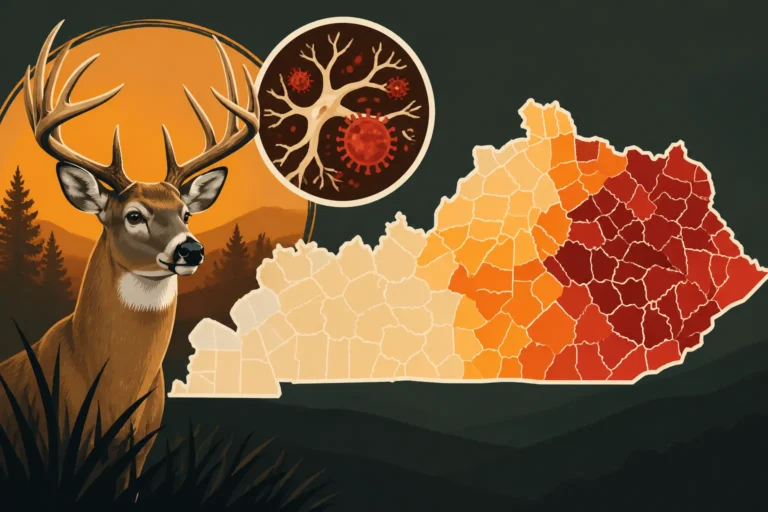
Once coyotes established a foothold in Western Kentucky, their spread across the rest of the state was methodical, albeit still surprisingly rapid in ecological terms. They weren't held back by major geographical barriers, and the mosaic of farmlands, small woodlots, and burgeoning deer populations offered an ideal environment for them to thrive. By the 1980s and 1990s, coyotes were commonly reported throughout Central and Northern Kentucky, and by the turn of the millennium, they were firmly established in the rugged Appalachian foothills of Eastern Kentucky.
This eastward expansion wasn't always a uniform march. Sometimes, individuals would travel great distances, establishing new populations in areas ahead of the main front. This "leapfrog" pattern helped accelerate their colonization. The adaptability of coyotes is truly remarkable. They can survive on a wide variety of food, from rodents and rabbits to deer fawns and even fruits and insects. This generalist diet allowed them to colonize diverse habitats, from the cornfields of the Bluegrass region to the dense forests of the Daniel Boone National Forest. Hunters with tools like GoHunt, particularly those who regularly scout new areas, often notice these shifts in animal populations and could have potentially seen their spread unfold over the years, marking new territories on their digital maps. The story of Kentucky Coyote Range and Density really tells this tale of pervasive spread.
Factors Contributing to Coyote Colonization
Understanding that coyotes are relatively new to Kentucky, the next logical question is: why did they succeed so spectacularly where other predators had failed or been eliminated? The answer lies in a combination of environmental changes, their inherent biological advantages, and frankly, a bit of luck.
Habitat Changes and Resource Availability
As mentioned earlier, Kentucky's landscape underwent a massive transformation with European settlement. The dense, unbroken forests that once favored large, deep-woods predators like wolves were replaced by a fragmented patchwork of farms, fields, pastures, and woodlots. This "edge habitat" is precisely what coyotes excel in. It offers a diverse buffet of food sources – field mice, voles, rabbits, groundhogs, and even agricultural crops – alongside sufficient cover for denning and hunting.
The concurrent decline of larger predators like wolves left a significant ecological vacuum, reducing competition for food and territory. Simultaneously, white-tailed deer populations, after being critically low in the early 20th century, rebounded dramatically thanks to conservation efforts. This provided a consistent food source, especially for opportunistic predators like coyotes who readily prey on fawns and scavenge deer carcasses. These changing conditions created a veritable "welcome mat" for the adaptable coyote. If you've spent any time Hunting Western Kentucky Bottomland Deer, you've probably seen evidence of coyotes benefiting from the agricultural-forest interface.
Adaptability and Resilience
Perhaps the single most important factor in the coyote's success is its incredible adaptability. These aren't creatures that specialize in one type of prey or one specific habitat; they are generalists in the truest sense of the word.
- Dietary Flexibility: Coyotes are omnivores. While they are efficient predators of small game, they will eat almost anything. They scavenge carrion, consume fruits, berries, and insects, and prey on livestock or poultry when opportunities arise. This flexible diet means they can survive and thrive even when specific prey populations fluctuate.
- Reproductive Strategy: Coyotes have a high reproductive rate, producing large litters, especially when populations are low or resources are abundant. This allows them to quickly capitalize on new territories and bounce back from population setbacks.
- Behavioral Versatility: They can be solitary hunters, hunt in pairs, or form loose family groups, adapting their social structure to the hunting conditions. They are also highly intelligent and wary, quickly learning to avoid human persecution tactics, which contributes to their resilience in areas with hunting pressure. Many hunters find Predator and Furbearer Hunting in Kentucky a rewarding challenge due to the coyote's intelligence.
- Urban Adaptability: Unlike many other wild canids, coyotes have shown a remarkable ability to coexist, and even thrive, in suburban and urban environments, often going unnoticed by residents for long periods. This allows them to disperse through corridors that would be impassable for less adaptable species.
This combination of environmental opportunity and inherent biological prowess made the coyote an unstoppable force in colonizing Kentucky. Their resilience is a testament to natural selection, allowing them to fill the empty niche left by more specialized or less adaptable predators.
The Impact on Kentucky's Ecosystem and Hunters
The establishment of coyotes in Kentucky has had far-reaching consequences, reshaping not just the ecological balance but also influencing how hunters approach game management and their time afield. It's a complex dynamic, often stirring strong opinions among those who spend their lives connected to the land.
Impact on Deer and Small Game
One of the most talked-about impacts of coyotes is their predation on other game species. While adult, healthy deer are generally too large for a single coyote to take down, fawns are incredibly vulnerable. During the spring fawning season, coyotes can be significant predators, contributing to fawn mortality. This naturally raises concerns among deer hunters, especially those focused on Kentucky deer fawn survival rates. While the exact impact varies by region and coyote density, it's undeniable that coyotes add another layer of predation pressure that wasn't present a century ago. It's important to remember, however, that coyotes often target weaker or less healthy fawns, which can, in some ways, contribute to a stronger overall deer herd by removing individuals less likely to thrive.
Beyond deer, coyotes also readily prey on small game like rabbits, squirrels, and ground-nesting birds. This can certainly impact local populations, and hunters pursuing Grouse and Small Game Hunting in Kentucky might notice fewer rabbits in a particular fencerow if coyote activity is high. It's not always a straightforward cause-and-effect; factors like habitat quality, weather, and other predators also play significant roles. However, the coyote is now undeniably a permanent fixture in the predator guild, and their presence is a factor that wildlife managers and hunters must consider.
Coyote Hunting as a Management Tool and Sport
With coyotes firmly established, hunting them has become an increasingly popular activity across Kentucky, both as a form of recreation and as a perceived management tool. For many, it's a way to feel like they're helping local deer and small game populations, while for others, it's a challenging and engaging hunt in its own right. The fact that coyotes are an unprotected species and can be hunted year-round, day or night (with specific rules for night hunting, of course), makes them an accessible target. Many folks dedicate significant time to Coyote Calling in Kentucky Farm Country, using various calls to mimic prey in distress or other coyotes to lure them in.
The rise of coyote hunting has also spurred innovation in gear and tactics. Hunters employ everything from specialized calls and decoys to thermal imaging and night vision equipment for Night Hunting Rules for Kentucky Coyotes. Brands like GoHunt, with their advanced mapping and land ownership layers, are invaluable for coyote hunters scouting vast areas, identifying potential den sites, travel corridors, and access points on public and private land. By understanding terrain features and property boundaries, hunters can plan more effective setups, whether they're calling open fields or thick timber. It's a testament to the coyote's intelligence and wariness that they offer such a demanding and exciting hunting experience, pushing hunters to hone their skills and embrace new technologies.
The table below offers a simplified timeline of predator presence and the general period of coyote establishment in Kentucky.
| Era | Dominant Apex Predators | Coyote Presence | Notes |
|---|---|---|---|
| Pre-Settlement | Gray Wolves, Red Wolves, Black Bears, Cougars | Absent | Native predators maintained ecological balance. |
| 1800s – Early 1900s | Rapid decline/extirpation of wolves, cougars, bears | Absent / Rare Migrants | Habitat destruction, persecution by settlers. |
| Mid-1900s (1950s-70s) | Bobcats, Black Bears (limited), Bobwhites | Initial sightings | First reports in Western KY, gradual eastward expansion. |
| Late 1900s (1980s-90s) | Coyotes firmly established, Bobcats | Widespread | Colonized central & northern KY, adapted to fragmented habitats. |
| Early 2000s – Present | Coyotes ubiquitous, Black Bears (recovering in east) | Statewide | Permanent fixture, impacting deer/small game, popular hunting target. |
This table illustrates the profound shift in Kentucky's predator landscape, with the coyote stepping into a role that was left vacant for decades. While they were not always here, they are certainly here to stay.
Disclaimer
This article is for general informational purposes only and does not constitute professional advice. Laws, prices and regulations vary by location and change over time. Consult a qualified professional for guidance on your specific situation.