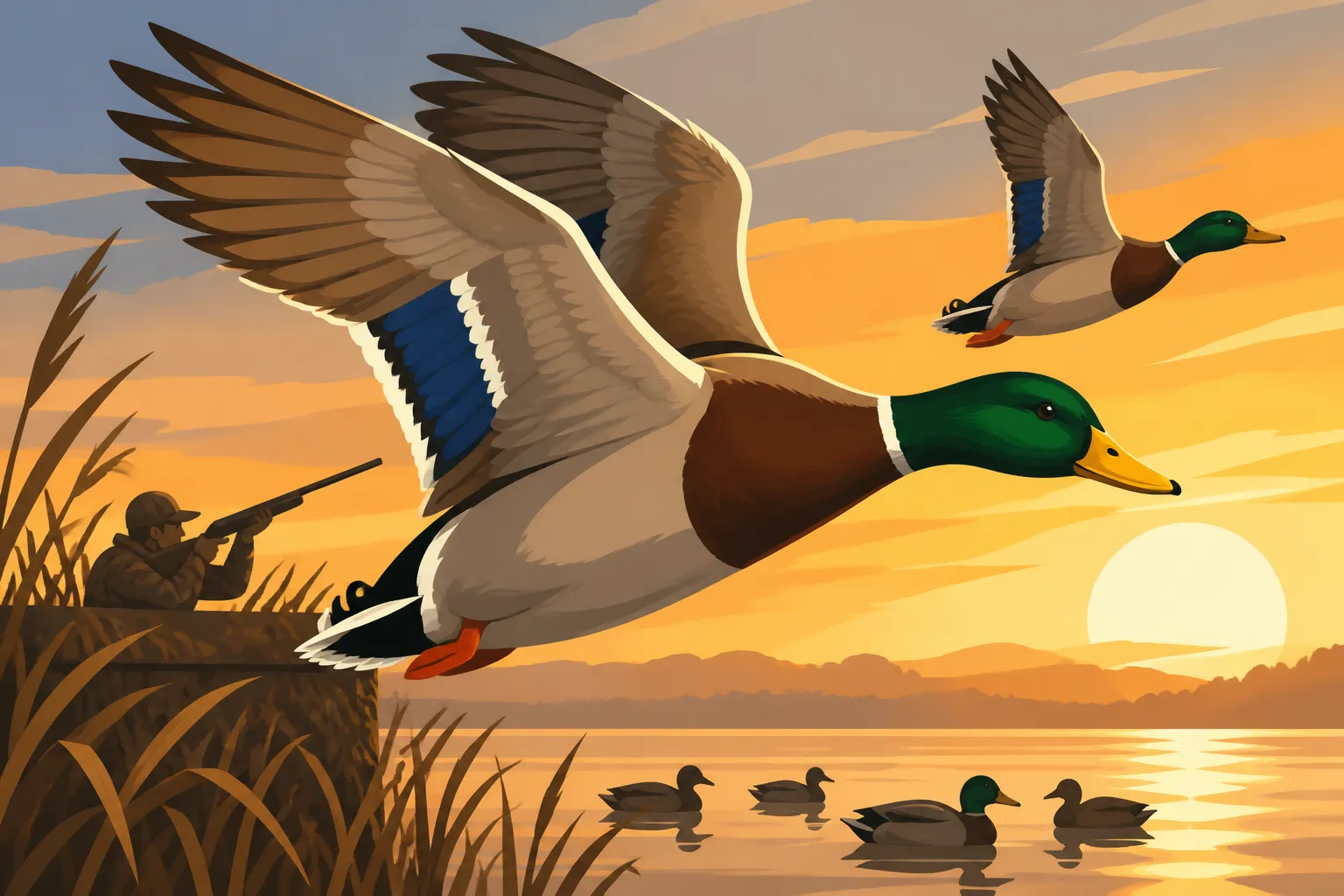
Mallards on Kentucky Lake
Hunting mallards on a vast expanse like Kentucky Lake can feel incredibly overwhelming, like searching for a needle in a haystack made of endless water and timber. Knowing where to even begin, let alone how to consistently bring these wily ducks into range, can lead to a lot of frustrating, empty hunts. This guide will walk you through everything from understanding mallard movements to setting up effective spreads, helping you navigate the unique challenges and opportunities of pursuing mallards on Kentucky Lake.
Understanding Mallard Behavior on Kentucky Lake
Mallards are truly iconic ducks, known for their distinctive green heads and loud quacks. But on a huge body of water like Kentucky Lake, their behavior can change drastically depending on the time of year, weather, and food availability. To consistently find success, you really need to get inside their heads and understand their daily routines and preferences. It’s not just about showing up; it’s about understanding why they show up where they do.
Migration Patterns and Timing
The timing of the mallard migration through Kentucky is absolutely critical for hunters on Kentucky Lake. While you might see some resident birds throughout the year, the real action starts when the northern flights begin pushing down. These early birds often show up in late October or early November, coinciding with colder temperatures up north. They're usually not as pressured, and can offer some fantastic shooting opportunities.
As the season progresses, especially from mid-November through December, Kentucky Lake becomes a major stopping point for thousands of mallards seeking refuge from freezing conditions further north. You'll notice distinct waves of new birds arriving, often after a strong cold front. By late season, in January, many of these birds have become incredibly wary, having seen every decoy spread and heard every call imaginable. Understanding these patterns, like knowing the Kentucky Waterfowl Migration Timing, can make all the difference in your planning.
The birds that winter on Kentucky Lake tend to establish more predictable routines, moving between feeding grounds, loafing areas, and roosts. They'll often feed heavily in agricultural fields or shallow backwaters in the early morning and late afternoon, spending midday resting on open water or in sheltered timber. A strong cold front can disrupt these patterns, pushing new birds in and often making existing birds more active as they seek out new food sources to fuel their metabolism.
Feeding Habits and Preferences
Mallards are opportunistic feeders, but they certainly have their favorites, and on Kentucky Lake, those preferences are largely driven by what's available and easy to access. In agricultural areas surrounding the lake, they'll key in on waste grain in cut corn or bean fields. These fields provide high-energy food that's essential for winter survival, making them prime hunting locations, especially during overcast or drizzly weather.
On the lake itself, mallards are particularly fond of shallow, flooded timber or backwater areas where they can dabble for submerged vegetation, seeds, and invertebrates. Acorns, especially from pin oaks or willow oaks in flooded bottoms, are a huge draw for them. If you can find a concentration of oaks in a flooded area, you've likely found a mallard magnet. They’ll also feed on aquatic insects and small crustaceans in the mud, especially in soft, marshy edges.
The water level on Kentucky Lake plays a massive role in what food sources are accessible. When water levels are high, more timber and fields become flooded, opening up new feeding opportunities. Conversely, low water levels can concentrate birds into fewer, deeper areas, or push them further out into larger open water bodies where they feel safer. This constant change means you have to stay vigilant and scout regularly to keep up with their ever-shifting menu preferences.
Roosting and Loafing Areas
Mallards, like most waterfowl, need safe places to spend their nights (roosting) and relaxed spots to rest during the day (loafing). On Kentucky Lake, these areas are typically characterized by a sense of security and often proximity to feeding grounds. Open water, particularly large bays or main lake areas that are difficult for hunters to access or cover, serve as prime roosting sites. These locations allow them to see predators (or hunters) from a distance.
During the day, after their morning feed, mallards will often move to loafing areas. These can be shallow, sheltered coves, dense flooded timber that provides cover, or even sandbars and mudflats if they're undisturbed. They'll preen, sleep, and just generally relax, conserving energy until their next feeding flight. These loafing spots are usually near their feeding grounds, allowing for easy, short flights between meals and rest.
Identifying these roosting and loafing areas, even if you don't hunt them directly, is key to understanding mallard movement. If you can locate a major roost, you'll know the general direction from which birds will be flying to their feeding grounds at dawn and returning at dusk. Similarly, knowing where they loaf can inform your midday scouting and help you predict afternoon flight paths as they transition back to feeding. This knowledge is crucial for setting up in the right travel corridors.
Prime Mallard Habitat and Locations
Kentucky Lake is a diverse fishery and waterfowl destination, but not all parts are created equal for mallard hunting. Knowing the specific types of habitat that mallards prefer and where to find them can drastically increase your odds of success. From flooded timber to agricultural fields, each offers a unique set of challenges and rewards.
Flooded Timber and Backwaters
For many Kentucky Lake duck hunters, flooded timber is the holy grail. The image of mallards cupping their wings through the trees is what dreams are made of. These areas, particularly on the western side of the lake or in tributary arms, offer shelter, food (especially acorns), and a natural concealment for hunters. The shallow, still water provides easy dabbling access to food, and the trees offer protection from strong winds and aerial predators.
Hunting flooded timber requires a special approach. You'll often be using small boats or even wading in, setting up among the trees. Concealment is paramount here, as ducks are looking directly down into the canopy. The best spots are usually areas with mature mast-producing trees, especially oaks, where the water is only a few feet deep. When the river levels rise and inundate new sections of timber, these become immediate hotspots.
Access can be a challenge in these areas. Many of the best spots are deep within Wildlife Management Areas (WMAs) or private lands. When you're considering a hunt, it's wise to use tools like GoHunt or other mapping apps to identify public access points and property boundaries. Always remember to respect private land and adhere to regulations regarding Treestand Setups in Daniel Boone National Forest or other public areas, even though this is timber on a lake. The principles of minimizing disturbance and leaving no trace remain the same.
Cut Fields and Agricultural Edges
While Kentucky Lake itself is a massive water body, the surrounding agricultural landscape heavily influences mallard movements, especially in areas like the bottomlands of Western Kentucky. Mallards will readily leave the lake to feed in harvested corn, soybean, or even winter wheat fields, particularly if there are convenient sloughs or ditches nearby for resting and drinking. These fields are high-energy food sources that ducks crave, especially during cold snaps.
Hunting these fields often involves layout blinds or well-camouflaged pit blinds along field edges, often close to a water source like a drainage ditch or small pond. Decoy spreads can be much larger here, mimicking a large flock feeding in a field. The key is to scout these fields religiously to confirm recent bird activity. Look for fresh droppings, tracks in muddy areas, and birds flying to and from the fields at dawn and dusk.
The challenge with field hunting is often securing permission on private land, as many of these prime agricultural areas are privately owned. However, some WMAs have agricultural components, and areas like Peabody Wildlife Management Area in Western Kentucky often manage certain fields with waterfowl in mind. Knowing how to read aerial photos for these types of settings can give you a real edge in finding these elusive field feeders.
Open Water and River Channels
Though not typically considered prime mallard hunting, open water areas and river channels on Kentucky Lake serve crucial roles, primarily as safe roosting and loafing spots. During high pressure or very calm, sunny days, mallards will often choose to sit out in the middle of a large bay or river channel where they can spot danger from a long distance. Hunting these open water areas directly can be incredibly difficult due to the sheer size and the ducks' wariness.
However, understanding these open water habits is vital for knowing where birds are coming from and going to. If you see hundreds of mallards rafted up in a large open bay at midday, you know they're not feeding there, but rather resting before their next move. This information can help you predict their flight paths to nearby flooded timber or agricultural fields.
Sometimes, during severe cold snaps or strong winds that make feeding in shallower areas difficult, mallards might concentrate in more protected, deeper channels or large coves, especially if there's some submerged vegetation or food still accessible. While challenging, employing strategies like Layout Blind Hunting Western Kentucky Fields (adapted for water) or using large spreads of diver decoys mixed with a few mallards can sometimes bring in curious birds, particularly if you have good cover on a point or island. This is where a truly versatile hunter adapts their approach.
Effective Decoy Spreads and Calling Techniques
Getting mallards to commit on Kentucky Lake is an art form. It's not just about throwing out some plastic ducks; it's about creating an illusion of safety and abundance. Your decoy spread and calling need to work together seamlessly to convince wary birds that your spot is the place to be.
Standard Mallard Spreads
A standard mallard spread on Kentucky Lake typically aims to mimic a relaxed, feeding flock. For smaller, more intimate settings like flooded timber or shallow backwaters, a spread of 1 to 2 dozen decoys might be sufficient. The classic "J-hook" or "U-shape" spread with an open landing zone in front of your blind is always a good starting point. The idea is to guide birds into that open pocket, putting them right where you want them for a clean shot.
When hunting larger areas, especially open water or big field edges, don't be afraid to go big. A spread of 3-5 dozen decoys, or even more, can be incredibly effective. Consider incorporating different types of mallard decoys – some upright, some feeders, some resting – to add realism. The more natural your spread looks, the more confidence it instills in circling birds. Remember, mallards are social creatures, and a large, content flock signals safety.
Varying the distance of your decoys from your blind is also crucial. Have some closer for quick shots, and some further out to draw the attention of passing birds. Always ensure your landing zone is clear of obstacles and that your decoys are anchored securely enough to handle any chop or current on the lake. Nobody wants to spend their hunt retrieving lost dekes!
Motion Decoys and Confidence Birds
Adding motion to your spread can be a game-changer on Kentucky Lake, especially on calm days when static decoys look, well, a little too static. Spinning-wing decoys are incredibly effective at grabbing attention from a distance, mimicking landing birds and drawing their eyes to your spread. However, be mindful of how much motion you use; sometimes, less is more, particularly on heavily pressured birds who have become wary of excessive "flash."
Jerk strings or swimming decoys can also add subtle, lifelike movement to your spread, making it appear as though ducks are actively feeding and moving about. This subtle motion can often be more convincing to wary birds than a constantly spinning wing, especially once they're closer. Experiment with what works best for the specific hunting pressure and conditions you face.
Beyond mallards, incorporating "confidence decoys" can significantly enhance the realism of your spread. A few Canada geese, pintails, or even a pair of coots can make your spread look more natural and inviting. These species often associate with mallards, and their presence suggests a safe feeding or resting area. This is where Decoy Placement for Pressured Kentucky Birds really comes into play. Adding a Canada goose or two, for example, tells incoming mallards that even the big, cautious geese feel safe here.
Concealment and Blind Placement
No matter how good your decoys and calling are, poor concealment will ruin your hunt faster than anything else. Mallards have incredible eyesight, and they've learned to associate unnatural shapes or movements with danger. On Kentucky Lake, this means meticulous attention to detail in your blind setup. Whether you're in a permanent blind, a layout blind, or a boat blind, it must blend seamlessly with the natural surroundings.
For boat blinds in flooded timber, brush it in heavily with natural vegetation from the area – branches, reeds, grasses. Ensure there are no shiny spots, and that you're not silhouetted against the sky. In open fields, layout blinds need to be perfectly brushed in with stubble, corn stalks, or whatever vegetation is present. Often, you'll want to deploy them slightly off a major travel path, maybe along a fence line or a slight rise, to give you an elevated view without being too obvious.
Blind placement also considers the wind. Mallards almost always land into the wind, so your blind should be positioned to give you a crosswind shot at birds approaching your landing zone. Always consider the sun's position as well, especially during morning hunts; if you can keep the sun at your back, you'll have an advantage, making it harder for incoming birds to pick you out. This is a crucial element for successful Using a Ground Blind on Kentucky Public Land or any other waterfowl blind setup.
Essential Gear for Kentucky Lake Mallard Hunting
Hunting mallards on Kentucky Lake isn't just a walk in the park; it's often a rugged, wet, and cold endeavor. Having the right gear isn't just about comfort, it's about safety and effectiveness. Skimping on essentials can turn a fantastic opportunity into a miserable experience.
Boats and Motors
Given the vastness of Kentucky Lake, a reliable boat is practically non-negotiable for serious mallard hunting. You'll need something that can safely handle potentially choppy water on the main lake, but also navigate shallow backwaters and flooded timber. A jon boat, usually 16-18 feet long with a dependable outboard motor (25-50hp), is a common choice. It offers stability, capacity for decoys and gear, and a relatively shallow draft.
Many hunters also utilize mud motors or surface drive motors if they plan to frequently access extremely shallow flooded timber or thick marshy areas. These specialized motors allow you to get into places conventional outboards can't, opening up untouched hunting grounds. Regardless of your choice, ensure your boat is well-maintained, has all required safety equipment (life jackets, navigation lights, etc.), and that you know how to operate it safely in various conditions.
Having a smaller, secondary vessel like a kayak or canoe can also be invaluable for accessing very tight timber pockets or retrieving downed birds in thick cover where your main boat might not fit. Always check the weather forecast before heading out on Kentucky Lake; conditions can change rapidly, and you don't want to be caught unprepared in a squall.
Waders and Cold Weather Clothing
You're going to get wet, and it's often going to be cold. Good quality waders are an absolute must. Neoprene waders offer excellent insulation in cold water, while breathable waders can be more comfortable for warmer early season hunts, especially if you're doing a lot of walking. Look for durable, puncture-resistant materials, and ensure they fit well enough to layer clothing underneath without being too bulky.
Layering is the key to staying warm and dry during a Kentucky Lake mallard hunt. Start with a moisture-wicking base layer against your skin to pull sweat away. Add insulating layers like fleece or wool for warmth, making sure you can shed layers if you get too warm during activity. Your outer layer should be waterproof and windproof, protecting you from rain, spray, and biting winds. Remember that Waders for Flooded Timber Hunting should offer not only warmth but also good traction in slippery mud.
Don't forget accessories: a warm, waterproof hat, insulated gloves (or fingerless gloves for shooting), and thick wool socks are crucial. Hypothermia is a real risk when hunting cold water, so investing in good cold-weather gear is an investment in your safety and enjoyment.
Shotguns and Ammunition
For mallards on Kentucky Lake, a 12-gauge shotgun is the standard, offering versatility in shot size and payload. Both pump-action and semi-automatic shotguns are popular choices, with semi-autos offering faster follow-up shots which can be critical when working a flock. Ensure your shotgun is clean, well-maintained, and functions reliably in wet and cold conditions.
Choke selection is important, and many hunters opt for modified or improved cylinder chokes for close-range timber shooting, moving to more open modified or full chokes for longer shots in open water or fields. Patterning your shotgun with your chosen ammunition before the season is essential to know its effective range and spread.
When it comes to ammunition, non-toxic shot is legally required for all waterfowl hunting, and steel shot is the most common and affordable option. However, many hunters are turning to denser alternatives like bismuth or tungsten-based loads. These deliver more energy downrange, improving performance on longer shots and reducing the need for tight chokes. While more expensive, the increased effectiveness can be worth it, especially on wary late-season mallards. Be sure to understand Kentucky Minimum Rifle Caliber Rules if you ever plan to switch to big game, but for ducks, shotguns are king.
Navigating Regulations and Safety
Hunting on Kentucky Lake involves specific regulations designed to manage waterfowl populations and ensure hunter safety. Ignoring these can lead to fines, loss of privileges, and even dangerous situations. A little homework upfront goes a long way.
Kentucky Waterfowl Zones and Seasons
Kentucky Lake falls within specific waterfowl zones, and understanding these boundaries is crucial because season dates and bag limits can vary slightly between zones. Always check the current Kentucky Department of Fish and Wildlife Resources (KDFWR) waterfowl hunting guide before each season. They publish detailed information on opening and closing dates, legal shooting hours, and daily bag and possession limits for various species, including mallards.
Pay close attention to mallard bag limits, as there are often specific restrictions on the number of hen mallards you can harvest. Misidentifying a hen in flight is a common mistake for new hunters, so practice your duck identification. Knowing the Kentucky Duck and Goose Zone Rules is non-negotiable for planning your trip and ensuring you stay within legal bounds.
These regulations are in place to ensure sustainable hunting opportunities for future generations. Respecting the rules, especially those concerning season dates and bag limits, is a fundamental responsibility of every ethical hunter. Don't rely on old information or hearsay; always go to the official KDFWR source.
License and Stamp Requirements
Before you even step foot in a boat or blind, you need to ensure all your licensing is in order. For Kentucky residents, a valid Kentucky hunting license is required, along with a Kentucky Migratory Bird-Waterfowl Permit, and a Federal Duck Stamp. Non-residents will need a nonresident Kentucky hunting license, plus the state migratory bird permit and Federal Duck Stamp.
The Federal Duck Stamp, officially known as the Migratory Bird Hunting and Conservation Stamp, is a physical stamp that must be signed across its face and carried while hunting. It's a vital piece of conservation funding, with 98% of its revenue going to acquire or lease wetlands and wildlife habitat for the National Wildlife Refuge System. This means your purchase directly benefits the habitats that ducks, like the mallards on Kentucky Lake, depend on.
It’s easy to overlook a detail like the HIP (Harvest Information Program) certification, which is also required for all migratory bird hunters in Kentucky. This involves a quick, free survey to help wildlife agencies gather data on harvest numbers. Always double-check that you have every necessary license, permit, and stamp before heading out, as conservation officers do check regularly. You can find more information about these requirements, including how to purchase them, at the KDFWR website.
Public Land Access Rules and Ethics
Much of Kentucky Lake, including sections of Land Between the Lakes (LBL) and various WMAs, offers public hunting access. However, each public area can have its own specific rules and regulations beyond statewide general hunting laws. For example, some WMAs might have special draw hunts, temporary closures, or restrictions on vehicle access, boat motor size, or the use of permanent blinds.
Always consult the specific WMA or public land regulations before you hunt. The KDFWR website and the GoHunt mapping tool can be invaluable resources for identifying public land boundaries and specific area rules. Remember that hunting on public land comes with a shared responsibility: practice ethical hunting, pack out all your trash (including spent shotshells), and minimize your impact on the environment. Be a good neighbor to other hunters and outdoor enthusiasts.
Consider areas where Hunting Land Between the Lakes Waterfowl might have slightly different rules than a state-managed WMA. Respect for other hunters means giving them adequate space, avoiding "sky-busting" (shooting at birds outside of effective range), and never disturbing another hunter's setup. Safety is paramount: always identify your target, know what's beyond it, and follow all firearm safety rules.
Planning Your Hunt for Success
Success on Kentucky Lake doesn't happen by accident; it's the result of diligent planning, thorough scouting, and adapting to conditions. Even the most experienced hunters will tell you that every season, every day, can present new challenges.
Scouting Before the Season
Effective scouting is hands down the most crucial element for consistent mallard hunting on Kentucky Lake. Don't wait until opening morning to figure out where the birds are. Start weeks, or even months, before the season. Use satellite imagery on mapping apps like GoHunt to identify potential flooded timber, backwater sloughs, and agricultural fields near the lake. Look for historical water lines and areas that tend to hold water when levels rise.
Once birds begin to arrive, spend time observing them. Drive country roads at dawn and dusk to watch for birds flying to and from fields. Use binoculars or a spotting scope to scan open water bodies for rafts of ducks. Pay attention to wind direction and how it affects their flight patterns. Look for fresh sign: droppings, feathers, and feeding activity. A little legwork (or boat work) before the season can save you countless hours of unproductive hunting.
Remember that duck patterns can change quickly with weather and hunting pressure. What was hot last week might be barren this week. Consistent scouting, even during the season, is key to staying on the birds. This means paying attention to details like Reading a Bottomland Slough for a Morning Flight or understanding how certain crops influence feeding patterns.
Weather and Water Level Considerations
Mallards are highly sensitive to weather changes and, on Kentucky Lake, to fluctuating water levels. Cold fronts, especially those accompanied by strong north winds, often push new birds into the area and make existing birds more active as they seek food. Overcast, drizzly days are often prime hunting conditions, as birds fly lower and are generally more receptive to calling and decoying. Bright, bluebird days can be tougher, as ducks tend to raft up on open water and become warier.
Water levels on Kentucky Lake are managed by the Tennessee Valley Authority (TVA) and can fluctuate significantly throughout the fall and winter. High water levels can flood new timber and fields, opening up fresh feeding grounds. Low water levels can concentrate birds in deeper channels or force them out of traditional shallow spots. Always check the current lake level reports before your hunt. You can usually find this information on the TVA website or through local marine forecasts.
Understanding how these factors interact is vital. A sudden drop in temperature might make birds want to feed heavily, but if water levels are too low to access their preferred flooded timber, they might shift to agricultural fields. Being prepared to adapt your strategy based on these conditions, from changing your hunting location to modifying your decoy spread, is a hallmark of a successful Kentucky Lake mallard hunter.
Group Hunting Strategies
Mallard hunting on Kentucky Lake is often a social affair, and hunting with a group can significantly enhance your effectiveness and safety. More hunters mean more eyes for spotting incoming birds, more hands for setting out and picking up decoys, and a wider range of calling abilities. When hunting with a group, clear communication is paramount.
Before the hunt, discuss roles: who will call, who will watch for incoming birds, and where everyone will position themselves in the blind. Agree on a shooting zone for each person to ensure safety and prevent "cross-firing." When birds are working, designate a shot caller to ensure everyone shoots at the appropriate time, preferably when birds are fully committed and within effective range. This prevents premature shooting (sky-busting) that often flares birds.
Having a retrieve dog is another huge asset, especially on a large water body. A well-trained retriever can dramatically increase your recovery rate, minimizing lost birds in thick cover or open water. If you don't have a dog, be sure your group has a plan for swift retrieval of downed birds, especially in current or heavy vegetation, to avoid crippling losses. Teamwork makes the dream work on Kentucky Lake!
Disclaimer
This article is for general informational purposes only and does not constitute professional advice. Laws, prices and regulations vary by location and change over time. Consult a qualified professional for guidance on your specific situation.