Kentucky Ruffed Grouse Decline
There's a quiet sorrow that settles in the hearts of many Kentucky hunters when the conversation turns to ruffed grouse. For generations, the explosive flush of a thunder chicken from a thicket of young saplings was a sound as iconic as a gobbler's morning serenade. But those flushes have grown increasingly rare, leaving a palpable void in our woodlands and our hunting traditions. This guide aims to pull back the curtain on the Kentucky ruffed grouse decline, exploring the complex reasons behind it and discussing the concerted efforts being made to try and bring these magnificent birds back from the brink.
Understanding the Ruffed Grouse in Kentucky
For many who grew up hunting in the hollows and ridges of Eastern Kentucky, the ruffed grouse wasn't just another game bird; it was a symbol of wild, rugged woodlands. The challenge of finding them, the sudden burst of wings, and the fleeting shot through dense cover etched memories that define a lifetime of upland hunting. But those days are fading, and understanding how we got here requires a look back at the bird's historical footprint and its current, precarious status.
Historical Abundance and Range
Kentucky, particularly the vast stretches of its eastern mountains, once boasted a thriving ruffed grouse population. These birds flourished in the mosaic of timber that characterized the region – areas rich with disturbance like logging, wildfires, and even early farming practices that created pockets of young, regenerating forest. Picture the early 20th century: a landscape still recovering from extensive logging, where clear-cuts and timber harvests were creating prime "early successional" habitat – the dense, brushy cover grouse absolutely need to survive and reproduce.
Hunters, their dogs, and even trappers would regularly encounter these birds across much of the eastern and southeastern portions of the state. Counties like Harlan, Bell, Knox, and McCreary, deeply forested and rugged, were considered strongholds. The Daniel Boone National Forest, with its mixture of private and public lands, provided countless acres of potential habitat. The very nature of the forest economy, with timbering operations regularly opening up the canopy, inadvertently sustained a healthy grouse population. It was a golden era for those who loved the thrill of Grouse Hunting the Cumberland Mountains.
Current Population Status and Geographic Hotbeds
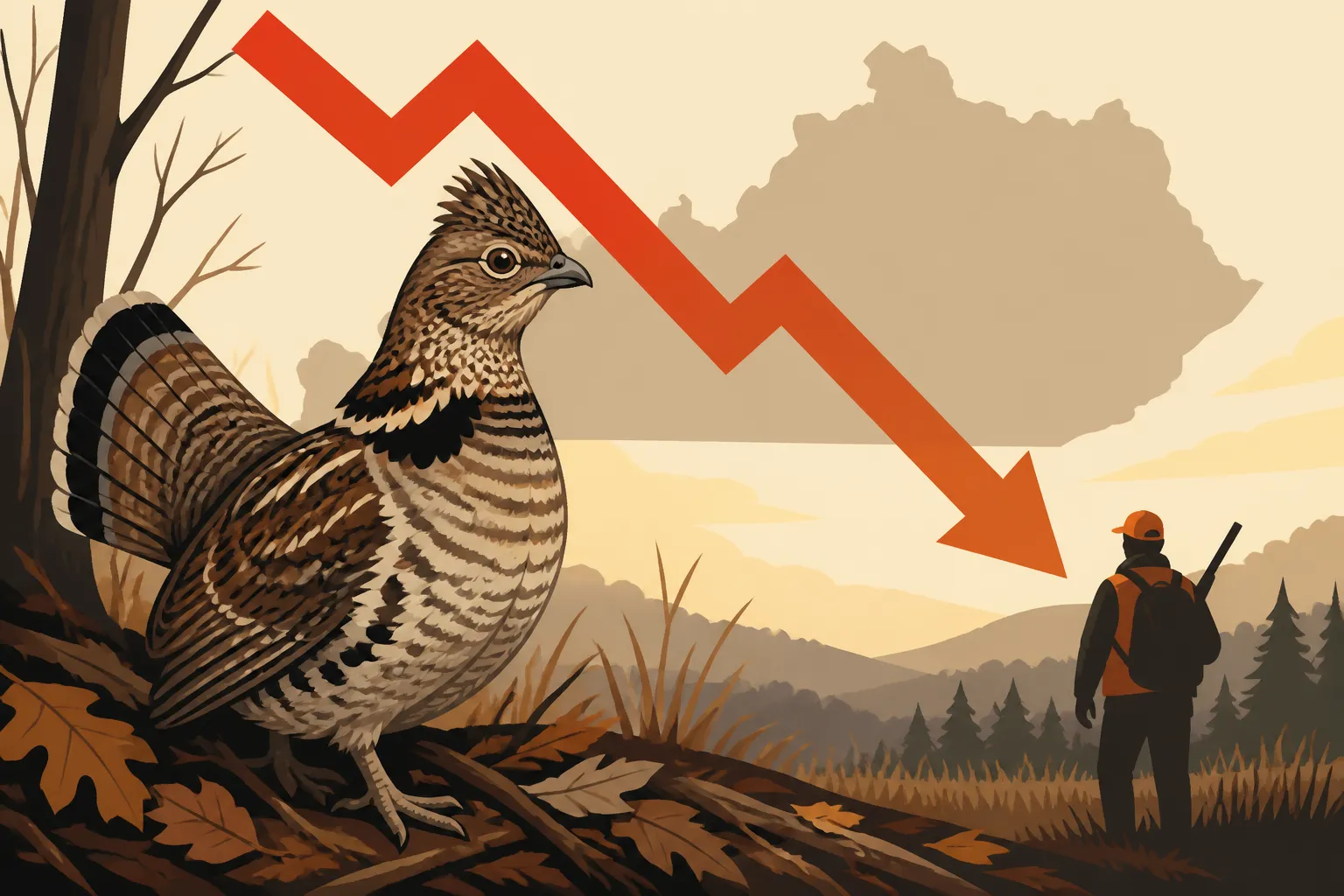
Fast forward to today, and the picture is starkly different. The robust populations of yesteryear are largely gone, replaced by a scattering of birds in isolated pockets. While you might still hear a drumming grouse on a spring morning or flush a bird during deer season, these encounters are far from common. The Kentucky Department of Fish and Wildlife Resources (KDFWR) has documented a precipitous decline, mirroring trends seen across much of the grouse's southern range.
The last remaining "hotbeds," if you can even call them that, are generally confined to the most remote and rugged areas of Eastern Kentucky. These are typically places where timber management practices, either private or public, have recently created small, fragmented parcels of suitable habitat. These areas are often difficult to access, which ironically offers some protection from hunting pressure, but the overall numbers are still critically low. Biologists are continually monitoring these areas, looking for any signs of stability or, hopefully, recovery, but the data continue to paint a concerning picture about Kentucky Ruffed Grouse Numbers Today.
Primary Drivers Behind the Decline
The decline of the ruffed grouse in Kentucky isn't due to a single culprit but rather a perfect storm of interconnected factors. It's a complex ecological puzzle, and understanding each piece is crucial to appreciating the challenges facing conservation efforts. From the subtle shifts in our forests to the more insidious threats of disease, these drivers have collectively pushed the grouse to the brink.
The Critical Role of Forest Succession
Perhaps the most significant factor in the grouse's decline is the natural process of forest succession. Ruffed grouse are not birds of mature, old-growth forests. They are habitat specialists, thriving almost exclusively in young, regenerating woodlands – areas often referred to as "early successional habitat." This means forests that have been recently disturbed by events like clear-cutting, intense fires, or severe storms, and are now growing back with a dense understory of saplings, shrubs, and briars. This thick cover provides essential protection from aerial predators like hawks and owls, and ground predators like coyotes and bobcats. It also offers abundant food sources like buds, catkins, and insects.
The problem in Kentucky, and much of the eastern U.S., is that our forests have largely matured. The widespread logging of a century ago, which inadvertently created so much prime grouse habitat, has been replaced by more selective logging practices or, in many areas, no logging at all. Forests have grown up, the canopy has closed, and the dense understory that grouse depend on has thinned out. Without continuous disturbance, these critical habitats shrink, leading to fragmented populations that struggle to find enough suitable living space. It's a classic case of loving our forests to death, at least from a grouse perspective. When you're Hunting Eastern Kentucky Coalfield Country, you often encounter vast tracts of mature timber, making it obvious why grouse struggle.
Emerging Threats: West Nile Virus and Climate Change
Beyond habitat loss, two emerging threats have significantly impacted grouse populations: West Nile Virus (WNV) and the broader effects of climate change. West Nile Virus, a mosquito-borne illness, has been identified as a major mortality factor for grouse, particularly in the southern parts of their range where mosquito seasons are longer and warmer. Studies have shown that grouse are highly susceptible to the virus, and even non-lethal infections can weaken birds, making them more vulnerable to predation or other environmental stressors. The warmer temperatures associated with climate change could potentially exacerbate this problem by extending the mosquito season and increasing the virus's prevalence.
Climate change also brings other challenges. Shifting weather patterns can impact food availability, nesting success, and chick survival. More intense or prolonged droughts can affect understory vegetation, while unseasonably warm winters followed by sudden cold snaps can be devastating for incubating hens or young broods. While the direct impacts are harder to quantify than habitat loss, these environmental shifts add another layer of stress to an already struggling population, making recovery even more difficult.
Predation Pressures
In any ecosystem, predation is a natural and healthy part of the cycle. However, when a prey species is already struggling due to habitat loss and disease, an increase in predator pressure can be particularly devastating. For ruffed grouse, a wide array of predators poses a threat. Aerial hunters like Cooper's hawks, great horned owls, and goshawks are highly efficient at snatching birds from less dense cover. On the ground, predators such as coyotes, bobcats, foxes, raccoons, and even free-ranging domestic cats and dogs can decimate nests and adult birds.
As grouse habitat becomes more fragmented and sparse, birds are forced into smaller, more isolated patches. This makes them easier targets for predators, who can more effectively patrol these limited areas. Furthermore, the overall increase in some generalist predator populations in certain areas, combined with the lack of dense escape cover, creates an unsustainable situation for grouse. It's not that predators are inherently "bad"; it's that the balance has been thrown off, with the grouse losing the habitat advantage they once relied on to evade their pursuers.
Habitat Management and Conservation Efforts
Acknowledging the dire situation for Kentucky's ruffed grouse, the KDFWR and various conservation partners have initiated efforts to reverse the trend. These efforts largely focus on addressing the primary driver of their decline: habitat. It’s a challenging and long-term endeavor, but one that is absolutely essential if we hope to hear the distinct drumming of a grouse in our forests again.
Strategic Timber Practices and Early Successional Forests
The cornerstone of grouse conservation is the creation and maintenance of early successional forest habitat. This isn't about indiscriminately clear-cutting vast tracts, but rather implementing carefully planned and strategic timber harvests. The KDFWR, often in collaboration with the U.S. Forest Service on lands like the Daniel Boone National Forest, uses science-based forestry practices to create a patchwork of different forest age classes. This includes clear-cuts ranging from 5 to 40 acres, which then regenerate into the dense, young forest that grouse need.
These cuts are designed to mimic natural disturbances and are often carried out in rotation, ensuring a continuous supply of suitable habitat over time. For example, a tract might be harvested, and then adjacent areas would be left to mature before their turn, creating a diverse landscape. Such practices not only benefit grouse but also a host of other wildlife species that depend on young forest, including white-tailed deer, rabbits, and many songbirds. Understanding How Old a Cut Should Be for Grouse is crucial, as the density and structure of the regrowth are paramount. Tools like GoHunt can be invaluable for identifying potential areas on public lands that might have seen recent timbering or prescribed burns, indicating emerging early successional growth.
Collaborative Conservation Initiatives
Effective grouse conservation requires more than just state and federal agencies; it demands a collaborative approach involving private landowners, non-governmental organizations, and even hunters themselves. Organizations like the Ruffed Grouse Society (RGS) have been instrumental in advocating for and funding habitat projects across the grouse's range, including in Kentucky. They work with landowners, providing technical assistance and sometimes financial incentives, to encourage habitat improvements on private property, which makes up a significant portion of Kentucky's forested landscape.
The KDFWR also works with various partners on specific projects, such as prescribed fire programs. Controlled burns can be a highly effective tool for setting back forest succession, encouraging the growth of herbaceous plants, and creating the open understory that grouse prefer for brood rearing. These initiatives also involve public education, helping hunters and other outdoor enthusiasts understand the ecological importance of these practices, even if they sometimes look jarring to the untrained eye. Through these partnerships, the reach of conservation efforts is extended, ensuring a more comprehensive approach to grouse recovery. When planning a trip, checking official sources or even using mapping tools like GoHunt to understand land designations and recent habitat work can make a big difference in finding viable areas.
Impact of the Decline on Hunters and Ecosystems
The steep decline of the ruffed grouse has left an indelible mark, not just on the ecological balance of Kentucky's forests but also on the cultural fabric of its hunting community. For many, the absence of this once-common bird represents more than just the loss of a game species; it's a profound shift in the very experience of being outdoors in the Bluegrass State.
Loss of a Traditional Hunting Heritage
Hunting ruffed grouse is more than just bagging a bird; it’s an art form, a dance between hunter, dog, and wild bird in some of the state's most rugged terrain. The tradition of chasing grouse has been passed down through generations, often involving long days of hiking, learning the nuances of cover, and the pure joy of watching a well-trained bird dog work. The decline means fewer opportunities for these experiences, and for many, the tradition itself is at risk. Younger hunters may never know the excitement of a consistent grouse season, limiting their connection to a unique aspect of Kentucky's hunting legacy.
The emotional impact cannot be overstated. For hunters who grew up with abundant grouse, the current scarcity is a stark reminder of changing landscapes and lost opportunities. It's a conversation starter in hunting camps, often tinged with nostalgia and regret. This loss also extends to the specialized gear and techniques associated with grouse hunting – the lightweight shotguns, the specific dog breeds, and the intimate knowledge of deep woods that are now less relevant. The thrill of Flushing Grouse Without a Dog or with a pointer is now a rare occurrence rather than a regular season highlight.
Ecological Ripple Effects
The ruffed grouse is an indicator species; its decline signals broader ecological issues within its preferred habitat. As a specialist, its struggle indicates that the early successional forest habitats it relies on are diminishing. This isn't just bad for grouse; it has ripple effects throughout the entire ecosystem. Many other species, from cottontail rabbits and snowshoe hares to woodcock and numerous migratory songbirds, also depend on these same young forest habitats. When grouse populations falter, it's often a sign that these other species are likely struggling as well.
Furthermore, grouse play a role in the forest food web, serving as prey for various predators. A reduction in grouse numbers means a reduction in a natural food source, which can impact predator populations or force them to rely more heavily on other prey species, potentially creating imbalances elsewhere. Their foraging habits, which include eating buds, catkins, and insects, also contribute to seed dispersal and insect control within their specific microhabitats. The health of a single species, especially one so closely tied to a particular habitat type, can tell us a great deal about the overall health and diversity of the forest ecosystem.
The Future of Grouse Hunting in Kentucky
Considering the challenges, it's easy to feel pessimistic about the future of ruffed grouse hunting in Kentucky. However, conservation efforts, while facing an uphill battle, offer a glimmer of hope. Understanding the road ahead, both in terms of continued hurdles and how individual hunters can contribute, is vital for anyone who cherishes this iconic woodland bird.
Challenges and Hurdles Ahead
The path to grouse recovery in Kentucky is fraught with challenges. The sheer scale of habitat needed is immense, and creating and maintaining early successional forests requires significant resources, consistent effort, and a long-term commitment. Public land managers, like those in the Daniel Boone National Forest, are often balancing multiple objectives, from timber production to recreation to protecting endangered species, making it difficult to prioritize specific habitat types across vast areas. On private lands, convincing landowners to adopt grouse-friendly timber practices can be challenging, especially given economic pressures and varying land-use goals.
Moreover, the continuing threat of West Nile Virus and the unpredictable impacts of climate change add layers of uncertainty. Even if ideal habitat is created, these environmental stressors can undermine recovery efforts. It's a race against time, and the fragmented nature of the remaining grouse populations means that even small victories can be slow to translate into widespread recovery. The KDFWR faces a monumental task in trying to manage these diverse threats simultaneously. Hunters navigating public land for any species should be aware of changing conditions; resources like the Kentucky Hunt Fish App or GoHunt can sometimes show recent timber activity or prescribed burn areas, offering clues to potential grouse habitat.
How Hunters Can Contribute to Recovery
While the heavy lifting of large-scale habitat management falls to agencies and organizations, individual hunters have a crucial role to play in the future of Kentucky's ruffed grouse. First and foremost, financial support through hunting license purchases and donations to conservation groups like the Ruffed Grouse Society directly funds habitat projects. Every dollar spent on a hunting license in Kentucky goes towards wildlife management, including efforts that indirectly or directly benefit grouse. Hunters committed to the long game can find out more about Kentucky Hunter Education Requirements and ensure future generations are prepared.
Beyond financial contributions, hunters can become advocates. Educating fellow hunters, landowners, and the general public about the importance of early successional habitat is vital. Supporting sustainable timber practices and prescribed fire initiatives, even if they temporarily alter the aesthetic of a beloved woodlot, is critical. Furthermore, volunteering with local conservation groups or participating in citizen science projects that monitor bird populations can provide valuable data. While the state's grouse season remains open, many hunters choose to self-regulate, reducing their harvest to minimize pressure on fragile local populations, especially during periods of known low density. Carrying a good Packs for a Daniel Boone Forest Day Hunt allows you to bring along all the essentials for scouting, even if you’re not hunting.
Here's a glimpse into historical grouse harvest trends in Kentucky, illustrating the profound decline:
| Year Range (Approx.) | Average Annual Harvest (Estimated) | Trend | Notes |
|---|---|---|---|
| Early 1970s | 20,000 – 30,000 | Peak or Near-Peak | Abundant early successional habitat from past timbering |
| Late 1980s | 10,000 – 15,000 | Significant Decline | Forests maturing, habitat loss accelerating |
| Early 2000s | 2,000 – 5,000 | Steep Decline Continues | West Nile Virus identified as a new threat |
| 2010s to Present | < 1,000 (often < 500) | Critical Lows, Fragmented Populations | Limited and isolated pockets of birds, hunting opportunities rare |
This table clearly illustrates the dramatic reduction in grouse harvest, directly reflecting the decline in their population over the past half-century. It's a sobering reminder of what we've lost and the urgency of ongoing conservation efforts. For those still venturing out, remember that good preparation is key, including essentials like a First Aid Kits for Remote Daniel Boone Forest Ground and appropriate footwear, like Boots for Walking Kentucky Ridges. Even if the grouse flushes are few and far between, the wild places they call home are still worth exploring and preserving.
Disclaimer
The information provided in this guide is for general informational purposes only and is not intended as legal advice or a substitute for official hunting regulations. Always consult the latest Kentucky Department of Fish and Wildlife Resources (KDFWR) regulations and local laws before participating in any hunting activity. Hunting regulations and seasons can change, and it is the hunter's responsibility to stay informed and compliant.