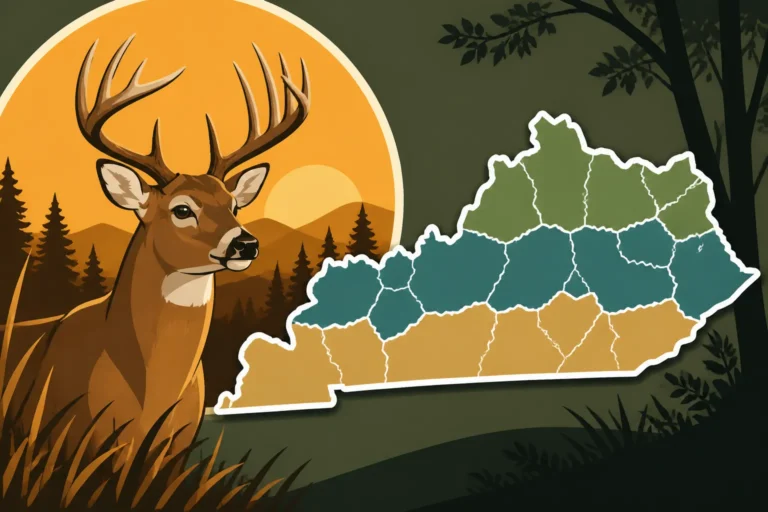
Kentucky Landowner Deer Permit Rules
Navigating the specific regulations for hunting on your own land in Kentucky can feel like trying to untangle a fishing line after a particularly enthusiastic casting session. Many folks assume that owning property automatically grants them carte blanche to hunt deer however and whenever they please, but the reality is often a patchwork of rules that can be confusing. This comprehensive guide is here to clarify the Kentucky landowner deer permit rules, helping you understand your privileges, responsibilities, and how to stay on the right side of the Kentucky Department of Fish and Wildlife Resources (KDFWR) regulations.
Understanding the Basics of Kentucky Landowner Deer Permits
The idea of being a landowner and not needing a license to hunt on your own slice of Kentucky is a common misconception. While Kentucky does offer some unique provisions for resident landowners, it's not a free-for-all. These rules are designed to balance the rights of property owners with the state's broader wildlife management goals, ensuring healthy deer populations for everyone. It’s crucial to grasp these fundamental concepts before you ever step into the woods on your own acreage.
Who Qualifies as a "Landowner" for Hunting Purposes?
When the KDFWR talks about a "landowner" in the context of hunting, they have a pretty specific definition in mind. It's not just anyone who uses the land or lives there; it refers to individuals who hold the deed to at least five contiguous acres in Kentucky. This "contiguous" part is key – the land needs to be physically connected, not five separate one-acre parcels scattered across the county.
This is where things can get tricky for families. For instance, if your son lives on your property and helps with the farm, he still might not qualify as a "landowner" under these specific rules unless he's also a deeded owner. The same goes for someone leasing land; a lessee is not a landowner, no matter how long they've been renting or farming the property. The privilege extends to the deeded owner, their spouse, and their dependent children living in the same household. This means if your adult children have moved out and established their own households, they generally won't fall under your landowner permit umbrella, even if they're hunting on your family farm. It's always best to err on the side of caution and ensure everyone hunting on your land understands whether they need their own licenses and permits.
The Privileges and Limitations of Landowner Permits
So, what exactly does being a resident landowner (with 5+ contiguous acres) get you in terms of deer hunting in Kentucky? The biggest perk is that resident landowners, their spouses, and their dependent children living in the same household are not required to purchase a state hunting license or a deer permit when hunting deer on their own deeded property. This is a significant cost saving, especially if you have a family that enjoys hunting together.
However, it's not entirely without rules. Even as a landowner, you must still abide by all other statewide deer hunting regulations. This includes legal shooting hours, equipment restrictions (e.g., proper firearms for Kentucky deer hunting, legal archery equipment), and importantly, the statewide season dates. You can't just decide to hunt deer in June because you own the land. You also have to adhere to the county-specific bag limits and antler restrictions. For example, if you live in a county that is part of a specific Kentucky Deer Management Zone Rules, you'll need to know what those limits are for both antlered and antlerless deer.
Let's say you own a beautiful 80-acre tract in Union County, a prime spot for Hunting Western Kentucky Bottomland Deer. You, your spouse, and your two high-school-aged children can all hunt deer on that property without needing a license or deer permits. However, if your daughter brings her college roommate, that roommate absolutely needs to have a valid Kentucky hunting license and deer permits.
It's also vital to understand the difference in antlerless deer limits. While you might be exempt from needing a permit, the actual number of antlerless deer you can harvest on your property still depends on your county's deer zone. Knowing How Many Antlerless Deer Your Zone Allows is critical. For instance, in Zone 1 counties, landowners can often take an unlimited number of antlerless deer without a permit, whereas in Zone 2 or 3 counties, there are stricter limits. A great tool like the KDFWR's online map or a service like GoHunt can help you quickly ascertain your county's current zone designation and its associated bag limits.
Here's a quick overview of typical landowner privileges versus general public hunting:
| Feature | Resident Landowner (5+ acres, hunting own land) | General Public Hunter (Resident/Non-resident) |
|---|---|---|
| Hunting License | Not required | Required |
| Statewide Deer Permit | Not required | Required |
| Youth Hunter Exemptions | Dependent children included | Youth license/permit rules apply |
| Season Dates | Must follow statewide dates | Must follow statewide dates |
| Bag Limits (Antlered) | Must follow county/zone limits | Must follow county/zone limits |
| Bag Limits (Antlerless) | Must follow county/zone limits | Must follow county/zone limits |
| Telecheck Reporting | Required | Required |
| Equipment Restrictions | Must follow statewide rules | Must follow statewide rules |
This table illustrates the core difference: while the cost and permit requirement are waived, the rules of the hunt remain consistent with statewide regulations.
Navigating the Permit Application and Usage Process
Even though resident landowners are exempt from purchasing certain permits, there are still processes to understand, especially regarding how these "landowner permits" are recorded, and how your harvest contributes to statewide management data. It's not a free pass to ignore all administrative steps.
How to Acquire Your Landowner Tags
Okay, so you don't buy a landowner permit in the traditional sense, but you do need to understand how your hunting activity is recognized and recorded. For resident landowners hunting on their own property, the exemption from purchasing a Kentucky Resident Hunting License Options and deer permit is automatic, provided you meet the acreage and residency requirements. You don't apply for a specific "landowner permit" number or card. Your status as the deeded owner of qualifying land is your "permit."
However, if you decide to hunt off your property, even on neighboring land with permission, or if you're a non-resident landowner (more on that later), you absolutely will need to purchase the appropriate Kentucky Hunting Licenses and What They Cost and deer permits. The easiest way for anyone to get these is through the KDFWR's online license portal, or by visiting a local vendor like a sporting goods store or county clerk's office. The online portal is incredibly user-friendly and allows you to print your licenses or store them digitally on your phone via the Kentucky Fish and Wildlife App. Tools like GoHunt's property line maps can be invaluable for confirming exactly where your deeded land ends and public or another private property begins. This way, you'll always know if you're truly on your own exempt land or if you need those additional tags.
Reporting Your Harvest as a Landowner
This is arguably the most critical step for landowners, and it's one that cannot be skipped. Every deer harvested in Kentucky, whether by a licensed hunter or an exempt landowner, must be reported to the KDFWR. This is done through the Kentucky Deer Harvest Reporting Rules, commonly known as Telecheck. This system is vital for KDFWR biologists to collect accurate harvest data, which in turn helps them make informed decisions about deer population management across the state.
The Telecheck process is straightforward. After you've harvested a deer and before you process it or transport it out of the state, you must report it within 24 hours. You can do this online through the KDFWR website, or by calling their toll-free number. You'll need to provide information such as the county of harvest, the date of harvest, the species (deer), sex (buck or doe), and whether it was antlered or antlerless. For landowners, you'll indicate that you are hunting under a landowner exemption.
Forgetting or failing to Telecheck a harvested deer is a violation of state law, regardless of your landowner status. There's no special exemption for landowners here. Imagine a scenario: you drop a nice buck on your farm in Graves County. You're feeling great, you gut it, drag it back to the barn, and start processing it. But you forget to Telecheck it. If a KDFWR conservation officer were to visit your property for any reason and found an untracked deer, you could face penalties. So, even though you don't buy a permit, your reporting responsibility is just as important as any other hunter's. Always keep that Telecheck confirmation number handy!
Common Scenarios and Frequently Asked Questions
The world of landowner deer permits can get a bit muddy when you move beyond the simplest case of "owner hunting their own land." Family dynamics, property arrangements, and specific situations often lead to confusion, making it essential to address some of these common questions.
Hunting on Leased Land or Family Property
This is where many people run into trouble. Let's tackle leased land first. If you are leasing hunting rights from a landowner, you are not considered the landowner. Full stop. You absolutely need to purchase all the necessary Kentucky Resident Hunting License Options and deer permits, just like any other non-landowner hunter. The landowner's exemption does not transfer to their lessees. The same goes for someone managing a property for an absentee owner; unless they are deeded on the property, they need their own licenses.
Family property is another common sticking point. As mentioned, the exemption extends only to the deeded resident landowner, their spouse, and their dependent children living in the same household. What about other family members?
- Adult children not living at home: They need their own licenses and permits.
- Parents of the landowner: They need their own licenses and permits.
- Siblings, aunts, uncles, cousins, etc.: They all need their own licenses and permits.
If these family members are hunting on your land, they also need permission. While verbal permission is generally accepted in Kentucky for private land hunting, it's always, always, always a good idea to have written permission. A simple note with your name, their name, date, property description, and your signature can save a lot of headaches. This is why resources like "Do You Need Written Permission in Kentucky?" and "Getting Private Land Permission in Kentucky" are so crucial, even within families. It protects everyone involved.
For example, your nephew, who lives in Frankfort, wants to come hunt your 50 acres in Hopkins County. He's an adult, so he doesn't qualify under your dependent child exemption. He needs a valid hunting license and the appropriate deer permits. You, as the landowner, should provide him with written permission to avoid any misunderstandings with KDFWR personnel or local law enforcement.
Special Considerations for Large Tracts or Multiple Owners
Acreage is a factor in qualifying for the exemption (minimum 5 contiguous acres), but does owning a massive tract change anything? Not really for the core permit rules. Whether you own 5 acres or 500 acres, the same rules apply regarding the landowner exemption for yourself, spouse, and dependent children. The biggest difference with larger tracts is often in management potential and the ability to spread hunting pressure, rather than permit requirements.
What if a property has multiple owners? This is a bit more nuanced. If a property is jointly owned (e.g., two brothers on the deed), each resident landowner on the deed (and their spouse/dependent children) would typically qualify for the exemption on that property. However, if one owner lives in Ohio and the other in Kentucky, only the Kentucky resident landowner would qualify for the exemption. The non-resident owner would need to purchase all appropriate Kentucky Nonresident Hunting License Options if they wanted to hunt that property.
Another common scenario involves properties held in a trust or by a corporation. In these cases, it often depends on how the trust or corporation is structured and who is designated to hunt on behalf of that entity. Generally, a corporate entity cannot hold a "landowner permit" in the same way an individual can. Individuals hunting under a corporate or trust ownership would typically need to purchase their own licenses and permits, unless they meet the specific definition of a resident landowner who personally holds the deed. It's always best to consult directly with the KDFWR or legal counsel if your land ownership falls into these more complex categories. Using a service like GoHunt can help clarify property ownership records, which might be helpful in such situations.
Ultimately, Kentucky's landowner deer permit rules are a privilege designed for resident landowners to hunt on their own property with immediate family, without the burden of purchasing state licenses and permits. They are not a loophole to circumvent general hunting regulations, nor do they extend indefinitely to others who happen to hunt your land. Respecting these rules not only keeps you legal but also contributes to the sustainable management of Kentucky's incredible deer resource.
Disclaimer
Please remember that hunting regulations can change, and interpretations may vary. While this guide aims to provide accurate and up-to-date information, it is always your responsibility to consult the most current Kentucky Department of Fish and Wildlife Resources (KDFWR) regulations and laws before hunting. This article is for informational purposes only and should not be considered legal advice.