Kentucky Modern Gun Season Opening Day
The crisp air of November in Kentucky brings with it a special kind of excitement and, let's be honest, a good bit of anxiety for deer hunters. The rush of Kentucky's Modern Gun Season Opening Day is unparalleled, often feeling like a holiday in itself, but it also presents unique challenges, from navigating crowded public lands to understanding how deer react to the sudden increase in pressure. This guide is here to walk you through everything you need to know to not just survive, but thrive, on one of the most anticipated days in the Kentucky hunting calendar.
The Unique Experience of Opening Day for Modern Gun Season
Opening day for modern gun season isn't just another hunting day; it's an event. For many, it marks the pinnacle of their deer hunting year, a chance to finally bring out the rifle after weeks, or even months, of archery or muzzleloader hunting. But with that peak of anticipation comes significant pressure, both on the landscape and the deer themselves. Understanding these dynamics is crucial for success.
Opening Day Pressure and Hunter Density
Let's be real, you won't be alone out there on opening day. Whether you're hunting a popular Wildlife Management Area (WMA) or even a private tract with multiple hunters, expect company. Kentucky's modern gun season often sees the highest hunter participation of any season, and everyone is keyed up, hoping to fill a tag. This means parking lots will be full, trails will see more foot traffic, and the woods will echo with more shots than any other day of the year.
This increased hunter density can be a blessing or a curse. On one hand, it can push deer around, sometimes right into your shooting lane. On the other, it means you'll need to work harder to find pockets of unpressured deer or anticipate their escape routes. It also means you need to be extra vigilant about safety, as more people in the woods mean a higher chance of accidental encounters or mistaken identity. Using mapping apps, like the one offered by GoHunt, can be invaluable for identifying remote corners of public land that might see less pressure, even on the busiest days. You can learn more about Hunting Pressure on Kentucky Public Land to better prepare for these conditions.
Deer Behavior in Response to Pressure
Deer aren't stupid. They know when hunting season starts, and especially when the guns come out. That first morning volley of shots acts like a giant alarm clock. Deer that were previously moving fairly openly during archery season will often become nocturnal or seek out the thickest, nastiest cover they can find. They’ll also use terrain features like steep hollows, dense thickets, or deep creek bottoms as sanctuaries, often moving only after dark or during the quietest parts of the day.
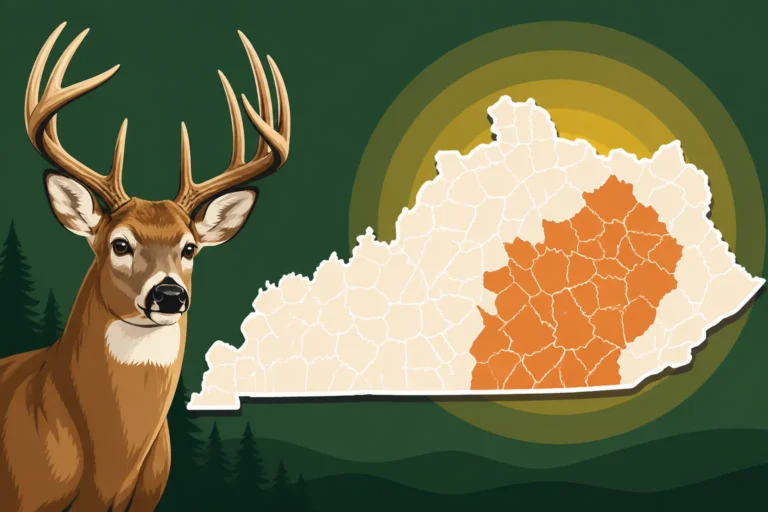
This immediate shift in behavior requires hunters to adapt quickly. Instead of focusing on traditional food sources where deer fed openly, you might need to target bedding areas or the escape corridors between them. Look for pinch points or funnels that deer are likely to use when moving between cover or trying to avoid human activity. Understanding how Eastern Kentucky Versus Western Kentucky Deer might react differently to pressure, given their varied habitats, can also provide an edge. In the heavily forested eastern counties, deer might simply drop into a deep hollow, whereas in the more fragmented western farmlands, they might sprint to the nearest large woodlot or river bottom.
Weather's Impact on Early Season Hunting
While we dream of crisp, cold mornings for opening day, Kentucky's weather in November can be incredibly fickle. You might wake up to freezing temperatures and a dusting of snow, or it could be unseasonably warm and rainy. Each scenario impacts deer behavior and your hunting strategy. A cold front often means increased deer movement, as they feed heavily before the weather worsens. A warm, rainy day, however, might keep deer bedded down and make scent control even more critical.
Wind is another major factor. High winds can make hearing deer difficult, but they can also mask your own noise. Deer tend to move with the wind in their face, using their noses to detect danger ahead. Understanding Wind and Thermals on a Kentucky Ridge is particularly important, as swirling winds in hilly terrain can quickly betray your position. Always check the forecast leading up to Kentucky Modern Gun Season Opening Day and be prepared to adjust your clothing layers, hunting spot, and even your approach strategy based on what Mother Nature throws at you.
Essential Tactics for Modern Gun Season Success
Success on modern gun opening day isn't just about showing up with a rifle. It requires thoughtful preparation, strategic execution, and a willingness to adapt. The tactics that work best often involve leveraging the chaos caused by other hunters and being in the right place when deer are trying to escape.
Pre-Season Scouting and Last-Minute Adjustments
The work for opening day truly begins long before November. Thorough pre-season scouting is paramount. During the summer and early fall, identify primary food sources like acorn flats, agricultural fields, and natural browse. Pinpoint bedding areas – often dense thickets, cedar groves, or steep north-facing slopes – and, crucially, the travel corridors between them. Look for natural funnels, saddlebacks, and creek crossings that deer are likely to use. Tools like GoHunt's satellite imagery can help you identify these features from home, allowing you to prioritize areas for on-the-ground investigation.
Even if you’ve been scouting all year, the week before modern gun season is prime time for last-minute adjustments. Check trail cameras for recent movement patterns, especially around potential escape routes. Look for fresh rubs and scrapes that indicate a buck is active in the area. Remember, other hunters will also be scouting, so be mindful of potential pressure points. If you see a lot of fresh boot tracks near your prime spot, it might be time to have a backup plan. A deep dive into Scouting Kentucky Public Land Before Season can provide more comprehensive strategies for this critical phase.
Strategic Stand Placement and Entry/Exit Routes
Where you place your stand or ground blind on opening day can make or break your hunt. With increased hunter activity, deer will often move to the thickest cover and use less obvious routes. Instead of setting up directly over a food plot, consider ambush points along escape routes or deep within bedding areas, assuming legal access. Look for hidden funnels or dense transition areas that deer might use to sneak away from pressure.
Your entry and exit routes are just as important as your stand location. Plan a route that is quiet, uses terrain to hide your approach, and avoids disturbing known bedding areas. Many experienced hunters will walk an extra mile or two to access a stand from an unconventional direction, ensuring they don't spook deer on their way in. For example, Hanging a Stand on an Eastern Kentucky Ridge requires careful consideration of thermals and wind direction, especially if you're trying to intercept deer moving from a bottomland bedding area up to a ridge. Conversely, if you're Setting Up on a Western Kentucky Field Edge, consider how deer will enter and exit the field and position yourself for a safe, ethical shot. Always be prepared to adapt, as the first shots of the morning may change deer movement patterns instantly.
Understanding Deer Movement on Public and Private Land
Deer movement varies significantly between public and private lands, especially during high-pressure seasons. On public land, deer quickly learn to avoid roads and easily accessible areas, retreating into dense, rugged terrain. They'll often move during low light or when hunter activity briefly subsides. Hunters on public land should focus on finding unpressured pockets, often requiring longer walks and navigating challenging topography. Hunting the Late-Season January Lull tactics, which emphasize finding secluded bedding and food sources, can surprisingly apply to opening day on public land, as deer are under similar avoidance pressure.
On private land, especially large tracts with limited hunting pressure, deer might exhibit more "natural" movement. However, even on private land, the statewide pressure from Kentucky Modern Gun Season Opening Day will make deer wary. If neighboring properties are heavily hunted, your private land deer might still be pushed onto your property or shift their patterns significantly. Communicate with neighbors if possible to understand their hunting plans, which can help you predict deer movement. Regardless of where you hunt, paying attention to scrape lines along a logging road or looking for fresh tracks around field edges can provide critical clues about recent activity.
Key Regulations and Legal Necessities
Kentucky's hunting regulations are designed to manage the deer herd effectively and ensure hunter safety. On opening day, with the excitement and crowds, it's more important than ever to be intimately familiar with the rules. Ignorance is never an excuse in the eyes of the law.
Confirming Season Dates and Deer Management Zones
It might seem obvious, but double-checking the exact dates for Kentucky Modern Gun Season Dates is the first and most crucial step. While the season often runs statewide for a specific period, it's essential to confirm the opening day. Kentucky uses a system of deer management zones (Zones 1-4) that dictate antlerless bag limits. Your county's zone classification directly impacts how many deer you can legally harvest. You can find this information readily on the Kentucky Department of Fish and Wildlife Resources (KDFWR) website or through the GoHunt app which often integrates these regulatory details. Understanding Kentucky Deer Management Zone Rules is not just about legality; it's about ethical hunting and contributing to sound deer population management. Always verify the zone for your specific hunting location before heading afield.
Blaze Orange Requirements and Safety Protocols
Safety is paramount, especially during modern gun season. Kentucky law requires hunters to wear a minimum amount of blaze orange or pink. This isn't just a suggestion; it's a legal requirement and a critical safety measure. You need to display at least 500 square inches of solid blaze orange or pink on your head, back, and chest, visible from all sides. This applies to deer, elk, and bear hunters, and anyone accompanying them. Even if you're sitting in a ground blind, ensure sufficient blaze orange is visible.
Beyond the legal requirements, common sense safety protocols are non-negotiable. Always treat every firearm as if it's loaded, keep the muzzle pointed in a safe direction, keep your finger off the trigger until ready to shoot, and be absolutely sure of your target and what is beyond it. The excitement of Kentucky Modern Gun Season Opening Day can lead to rushed decisions, so take an extra breath and apply the four rules of firearm safety. Understanding How Much Blaze Orange Kentucky Requires can literally save lives.
Kentucky Deer Harvest Reporting Rules
After a successful hunt, the excitement continues with the responsibility of reporting your harvest. Kentucky mandates that all harvested deer must be reported via the Telecheck system by 8 PM on the day the animal is recovered. This is not optional; it's a legal requirement and crucial for KDFWR to manage the state's deer population effectively. You can Telecheck online, via phone, or through the KDFWR app.
Make sure you have your confirmation number from your license purchase, the county where the deer was harvested, the species (deer), sex, and the type of weapon used (modern gun). Failing to Telecheck a deer is a violation, so don't let the thrill of the moment overshadow this important step. Many hunters like to take photos and celebrate, but remember to get that deer checked in. Detailed information on Kentucky Deer Harvest Reporting Rules can help ensure you complete this step correctly and avoid any issues.
After the Shot: From Field to Freezer
The shot is made, the deer is down—now the real work begins. The process of tracking, recovering, field dressing, and telechecking your deer is just as critical as the hunt itself, impacting both the legality of your harvest and the quality of your venison.
Tracking and Recovering Your Deer
Even with a perfect shot, deer rarely drop in their tracks. Tracking can be challenging, especially in dense Kentucky timber or through leaf litter. After the shot, give the deer some time if you suspect a good hit, especially for lung or heart shots. A good rule of thumb is 30 minutes for a solid hit, and several hours (or even overnight) for a gut shot, depending on ambient temperatures. If you hit bone, give it an hour or two. Patience here is key to a successful recovery.
When you begin tracking, move slowly and deliberately. Look for blood, broken branches, disturbed leaves, or tracks. Mark the last spot of blood you found with flagging tape or a bright piece of toilet paper before moving forward. If you lose the trail, spread out and search in concentric circles from the last known sign. Having a tracking partner can be incredibly helpful. If the deer runs into private property, remember Retrieving Game From Private Land in Kentucky often requires explicit permission, even if you clearly shot the animal on your land. Always respect property boundaries. For deeper insights, consult a guide on Tracking a Deer Through Kentucky Leaf Litter.
Field Dressing and Initial Meat Care
Once the deer is recovered, immediate field dressing is essential, especially if temperatures are mild. Removing the entrails quickly helps the carcass cool down, preventing bacterial growth and ensuring high-quality meat. Work carefully to avoid puncturing the stomach or intestines, as this can contaminate the meat. Have a sharp knife, gloves, and some rope or paracord to help maneuver the animal.
After field dressing, consider how you’ll get the deer out of the woods. If you're hunting in rugged terrain like the Daniel Boone National Forest, a deer cart or sled can be a lifesaver. For longer hauls or extremely steep terrain, the "gutless method" (boning out the animal in the field) might be necessary. This significantly reduces weight and allows for easier transport. If it's Field Dressing a Deer in Cold Weather, you have a bit more time, but swift action is always best. Once out, get the deer cooled down as quickly as possible. Hang it in a cool, shaded place, or get it to a processor or cooler promptly.
Telechecking Your Harvest: The Final Step
Remember the Telecheck rules we discussed? This is where it all comes together. After your deer is recovered, field dressed, and transported, you must report it to the KDFWR. As noted earlier, you have until 8 PM on the day of recovery to complete this. Don't procrastinate, as forgetting or missing the deadline can lead to fines.
Have all the necessary information handy: your confirmation number from your license, the county of harvest, species, sex, and weapon used. You'll receive a confirmation number once the Telecheck is complete, which you should keep for your records. This confirmation is proof that you legally harvested the animal. It’s a vital step in the process and helps KDFWR gather critical data about Kentucky Deer Herd Size and trends, ensuring healthy populations for future generations of hunters.
Table: Kentucky Modern Gun Season Essentials
| Requirement | Detail | Importance |
|---|---|---|
| Season Dates | Refer to KDFWR regulations for specific opening and closing dates. | Legal necessity for hunting. |
| Deer Zones | Know your county's deer zone (1-4) for antlerless bag limits. | Dictates legal harvest limits. |
| Blaze Orange/Pink | 500 sq. inches visible on head, back, and chest. | Critical for hunter safety. |
| Hunting License | Valid Kentucky hunting license and deer permit required. | Legal to participate in the hunt. |
| Telecheck Harvest | Report deer by 8 PM day of recovery (online/phone/app). | Legal requirement for harvest reporting. |
| Weapon Legality | Ensure your rifle, ammunition, and accessories comply with KDFWR rules. | Legal necessity for firearm use. |
| Private Land Access | Written permission required to hunt or retrieve game on private land. | Avoid trespassing and legal issues. |
| Safety First | Always practice the four rules of firearm safety. | Prevents accidents and injuries. |
Disclaimer
The information provided in this guide is for general informational purposes only and does not constitute legal advice. Hunting regulations can change, and it is the hunter's sole responsibility to consult the most current Kentucky Department of Fish and Wildlife Resources (KDFWR) hunting guide and state laws before participating in any hunting activity. Always prioritize safety and ethical hunting practices.