Hunting Small Private Tracts in Kentucky
It's a common story in Kentucky: you've either inherited a small patch of woods, or a buddy finally got permission on a few acres from a reluctant landowner. These small private tracts often feel like golden opportunities, yet they come with their own unique set of challenges compared to sprawling public lands or vast private leases. This guide will walk you through the practical, no-nonsense strategies to successfully hunt these smaller parcels, ensuring you make the most of every precious acre and avoid common pitfalls.
Understanding the Unique Challenges and Advantages of Small Tracts
Hunting smaller private land parcels in Kentucky isn't just about shrinking your grand public land tactics; it's about shifting your mindset entirely. These tracts, often overlooked, can be incredibly productive if approached with precision and respect.
The Double-Edged Sword of Limited Acreage
Let's be real, a small tract, say 5 to 20 acres, can feel like both a blessing and a curse. On one hand, you might have prime deer sign, rubs, scrapes, and bedding areas right at your fingertips. It's exhilarating to know you're literally on top of the deer. But that limited acreage also means every step you take, every scent you leave, and every loud cough you make has a much greater impact. A single ill-advised hunt can blow out the entire property for days, sometimes weeks.
Think about it: on 500 acres of Daniel Boone National Forest, a deer spooked on one ridge might simply relocate to an adjacent one, eventually circling back. On 10 acres, that deer is likely off your property entirely, maybe even onto a neighbor's land where they might not be quite so keen on returning quickly. This makes minimizing your footprint paramount. The frustration of scouting a perfect little food plot or a thick bedding area only to realize a single wrong move could ruin it for the season is a very real challenge hunters face. The key is understanding that your presence, no matter how subtle, is magnified on such a compact space.
Navigating Access and Permission Etiquette
Getting permission to hunt small private tracts in Kentucky is often half the battle. This isn't just about knocking on a door; it's about building a relationship, especially when it comes to smaller landholders who might be hesitant about hunters on their property. Many people are wary due to past negative experiences, so your approach needs to be sincere and respectful.
When you approach a landowner, come prepared. Dress neatly, introduce yourself clearly, and have a firm handshake. Explain exactly what you're looking to do – typically, hunting deer with archery gear, or perhaps a limited firearms hunt. Offer something in return: help with chores, fence mending, checking on the property, or even sharing some venison. Be upfront about safety, particularly if the property is near residences or other active areas. Make sure to clarify property boundaries and agree on specific parking spots and access routes. I've found that having a simple, written agreement, even if informal, can prevent misunderstandings later. This is especially important for legal clarity, as Kentucky's laws regarding trespass and permission can sometimes be tricky to navigate. You need to know if you need specific written permission, or if verbal is sufficient. Always be sure to respect Kentucky Posted Land Rules and look for "No Hunting" signs, which clearly indicate where you should not even ask. Showing this respect upfront builds trust.
Furthermore, consider asking for permission to shed hunt in the off-season or even just to scout, showing you're interested in the long-term health of the property and not just the quick kill. Establishing yourself as a responsible, helpful individual can turn a single season of access into years of fruitful hunting opportunities.
Scouting and Strategy: Making Every Acre Count
When every acre matters, your scouting and strategic planning need to be meticulous. You can't afford to guess or make broad assumptions; you need to know exactly how deer are using every nook and cranny of the property.
Detailed Reconnaissance: Maps, Boots on the Ground, and Technology
Before you even set foot on the ground, dig into those digital maps. Tools like GoHunt are invaluable for overlaying property boundaries, topo maps, and aerial photography. You can identify potential bedding areas (often the thickest, nastiest cover), likely travel corridors (creek bottoms, fencerows, slight rises), and any existing food sources (persimmon trees, oak stands, old apple orchards). Pay close attention to how the small tract connects to larger blocks of cover or food sources on neighboring properties. This is crucial for understanding how deer might enter and exit your patch. For example, if your 10 acres is a thick brushy island surrounded by open farm fields, it's likely a bedding sanctuary, and deer will move through it at dawn and dusk.
Once you have a solid understanding from the maps, it's time for boots on the ground. Walk the perimeter, but more importantly, walk through the property, carefully looking for rubs, scrapes, tracks, and droppings. Identify natural funnels, pinch points, and security cover that might hold deer. Look for subtle changes in elevation that could create thermal advantages for bedding deer or natural barriers. If you're Reading Aerial Photos for Eastern Kentucky Deer, you'll notice how contours and timber types dictate movement, and the same applies, just on a smaller scale, to private land. Consider using trail cameras, but strategically place them to monitor key travel routes without being overly intrusive. Remember, minimizing your footprint is key, so don't check cameras too frequently.
Minimizing Pressure and Maximizing Impact
This is perhaps the most critical aspect of hunting small private tracts. Your goal is to be a ghost. Every time you enter the property, you're leaving scent and potentially disturbing deer. Plan your entry and exit routes meticulously. If there's a standing cornfield nearby, you might consider Entry Routes Through Standing Beans or other tall crops to mask your approach. Always try to approach with the wind in your favor, both to and from your stand location.
Think about when you hunt. Instead of sitting all day, which increases your chances of bumping deer, consider shorter, targeted hunts during peak movement times, like the first two hours of daylight or the last two hours before dark. If you're primarily hunting a bedding area on your property, focus on afternoon hunts when deer are already bedded and will move towards evening food sources. If your property is more of a feeding area, morning hunts might be more productive as deer leave. Consider limiting your hunts to once or twice a week, giving the deer a chance to settle back in. The less pressure you exert, the more comfortable deer will become using your small tract consistently.
Setting Up Smart: Stand Placement and Concealment
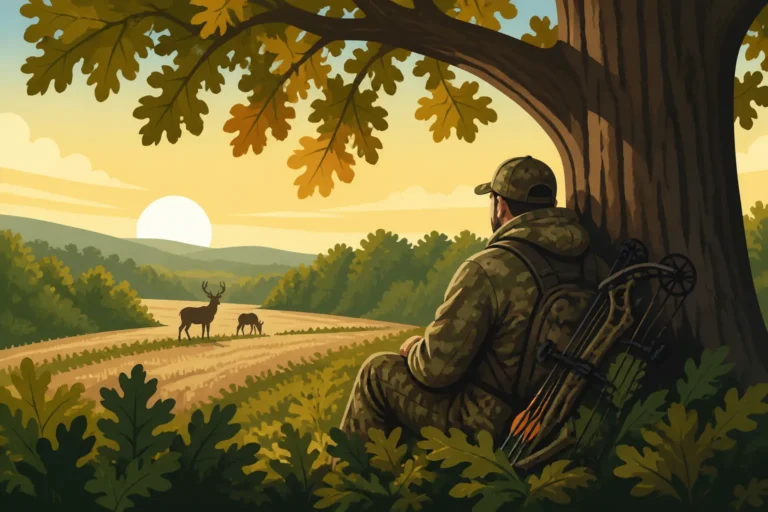
Your stand setup on a small tract needs to be incredibly well thought out. With limited space, you often only get one or two good setups before you risk over-pressuring the area. Evaluate prevailing winds, sun position, and potential shooting lanes. Look for natural backdrops that will break up your silhouette, like a thick oak tree or a cluster of pines.
For ground setups, consider Using a Ground Blind on Kentucky Public Land principles, brushing in a blind strategically in a dense thicket or along a fencerow, ensuring you have clear shots but remain concealed. For elevated stands, assess the safest and most effective trees. Climbing sticks and a mobile treestand can be ideal for flexible setups, allowing you to adapt to changing conditions or deer movement without leaving a permanent footprint. When Hanging a Stand on an Eastern Kentucky Ridge, for example, you'd prioritize wind direction and visibility. On a small private tract, you might prioritize concealment and ease of access even more. Consider the property's boundaries – you don't want to shoot a deer that runs onto a non-permissive neighbor's land. Positioning your stand to encourage a deer to run back into your property after the shot is a smart play.
| Strategy Component | Small Tract Focus | Large Tract/Public Land Focus |
|---|---|---|
| Scouting | Intense micro-analysis of every acre | Broader macro-analysis of large areas, then deep dives |
| Entry/Exit | Extremely precise, wind-dependent, low-impact | Can be more forgiving, but still crucial |
| Hunting Frequency | Infrequent, targeted short sits | Can accommodate more frequent, longer sits |
| Stand Placement | Prioritize concealment, boundary awareness | Prioritize visibility, access to travel corridors |
| Pressure Management | Paramount; one mistake can ruin the tract | Important, but deer have more space to relocate |
| Neighbor Relations | Crucial for safety and long-term access | Less direct impact on your immediate hunting |
Hunting Tactics Tailored for Small Private Land
Hunting these small parcels requires a nuanced approach, acknowledging that deer behavior is heavily influenced by the confined space and surrounding properties.
Adapting to Limited Movement and Neighboring Influence
Deer on small tracts are acutely aware of their surroundings, including adjacent properties. They might bed on your 5 acres but feed primarily on your neighbor's alfalfa field, or vice-versa. Understanding how deer move between these properties is key. Look for funnel points where deer are naturally constricted, like a narrow strip of woods between two fields, a creek crossing, or a thick fencerow. These are high-traffic areas even on small parcels.
During the rut, bucks will expand their range, often using these small tracts as quick travel routes or temporary bedding as they cruise for does. This is where calls can be effective. A well-placed series of Grunt Calls in Mature Kentucky Timber might just pull a cruising buck from a nearby property onto yours. Be mindful that if your neighbor is heavily hunting their land, deer might seek refuge on your unpressured small tract, turning it into an unexpected sanctuary. This can work to your advantage, especially in the late season. Pay attention to local road kill or harvest reports to gauge hunting pressure and deer density in the general area.
Utilizing Short Windows and Targeted Hunts
As mentioned earlier, short, precise hunts are often more effective on small tracts than all-day sits. If your property has a primary food source like a small clover plot or an oak stand dropping acorns, focus your hunts during the last hour or two of daylight. If it's more of a bedding sanctuary, consider a morning hunt to intercept deer returning from feeding, though this can be risky as you might bump bedded deer on your way in.
Key times like the Hunting the Rut in Early November can present fantastic opportunities on these small parcels, as bucks are less predictable and more prone to chasing. Even if your tract doesn't hold a resident giant, a hot doe passing through can bring a mature buck right onto your land. The more you learn the specific nuances of your small tract and its deer, the better you can predict these short, high-opportunity windows. This type of hunting requires patience and discipline, resisting the urge to over-hunt a good spot.
The Role of Food, Cover, and Water on Micro-Scales
Even on a small scale, providing the essentials can make your tract irresistible to deer. If the landowner permits, a small, strategically placed food plot can be a game-changer. Even a quarter-acre plot of clover or brassicas can be a significant draw, especially when natural food sources dwindle in late fall. Think about native browse too – honeysuckle, greenbriar, and various forbs can offer year-round nutrition.
Cover is equally vital. Deer seek refuge in thick, dense areas, particularly if the surrounding properties are open. Don't be afraid to create more bedding cover by hinge-cutting trees to create brushy tangles or letting certain areas grow up into thickets. These secure zones are what will encourage deer to stay on or frequently visit your property. A forgotten corner of briars or a small stand of pines can be a crucial bedding area. For example, if you're Hunting Small Woodlots Near Suburban Louisville, these small pockets of dense cover become absolute magnets for deer seeking refuge from human activity.
Finally, water is often overlooked. A small spring, a seep, or even a dug-out pond can be a critical resource, particularly during dry spells or if larger water sources are distant. Ensuring deer have easy access to food, water, and secure cover on your small tract increases their likelihood of spending more time there, providing you with more consistent hunting opportunities.
Remember, the goal isn't just to hunt the deer that live on your small tract, but to understand how deer use it in relation to the larger landscape. This holistic view, combined with meticulous planning and low-impact execution, will turn those challenging small parcels into surprisingly productive hunting grounds.
Disclaimer
Hunting is an inherently dangerous activity. Always prioritize safety, understand and follow all Kentucky hunting regulations, and ensure you have the appropriate licenses and permits. The information provided here is for educational purposes and should not replace professional guidance or official state guidelines.