Turkey Decoys That Work on Pressured Birds
There’s nothing quite as frustrating as spotting a gobbler coming in hot, only to watch him hang up at 100 yards, nervously staring at your decoy spread before melting back into the timber. In Kentucky, especially on public lands or areas that see consistent hunting pressure, turkeys get wise quickly. They've seen it all, and those hyper-realistic decoys that worked like a charm last year might now be met with outright suspicion. This guide is all about understanding why those pressured birds are so wary and how you can adapt your decoy strategies to still pull them into shotgun range.
Understanding the Wary Gobbler: Why Decoys Spook Them
When turkeys become "pressured," it means they've had enough encounters with hunters to develop a healthy, sometimes exaggerated, sense of caution. They're not dumb birds; they learn from experience, and every close call, every setup they've busted, adds to their education. This education often leads to specific behaviors that make traditional decoy setups less effective.
The "Decoy Effect" on Educated Birds
Think about it: a gobbler struts into a field, sees a hen or jake decoy, and everything feels right. Then, bam, a loud noise, a flash of movement, and his buddies scatter. Or, maybe he notices something just isn't quite right – the decoy is too stiff, too bright, or simply in an unnatural spot. Over time, these experiences teach him that decoys can equal danger. He might still be drawn in by the idea of a hen, but his instincts kick in, telling him to approach with extreme caution. He’ll hang up at a safe distance, often just out of range, trying to determine if the situation is truly safe. This is where your beautiful, expensive decoy suddenly becomes a liability instead of an asset. It's not that he doesn't want to breed, it's that he wants to live to breed another day.
Common Mistakes That Pressure Turkeys
Many hunters, myself included, often fall into predictable patterns, and turkeys are quick to pick up on them. One of the biggest mistakes is using the same decoy setup in the same spots year after year. If a gobbler sees a full-strut tom and a couple of feeding hens in that same corner of the field every spring, he's going to associate it with danger. Another common error is using decoys that are too aggressive. A full-strut gobbler decoy can work wonders in areas with low pressure, but a seasoned, dominant tom in a pressured area might see it as an unnecessary challenge and skirt wide, or worse, ignore it completely, knowing that real fights aren't worth the risk. Similarly, decoys that are too clean or too perfect can look unnatural. Real birds are often a bit scruffy, a bit muddy. Oversized or cartoonish decoys can also be dead giveaways. The goal is to mimic reality so precisely that even a cautious bird can't tell the difference until it's too late.
Types of Decoys for Pressured Turkeys
When dealing with wise, wary gobblers in Kentucky, your decoy selection becomes incredibly important. You need realism, subtlety, and often, a less confrontational presentation. Forget the massive, intimidating full-strut toms unless you know exactly what you're doing.
Realistic Hen Decoys
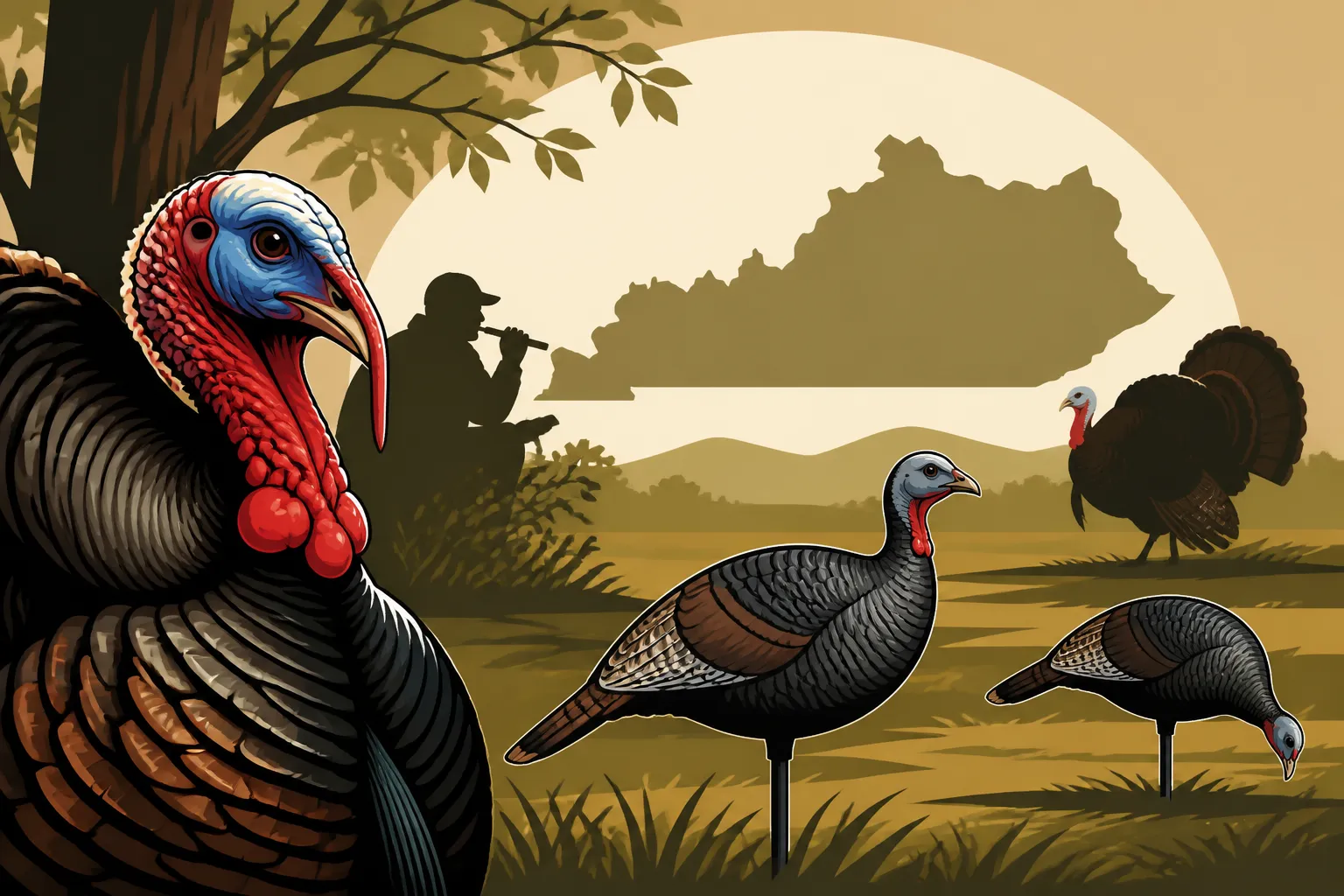
For pressured birds, a realistic hen decoy is often your best bet. Forget the cheap, shiny plastic ones. You want decoys that mimic the natural posture and feather details of a real hen. Look for decoys with lifelike feather textures, subtle paint schemes, and even flocked bodies that reduce glare. The posture matters too: a contented, feeding hen or a submissive, breeding hen communicates a much safer, more inviting scenario than an upright, alert posture. A single, receptive hen can be incredibly effective. Sometimes, two hens – one feeding, one slightly reclined or looking around – can add a touch of realism without being overwhelming. These soft, inviting postures don't challenge a dominant gobbler, they simply present an opportunity he's hard-wired to pursue. Think about the subtle body language of a real hen; you want your decoy to convey that same message of availability and safety. Kentucky Spring Turkey Season Rules often emphasize these subtleties, even if indirectly.
The Subtle Jake or Quarter-Strut Decoy
While a full-strut gobbler decoy can be risky, a jake decoy can still be incredibly effective for pressured birds, provided it's used correctly. The key is subtlety. Instead of a fully puffed-up, aggressive full-strut jake, opt for a half-strut or quarter-strut jake. These decoys depict a younger, less dominant male who is still interested in breeding but not actively challenging. This posture can often trigger a dominant gobbler's territorial instincts without immediately putting him on high alert. He sees a potential rival, but one he feels confident he can easily run off. The challenge is just enough to draw him in, but not so much that he feels threatened and circles wide. Placement is crucial here, too; you want the jake to appear somewhat isolated, inviting the dominant tom to come in and assert his dominance. A lot of success in Turkey Tactics for Farmland Field Edges comes from understanding this fine balance.
Fan or Reaper Decoys: When to Use Them (and When Not To)
Fanning or reaping involves using a turkey fan (either real or artificial) to mimic a gobbler or jake, often used to draw in curious or aggressive Toms. This can be incredibly exciting and effective, but it comes with significant risks, especially with pressured birds. In areas with high hunter density or where birds have been "reaped" before, they can become extremely wary of a rapidly approaching fan. If a gobbler doesn't like what he sees, or senses danger, he's gone.
However, in certain situations, like when a gobbler is hung up far out in an open field and won't commit to calls, a fanned decoy can sometimes be the only thing that breaks his stalemate. The trick is knowing when to deploy it. It’s a highly aggressive tactic that requires extreme caution and a full understanding of your surroundings, ensuring you know exactly where other hunters might be. It also needs to be combined with careful Run-and-Gun Turkey Tactics on Public Land. When scouting using tools like GoHunt, pay attention to the terrain; fanning is best in wide-open spaces where you can see incoming birds and not be surprised.
Here's a quick comparison of decoy types for pressured birds:
| Decoy Type | Best Use for Pressured Birds | Pros | Cons |
|---|---|---|---|
| Realistic Hen | Single, feeding, or receptive hen | Non-threatening, natural, highly inviting | May not always trigger aggressive gobblers |
| Pair of Hens | One feeding, one alert/reclined | More realism, still non-threatening | Can sometimes appear too "busy" for highly pressured birds |
| Subtle Jake | Half-strut or quarter-strut | Challenges dominance without being aggressive | Can still be viewed as a threat by extremely wary toms |
| Full-Strut Gobbler | Generally not recommended | Can draw in very aggressive toms | High risk of spooking pressured birds or being ignored |
| Fan/Reaper | Last resort for hung-up birds | Can break a stalemate | Very high risk, requires extreme caution, dangerous with other hunters |
Decoy Placement and Setup Strategies
Getting the right decoy is only half the battle. How you place them, how many you use, and their orientation can make all the difference between a bird strutting into range and him turning tail. For pressured Kentucky birds, subtlety, realism, and a keen understanding of turkey behavior are paramount.
Minimizing Decoy Numbers and Maximizing Realism
When birds are pressured, less is often more. A huge spread of multiple hens and strutting toms can actually be a red flag. It looks unnatural, almost too perfect, and can suggest a trap. Instead, try a single, highly realistic hen decoy positioned to look relaxed and feeding. This simple setup screams "safe" and "available" without any aggressive posturing. If you feel the need for more, add a second hen in a slightly different posture, perhaps preening or looking around. The goal is to create a believable, low-key scene that a gobbler can approach without feeling challenged or suspicious. The more natural your setup, the more likely a wary bird will commit. Remember, these birds have likely seen dozens of decoy spreads, so you need to present something that doesn't immediately register as a typical hunter's setup.
Strategic Orientation and Wind Considerations
Decoy orientation is critical, especially for gobblers that circle before committing. Always position your hen decoys to face away from the direction you expect the gobbler to approach. Why? Because when a gobbler struts in, he wants to get in front of the hen to show off. If your decoy is facing him, he might hang up, trying to get around her. If she's facing away, he'll naturally try to get into her line of sight, often bringing him closer to your shooting lane.
If using a jake decoy with hens, place the jake behind the hens, facing them, as if he's trying to get their attention, while the hens face away. This makes the dominant tom want to come in and push the jake away, putting him perfectly in range. Also, consider the wind. Turkeys, like many animals, often approach with the wind in their face to pick up scent. Try to position your decoys so that an approaching gobbler, using the wind to his advantage, will present you with a broadside shot as he checks out the spread. This often means putting the decoys slightly downwind from your position.
Setting Up Near Cover and Escape Routes
Pressured birds are acutely aware of their surroundings, and they rarely commit to wide-open spaces without ample cover nearby. When setting up your decoys, look for locations that offer some form of natural concealment or an easy escape route for the birds. This could be a field edge bordering thick woods, a slight rise in terrain, or even a line of fencerows with tall grasses. If you're on public land, like some sections of Daniel Boone National Forest, look for those natural breaks in the timber.
Place your decoys close enough to this cover that the gobbler feels secure approaching them. If they're too far out in the open, he'll likely hang up at the tree line. Also, consider your own hide. Your blind or natural cover should be well-camouflaged and within easy shooting distance of your decoys, ideally 20-30 yards. If a gobbler commits, you want to be ready. Think about how a turkey would naturally move through the landscape – they stick to edges, use depressions, and are always aware of nearby escape options.
Combining Decoys with Calling Tactics
Decoys are powerful tools, but they work best when combined with smart calling. For pressured birds, your calling needs to be just as subtle and realistic as your decoy spread.
Soft and Subtle Calling
Loud, aggressive calling can sometimes work on unpressured birds, but with wary gobblers, it often just puts them on edge. They’ve heard it all before. Instead, focus on soft, realistic hen sounds. Think subtle yelps, clucks, and purrs. These calls mimic a contented hen, signaling safety and drawing in a gobbler without raising alarms. A few soft tree yelps at first light, followed by minimal clucks and purrs as the morning progresses, can be incredibly effective. Let your decoys do most of the visual work; your calls are just the audio confirmation that everything is real and inviting. If you're using GoHunt to scout areas, pay attention to the pressure maps or recent harvest data – areas with higher pressure demand softer calling. Many successful hunters in Hunting the Kentucky Rut in Early November apply this principle of subtlety, even for deer.
Knowing When to Call and When to Stay Silent
Perhaps even more important than how you call is when to call – and crucially, when not to. With pressured birds, once a gobbler is committed and heading your way, it's often best to stop calling entirely. Any further calling can make him suspicious, especially if he's getting close and doesn't immediately see the source of the sound, or if your calls don't perfectly match the visual of your decoy. Let him come to the decoys without interruption. If he hangs up, a very soft, subtle cluck or purr might be enough to push him over the edge.
Another key moment to be silent is if you've called vigorously and the bird has responded, but then goes quiet. Don't panic and call even more aggressively. He might be circling, he might be using terrain to approach unseen, or he might just be taking his sweet time. Patience is paramount. Sometimes, the best call is no call at all. Just like in Grunt Calls in Mature Kentucky Timber for deer, sometimes silence is golden.
Using Locator Calls to Pinpoint Roosted Birds
While locator calls like owl hoots, crow caws, or even coyote howls don't directly interact with your decoy setup, they are invaluable for pinpointing roosted birds, especially when scouting for those wary gobblers. Before first light, or even the evening before a hunt, using a locator call can get a shock gobble from a bird, revealing his position without him associating your location with hunter-related hen calls. Once you know where he is, you can plan your approach and decoy setup accordingly.
This is especially helpful on public lands where birds are likely to be wary. You want to get into position long before daylight, often by 30-45 minutes, to avoid being detected. Knowing exactly where that bird is Calling a Kentucky Gobbler Off the Roost allows you to sneak in, set up your decoys, and be ready for him to fly down. Then, you can switch to those subtle hen calls to draw him to your waiting spread.
Advanced Decoy Tactics for Ultra-Pressured Gobblers
Sometimes, even the most realistic hen and subtle jake aren't enough for those truly educated gobblers. When faced with birds that have seen it all, you need to think outside the box and be willing to adapt.
Utilizing Decoys for "Blind Calling"
One tactic for ultra-pressured birds, especially on public land like some areas in the Hunting Western Kentucky Bottomland Deer, is to use decoys for "blind calling." This involves setting up your decoys in a spot where you expect a gobbler to travel, based on scouting or previous observations, but you might not necessarily see him at first. You call, he responds, and you just wait, hoping your setup is enticing enough for him to walk into. The decoys act as a visual beacon, drawing him into an area he might not otherwise investigate.
This often means placing your decoys along natural travel corridors: creek bottoms, logging roads, ridge lines, or the edges of food plots. You're anticipating his movement rather than reacting to a bird you can currently see. The key here is confidence in your scouting. You need to be sure that this is a spot a gobbler will eventually pass through. Using the Kentucky Hunt Fish App or a platform like GoHunt for aerial photos to pinpoint these corridors can be very effective.
Employing Decoys for Standoff Situations
There are times when a gobbler will hang up just out of range, gobbling his head off but refusing to close the distance. This is a classic "standoff" situation with pressured birds. In these instances, you might need to adjust your decoy strategy mid-hunt. If you started with a single hen, consider adding a jake decoy (a subtle one, of course) to create a more compelling scene. The jake can sometimes be the visual trigger that pushes a hung-up dominant gobbler over the edge, as he feels compelled to chase off the younger rival.
Another technique is to move your decoy setup slightly. If the gobbler is focused on one area, subtly moving your decoy(s) a few yards to a slightly more concealed position, or to a spot that forces him to come closer to get a better look, can sometimes work. This requires stealth and patience, often best done when the bird is out of sight or his attention is diverted. It's a high-risk, high-reward maneuver, but for a truly stubborn bird, it might be your only shot. Just make sure you understand Kentucky Public Land Hunting Hours and plan your moves accordingly.
The Art of Decoy Motion
Static decoys can work, but adding subtle motion can be a game-changer for pressured birds. A slight breeze making a decoy's fan or head bob, or a string system you control from your hide that makes a hen's head move, can add a layer of realism that static decoys can't match. Turkeys are constantly moving, pecking, preening, and looking around. A completely still decoy, especially on a calm day, can look unnatural.
Some hunters even use battery-operated decoys that offer subtle movements, like a rotating fan or a bobbing head. While these can be effective, ensure they are subtle and not overly aggressive. The goal isn't to create a carnival ride, but to mimic the natural, almost imperceptible movements of a real bird. This touch of realism can often be the difference when a wary gobbler is scrutinizing your setup from afar.
Decoy Care and Maintenance for Consistent Success
Even the best decoy selection and placement won't matter if your decoys aren't in top shape. For pressured birds, realism is key, and dingy, damaged, or unnatural-looking decoys will give you away every time.
Keeping Your Decoys Clean and Glare-Free
Nothing screams "fake" to a wary gobbler more than a decoy that's unnaturally shiny or covered in dirt and debris. Make it a habit to clean your decoys regularly. A simple wipe-down with a damp cloth after each hunt can remove dust, mud, and pollen. For more stubborn grime, a gentle soap and water solution works well.
More importantly, pay attention to glare. Many plastic decoys, especially older models, can reflect sunlight unnaturally, creating a beacon of suspicion for an approaching bird. Consider decoys with flocked surfaces, which absorb light and provide a more natural, dull finish. If you have older, shinier decoys, you can sometimes scuff them lightly with fine sandpaper or apply a flat, matte-finish spray paint (ensure it's completely scent-free and color-matched) to reduce glare. This small detail can make a huge difference in drawing in those sharp-eyed Kentucky gobblers.
Protecting Decoys During Transport and Storage
The way you transport and store your decoys directly impacts their lifespan and effectiveness. Tossing them loosely in the back of your truck or cramming them into a gear bag with other sharp objects is a sure way to damage them. Scratches, dents, and bent stakes detract from realism.
Invest in a dedicated decoy bag or individual decoy sleeves. Many quality decoy brands offer these. This protects the finish and prevents parts from bending or breaking. When storing them during the off-season, keep them in a cool, dry place away from direct sunlight, which can fade colors and degrade materials. Storing them neatly also prevents them from getting permanently creased or deformed. Taking care of your gear, from your Turkey Shotguns and Chokes to your decoys, ensures they're always ready to perform when opportunity knocks.
Customizing and Enhancing Decoys
Sometimes, a little customization can make a standard decoy truly stand out. You can add real turkey feathers to the tail and wings of a hen or jake decoy for an extra touch of realism. Using a taxidermy-quality turkey head on a generic body can also elevate the decoy's lifelike appearance. Just ensure any additions are securely attached and don't create unnatural movement or glare.
Another enhancement is adding natural elements around the base of your decoy. A few sprigs of real grass or some fallen leaves can help blend the decoy into its surroundings and make it look more like a natural part of the environment. Always be mindful of scent when adding natural materials – avoid anything with a strong odor. These subtle touches can be just what a highly pressured gobbler needs to convince him that your setup is the real deal.
Disclaimer
This article is for general informational purposes only and does not constitute professional advice. Laws, prices and regulations vary by location and change over time. Consult a qualified professional for guidance on your specific situation.