6.5 Creedmoor for Eastern Kentucky Ridges
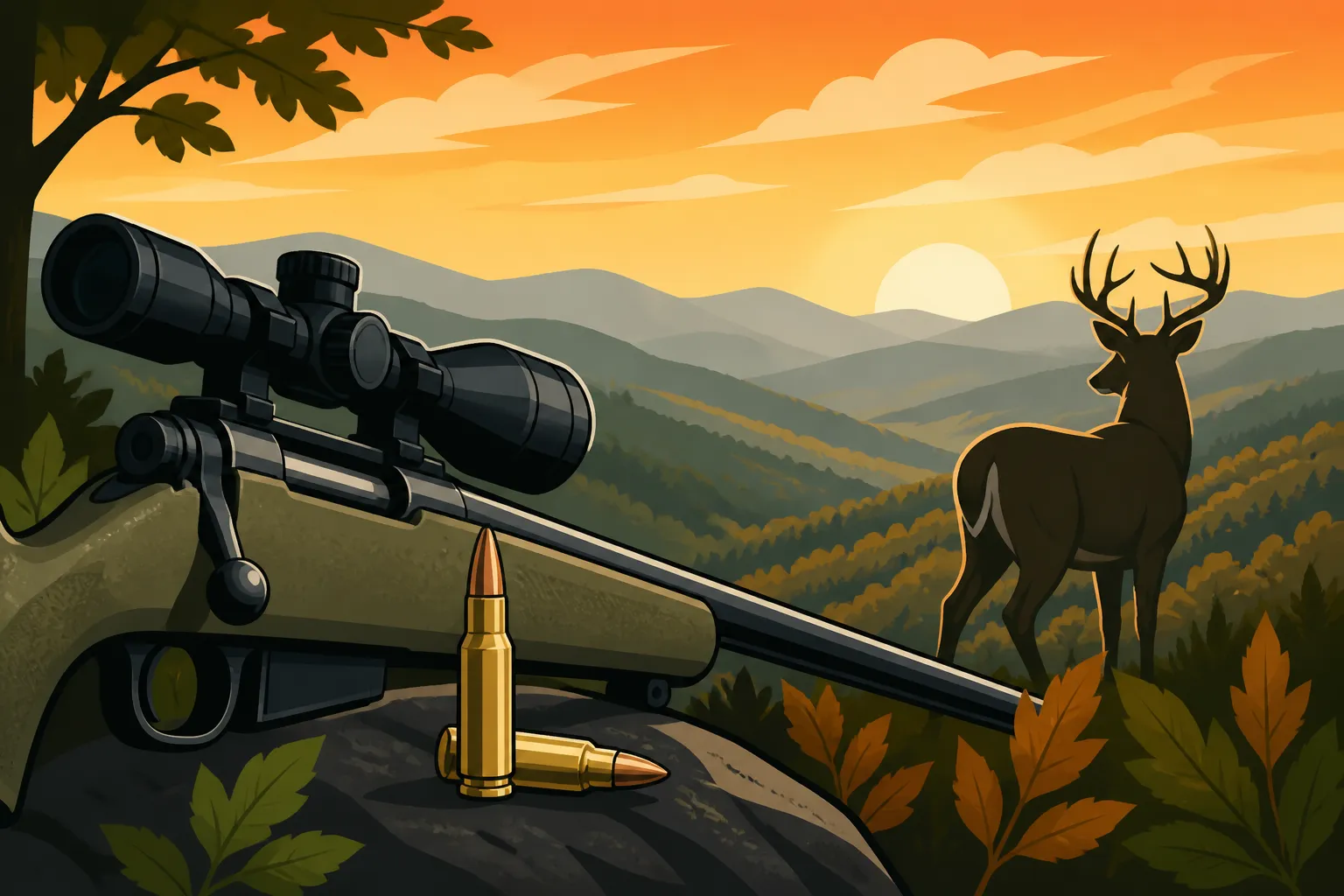
Hunting Eastern Kentucky's steep, timber-choked ridges can be a real headache when it comes to rifle selection, leaving many hunters wondering if their go-to caliber can handle both the close-quarters shots and those surprising longer pokes across hollows. This guide dives deep into why the 6.5 Creedmoor has become a top contender for these specific challenges, offering a balanced approach that can boost your confidence on rugged terrain and help you make ethical shots when it counts.
Understanding Eastern Kentucky's Terrain and Shot Opportunities
Eastern Kentucky isn't like the flat farmlands of the west. Here, the landscape is defined by its dramatic topography, a continuous series of steep hills, deep hollows, and dense timber. This creates a unique set of challenges and opportunities for deer hunters, influencing everything from how you move through the woods to the kind of shot you might be presented with.
The Landscape of Eastern Kentucky Ridge Hunting
Picture yourself slowly still-hunting a ridge, moving through mature hardwood forests where the ground underfoot is a thick carpet of leaves, making every step a conscious effort to stay quiet. You might crest a rise and look down into a hollow so steep and dark it feels like twilight, even at midday. These aren't the gentle rolling hills some imagine; this is rugged, unforgiving country that demands physical stamina and a keen understanding of deer movement along contour lines. Deer often use these very contours, especially the saddles and benches, as their highways, making these pinch points prime ambush locations. It’s an environment where a deer might appear suddenly at 30 yards in dense saplings, or you might spot one picking its way through a distant clear-cut 250 yards away on the opposite ridge. Hunting Pine Mountain Ridgelines really highlights the unique nature of this demanding terrain.
Typical Shot Distances and Scenarios
Given the nature of Eastern Kentucky, your shot opportunities can vary wildly. Many shots will indeed be within 100 yards, often closer, especially if you're deep in the timber or tucked into a thicket near a bedding area. These are quick, reactionary shots where a deer might materialize from behind a stand of rhododendron. However, don't let the "timber" fool you into thinking long shots are rare. As you navigate these ridges, you'll inevitably encounter situations where you're looking across a large hollow, a powerline cut, or a recent timber harvest, presenting a shot anywhere from 150 to 300 yards. It’s this dichotomy—the potential for both up-close and surprisingly long shots—that makes choosing a versatile cartridge so crucial. You need something that can perform admirably at both extremes without making significant adjustments or compromises.
Why the 6.5 Creedmoor Shines in This Environment
The 6.5 Creedmoor burst onto the hunting scene and quickly gained a reputation for precision and performance, particularly at longer ranges. But its qualities extend far beyond just reaching out there. For the specific demands of Eastern Kentucky's varied terrain, this cartridge offers a sweet spot that many traditional calibers struggle to match, providing a real advantage when you’re out there on the mountain.
Ballistics and Trajectory for Varied Ranges
One of the most compelling reasons to consider the 6.5 Creedmoor for Eastern Kentucky ridges is its incredibly flat trajectory and excellent ballistic coefficient, especially with common hunting loads. What does this mean for you, the hunter? It means less bullet drop over distance compared to many other popular deer cartridges. When you're trying to quickly judge a shot on a deer moving through uneven terrain, often with limited time, having a round that flies flatter reduces the guesswork. You can often hold dead-on for a wider range of distances, say from 50 to 250 yards, without worrying about massive holdover or hold-under. This characteristic is a huge confidence booster when a deer steps out across a wide hollow and you don't have time to dial your scope or make complex calculations. It simplifies the aiming process in situations where speed and accuracy are paramount.
Recoil Management for Follow-Up Shots
Let's be honest, nobody enjoys getting thumped by their rifle, especially when you're trying to maintain focus for a follow-up shot. The 6.5 Creedmoor delivers plenty of energy for deer-sized game without the heavy recoil associated with larger magnum cartridges. This manageable recoil is a significant advantage in the field. First, it makes practice more enjoyable and sustainable, allowing you to develop better shooting habits and confidence with your rifle. Second, and perhaps more importantly for hunting the ridges, it allows for quicker sight recovery after the shot. If your first shot doesn't connect perfectly, or if you're presented with a second deer, being able to quickly get back on target without being completely jarred off-line is a critical advantage. This is particularly true if you're taking a shot from an awkward position, like bracing against a tree on a steep incline, where heavy recoil can make you lose your balance or struggle to reacquire your target.
Terminal Performance on Whitetails
When it comes down to it, a cartridge needs to humanely dispatch the animal. The 6.5 Creedmoor, typically firing 120-147 grain bullets, has proven to be incredibly effective on whitetail deer. These bullets, often designed with controlled expansion in mind, penetrate deep, create a significant wound channel, and transfer ample energy to drop deer quickly. Even at the longer ranges you might encounter across a large hollow, the 6.5 Creedmoor retains sufficient energy to ensure a clean kill, provided your shot placement is accurate. This isn't a massive magnum that's going to blow a huge hole, but rather a precise, efficient cartridge that gets the job done without excessive meat damage. For anyone worried about performance on larger bodied Kentucky bucks, rest assured, the 6.5 Creedmoor with a well-constructed bullet is more than capable. Best Rifle Caliber for Kentucky Deer discussions often include the 6.5 Creedmoor for these very reasons.
Optics and Setup for a 6.5 Creedmoor on Kentucky Ridges
Having the right rifle is only half the battle; how you equip and set up your 6.5 Creedmoor for Eastern Kentucky's unique hunting conditions is equally important. The wrong optics or zero can turn a perfect shot into a frustrating miss, or worse, a wounded animal. Thoughtful selection and careful preparation will pay dividends when you're out on the steep terrain.
Choosing the Right Scope Magnification
For Eastern Kentucky, you need a scope that is versatile enough for both quick, close-range engagements and those unexpected longer shots. A variable power scope with a lower end of 3x or 4x is ideal for navigating the dense timber and quickly acquiring a target at 50-100 yards. Something like a 3-9×40, 3-12×44, or even a 4-16×44 is a fantastic choice. The upper magnification, whether it's 9x, 12x, or 16x, provides enough power to confidently make those 200-300 yard shots across a hollow or into an open clear-cut. Avoid scopes with excessively high minimum magnifications (e.g., a 6-24x) unless you specifically tailor your hunting style to longer shots. They can be a hinderance in the thick stuff, making it hard to find a deer that jumps up close. When you're hunting in low-light conditions, which are common in deep hollows and during legal shooting hours, Rifle Scopes for Low-Light Hollows become critical, so ensure your chosen optic has good light-gathering capabilities.
Zeroing Strategy for Mixed Terrain
Given the varied shot distances in Eastern Kentucky, a smart zeroing strategy is key. Many hunters find that zeroing their 6.5 Creedmoor at 200 yards provides an excellent "kill zone" without much holdover or hold-under from around 25 yards out to roughly 250-275 yards. With a 200-yard zero, your bullet will typically rise a couple of inches above the line of sight in its flight path, peaking around 100-125 yards, and then drop back to zero at 200 yards, before dropping maybe 4-6 inches at 250 yards. For a deer's vital zone, this often means you can put your crosshairs directly on the aiming point for the vast majority of your shots. It minimizes the need for on-the-fly trajectory calculations, which is invaluable in the heat of the moment. Always confirm your rifle's specific ballistic drop with your chosen ammunition, preferably by shooting at various distances out to 300 yards. Using an app like the one available through GoHunt can help you visualize your bullet's trajectory, but nothing beats actual range time. If you need a more in-depth guide, check out Zeroing at 100 Yards for Ridge Hunting as a starting point and adjust for your needs.
Essential Accessories for Ridge Hunting
Beyond the rifle and scope, a few accessories are absolutely essential for hunting Eastern Kentucky ridges with a 6.5 Creedmoor. A good quality sling is non-negotiable. You'll be doing a lot of walking, often with steep ascents and descents, and carrying your rifle comfortably and securely is paramount. A padded sling will save your shoulder and allow you to keep your hands free for balance. A sturdy bipod or shooting sticks can be a game-changer for those longer shots, providing a stable shooting platform when a good rest isn't naturally available. Even a simple set of lightweight shooting sticks can make a 200-yard shot feel like 100 yards. Don't forget a rangefinder; while the 6.5 Creedmoor is forgiving, knowing the exact distance removes all doubt. Before you head out, make sure you've consulted your GoHunt maps to identify potential shooting lanes and ranges. Finally, reliable illumination like a good headlamp is critical for navigating the woods in pre-dawn darkness or after dark during recovery. Packs for a Daniel Boone Forest Day Hunt often detail many of these essential items.
Ammunition Selection for Kentucky Deer
Choosing the right ammunition for your 6.5 Creedmoor isn't just about bullet weight; it's about bullet construction and how that bullet performs on deer at various ranges. You want a bullet that expands reliably, penetrates deeply, and retains enough weight to create a significant wound channel without fragmenting excessively, especially when you might encounter tough bone.
Bullet Construction for Whitetails
For whitetail deer, especially the robust bucks found in parts of Kentucky, you'll want a bullet designed for controlled expansion. This typically means a bonded bullet, a partitioned bullet, or a monolithic (all-copper) bullet. These designs are engineered to hold together, retaining a high percentage of their original weight, even after impacting bone. This deep penetration is vital for reaching the vitals from various angles, which can easily happen when deer are moving or you're shooting from an elevated position. Bullet weights in the 120 to 143-grain range are excellent choices for the 6.5 Creedmoor on deer. Lighter varmint-style bullets, while accurate, often don't offer the necessary penetration and integrity for a clean kill on a deer.
Optimizing for Accuracy and Performance
Every rifle has its preferred ammunition, and your 6.5 Creedmoor is no exception. It's crucial to test several brands and bullet types to see which one delivers the best accuracy in your specific rifle. Don't just grab a box off the shelf and assume it'll shoot perfectly. Purchase a few different boxes of high-quality hunting ammunition with bullet constructions mentioned above (e.g., Hornady ELD-X, Federal Terminal Ascent, Nosler AccuBond, Barnes TTSX) and spend some time at the range. Shoot from a stable rest and see which groups the tightest.
Once you've found the most accurate load, stick with it. Consistent ammunition means consistent ballistics, which translates directly to more confident and ethical shots in the field. When scouting new areas, especially public lands, remember to use tools like GoHunt to understand the terrain and plan your shots, always knowing the capabilities of your chosen round. For discussions around ethical shot placement and cartridge capabilities, you might find Practical Range in Daniel Boone Forest Timber to be a helpful read, as it emphasizes shot selection in challenging environments.
Comparing Calibers for Eastern Kentucky Whitetails
To put the 6.5 Creedmoor's suitability into perspective, let's briefly compare it to a couple of other popular deer calibers often used in Kentucky.
| Caliber | Typical Bullet Weights (gr) | Recoil (Relative) | Trajectory (Relative) | Energy at 200 yds (Approx.) | Suitability for Eastern KY Ridges |
|---|---|---|---|---|---|
| 6.5 Creedmoor | 120-147 | Low to Moderate | Very Flat | Excellent | Ideal: Versatile, low recoil, flat trajectory for mixed ranges. |
| .308 Winchester | 150-180 | Moderate | Good | Excellent | Very Good: Reliable, ample power, slightly more recoil but a solid choice. |
| .270 Winchester | 130-150 | Moderate | Very Flat | Excellent | Good: Flat shooting, but often with more recoil than 6.5 CM, which can be a factor. |
As you can see, while other calibers are certainly capable, the 6.5 Creedmoor truly offers a balanced package of manageable recoil and a flat trajectory that makes it a top-tier choice for the dynamic and often unpredictable shot opportunities you'll encounter while Reading a Ridge for Cumberland Deer. This combination allows for more comfortable practice, quicker follow-up shots, and simplified aiming when you're faced with diverse shot distances on those steep Eastern Kentucky slopes.
Disclaimer
This article is for general informational purposes only and does not constitute professional advice. Laws, prices and regulations vary by location and change over time. Consult a qualified professional for guidance on your specific situation.