Is a .243 Enough for Kentucky Whitetails?
There’s a common misconception among hunters that bigger is always better when it comes to rifle calibers for deer. You might be standing in the sporting goods store, looking at the array of powerful cartridges, and wondering if your trusty .243 Winchester is truly "enough" for a Kentucky whitetail. This isn't an idle question; it's about making an ethical kill and ensuring your hunt is successful and responsible. This guide aims to thoroughly explore the capabilities of the .243, examining its ballistics, practical applications in Kentucky's diverse terrain, and the critical role of shot placement to help you hunt confidently.
Understanding the .243 Winchester Cartridge
The .243 Winchester has earned a reputation as a fantastic all-around cartridge, particularly popular among hunters who appreciate its manageable recoil and flat trajectory. When people ask if it's "enough" for deer, they're really asking if it delivers sufficient energy and bullet performance to reliably dispatch an animal of that size. For the average Kentucky whitetail, the answer is a resounding yes, provided the hunter understands its capabilities and limitations.
Ballistics and Bullet Construction
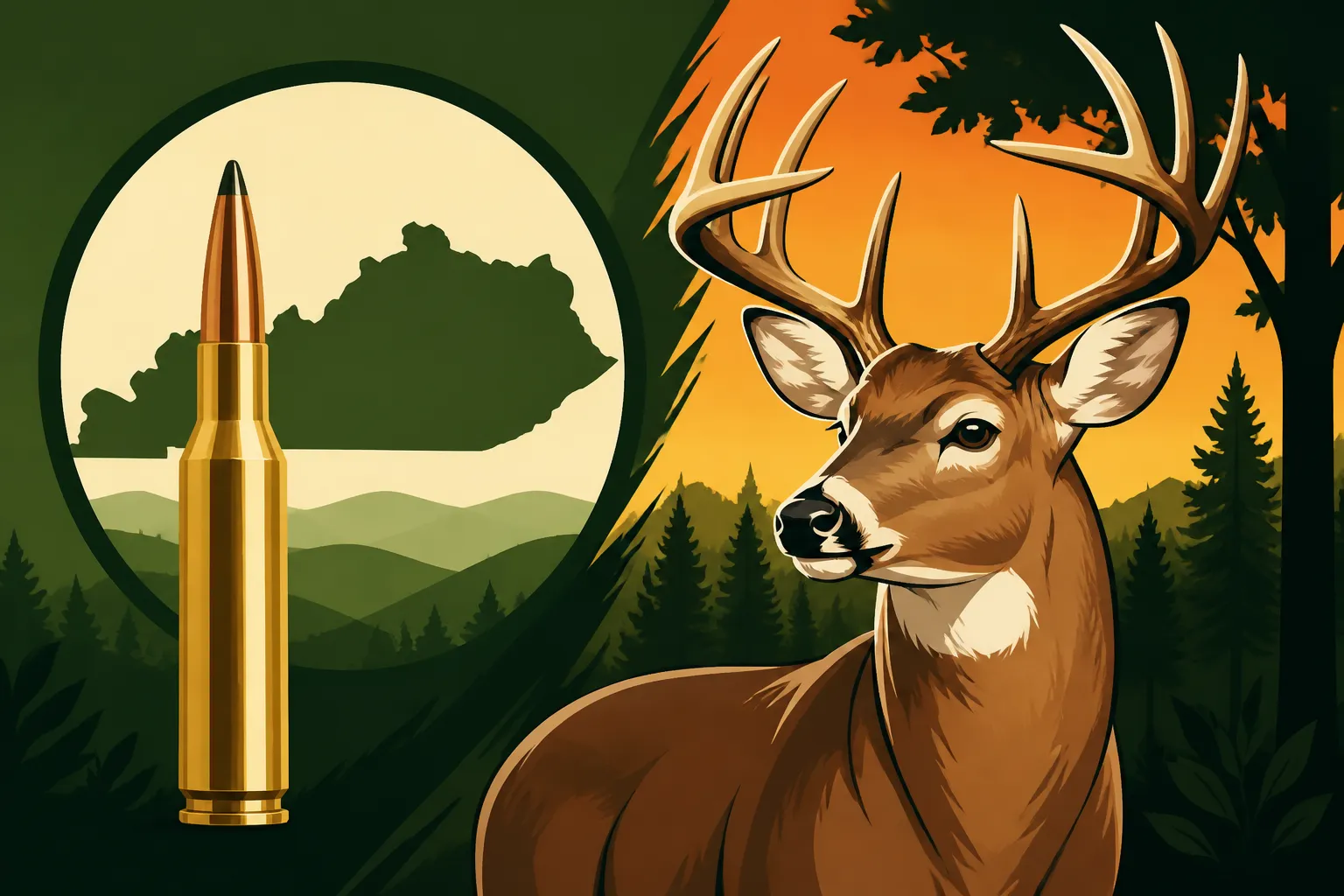
At its core, the .243 Winchester fires a .243-inch diameter bullet, typically ranging in weight from 80 to 100 grains for deer hunting. These lighter bullets are launched at impressive velocities, often exceeding 3,000 feet per second. This high speed translates to a very flat trajectory over typical hunting distances, which can be a huge advantage when you're trying to thread a shot through a narrow lane in thick timber or across a rolling field. The kinetic energy delivered by these bullets is more than adequate for deer, especially with modern bullet designs.
However, bullet construction is paramount. You can't just throw any 80-grain varmint bullet at a deer and expect reliable performance. For deer, you need a bullet designed for controlled expansion and penetration. Look for options like bonded bullets, partitioned bullets, or those with heavy jackets that resist fragmentation. These bullets are engineered to hold together, create a wound channel that passes through the vitals, and often exit the deer, leaving a good blood trail. Without proper bullet construction, a high-velocity, lightweight bullet can sometimes expand too rapidly or even fragment on impact, leading to a superficial wound or a non-lethal hit. For instance, imagine you've got a shot at a nice buck in a creek bottom, and it's a perfect broadside at 75 yards. With a well-constructed 95-grain bullet, aimed correctly, that deer is going down quickly and cleanly. The bullet will typically punch through both lungs, doing immense damage on its way.
Recoil and Shooter Comfort
One of the most significant advantages of the .243 is its exceptionally light recoil. Compared to popular deer cartridges like the .30-06 Springfield or .308 Winchester, the .243 is a pussycat. This low recoil makes it an excellent choice for a wide range of hunters, from those sensitive to recoil to new hunters, including youth just starting out. When you're not flinching or anticipating a harsh kick, you can focus entirely on fundamental shooting skills: sight picture, breath control, and trigger squeeze.
This comfort directly translates to increased accuracy, which is arguably the most crucial factor in ethical hunting. A hunter who can consistently place shots precisely where they need to go with a .243 is far more effective than a hunter who flinches and pulls shots with a magnum cartridge. Think about taking a new hunter, maybe your child or grandchild, out for their First-Timer on a December Hunt. Handing them a rifle that won't punish them with heavy recoil allows them to build confidence and develop good shooting habits from the start. They'll be more likely to enjoy the experience and become a proficient, ethical hunter. The psychological benefit of a comfortable shooting experience can't be overstated when it comes to repeatable accuracy in the field.
Kentucky Whitetails and Shot Placement
Kentucky is home to a robust whitetail deer population, and while we're not talking about the massive-bodied deer you might find in some northern states, our bucks and does are healthy, respectable animals. Understanding their anatomy and focusing on precise shot placement is critical, regardless of the caliber you're using.
Deer Size and Anatomy in Kentucky
The average adult whitetail buck in Kentucky might weigh anywhere from 150 to 200 pounds live weight, with some mature giants pushing past that. Does are typically smaller, ranging from 90 to 140 pounds. These aren't tiny animals, but they're not bears or elk, either. Their vitals — the heart and lungs — are relatively large targets when presented correctly, and they're located within the chest cavity, protected by the rib cage.
A well-placed shot with a .243, using an appropriate bullet, will penetrate these vital organs, causing massive hemorrhage and rapid blood loss, leading to a quick and humane kill. The key is well-placed. For instance, a broadside shot aimed just behind the shoulder, about one-third of the way up the body, will typically hit both lungs and often nick the top of the heart. This is the ideal scenario for a clean kill. Even a quartering-away shot can be highly effective, angling the bullet through the last ribs to reach the opposite lung and heart. Many hunters use mapping tools like GoHunt to visualize terrain and potential shot angles from their stand, which helps them anticipate these scenarios. Understanding how a deer stands and moves in relation to your position is paramount for ethical hunting.
The Importance of Accuracy
Let's be blunt: a marginally placed shot with a .300 Winchester Magnum is far less effective and ethical than a perfectly placed shot with a .243. Accuracy isn't just a suggestion; it's a moral imperative in hunting. Your rifle, no matter the caliber, is only as good as your ability to wield it accurately under pressure. This means practicing regularly at the range, not just from a bench, but from positions you'd actually use in the woods, like sitting, kneeling, or even standing.
Many hunters fail to truly practice under realistic conditions. It’s one thing to punch holes in paper at 100 yards from a steady bench rest. It’s another to make that same shot when your heart is pounding, you’re slightly out of breath from a hike, and the deer is only offering you a brief window. If you're consistently putting your shots into a 3-inch group at 100 yards with your .243, that's more than sufficient for the vitals of a Kentucky whitetail. What matters most is knowing your rifle, knowing your capabilities, and never taking a shot that you're not confident in. This dedication to precision ensures that the Kentucky Deer Harvest Records reflect ethical takes.
Practical Considerations for the Kentucky Hunter
Kentucky's hunting landscape is incredibly varied, from the dense timber and steep hollows of Daniel Boone National Forest to the sprawling agricultural fields and river bottoms of Western Kentucky. These diverse environments present different challenges and opportunities for the .243 hunter.
Terrain and Shot Distances
In Eastern Kentucky, particularly in areas like the Cumberland Mountains or parts of the Daniel Boone National Forest, shot distances are often quite short. The terrain is rugged, heavily wooded, and visibility can be limited to 50-75 yards in many spots. Here, the flat trajectory of the .243 is still beneficial, but less critical than in open country. Its low recoil allows for quick follow-up shots if needed, though hopefully, a single well-placed shot is all it takes. For example, when you're Still-Hunting Eastern Kentucky Ridges, you might only get a glimpse of a deer moving through thick undergrowth. A precise shot at close range is what counts.
Conversely, if you're hunting the rolling hills of the Bluegrass Region or the expansive crop fields of Western Kentucky, particularly when Hunting Western Kentucky Bottomland Deer or field edges, shot distances can easily stretch to 150-200 yards, or even further in some open areas. This is where the .243's flat trajectory truly shines. It minimizes bullet drop, making range estimation less critical than with slower, heavier calibers. A hunter using a .243 and confident out to 200-250 yards will find it perfectly capable for these situations. However, always know your personal ethical range, especially on public land where deer might be more skittish. Scouting tools such as GoHunt's satellite imagery can give you a better idea of likely shot distances in a given area.
Ammunition Selection for Whitetails
Choosing the right ammunition is probably the most critical factor for success with a .243 on deer. Forget the cheap plinking ammo or varmint loads; you need bullets designed specifically for medium game. Here’s what to look for:
- Bullet Weight: Stick to the heavier end of the spectrum for deer, generally 90-100 grains. While 80-grain bullets can work, the extra weight provides more momentum for penetration and often a slightly larger wound channel.
- Bullet Construction: This is key. Look for bullets that are designed for controlled expansion. Brands offer excellent options with designs like bonded cores, interlocked jackets, or monolithic copper construction. These bullets expand reliably while retaining enough weight to penetrate deeply through bone and tissue. Without adequate penetration, you risk only wounding the animal.
- Specific Examples (generic types): Think about bullets that have a reputation for retaining weight and punching through. These types are often labeled as "deer hunting" or "big game" bullets. They’re built to hold together, expanding to about 1.5 to 2 times their original diameter and creating a devastating wound channel through the vitals.
Choosing a premium hunting bullet transforms the .243 from a "maybe" to a "definitely" for deer. It's a small investment that makes a huge difference in terminal performance and hunting ethics.
Potential Limitations and Ethical Shots
While the .243 is highly effective for most Kentucky whitetails, there are situations where it might not be the ideal choice, or where a hunter needs to exercise extra caution:
- Extreme Angles: A severely quartering-to or quartering-away shot can present a challenge for any caliber, but especially for a smaller one. The bullet needs to penetrate a lot of muscle and potentially bone to reach the vitals from these angles. If you're facing such a shot, and doubt your ability to place the bullet perfectly, it's always more ethical to pass and wait for a better opportunity.
- Long-Range Shots: While the .243 is flat-shooting, its energy drops off at extended ranges. Beyond 250-300 yards, depending on the specific bullet, the energy might dip below what's considered ideal for a quick, humane kill on deer, especially if you encounter a very large-bodied buck. Know your rifle's capabilities and, more importantly, your own effective range. Don't push it.
- Bone Impacts: While modern, well-constructed .243 bullets can break ribs and even shoulders, a direct hit to heavy bone like the shoulder blade or the leg bone can sometimes reduce penetration, particularly on a larger deer. Again, shot placement is key to avoiding these major bone structures and aiming for the softer vitals.
The primary limitation of the .243 isn't the cartridge itself, but the hunter's willingness to take questionable shots. Always prioritize a clean, ethical kill over the desire to fill your tag. If in doubt, don't shoot.
Making the Most of Your .243 in Kentucky
To truly maximize the effectiveness of your .243 Winchester for Kentucky deer hunting, it comes down to two primary factors: consistent practice and smart hunting strategies. The rifle is just a tool; you are the craftsman.
Regular Practice and Familiarity
You can read all the articles and watch all the videos, but nothing replaces time at the shooting range. Regular practice helps you become intimately familiar with your rifle, its trigger, and its recoil impulse. This familiarity builds confidence, which is crucial when that moment of truth arrives in the deer woods.
- Practice from Hunting Positions: Don't just shoot from a bench. Practice shooting offhand, kneeling, and sitting, as these are common positions you'll find yourself in while hunting. If you hunt from a treestand, practice shooting from an elevated position if possible, understanding how angles change bullet impact. A resource like Zeroing a Rifle for Mixed Distances can help you prepare for varied shot opportunities.
- Varying Distances: Practice at different distances, from 50 yards out to your maximum ethical range (which for most .243 hunters on deer is realistically 200-250 yards). Understand your bullet's trajectory and hold points at these distances.
- Simulate Pressure: While hard to replicate perfectly, try adding a little light exercise before shooting, or practice quick target acquisition to get used to shooting under a slightly elevated heart rate.
Consistency at the range makes all the difference when you're focused on making a clean kill.
Scouting and Stand Placement
Smart hunting strategy can significantly increase your success with a .243, or any caliber for that matter. Good scouting and careful stand placement are paramount to ensuring shot opportunities are within your effective range and present favorable angles.
- Reduce Shot Distance: The best way to guarantee an ethical shot with a .243 is to get closer to the deer. This means diligent scouting for deer sign – tracks, rubs, scrapes, and feeding areas. Understanding where deer are moving and why they're moving there allows you to set up your stand or blind in an optimal location, naturally reducing your average shot distance. Tools like Scouting With the Kentucky Hunt Fish App or other digital mapping platforms such as GoHunt can be invaluable for identifying pinch points, funnels, and food sources.
- Favorable Angles: When placing your stand, consider the likely direction deer will approach and move. Try to anticipate positions that will offer broadside or slightly quartering-away shots, which are ideal for a .243. Avoid setups that primarily offer head-on or steep quartering-to shots, especially in thick cover. Understanding Hunting a Funnel Between Two Hollows can show you how to naturally guide deer into perfect shot opportunities.
- Patience and Discipline: Even with the best scouting, sometimes the deer just doesn't cooperate. If a shot isn't perfect, or if it's too far, or if the angle is poor, have the discipline to wait for a better opportunity, or to simply pass on that deer. There's always another day.
A well-practiced hunter using a .243 with appropriate ammunition, coupled with intelligent scouting and stand placement, is a highly effective and ethical deer hunter in Kentucky.
| Factor | .243 Winchester Effectiveness on Kentucky Whitetails | Key Considerations |
|---|---|---|
| Bullet Performance | Excellent with proper bullet construction | 90-100 grain, bonded/partitioned/monolithic bullets |
| Recoil | Very Low | Promotes accuracy, ideal for new/recoil-sensitive hunters |
| Trajectory | Very Flat | Excellent for shots out to 250 yards |
| Kentucky Deer Size | Adequate for average 90-200 lb deer | Focus on vitals; large-bodied bucks require precision |
| Shot Placement | CRITICAL | Broadside or quartering-away through heart/lungs |
| Terrain Suitability | Versatile (dense timber to open fields) | Range estimation less critical in open areas due to flat trajectory |
| Ethical Range | Up to 250-300 yards (hunter-dependent) | Know your limits; pass on questionable shots |
Disclaimer
This article is for general informational purposes only and does not constitute professional advice. Laws, prices and regulations vary by location and change over time. Consult a qualified professional for guidance on your specific situation.