Treestands and Saddles on Public Land
There's nothing quite like the rush of hunting Kentucky's public lands, but it comes with its own set of challenges, especially when it comes to getting elevated. Many hunters struggle with how to effectively and safely use treestands or the increasingly popular saddle hunting systems without violating regulations, disturbing other hunters, or getting bogged down with too much gear. This comprehensive guide will walk you through the nuances of using both treestands and saddles on Kentucky's public ground, helping you make informed decisions for your next hunt.
The Public Land Challenge for Elevated Hunting
Public land hunting in Kentucky is an incredible resource, offering vast opportunities from the rugged mountains of the east to the sprawling farmlands and bottomlands of the west. However, these lands often come with unique challenges that directly impact how you approach elevated hunting. It's not as simple as throwing up a stand and leaving it all season; there's a dance between regulations, logistics, and competing with other hunters.
Navigating Restrictions and Regulations
One of the biggest hurdles for any public land hunter is understanding and adhering to the specific rules of the game. Unlike private land where you often have more leeway, public land agencies like the Kentucky Department of Fish and Wildlife Resources (KDFWR), the U.S. Forest Service, and others have strict guidelines regarding treestands and ground blinds. For instance, on many Wildlife Management Areas (WMAs) and in Daniel Boone National Forest, you can't install permanent treestands. This means no screwing steps into trees, no leaving stands up for extended periods, and certainly no cutting limbs to clear shooting lanes.
These rules are in place for a few good reasons: to prevent damage to the trees, to ensure fair access for all hunters, and to minimize litter or abandoned equipment. It often means that anything you put up must be portable and removed either daily or within a specified timeframe after the season ends. This immediately dictates the type of elevated hunting system you can realistically use. You need something that can be quickly and quietly deployed and removed, without leaving a trace. Treestand Rules on Kentucky Public Land are non-negotiable, and knowing them inside and out prevents headaches and potential fines.
The Need for Mobility and Stealth
Public land hunting, particularly for deer, often requires a highly mobile approach. Pressure from other hunters can push deer into less accessible areas, and food sources can change rapidly, necessitating a quick relocation. Hauling a heavy, cumbersome stand setup deep into the woods, especially up some of Kentucky's steeper hillsides or through thick creek bottoms, isn't just physically demanding – it's a noisy affair that can spook game. Every clank of metal, every grunt of exertion, works against you.
Therefore, your elevated hunting system needs to be lightweight, packable, and as quiet as possible. You want to be able to move with the deer, adapting to changing conditions and hunting pressure. If you find fresh sign a mile from your truck, you need to be able to get there, set up, and hunt effectively, without having to abandon your plan because your gear is too heavy or too loud to carry further.
Dealing with Pressure and Competition
Let's be real, many easily accessible public land spots get hammered. Especially during the early archery season or the opening days of modern gun, you might find yourself sharing the woods with plenty of other folks. This means the deer in these areas are often skittish, moving mostly at night, or bedding in the thickest, nastiest cover they can find. To consistently find success, you often have to go where others won't, which almost always means hiking further and tackling tougher terrain.
An elevated hunting system that allows you to venture off the beaten path, silently navigate dense cover, and set up quickly in less-pressured areas becomes a huge advantage. You might be targeting a small, overlooked bench halfway up a ridge, or a thicket along a river bottom that most hunters walk past. The ability to climb virtually any suitable tree, adapt to different angles, and disappear into the canopy without a huge, obvious treestand becomes critical in these high-pressure scenarios.
Treestands on Public Ground: Pros, Cons, and Practicalities
Treestands have been a staple for elevated deer hunting for generations, and for good reason. They offer a stable, comfortable platform that gets you above a deer's primary line of sight and scent. However, on public land, certain types of stands and specific usage considerations come into play due to the aforementioned regulations and the need for mobility.
Climber Stands: The Mobile Workhorse
Climber stands are a fantastic option for public land hunters who prioritize mobility and simplicity. They consist of two sections – a seat section and a foot platform section – that you "climb" up the tree by alternating your weight. The beauty of a climber is that it's an all-in-one unit. You carry one piece of equipment to the tree, and as long as the tree is suitable, you can be elevated quickly. This reduces the number of trips back and forth from the truck and minimizes gear noise.
The ideal tree for a climber is straight, limbless for at least 20 feet, and relatively uniform in diameter. These are common in many of Kentucky's hardwood forests, particularly in mature timber stands. They shine on public lands like parts of Daniel Boone National Forest or areas of Western Kentucky Bottomland Deer hunting where suitable trees are plentiful. The downside is that they are very tree-dependent. If your prime hunting spot only has crooked, limby trees, or multi-trunked trees, a climber simply won't work. They can also be a bit noisy if not packed properly, and the climbing process itself, while generally quiet once you get the hang of it, can still make some creaks and groans if you're not careful.
Hang-On Stands and Sticks: Versatility and Adaptability
For ultimate versatility on public land, many hunters turn to hang-on stands paired with climbing sticks or sections of a climbing ladder. This system involves carrying a lightweight stand and multiple sections of climbing aids separately. Once at your chosen tree, you attach the climbing sticks, then hang your stand at the desired height. While this is more gear to carry than a climber, the advantage is profound: you can climb virtually any tree that will support your weight and safely hold the stand.
Whether you're trying to get into a specific tree in a thick pine stand on the Cumberland Plateau or navigating the limby oaks of a less-managed WMA, a hang-on stand and sticks offer unparalleled adaptability. They allow you to get into those "perfect" trees that a climber might not manage, often in thicker cover or on less-than-perfect straight trunks. The trade-off, of course, is the increased setup and takedown time, as well as the potential for more noise during deployment if you're not practiced. Many hunters, however, find that the ability to set up in exactly the right spot outweighs these cons, especially when trying to intercept a wary public land buck that uses very specific cover. For those deep in the woods or trying to Hang a Stand on an Eastern Kentucky Ridge, the flexibility of a hang-on setup can be invaluable.
Safety and Regulations for Stands
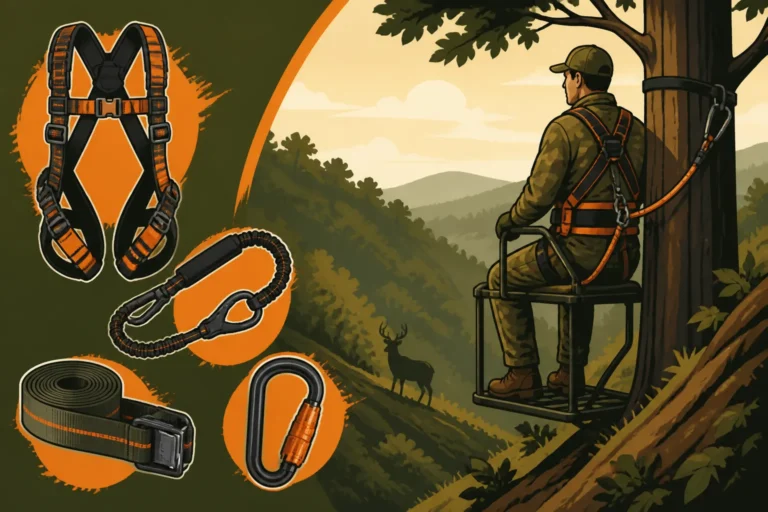
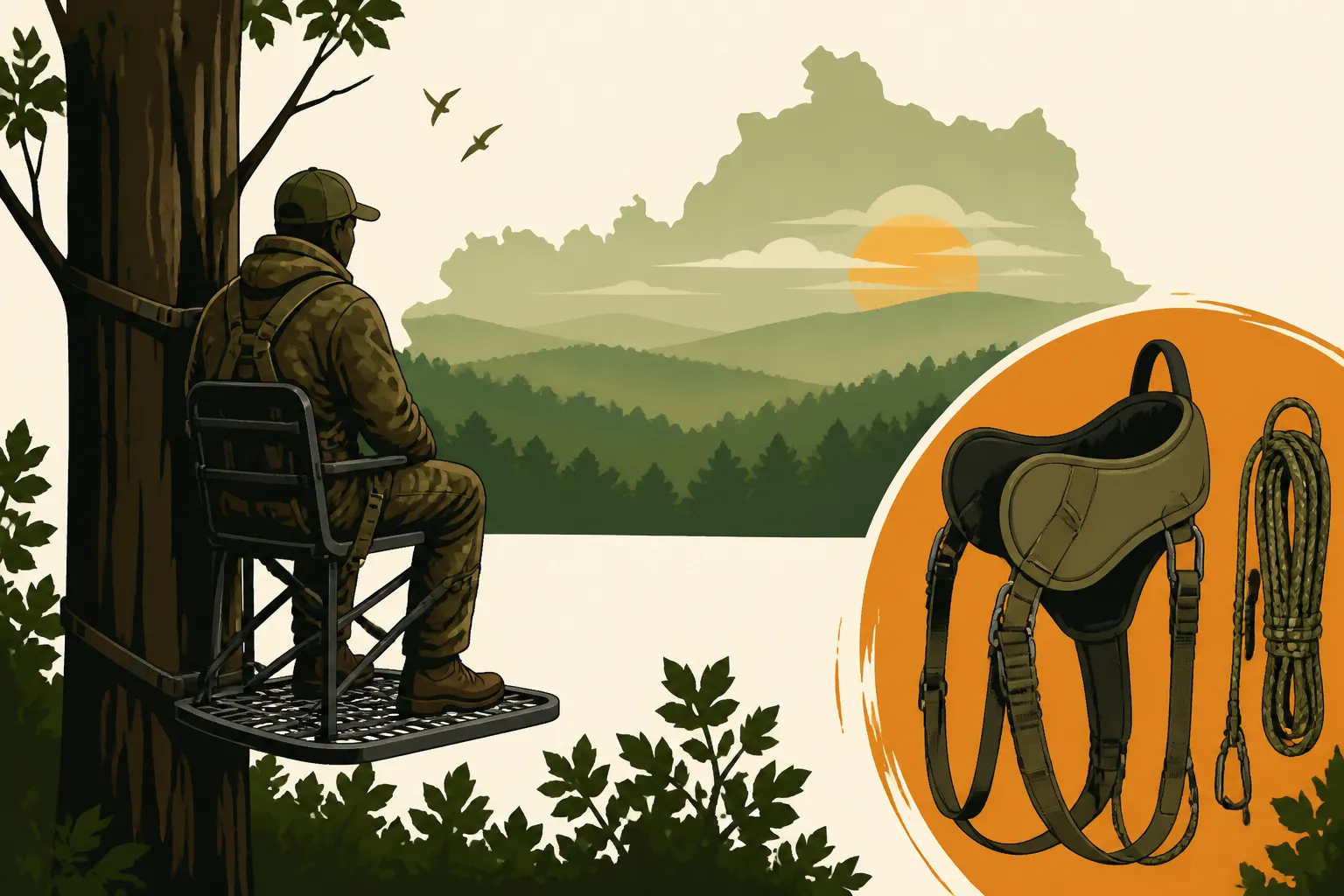
Regardless of whether you choose a climber or a hang-on stand, safety is paramount. On public land, where you might be hunting alone or far from easy access, a fall can have dire consequences. Always, and I mean always, wear a full-body safety harness. Connect to the tree the moment your feet leave the ground and stay connected until you're back on solid earth. A lifeline is a fantastic addition, allowing you to stay tethered during the entire ascent and descent. Safety Harnesses and Lifelines are not optional; they are life-saving equipment.
Beyond personal safety, remember the public land regulations. Most Kentucky public lands require that all stands be removed within a short period after the season closes, if not daily. Never leave personal property on public land beyond the legal timeframe. Mark your stand discreetly with your name and address or KDFWR ID number if required, to comply with regulations and to help identify it if it's found after the legal removal period. Abandoned stands are a common issue and can lead to fines or loss of hunting privileges.
| Stand Type | Pros | Cons | Ideal Public Land Scenario |
|---|---|---|---|
| Climber Stand | All-in-one unit, quick setup (on ideal trees), portable | Tree-dependent (straight, limbless), can be bulky/noisy to carry | Mature hardwood forests with numerous straight, limbless trees |
| Hang-On Stand | Highly versatile, fits most trees, can be very quiet | More pieces to carry, longer setup time, requires climbing sticks | Diverse timber, thick cover, targeting specific, unique trees |
Saddle Hunting: The Ultimate Mobile Option for Public Land
While treestands have their place, saddle hunting has surged in popularity among public land enthusiasts, and for good reason. It takes the concept of mobility and stealth to an entirely new level, offering advantages that traditional stands simply can't match in certain scenarios.
What is Saddle Hunting?
Imagine wearing your treestand. That's essentially saddle hunting. Instead of standing or sitting on a platform in front of the tree, you wear a padded harness (the "saddle") that suspends you against the tree. You use a lineman's belt to secure yourself while ascending with climbing sticks, ropes, or even just spurs. Once at hunting height, you use a short rope with a prusik knot (or a similar adjustable tether) to position yourself around the tree, allowing you to rotate 360 degrees and shoot from any angle. A small platform or set of steps provides a place for your feet.
The core principle is minimalist, lightweight, and incredibly adaptable. You're not relying on a large, heavy platform, but rather a system that integrates you directly with the tree. It feels different, certainly, but once you get accustomed to it, the freedom it provides is unparalleled.
Advantages for Public Land Hunters
Saddle hunting's benefits are tailor-made for the public land hunter. First and foremost is its extreme portability. A saddle, ropes, and a small platform can often weigh significantly less than even a lightweight hang-on stand and sticks. This means you can pack deeper into those remote corners of a WMA or the Daniel Boone National Forest, reaching spots other hunters won't even consider because of the trek. A lighter pack makes for a quieter hike in, too, as there's less bulk and clanking. Consider it for those extended hikes when Packs for a Daniel Boone Forest Day Hunt need to be as light as possible.
Secondly, you get unmatched versatility in tree choice. Because you're hanging around the tree rather than strictly in front of it, you can utilize crooked, limby, or multi-trunked trees that would be impossible for a climber and challenging for even a hang-on stand. This opens up a huge array of potential hunting spots, allowing you to always pick the best tree for cover, wind, and shooting lanes, not just the most convenient one. This adaptability is key when Hunting a Funnel Between Two Hollows where the perfect tree might not be a text-book straight oak.
Finally, the minimalist profile makes you incredibly difficult to spot. A saddle hunter blends into the tree canopy, presenting a much smaller, less angular silhouette than a traditional stand. You're also able to utilize the tree itself as much more cover, peeking around it as needed. This significantly reduces your visibility to wary deer, especially when they're accustomed to seeing traditional stands.
Learning Curve and Gear
While the advantages are clear, saddle hunting does come with a learning curve. It's not difficult, but it's different. You'll need to learn rope work, how to efficiently ascend and descend, and how to comfortably position yourself for various shot angles. It's highly recommended to practice extensively in your backyard or a low-pressure area before taking it to the woods. Get comfortable with the feel, the movements, and even shooting from the saddle. This isn't something you want to figure out on your first real hunt.
Essential gear beyond the saddle itself includes a set of climbing sticks or an SRT (Single Rope Technique) setup for ascent, a small platform or set of steps for your feet, an adjustable tether to connect you to the tree, and a lineman's belt for safety during setup. Brands like Tethrd, Trophyline, and Novix are popular in the saddle hunting community, offering various components to build your ideal mobile system. Remember that practice makes perfect, and investing in quality, quiet gear will pay dividends in the field.
Choosing Your Setup: Factors for Kentucky Public Land
Deciding between a treestand (climber or hang-on) and a saddle ultimately comes down to your personal hunting style, the specific terrain you'll encounter, and what you're willing to invest in both gear and practice. There's no single "best" option; only the best option for you and your specific Kentucky hunting scenarios.
Terrain and Timber Type
Kentucky's diverse landscape means that one elevated hunting system might excel in one region but fall short in another. For example, if you spend most of your time hunting the mature, relatively open hardwood forests of parts of the Daniel Boone National Forest or some central Kentucky WMAs, a climber stand might be a very efficient choice. Here, you'll find plenty of straight, limbless trees perfect for a quick ascent.
However, if your public land adventures take you into the super-steep, often gnarled and thick timber of the eastern coalfields, or the swampy, tangled creek bottoms of western Kentucky, a hang-on stand with sticks or a saddle setup will offer far more flexibility. These areas often have trees that are too crooked or limby for a climber, but perfectly suitable for a hang-on or saddle, allowing you to get into those tighter, less-accessed pockets where big bucks often hide. Hunting Western Kentucky Bottomland Deer often means dealing with varied tree types, making versatility key.
Hunting Style and Mobility Needs
Consider your typical hunting style. Are you a "set it and forget it" hunter who likes to scout one spot, set up, and hunt it repeatedly? Or are you a "run-and-gun" enthusiast who constantly moves, adapting to fresh sign and changing conditions?
If you prefer to move frequently, covering significant ground and making multiple sets in a day, then a saddle setup or a very lightweight, packable hang-on system will serve you best. The minimal bulk and weight of these systems make quick relocations feasible and less exhausting. This is especially true if you plan on covering a lot of ground Still-Hunting Eastern Kentucky Ridges and want the option to quickly get into a tree if you jump a deer or find fresh sign.
If you typically find a few key spots and plan to spend longer periods in a stand, a more comfortable hang-on or even a climber might be your preference. While still portable, they generally offer a bit more seated comfort for an all-day sit. The key is to be realistic about how much weight you're truly willing to haul and how quickly you need to be able to set up and take down.
Budget and Investment
The initial cost of elevated hunting gear can vary significantly. Generally, a good quality climber stand can be a solid entry-level investment, offering a complete system for a reasonable price. Hang-on stands and climbing sticks can sometimes be bought individually, allowing you to piece together a system, but a full quality setup can sometimes run a bit more than a basic climber.
Saddle hunting gear, while lightweight, often involves a higher initial investment, particularly if you're buying a top-tier saddle, a quality platform, and advanced climbing methods. However, many hunters find the long-term benefits in terms of comfort, versatility, and increased success rates make the investment worthwhile. Think of it less as an expense and more as an investment in your hunting efficiency and enjoyment on Kentucky's public lands.
Maximizing Success from an Elevated Position
Simply owning an elevated hunting system isn't enough; knowing how to use it effectively on public land is where the real magic happens. It's a combination of smart scouting, careful strategy, and consistent practice.
Scouting and Placement are Key
Before you ever step foot into the woods with your stand or saddle, the real work should begin. Digital scouting tools are invaluable here. Applications like GoHunt allow you to meticulously pore over aerial imagery, topographic maps, and public land overlays from the comfort of your home. You can identify potential pinch points, terrain features that funnel deer, bedding areas, and subtle transitions in cover that other hunters might overlook. This is where you can truly differentiate your strategy on pressured public ground.
Once you have a few promising areas identified, it's time for boots-on-the-ground scouting. Look for fresh sign – tracks, rubs, scrapes, and droppings. Identify primary food sources, whether it's acorns in an oak ridge, browse in a clear-cut, or agricultural fields bordering a WMA. With your stand or saddle, you're looking for the perfect tree that offers cover, a good shooting lane, and positions you optimally for the prevailing wind. Don't just pick the first climbable tree; find the one that puts you in the absolute best position to intercept a deer. Scouting Kentucky Public Land Before Season is arguably more important than the hunt itself. For more granular detail, Reading Aerial Photos for Eastern Kentucky Deer can reveal hidden gems.
Entry and Exit Strategy
Perhaps the most overlooked aspect of hunting from an elevated position, especially on public land, is your entry and exit. A perfect stand setup can be completely ruined if you bust deer on your way in or out. Always consider the wind direction, not just at your stand, but during your entire approach. Thermals play a huge role, especially in hilly terrain; cold air sinks at night and morning, warm air rises midday. Your scent cone can drift for hundreds of yards, alerting deer before you even get to your tree.
Plan your route to minimize disturbance. Use natural cover, walk slowly and quietly, and avoid known bedding areas. Early morning entries should be executed in the dark, and late evening exits should wait until long after legal shooting light, giving deer a chance to disperse naturally. Using mapping tools like GoHunt to pre-plan silent entry and exit corridors can be a massive advantage, ensuring you don't educate the very deer you're trying to hunt. Understanding Wind and Thermals on a Kentucky Ridge is crucial for effective entry and exit.
Practice and Confidence
Having the right gear is only half the battle; being proficient with it is the other half. Practice setting up your treestand or saddle system in your backyard. Climb trees, get comfortable at hunting height, and practice drawing your bow or shouldering your rifle from various angles. Simulate real hunting conditions as much as possible. This builds confidence, speed, and quiet efficiency – all critical factors when you're trying to set up silently in the dark before dawn.
Also, practice shooting from an elevated position. The angles are different, and the perceived distance can be deceiving. Shoot at targets placed at various distances and angles from your elevated practice spot. Knowing your limitations and feeling confident in your shot placement from your chosen elevated system will lead to cleaner kills and less frustration in the field.
Essential Safety Practices for Elevated Hunting
I can't stress this enough: hunting from an elevated position carries inherent risks. While the rewards of getting above a deer's senses are great, they are never worth risking your life. Safety should always be your number one priority, especially when you're often hunting alone on public land where help might be a long way off.
Always Wear a Full-Body Safety Harness
This isn't a suggestion; it's a mandatory piece of equipment for any elevated hunter. A fall from even 10 feet can result in serious injury or death. Put your harness on before you leave the ground, and stay attached to the tree at all times while ascending, descending, and hunting. Utilize a lifeline or an adjustable tree tether that allows you to remain connected from the moment your feet leave the ground until they touch down again. Far too many hunting accidents involve falls from treestands, and almost all of them could have been prevented by proper harness use.
Check your harness annually for any signs of wear, tears, or sun damage. Replace it if there's any doubt about its integrity. A harness is a small price to pay for your life and your family's peace of mind.
Pre-Season Gear Checks
Before the season kicks off, give all your elevated hunting gear a thorough inspection. This includes your treestand, climbing sticks, ropes, straps, and buckles. Look for frayed straps, bent metal, cracked welds, or any signs of weakness or damage. Ropes should be checked for cuts, excessive wear, or sun degradation. Replace any components that show signs of wear or damage. This is especially true for items left out in the elements, which can degrade quicker.
Pay close attention to all pins, bolts, and fasteners. Ensure they are secure and free of rust or corrosion that could compromise their strength. Lubricate moving parts if needed to ensure quiet operation. Your life literally depends on the integrity of your equipment, so don't cut corners on maintenance.
Tell Someone Your Plans
If you're heading out to public land, especially for a solo hunt, always let someone know your exact plans. Tell a family member or trusted friend where you're going, your intended hunting area (be as specific as possible, perhaps dropping a pin on a map), and when you expect to return. Give them a contact number for emergency services in that area if you have one.
This simple step can be a lifesaver. If you don't check in by your designated time, someone will know to start looking for you or to alert the authorities. This is even more crucial when using elevated systems, as an incapacitating fall means you can't call for help yourself. A quick text or phone call before you lose service deep in the woods is all it takes to potentially save your life. For more safety considerations, look into First Aid Kits for Remote Daniel Boone Forest Ground.
Disclaimer
This article is for general informational purposes only and does not constitute professional advice. Laws, prices and regulations vary by location and change over time. Consult a qualified professional for guidance on your specific situation.