Treestand Setups in Daniel Boone National Forest
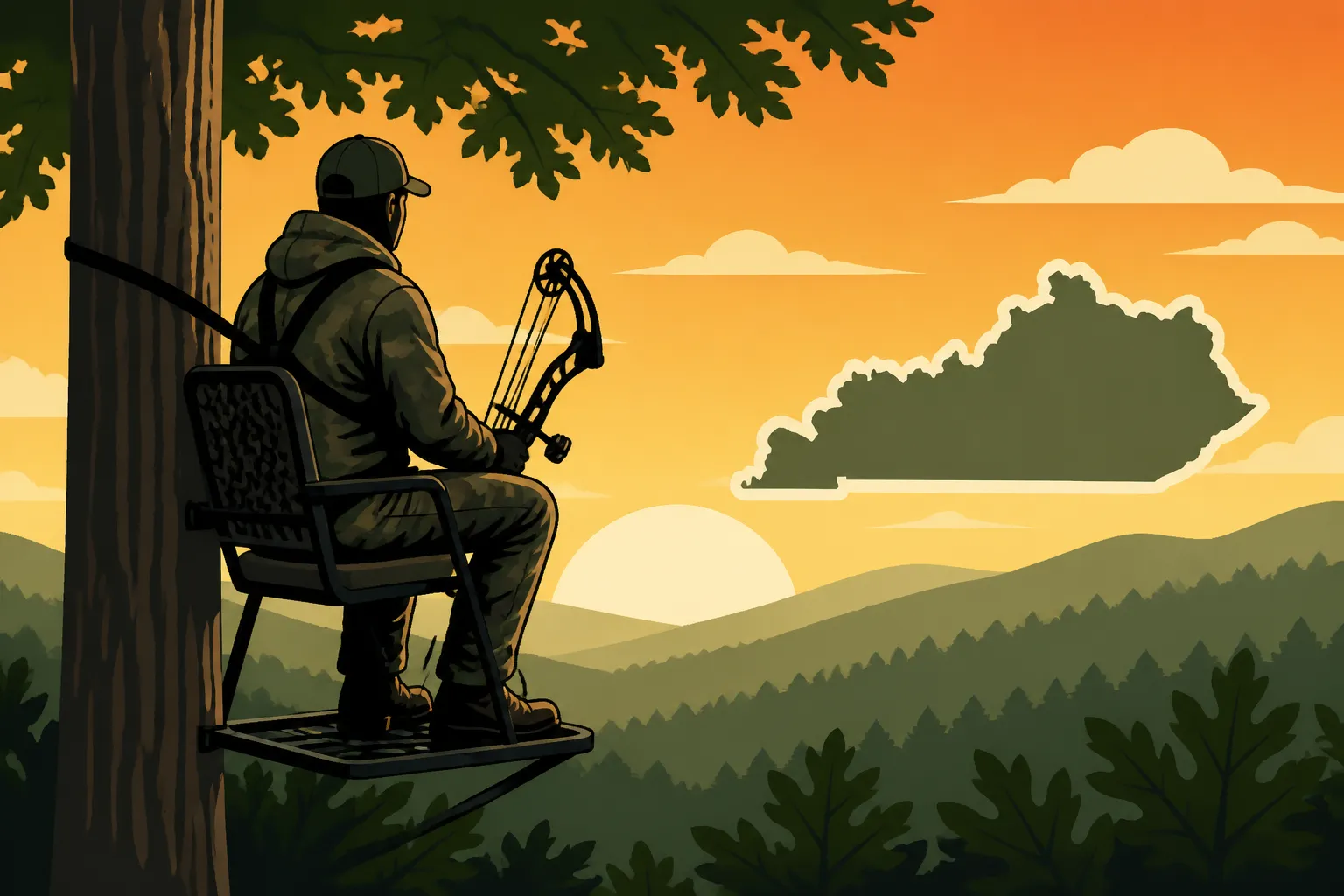
The Daniel Boone National Forest is a hunter's paradise, but let's be real, it's also a beast. The steep terrain, thick timber, and sprawling public land can make finding the perfect treestand setup feel like searching for a needle in a haystack, especially when you're trying to outsmart a wary Kentucky whitetail. This comprehensive guide is going to walk you through everything you need to know to establish effective, safe, and productive treestand setups deep within the challenging yet rewarding landscape of the DBNF.
Understanding the Unique Terrain of Daniel Boone National Forest
Hunting in the Daniel Boone National Forest isn't like hunting the flat crop fields of Western Kentucky. This place has its own rules, dictated by topography, timber, and water. Ignoring these fundamental differences is a surefire way to get frustrated and come home empty-handed. Understanding the lay of the land is your first step to success here.
Navigating Steep Ridge-and-Hollow Country
The DBNF is defined by its dramatic ridges and deep, winding hollows. You'll spend a lot of time walking up and down, and deer often use these features as highways. A buck might follow a specific contour line around a ridge, or cut across a saddle between two peaks. The key is to identify these travel corridors. Imagine a steep ridge dropping down into a hollow. Deer often won't walk straight down or straight up; they'll find the path of least resistance. This might be a slight bench on the side of a ridge, a logging road, or the bottom of a hollow where it flattens out a bit. Identifying these subtle breaks in the terrain is crucial for stand placement. Thinking about Reading a Ridge for Cumberland Deer can be incredibly helpful here, as those same principles apply. Don't just look for tracks; look at the landscape itself and try to anticipate where a deer would prefer to walk. This natural funneling of deer movement is what you're trying to capitalize on with your stand.
Timber Types and Their Impact on Stand Placement
The DBNF boasts a diverse mix of hardwoods, pines, and mixed forests, and the dominant timber type in your chosen area significantly influences stand placement. In areas primarily dominated by mature oaks, for example, your focus should shift dramatically when the acorns start to drop. White oak ridges, in particular, can be absolute magnets for deer in the early and mid-fall. You'll want to find trees with good cover and clear shooting lanes near these feeding zones. Conversely, in areas with thick pine stands or dense regrowth from past timber harvests, deer may use these as bedding areas, offering dense cover. Your approach there might be to set up on the edges of these thickets, catching deer moving in or out. The size and density of the trees also dictate what kind of stand you can use – a thick-barked oak might be perfect for a climbing stand, while a smaller, straighter sapling might only accommodate a hang-on or saddle setup. The forest floor, often littered with crunchy leaves, also demands careful attention to silent entry and exit, especially near these timber transition lines.
Water Sources and Natural Funnels
Water is life, and deer need it daily. Creeks, springs, and even intermittent drainages can be vital components of a deer's home range, especially during dry spells or in areas far from agricultural water sources. Setting up near a reliable water source, particularly one that acts as a bottleneck or funnel, can be incredibly productive. Beyond water, look for natural funnels created by the landscape itself: saddles between ridges, narrow strips of timber connecting larger woodlots, or even significant changes in elevation that force deer into a predictable travel path. A classic example is a narrow pinch point where two steep hollows converge, forcing deer to walk through a specific, smaller area. These are prime locations for a treestand because they concentrate deer movement, increasing your odds significantly. Understanding these funnels is key to maximizing your chances, much like considering Hunting a Funnel Between Two Hollows in any part of Kentucky.
Choosing the Right Treestand for Daniel Boone National Forest
The DBNF's rugged and varied terrain means that no single treestand type is universally perfect. What works on a flat river bottom won't necessarily cut it on a steep mountain ridge. Your choice of stand will depend heavily on the specific spot you're hunting, how mobile you need to be, and your personal comfort and safety preferences.
Climbers vs. Hang-ons: Mobility vs. Stability
Climbing treestands are fantastic for their portability and quick setup, allowing you to be highly mobile and adapt to changing deer patterns. If you're planning to still-hunt or scout a new area, and you find a perfect, straight-trunked tree with good cover, a climber allows you to be hunting quickly. However, the DBNF can challenge climbers. Many trees here are crooked, have low limbs, or are simply not straight enough for a safe climb. You'll often find yourself walking past otherwise ideal locations because the trees aren't climber-friendly.
Hang-on stands, on the other hand, offer more versatility in tree selection. You can hang them in more irregular trees, often much higher or in thicker cover, which can be a huge advantage in the DBNF. The downside is the need for climbing sticks or screw-in steps, which add weight and setup time. Setting up multiple hang-on stands in key locations throughout your hunting area allows for quick, quiet access to different spots depending on wind or deer movement. This is a common tactic for Hanging a Stand on an Eastern Kentucky Ridge where diverse tree shapes are the norm. While they take more effort to initially set up, once they're in place, they can be remarkably stable and comfortable for long sits.
Saddle Hunting: The Ultimate in Portability
Saddle hunting has exploded in popularity, and for good reason—it’s arguably the most adaptable and portable method for hunting timber, especially in a place like the DBNF. A saddle, combined with a lightweight set of climbing sticks or a one-stick method, allows you to ascend almost any huntable tree, including those with substantial leans or limbs that would be impossible with a traditional climber or hang-on. The freedom of movement in a saddle means you can rotate around the tree, keeping the trunk between you and incoming deer, and get shots off in directions that might be difficult from a fixed stand.
The minimalist nature of a saddle setup also means less weight to carry through those steep DBNF hollows. Imagine hiking a mile or two up and down rugged terrain; shaving off every pound makes a huge difference. However, saddle hunting does have a learning curve. It requires practice to become proficient at ascending and descending quietly and efficiently, and to shoot comfortably from different angles. It's an investment in both gear and time, but for the truly mobile and adaptable DBNF hunter, it can be a game-changer.
Ground Blinds: When Vertical Isn't an Option
Sometimes, a vertical approach just isn't feasible. Perhaps you're hunting a pine thicket with no suitable trees, a brushy fencerow, or an area with very small or diseased timber. This is where a ground blind shines. Modern pop-up blinds offer excellent concealment, scent control (to a degree), and protection from the elements, making them ideal for long, cold sits. They can also be a fantastic option for introducing new hunters or youth to the sport, as they allow for more movement and comfort.
The trade-off with ground blinds is usually visibility and range of motion compared to an elevated stand, and potentially scent control if not managed properly. On flatter terrain or in very dense cover, they can be incredibly effective. However, on steep DBNF hillsides, finding a level spot for a blind can be a challenge, and they don't offer the same view over terrain features as a treestand. Nevertheless, having one in your arsenal for those specific situations can significantly expand your hunting opportunities, especially in spots where deer are comfortable in thick cover.
Strategic Placement and Entry/Exit for DBNF
Placing your treestand isn't just about finding a tree with a good view; it's a chess match with the deer. In the DBNF, where the landscape is constantly working against you, strategic placement and meticulous planning for your entry and exit routes are paramount. Get these wrong, and even the best stand in the world will be worthless.
Reading Wind and Thermals on a Kentucky Ridge
Understanding how wind and thermals behave in the DBNF is one of the most critical aspects of stand placement. Unlike flat country where wind might be more consistent, ridges and hollows create complex air currents. As the sun rises, warm air typically rises up the hollows and ridges, creating an "updraft." In the evening, as the air cools, it sinks, creating a "downdraft." Deer are masters at using these air currents to their advantage, often traveling with the wind or thermals in their face to detect danger.
Your treestand needs to be positioned so that your scent isn't blowing into where you expect deer to approach or bed. This often means setting up on the leeward side of a ridge, or perhaps slightly below a ridge crest where an updraft will carry your scent over the top of the hollow. It's not uncommon for experienced hunters to have multiple stand locations for a single area, allowing them to adapt to different wind directions. Regularly checking an app like a dedicated hunting weather app or GoHunt before each hunt will give you real-time wind data, but ultimately, experience in the woods will teach you how these subtle air currents truly behave. Knowing Wind and Thermals on a Kentucky Ridge is a skill honed over many frustrating hunts, but it's invaluable.
Concealment and Shooting Lanes
Once you've factored in wind and thermals, your next priority is concealment. A treestand, no matter how high, won't hide you if you're silhouetted against the sky or if there's no natural cover around you. Look for trees that have good natural camouflage, such as a cluster of smaller trees around the main trunk, or a tree with dense leaf cover (though remember, that cover will disappear in late fall). Breaking up your outline is key.
Equally important are clear shooting lanes. You might find a perfect concealment tree, but if you can't get a clean shot at a deer within your ethical range, it's useless. Use a pruning saw or small loppers to carefully clear lanes before the season, being mindful not to over-cut and expose your position. Think about where deer are likely to pass and ensure you have lanes for both bow and gun hunting, if applicable. Clear shooting lanes are essential for making a swift, ethical kill, and the work you put in beforehand will pay dividends when that trophy buck steps into view.
Low-Impact Entry Routes Through Standing Beans
Getting to and from your stand without alerting deer is just as important as the stand placement itself. In the DBNF, this means identifying routes that minimize noise, scent, and visual disturbance. Often, this involves using natural features like creek beds (when dry), deep hollows, or logging roads that run parallel to your hunting area, rather than directly through it.
If you're hunting an area adjacent to agricultural fields, like those found bordering some parts of the DBNF, strategically walking through standing crops like beans or corn can provide excellent cover for a silent and unseen approach. However, be mindful of private land boundaries and always get permission if you're not on public land. The goal is to get into your stand long before daylight, and exit well after dark, when deer movement is typically at its peak, and your presence is less likely to be detected. This careful attention to Entry Routes Through Standing Beans or other forms of natural cover is a hallmark of successful hunters.
Safety First: Essential Gear and Practices
Hunting from a treestand, especially in the rugged, remote environment of the Daniel Boone National Forest, carries inherent risks. While the thrill of hunting is undeniable, ensuring your safety should always be your top priority. Accidents can happen quickly, and being prepared is not just smart—it's essential.
Full-Body Harnesses and Lifelines
This cannot be stressed enough: always wear a full-body safety harness when in a treestand, and remain connected to the tree from the moment your feet leave the ground until they touch back down. This means using a lifeline or a similar system that keeps you tethered as you ascend, descend, and while sitting in your stand. The DBNF's challenging terrain, often with trees growing at odd angles or on steep slopes, can make climbing precarious. A slip or a mechanical failure can have severe consequences, especially if you're hunting alone in a remote area.
Brands like Hunter Safety System and Summit offer excellent harnesses that are comfortable and easy to use. Invest in quality gear and ensure it fits properly. Your life literally depends on it. Before each season, inspect your harness, straps, and ropes for any signs of wear, fraying, or damage. Replace anything that looks suspect. This commitment to safety, including using proper Treestand Safety Gear for Steep Ground, is non-negotiable for any responsible treestand hunter.
Pre-Season Stand Checks and Maintenance
Before you ever step foot into your treestand for the season, a thorough pre-season check is absolutely critical. This goes for both permanent stands and those you hang each year. For hang-on stands, inspect all straps, cables, and bolts for rust, wear, or damage. Squirrels and other critters love to chew on straps, and prolonged exposure to the elements can degrade materials quickly. Make sure your climbing sticks are in good condition and all attachment points are secure.
For stands left out year-round, pay extra attention to tree growth. As a tree grows, it can slowly engulf or put stress on stand components, potentially weakening them or making the stand unsafe. If you notice any issues, address them immediately. Don't take chances. A little maintenance before the season can prevent a serious accident later on. This meticulous preparation is part of being a responsible hunter and ensuring your gear performs when you need it most.
Emergency Preparedness in Remote Areas
The DBNF is vast and, in many areas, remote. Cell service can be spotty or nonexistent. If you have an accident or an emergency, you might be hours from help. This makes personal emergency preparedness paramount. Always carry a fully charged cell phone, but don't rely on it. Carry a whistle to signal for help. A small, but well-stocked, first-aid kit is essential for treating minor injuries like cuts or scrapes.
Consider carrying a personal locator beacon (PLB) or a satellite messenger like a Garmin inReach or a Zoleo. These devices allow you to send SOS messages with your exact location, even without cell service, providing a vital lifeline in a true emergency. Inform a reliable person of your hunting location and your expected return time. Give them specific instructions on who to call if you don't check in. Packing a good survival kit, even for a day hunt, that includes fire-starting materials, a water filter, and emergency shelter, can be the difference between a scary night and a true disaster. When considering Packs for a Daniel Boone Forest Day Hunt, always prioritize emergency essentials.
Scouting and Adaptability for DBNF Success
Hunting the Daniel Boone National Forest effectively isn't just about setting up a stand; it's about being a detective, a planner, and an adaptable problem-solver. The forest is constantly changing, and deer patterns shift throughout the season. Successful hunters are those who scout diligently and are willing to adjust their strategies.
Pre-Season Scouting with Technology
Gone are the days when scouting was purely boots-on-the-ground. Modern technology has revolutionized the way we approach public land hunting. Apps like GoHunt, OnX Hunt, or the Kentucky Fish and Wildlife Resources (KDFWR) official map tool are invaluable for pre-season planning. You can use these apps from the comfort of your home to identify key features like contour lines, potential bedding areas (often on south-facing slopes for warmth or thickets for security), water sources, and natural funnels. They allow you to virtually "walk" the terrain, identifying potential stand locations and planning your access routes before you even step foot in the woods.
Layering different map types—topo, aerial, and even satellite imagery from different seasons—can reveal crucial details, such as changes in timber density, clear-cuts, or old logging roads that deer might use. Pin potential stand sites, mark possible bedding areas, and plan multiple entry and exit points. This digital reconnaissance, much like using Scouting With the Kentucky Hunt Fish App, saves countless hours of aimless wandering and helps focus your boots-on-the-ground efforts on the most promising areas. When you do hit the woods, you'll be confirming your digital suspicions, not starting from scratch.
In-Season Adjustments and Pressure Management
Deer patterns are rarely static. Food sources change, hunting pressure fluctuates, and the weather can drastically alter deer movement. The DBNF sees its fair share of hunting pressure, especially during opening weekends and the rut. Being able to make in-season adjustments is crucial. If your initial stand location isn't producing, don't be afraid to move. This might mean pulling your hang-on and relocating, or if you're saddle hunting, simply moving to a different tree.
Pay close attention to fresh sign: new rubs, scrapes, and tracks. These indicate current deer activity. If you notice an area that was hot suddenly go cold, it could be due to increased pressure pushing deer into thicker, more secluded areas. Be prepared to shift your focus to these sanctuaries. Understanding Hunting Pressure on Kentucky Public Land and adapting your tactics accordingly—perhaps by walking deeper, using less-traveled access points, or hunting during weekdays—can mean the difference between seeing deer and seeing only other hunters. Don't be stubborn; be smart.
Finding Ground Others Walk Past
One of the biggest advantages you can gain on public land like the DBNF is finding those overlooked pockets that other hunters walk past. These are often areas that are difficult to access, seem less appealing on a map, or simply require more effort. Think about steep, nasty ravines, dense thorny thickets, or areas a mile or more from any established trail or road. Deer, especially mature bucks, often seek refuge in these challenging spots.
While scouting, look for terrain features that deter other hunters but offer security for deer. This could be a very steep, rocky section of a ridge, a remote bench halfway down a treacherous hollow, or a small island of cover surrounded by more open woods. Don't be afraid to put in the extra mileage or navigate the tougher terrain. Often, the harder it is to get to a spot, the less pressure it sees, and the higher your chances of encountering an unmolested deer. Successfully Finding Ground Others Walk Past is often the secret sauce to consistent success on public lands. This is also where understanding Where Daniel Boone Forest Bucks Bed can lead you to these hidden gems.
Common Challenges and Troubleshooting in the DBNF
Hunting in the Daniel Boone National Forest is rarely a walk in the park. It's a place that demands resilience, quick thinking, and a willingness to overcome obstacles. From navigating other hunters to battling the unpredictable Kentucky weather, you'll inevitably face challenges. Knowing how to troubleshoot these common issues can save a hunt from ruin.
Dealing with Hunting Pressure on Kentucky Public Land
Let's face it, public land, especially accessible public land, means other hunters. During peak seasons, the DBNF can feel crowded, and hunting pressure is a significant factor in deer behavior. Deer learn quickly to avoid high-pressure areas, often becoming nocturnal or retreating to the thickest, most inaccessible parts of the forest. The key to dealing with this isn't to get frustrated, but to strategize.
One approach is to hunt during off-peak times: weekdays instead of weekends, or during less popular seasons like late archery. Another is to simply walk farther. Most hunters don't venture more than a half-mile from their vehicle. If you're willing to hike a mile or two, especially into rugged terrain, you'll often find less disturbed deer. Consider Deer Drives on Kentucky Public Land as a way to push deer if you're hunting with a group, but otherwise, focus on stealth and getting away from the crowds. Using a map tool like GoHunt to identify road access points and then planning routes that take you deep into the forest, away from direct competition, can give you a significant edge.
Battling the Elements: Rain, Wind, and Cold
Kentucky weather is notoriously unpredictable. You can start a hunt in crisp, cool conditions and end it drenched in a downpour or shivering in an unexpected cold snap. Treestand hunting requires you to be stationary for long periods, making you particularly vulnerable to the elements. Quality gear is your best friend here.
Invest in good layering systems that allow you to adjust to changing temperatures. Wool or synthetic base layers that wick moisture are crucial. A quality waterproof and windproof outer shell is non-negotiable for DBNF hunts, even if the forecast looks clear. Pack hand warmers, extra gloves, and a warm hat. Even a light drizzle can lead to hypothermia if you're not properly dressed and exposed to wind. Learning how to properly layer and what materials perform best in wet, cold conditions is vital for both comfort and safety during those long, late-season sits, especially if you're looking at Hunting the Late-Season January Lull. Don't let a little discomfort send you home early when a big buck might be moving.
Recovering a Deer From a Steep Hollow
This is the moment every hunter dreams of: a successful shot. But in the DBNF, the work is far from over once the deer hits the ground. Recovering a deer from a steep hollow or a remote ridge can be an arduous task, and it's something you need to be mentally and physically prepared for. A seemingly short drag can turn into an epic struggle up and down steep grades.
Always take a moment to mark your location and the deer's last known spot. Use your GPS or phone to drop pins. If possible, field dress the deer where it lies to reduce weight. Consider carrying a game cart if the terrain allows for it (many DBNF trails are too rough), or a heavy-duty deer sled, which can make dragging much easier. If you're hunting solo, you might have to quarter the deer and pack it out in stages, using a frame pack. Don't be a hero; safety comes first. If it's getting dark or the terrain is too dangerous, plan to come back with help. Knowing the challenges of Dragging a Deer Out of a Steep Hollow is part of being prepared for hunting in this rugged landscape.
| Stand Type | Portability | Setup Time | Tree Selection | Ideal DBNF Use | Pros | Cons |
|---|---|---|---|---|---|---|
| Climber | High | Fast | Limited | Quick, mobile hunts on straight, limbless trees | Quick setup, comfortable, good mobility | Limited tree selection, noisy if not careful |
| Hang-on | Medium | Moderate | Versatile | Permanent or semi-permanent sets in diverse trees | Versatile tree selection, can be left out, quiet once set | Requires climbing sticks, heavier than saddle, more initial setup time |
| Saddle | Very High | Moderate-Fast | Very Versatile | Highly mobile, adapting to varied DBNF timber | Ultimate portability, 360-degree shooting, minimalist | Learning curve, less comfortable for long sits for some, requires sticks |
| Ground Blind | Low-Medium | Fast | None | Hunting thickets, small timber, or extreme terrain | Excellent concealment, comfort, weather protection, good for youth | Limited vertical view, scent control challenges, bulky to carry |
Disclaimer
Hunting is an inherently dangerous activity. This guide provides general information and recommendations. Always consult the most current Kentucky Department of Fish and Wildlife Resources regulations before hunting. Prioritize safety by wearing appropriate gear, understanding your equipment, and being aware of your surroundings. The author and publisher are not responsible for any accidents or injuries that may occur.