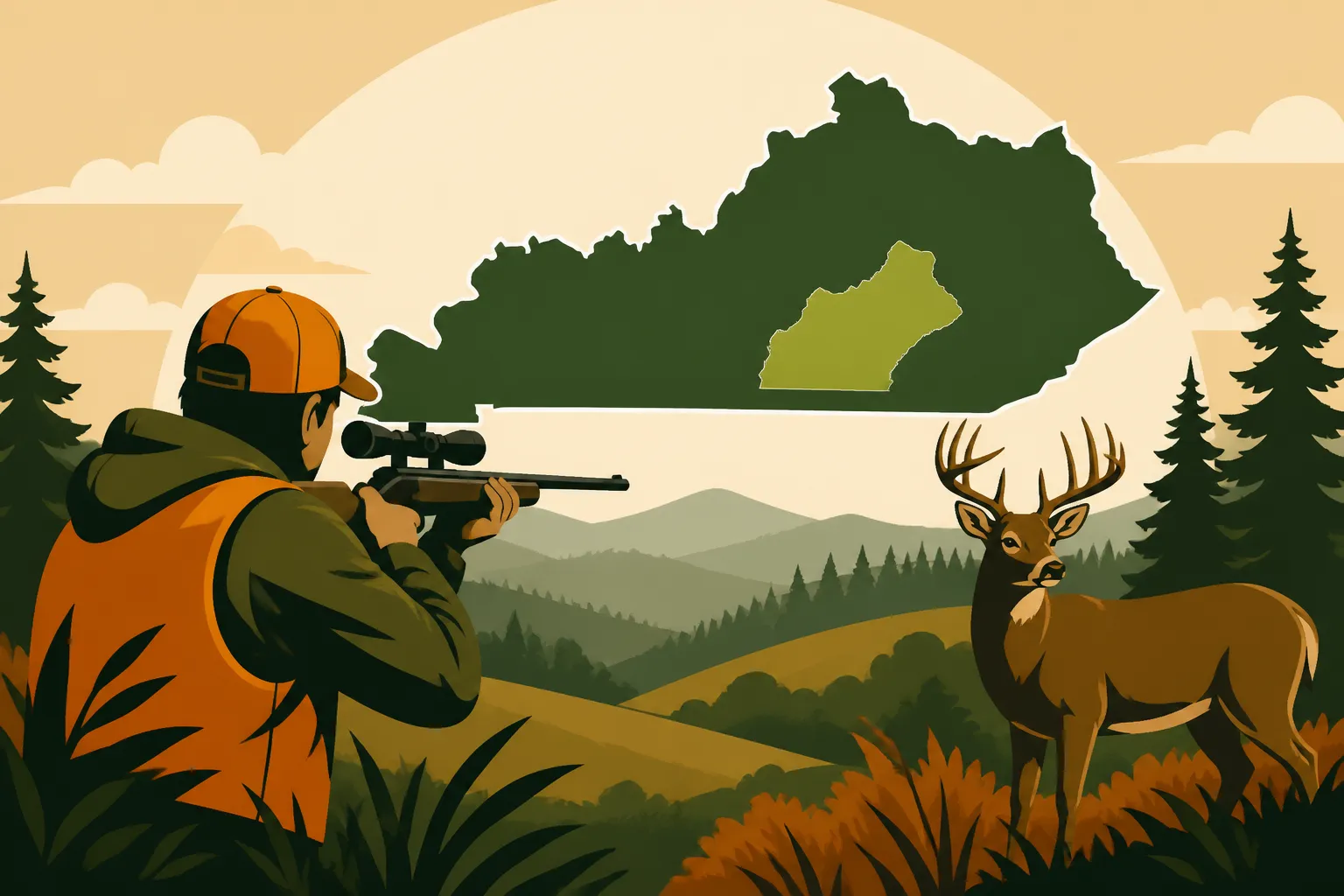
Leslie County Public Hunting Ground
Finding prime public hunting ground in the deep hollows and steep ridges of Eastern Kentucky can feel like searching for a needle in a haystack, especially when you're looking at a specific county like Leslie. Hunters often face a wall of private property signs or seemingly impenetrable wilderness. This guide will walk you through what to expect when hunting Leslie County's public land, highlighting its unique challenges and rewarding opportunities, ensuring you're prepared for the adventure.
Understanding Leslie County's Unique Terrain and Challenges
Hunting in Leslie County isn't like hunting the agricultural fields of Western Kentucky. It's a completely different beast, demanding a specific mindset and preparation. The landscape here defines the hunting experience, from how animals move to how you'll access your chosen spot.
The Rugged Landscape of Eastern Kentucky
Leslie County is nestled deep in the Appalachian foothills, a place defined by its dramatic topography. We're talking about incredibly steep inclines that will test your quads, narrow, winding hollows that swallow sunlight, and ridges that seem to stretch endlessly. This isn't rolling farmland or gentle woodlands; it's a wild, unforgiving terrain of dense timber, rhododendron thickets, and unforgiving rock outcroppings. The sheer physical challenge of traversing this country cannot be overstated, and it's often the first hurdle many hunters encounter.
This ruggedness has a profound impact on hunting strategy. Visibility can be extremely limited in the dense undergrowth, especially in the hollows where sunlight struggles to penetrate. Sound carries differently, sometimes echoing, sometimes muffling, making it tough to pinpoint a distant gobble or the subtle sounds of deer moving through dry leaves. Furthermore, thermals—the rising and falling air currents—are a critical factor here, dictated by the sun, shade, and the lay of the land. A ridge top might have a consistent wind, but drop into a hollow, and the air currents can swirl unpredictably, betraying your presence to a wary buck or a keen-nosed bear.
Understanding how game utilizes this terrain is key to success. Deer, for instance, often favor benches (flat spots along steep hillsides), saddles (low spots in a ridge), and thickets for bedding and travel. Turkeys will roost on the highest points of ridges overlooking hollows, making their morning descent a calculated affair. Learning to "read" these landscape features—identifying natural funnels, pinch points, and cover—is far more important than just walking through the woods hoping for a chance encounter. It demands patience and careful observation.
All of this means that hunting in Leslie County is not for the faint of heart or the unprepared. You absolutely need to be in decent physical condition, and your navigation skills must be top-notch. It’s an environment that rewards resilience and a deep appreciation for the wild.
Navigating Public Versus Private Land
One of the most frustrating aspects of hunting in many Eastern Kentucky counties, including Leslie, is the often-fragmented nature of public land. Instead of large, contiguous blocks, you might find a checkerboard pattern where public parcels are interspersed with private holdings, old coal company lands, or even small family plots. It can be incredibly disorienting, and accidental trespassing is a genuine concern if you’re not meticulous with your mapping.
This is precisely where modern mapping tools become not just helpful, but absolutely essential. Digital apps like onX Hunt shine in this environment, allowing you to clearly see property lines, public land boundaries, and even identify landowners in some cases. Relying solely on a paper map can leave you guessing, especially when the terrain itself provides few obvious markers. Taking the time to study these maps, both digitally and physically, before you even set foot in the woods, will save you a world of headaches and potential legal trouble.
Beyond just knowing the lines, understanding the relationship between public and adjacent private land can offer strategic advantages. Sometimes, a piece of public ground might be landlocked or best accessed by crossing a corner of private property. In these situations, cultivating good landowner relations, even for a simple access agreement, can unlock incredible hunting opportunities. Always remember: permission is paramount, and a friendly knock on a door can open more doors than you think.
Leslie County’s public hunting opportunities typically include portions of the Daniel Boone National Forest, which offers vast expanses, though access points can be limited and trails rugged. There might also be smaller Wildlife Management Areas (WMAs) managed by the Kentucky Department of Fish and Wildlife Resources (KDFWR), each with its own specific rules and access considerations. Leslie County also lies within Kentucky's designated Elk Restoration Zone, adding another layer of unique opportunity and regulation to the mix.
Hunting Opportunities and Key Species
While the terrain is tough, the rewards in Leslie County can be substantial. The county offers a diverse range of hunting experiences, from common game like deer and turkey to the chance at a truly once-in-a-lifetime elk or a challenging black bear hunt.
Deer and Turkey Hunting Prospects
White-tailed deer are the most commonly pursued game animal in Leslie County, and for good reason. While Eastern Kentucky isn't typically known for the Boone and Crockett giants that might emerge from the Bluegrass region, the deer population is generally healthy and offers consistent hunting. The deer here are often smaller-bodied and tougher, having adapted to the rugged environment. They're also incredibly stealthy, used to navigating dense cover and avoiding human contact. Hunting these mountain deer requires a different approach; it’s less about glassing vast fields and more about methodical still-hunting through thick timber, paying close attention to every sound and movement. Still-Hunting Eastern Kentucky Ridges is a classic tactic that shines in this type of country.
Success often hinges on understanding their travel corridors between bedding areas (often on steep, thick slopes) and feeding areas (acorn flats, clearcuts, or small openings). Look for subtle signs: rubs and scrapes along old logging roads or benches, fresh tracks in mud near a creek, or droppings around a white oak flat. Patience is truly a virtue here, as a quiet, observant hunter often spots deer before they spot him. Setting up on a natural funnel, such as a narrow saddle or a point where a hollow narrows, can pay dividends, especially during the rut.
Wild turkeys also thrive in Leslie County's extensive timberland. The dense hardwood forests provide excellent roosting habitat and ample food sources like acorns and insects. However, these birds can be scattered and notoriously difficult to pinpoint. A gobble might echo deceivingly off the steep hillsides, making it hard to know exactly where the bird is. Roosting birds the evening before a hunt, if possible, gives you a significant advantage. Otherwise, employing aggressive locator calls in the morning and then moving quickly to get within striking distance is a common strategy. Calling a Kentucky Gobbler Off the Roost requires finesse, especially when trying to coax a tom across a deep hollow.
You'll find that these mountain turkeys are often wary, especially after the initial rush of opening day. Don't be afraid to cover ground, using a "run and gun" approach to locate birds throughout the day. Calling might need to be more subtle once you've made contact, adapting to the bird's mood. The steep terrain can also make decoy placement tricky; ensure they're visible but also blend naturally into the environment.
Pursuing Bear and Elk in the Zone
What truly sets Leslie County apart for many hunters is its location within both Kentucky's Kentucky's Black Bear Population range and the state's renowned Kentucky's Record Elk Herd restoration zone. These are big game opportunities that are rare in the eastern United States, and they draw hunters from far and wide.
Elk hunting in Kentucky is an extraordinary privilege, highly sought after, and strictly managed through a limited quota lottery system. Drawing an elk tag is often a once-in-a-lifetime event for many, making the hunt itself a huge undertaking. Leslie County falls within the Elk Restoration Zone, meaning successful applicants could find themselves pursuing these majestic animals on its public lands. Applying for a Kentucky Elk Quota Hunt is a complex process, and success often comes down to sheer luck, but the dream keeps many applying year after year. Hunters who do draw a tag for this area will need to be prepared for vast, rugged terrain, often involving long hikes and diligent glassing across reclaimed mine lands or open timber patches.
Bear hunting is another incredible opportunity in Leslie County. The county is part of Kentucky's bear management zones, which have seen a growing and thriving black bear population. Unlike elk, which require a drawn tag, bear tags are generally available to anyone with the appropriate licenses, though season dates and harvest quotas are strictly enforced by zone. Strategies for bear often involve scouting for natural mast crops like acorns and berries, which bears absolutely gorge on in the fall. Finding areas with abundant food sources, particularly in remote hollows and ridge tops, is paramount. Hunting Bears Over Natural Mast in the Mountains demands thorough pre-season scouting to identify active feeding areas.
The challenges of hunting bear or elk in Leslie County are magnified by their size and the terrain. Retrieving a downed animal can be an epic task, often requiring multiple people and specialized gear. Proper shot placement is critical to avoid long, difficult tracking jobs, and understanding the anatomy of these larger animals is non-negotiable. These hunts are truly an adventure and demand a high level of preparation and commitment.
Essential Tactics for Leslie County Success
Success in Leslie County isn't just about showing up with a rifle; it's about preparation, smart tactics, and an understanding of the unique environment. These tips will help you maximize your chances and stay safe.
Scouting and Accessing Remote Areas
Pre-season scouting is not just advisable in Leslie County; it's absolutely crucial. The dense foliage of summer can hide a multitude of features that become obvious in the late fall or winter, but you can get a head start using digital tools. Start with high-quality aerial and topographical maps, available through platforms like onX Hunt or GoHunt. These tools allow you to identify potential bedding areas, travel corridors, water sources, and natural funnels from the comfort of your home. Look for benches, saddles, and steep draws that might concentrate game movement. Identify old logging roads or gas lines that could provide access deep into the public land.
Once you've done your digital homework, it's time for "boot on the ground" scouting. There's simply no substitute for walking the terrain, even in the off-season. This helps you understand how the elevation changes feel, how dense the thickets truly are, and where hidden springs or rock formations might be. Look for old sign, but prioritize fresh sign like tracks, droppings, and rubs. Identify trees that are producing mast, as these will be magnets for deer and bear. Remember to check regulations regarding trail cameras on public land before deploying them.
Access points are often a significant challenge. Many public land parcels in Leslie County, especially within the Daniel Boone National Forest, may not have formal parking areas or designated trails. You might find yourself parking along a county road and hiking in, sometimes for miles, just to get to a good starting point. Be prepared for long walks, and understand that the farther you are from vehicle access, the less hunting pressure you're likely to encounter. How Far to Walk From a Forest Road can be a determining factor in finding undisturbed game. Always map out your proposed entry and exit routes, and have backup plans.
Given the remoteness of many areas, safety should always be a top priority. Always let someone know exactly where you're going and when you expect to return. Carry a fully charged phone, but don't rely on it for navigation or emergencies as cell service can be spotty to non-existent in deep hollows. A dedicated GPS unit or a downloaded offline map on your phone is essential. A basic first-aid kit, a whistle, a headlamp, and emergency fire-starting materials are also non-negotiable items for hunting in such wild country.
Gear Considerations for Mountain Hunting
The physical demands of hunting Leslie County mean your gear choices are even more critical than usual. Investing in quality, reliable equipment will make your experience safer, more comfortable, and ultimately more successful.
First and foremost, your footwear is paramount. Forget about casual hunting boots; you need sturdy, waterproof boots with excellent ankle support and aggressive tread. You'll be traversing steep, uneven terrain, slippery leaf litter, and potentially muddy creek bottoms. Boots for Kentucky Hollows and Creek Bottoms need to stand up to abuse and provide stability on every step. Consider a pair that is broken in well before your hunt to avoid painful blisters.
Navigation tools are another non-negotiable. While phone apps like onX Hunt are fantastic, always have a backup. A dedicated GPS unit with pre-loaded maps or a traditional compass and paper topographical map are vital, especially if your phone battery dies or loses signal. Familiarize yourself with how to use these tools before you enter the woods. Layered clothing is also key. Kentucky weather can be unpredictable, swinging from mild to frigid in a single day, often with rain or snow. Synthetics or wool base layers, fleece mid-layers, and a waterproof/windproof outer shell will allow you to adapt to changing conditions and regulate your body temperature effectively.
When it comes to treestands or ground blinds, think lightweight and packable. If you're hiking deep, a heavy stand will quickly become a burden. Many hunters opt for saddle hunting systems or lightweight hang-on stands with climbing sticks for maximum mobility. Saddle Hunting in Kentucky Hardwoods offers a quiet and versatile option. If using a ground blind, choose one that is easy to set up and brush in effectively, blending into the natural surroundings.
Finally, game retrieval is a major consideration. Dropping a deer or bear in a steep, remote hollow means a potentially brutal pack-out. A robust game cart might work on old logging roads, but in many areas, boning out the animal and packing it out in a frame pack is the only realistic option. Carry game bags to protect your meat and a sharp, sturdy field dressing knife. Consider a sled for shorter, less steep drags. Dragging a Deer Out of a Steep Hollow is a skill in itself, and having the right tools or a strong hunting partner makes all the difference.
| Species | Preferred Habitat | Common Hunting Challenges | Recommended Gear Consideration |
|---|---|---|---|
| White-tailed Deer | Steep ridges, dense hollows, saddles, benches | Scouting difficulty, dragging out, thermal winds | Quality boots, topo map/GPS, lightweight stand, game bags |
| Wild Turkey | Ridge tops, mature timber, clearings | Locating birds, calling across hollows, steep climbs | Locator calls, box/slate calls, comfortable vest, patterning shotgun |
| Black Bear | Remote timber, mast-heavy areas, deep hollows | Difficult to locate, dense cover, long retrieves | High-power optics, robust firearm, bear spray, robust pack |
| Elk | Reclaimed mine lands, open timber, meadows | Drawing a tag, vast area, long-range glassing | Quality binoculars/spotting scope, bugle tube, good footwear |
Rules, Regulations, and Hunter Ethics
Hunting Leslie County's public land requires not only physical and tactical preparation but also a thorough understanding and adherence to Kentucky's hunting laws and a strong sense of ethical responsibility.
General WMA Rules and Local Nuances
Before you even plan your trip, it's crucial to familiarize yourself with Kentucky's general hunting regulations. This includes understanding the various Kentucky Hunting Licenses and What They Cost, as well as any specific permits required for deer, turkey, bear, or elk. Always carry proof of your licenses and permits, ideally both a physical copy and a digital one on your phone.
Beyond statewide regulations, pay close attention to any specific rules that might apply to the particular public land tract you're hunting in Leslie County. For instance, if you're hunting within the Daniel Boone National Forest, there might be regulations regarding camping, vehicle access on forest roads, or the use of ATVs. WMAs often have specific rules regarding stand placement, baiting, or even hunting hours. Treestand Rules on Kentucky Public Land often dictate that stands must be removed at the end of the season, and some WMAs might even prohibit screw-in steps or require portable stands only. Always check the KDFWR website for the most up-to-date information on the specific area you plan to hunt.
Blaze orange requirements are another critical safety rule. During Kentucky's modern gun deer season, hunters (and often those accompanying them) are required to wear a certain amount of hunter orange for visibility. How Much Blaze Orange Kentucky Requires is typically a minimum of 500 square inches on the head, back, and chest, visible from all sides. Even during archery or muzzleloader seasons when it's not strictly mandated, wearing some orange is a smart safety practice, especially on public land during peak hunting times. Always prioritize safety, both for yourself and for others in the woods.
It's your responsibility as a hunter to confirm all regulations before you go afield. Regulations can change, and ignorance of the law is never an excuse. A quick check of the KDFWR official guide or their website before each season is a must.
Respecting the Resource and Other Hunters
Hunting in Leslie County, particularly on public land, means you're sharing the resource with others. Practicing good hunter ethics is essential for maintaining a positive image for hunting and ensuring a quality experience for everyone. Always adhere to the "leave no trace" principle: pack out everything you pack in, and leave the woods cleaner than you found them. This includes spent shell casings, food wrappers, and any trash.
You will likely encounter other hunters, especially during opening weekends or peak rut periods. Hunting Pressure on Kentucky Public Land is a reality, and while Leslie County offers vast tracts, popular access points can still see traffic. Practicing patience, courtesy, and a respectful demeanor goes a long way. Give other hunters ample space, avoid cutting them off, and if you encounter someone, a friendly nod or quiet greeting is better than a confrontational stare. We're all out there for similar reasons, and mutual respect makes the experience better for everyone.
Ethical shot placement and diligent tracking are paramount, especially in rugged terrain where a wounded animal can quickly vanish. Take only shots you are confident in, and if you wound an animal, commit to finding it. Tracking a Deer Through Kentucky Leaf Litter can be incredibly challenging, as the dry leaves make blood trailing difficult. Take your time, mark your last known blood, and be prepared for a potentially long and arduous search. It's our duty to recover what we pursue.
Finally, proper game care is crucial. Once you've harvested an animal, especially in warmer early season conditions, begin field dressing immediately to cool the carcass. In remote areas with limited services, you'll need to be self-sufficient in butchering and transporting your game. This ensures the meat is handled respectfully and doesn't spoil, honoring the animal and providing healthy food for your table.
Disclaimer
This article is for general informational purposes only and does not constitute professional advice. Laws, prices and regulations vary by location and change over time. Consult a qualified professional for guidance on your specific situation.