Elk Viewing in the Restoration Zone
Kentucky elk restoration zone spans sixteen counties, offering prime viewing locations across four million acres of reclaimed surface mines.

Kentucky elk restoration zone spans sixteen counties, offering prime viewing locations across four million acres of reclaimed surface mines.

Kentucky elk history explains how conservation efforts and management strategies built a herd exceeding ten thousand animals.
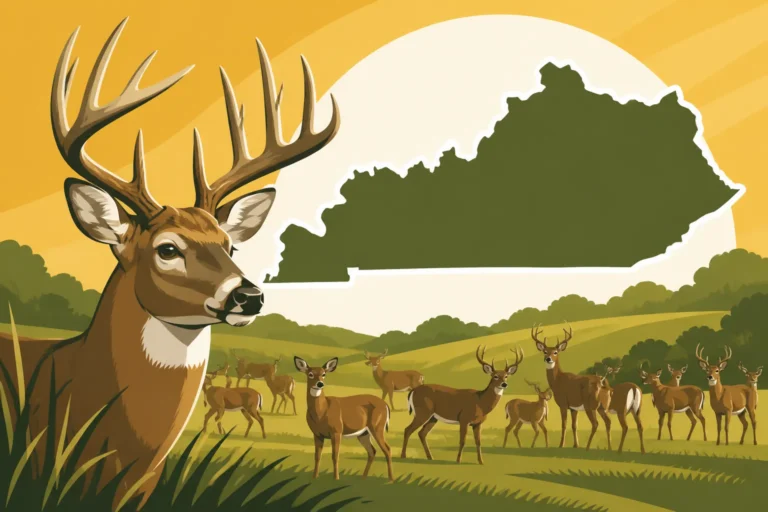
Kentucky features the largest free ranging elk herd east of the Mississippi river through a massive conservation project.
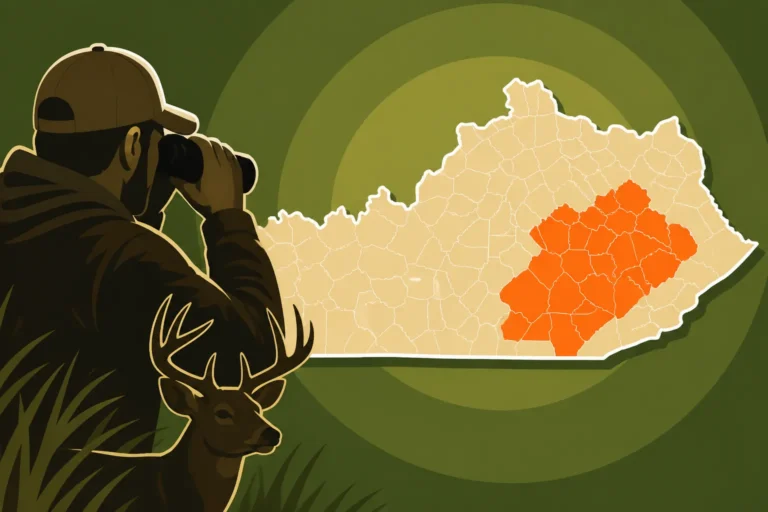
Kentucky’s twenty-two county Chronic Wasting Disease surveillance zone explains fatal neurological disease risks and local deer population impacts.
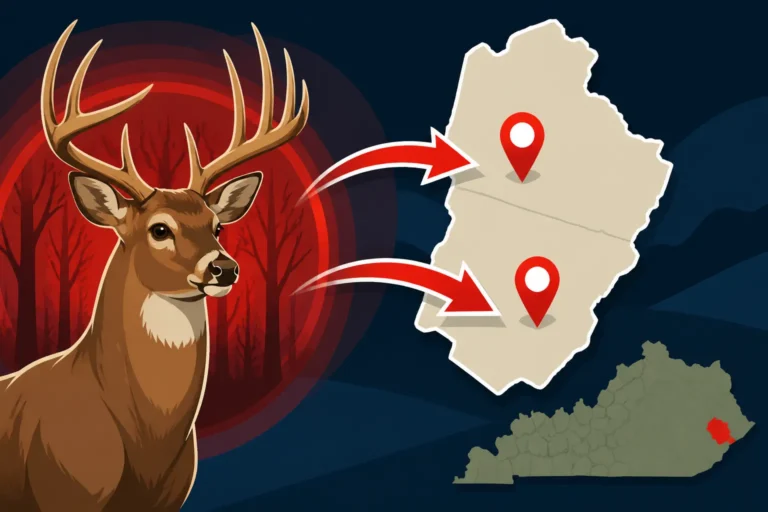
Chronic Wasting Disease detections in Ballard County reveal how fatal prions spread among Kentucky deer populations and threaten wildlife.

Kentucky deer harvest records and the Telecheck system reveal statewide trends, regional differences, and management data.

Kentucky Bluegrass Region limestone soils and rich forage provide superior nutrition that allows trophy whitetail deer antlers to grow.
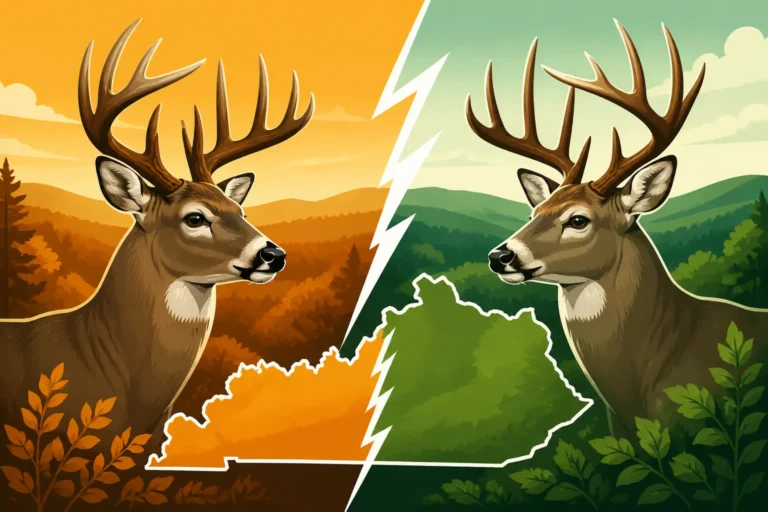
Eastern Kentucky and western Kentucky whitetail deer differ significantly in population density, habitat, food sources, and required hunting strategies.
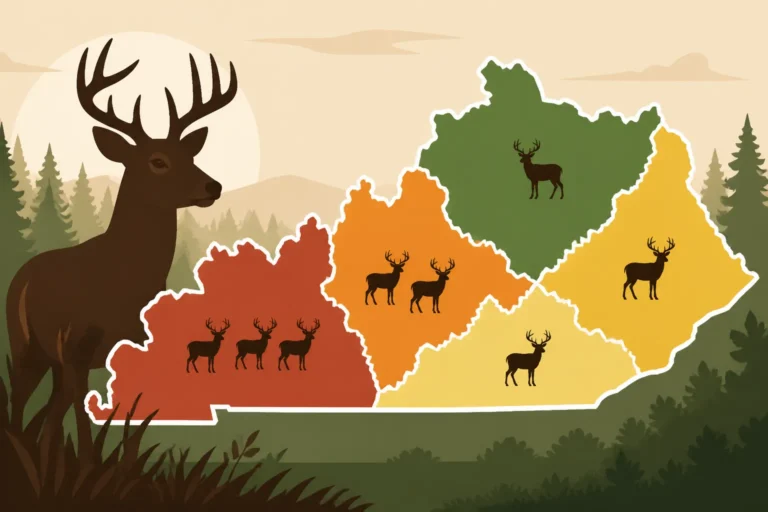
Kentucky deer density variations across regions, influenced by agricultural crop abundance, habitat quality, and disease outbreaks.
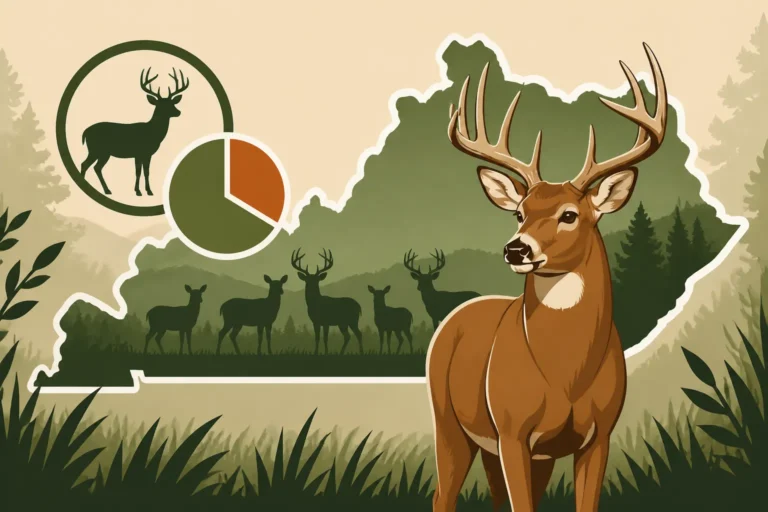
Kentucky deer population estimates explain how wildlife biologists calculate herd numbers and manage whitetail conservation across the state.