Why Red Wolves Vanished From Kentucky
It’s easy to look across Kentucky’s vast forests and fertile river bottoms today and imagine the deer, turkeys, and even elk that roam free. But what about the apex predators that once stalked these same lands? For generations, Kentucky was home to the enigmatic red wolf, a vital part of the ecosystem that has since vanished. This guide dives deep into the historical presence of the red wolf in Kentucky, exploring the forces that led to their extirpation and what their disappearance teaches us about conservation and human impact on wildlife.
The Ghost of the Red Wolf: A Kentucky History
Imagine a time when the howl you heard echoing across the ridges wasn't that of a coyote, but something larger, more substantial. That was the sound of the red wolf in Kentucky, a creature that once roamed widely across the southeastern United States, including deep into the Bluegrass State. Their absence leaves a quiet void, a missing piece in our natural heritage that often goes unacknowledged by those who only know Kentucky's current wildlife.
Tracing Their Ancient Paw Prints Across the Commonwealth
Historically, red wolves were the dominant canid across much of the eastern and south-central US. In Kentucky, their range wasn't confined to one specific region; historical accounts and archaeological findings suggest they were widespread, from the rugged Cumberland Mountains in the east to the expansive bottomlands of the Ohio and Mississippi Rivers in the west. They thrived in a mosaic of habitats: dense forests, swamps, cane breaks, and open woodlands. These wolves were incredibly adaptable, capable of navigating diverse landscapes, which is precisely why their eventual disappearance is such a stark reminder of how dramatically our state has changed. They weren't just passing through; they were an integral, enduring presence for thousands of years, coexisting with, and shaping, the very landscape and animal populations we still admire today. If you were to open up an advanced mapping tool like GoHunt and try to plot their historical range on a modern map, you'd quickly realize just how much prime real estate they once called home. Their domain was truly expansive, covering areas that today are bustling cities, agricultural fields, and managed timberland.
The Ecological Niche They Once Filled
Red wolves weren't just another animal in the woods; they were key players in a complex ecological drama. As apex predators, they sat at the top of the food chain, primarily preying on deer, small mammals like rabbits and raccoons, and even some birds. Think of it: a healthy red wolf population would have naturally kept deer herds in check, ensuring healthier individuals and preventing overbrowsing of vegetation. This, in turn, would have positively impacted countless other species that rely on specific plant life for food and cover. Their presence meant a more robust, balanced ecosystem. Without them, the dynamics shift, sometimes subtly, sometimes dramatically. The ripple effect of removing an apex predator is profound, leading to what scientists call a "trophic cascade." For example, with fewer wolves, deer populations can sometimes grow unchecked, leading to increased pressure on young forest growth, which then impacts species like grouse or certain songbirds that rely on that understory. Understanding the historical role of the red wolf helps us appreciate the delicate balance of nature and the profound impact even a single species can have. Their legacy is a testament to the intricate web of life that once flourished here.
The Pressures That Led to Their Disappearance
The story of the red wolf's vanishing act in Kentucky isn't a simple one; it's a tapestry woven with threads of human expansion, fear, and unintended consequences. It's a sad chapter in Kentucky Wolf History and Extirpation that highlights a pattern repeated across much of the continent for many of our native large carnivores.
Early Settlement and the Changing Landscape
When European settlers began pouring into Kentucky in the 18th and 19th centuries, they brought with them a very different vision for the land. Forests were cleared for agriculture, towns sprang up, and roads crisscrossed once-wild territories. This wasn't just about cutting down trees; it was a fundamental transformation of habitat. The dense, unbroken forests and expansive cane breaks that red wolves relied on for hunting, denning, and raising their young began to shrink and fragment. Imagine a wolf pack needing vast tracts of undisturbed land to sustain itself; as farms and settlements spread, these vital territories became smaller, isolated pockets, making it harder for wolves to find food, mates, and safe havens. The sheer scale of this change was unprecedented, altering ecosystems that had been stable for millennia. The bison, too, met a similar fate, as Kentucky Bison History Before Settlement shows, demonstrating how quickly human expansion can reshape wildlife populations. The landscape of Kentucky today, much of it agricultural or developed, stands in stark contrast to the wild frontier the red wolf once called home.
Persecution, Predator Control, and Bounty Systems
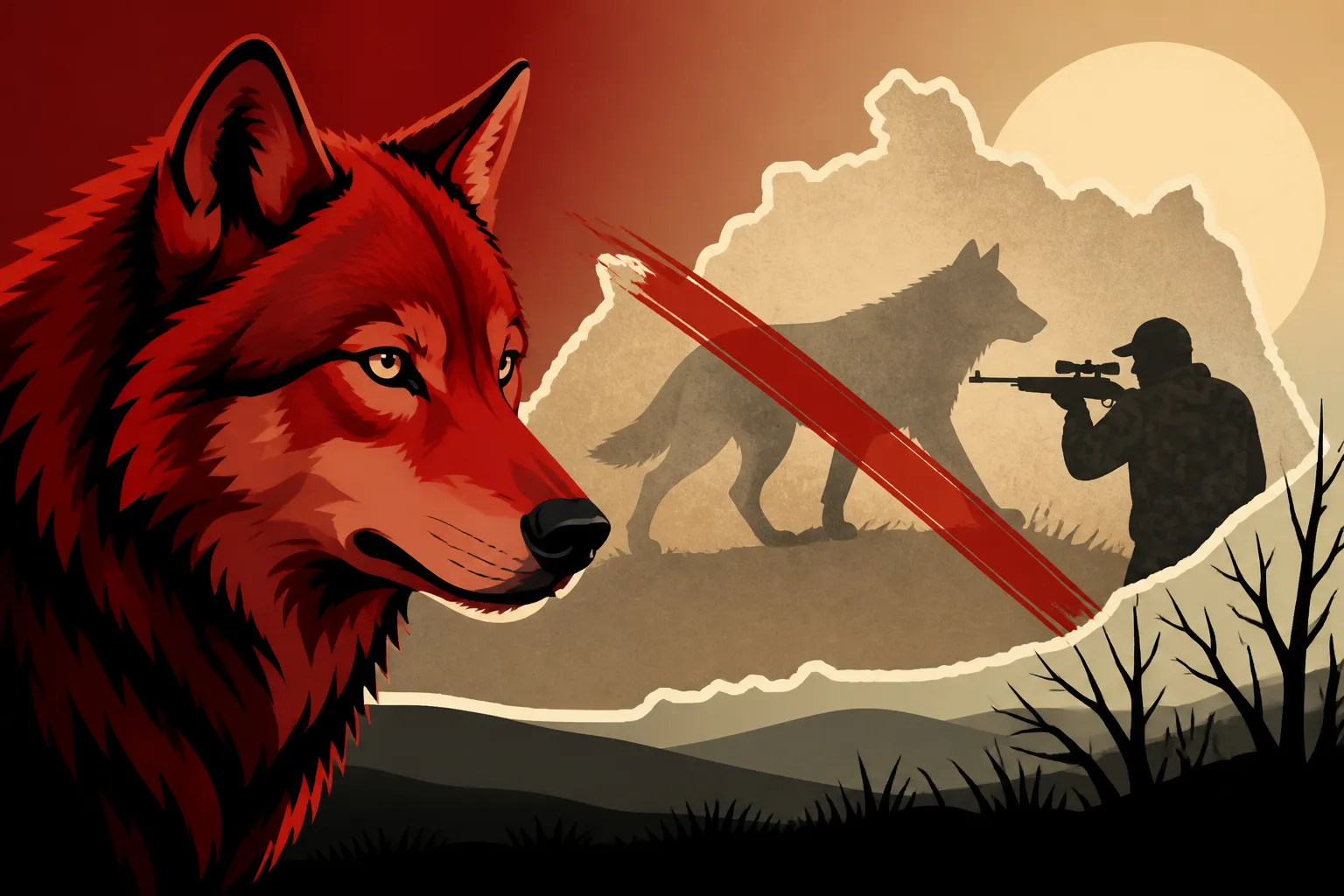
Beyond habitat loss, red wolves faced direct and often brutal persecution. Settlers, trying to protect their livestock and livelihoods, viewed wolves as a direct threat. This fear, often fueled by misunderstanding and exaggerated tales, led to widespread efforts to eradicate them. Kentucky, like many other states, implemented bounty systems, offering monetary rewards for wolf pelts or carcasses. This incentivized hunting and trapping, turning wolf eradication into a profitable endeavor for many. It wasn't just about individuals defending their farms; it became a systematic, government-sanctioned campaign to eliminate predators. These efforts were incredibly effective, perhaps too effective, pushing the red wolf populations to the brink. The historical record shows a relentless campaign, driven by a desire to "tame" the wilderness and remove perceived threats to human expansion and agricultural success. The cumulative effect of habitat destruction combined with intense hunting pressure proved to be an insurmountable challenge for these resilient animals.
The Rise of the Coyote and Genetic Threats
As red wolf populations dwindled, a new canid began to expand its range into Kentucky: the coyote. Coyotes, highly adaptable and less sensitive to human presence, moved in to fill the ecological void left by the disappearing wolves. This influx of coyotes introduced a new and insidious threat: hybridization. With fewer red wolves of their own kind to mate with, the remaining individuals began interbreeding with the more numerous coyotes. This wasn't just casual mingling; it was a genetic dilution, where the unique genetic signature of the red wolf was slowly absorbed and replaced by coyote genes.
Here's a simple way to visualize the difference between red wolves and coyotes:
| Feature | Red Wolf (Historically) | Coyote (Present Day) |
|---|---|---|
| Size | Medium-sized, larger than coyote, smaller than gray wolf | Small to medium-sized |
| Build | Lean, long legs, relatively narrow skull | Lean, smaller frame, often appears rangier |
| Coloration | Reddish-brown, tawny, sometimes with gray/black streaks | Grayish-brown, tan, often with darker saddle over back |
| Habitat | Forests, swamps, coastal prairies | Highly adaptable; prairies, deserts, forests, urban areas |
| Social Structure | Pack animals, highly social | Can be solitary, in pairs, or small family groups |
| Prey Base | Deer, raccoons, rabbits, small mammals | Small mammals, birds, carrion, some deer |
This interbreeding was particularly problematic because the offspring, while appearing wolf-like, carried a mix of genes, further blurring the lines and making it even harder for pure red wolves to persist. Eventually, pure red wolves were functionally wiped out in the wild, not just by bullets and traps, but by a silent, biological takeover. This genetic threat is one of the most significant challenges in modern red wolf conservation efforts, even in the few places where reintroduction attempts are being made. The Kentucky Coyote Range and Density today is a testament to how successfully they filled the void left by their larger, red-coated cousins.
Echoes of the Past: What We Learned and Future Possibilities
The disappearance of the red wolf from Kentucky is a somber reminder of past ecological mistakes, but it also provides valuable lessons for how we approach wildlife management today. It underscores the profound and often irreversible impact that human activities can have on even the most robust species.
The Ecological Vacuum and New Canid Dynamics
With the red wolf gone, Kentucky's ecosystems experienced a significant shift. As mentioned, coyotes quickly moved in and became the dominant wild canid. While coyotes play a predatory role, their size, hunting strategies, and preferred prey are generally different from those of the red wolf. This means the ecological balance isn't simply "replaced"; it's fundamentally altered. For example, some studies suggest that in the absence of larger predators like wolves, deer populations can fluctuate more dramatically or exhibit different behaviors. Kentucky Predator Impact on Fawn Recruitment might look very different now than it did when red wolves were present, as coyotes typically prey on fawns but adult deer face less pressure from them compared to wolves.
Today, coyotes are integral to Kentucky's wild spaces. They are found in virtually every county, from the urban fringes of Louisville to the deepest corners of the Daniel Boone National Forest. Their adaptability is truly remarkable, allowing them to thrive in human-dominated landscapes where red wolves could not. This new canid dynamic influences everything from small game populations to how deer behave on public and private lands. Understanding this shift is crucial for current wildlife managers, as they must now work within an ecosystem shaped by the absence of one apex predator and the proliferation of another. Hunters often use tools like GoHunt to understand current animal movements and densities, but imagine how different those maps would look if red wolves were still the primary wild canids.
The Complexities of Reintroduction in a Changed World
Given the red wolf's extirpation, one might wonder: could they ever return to Kentucky? The answer is incredibly complex. While some limited reintroduction efforts have taken place in other parts of their historical range, bringing them back to Kentucky faces monumental challenges.
Firstly, the very habitat that sustained them for millennia is largely gone or severely fragmented. The vast, undisturbed tracts of land required for a viable red wolf population are scarce. Our current landscape, with its extensive agriculture, dense road networks, and growing human population, presents significant obstacles. Secondly, the genetic issue of hybridization with coyotes remains a massive hurdle. Any reintroduced red wolves would inevitably encounter coyotes, risking further genetic dilution and undermining conservation efforts. This is a critical factor, as maintaining the genetic integrity of the species is paramount.
Finally, public perception and acceptance are huge. Many landowners and residents still harbor historical fears about large predators, particularly concerning livestock. Overcoming these deeply ingrained attitudes would require extensive education and outreach. For these reasons, red wolves remain on the list of Game You Cannot Hunt in Kentucky not because they are protected game, but because they simply no longer exist in the wild here. While the idea of seeing red wolves return is captivating, the reality of successful reintroduction in a state like Kentucky, with its current ecological and social dynamics, is a distant and complex aspiration. Our focus on wildlife conservation in Kentucky today tends to be on species like deer, elk, and turkey, managing for their populations within the parameters of our current, much-altered landscape. The story of the red wolf, however, serves as a powerful cautionary tale and a reminder of the precious, often fragile, balance of our natural world.
Disclaimer
This article is for general informational purposes only and does not constitute professional advice. Laws, prices and regulations vary by location and change over time. Consult a qualified professional for guidance on your specific situation.