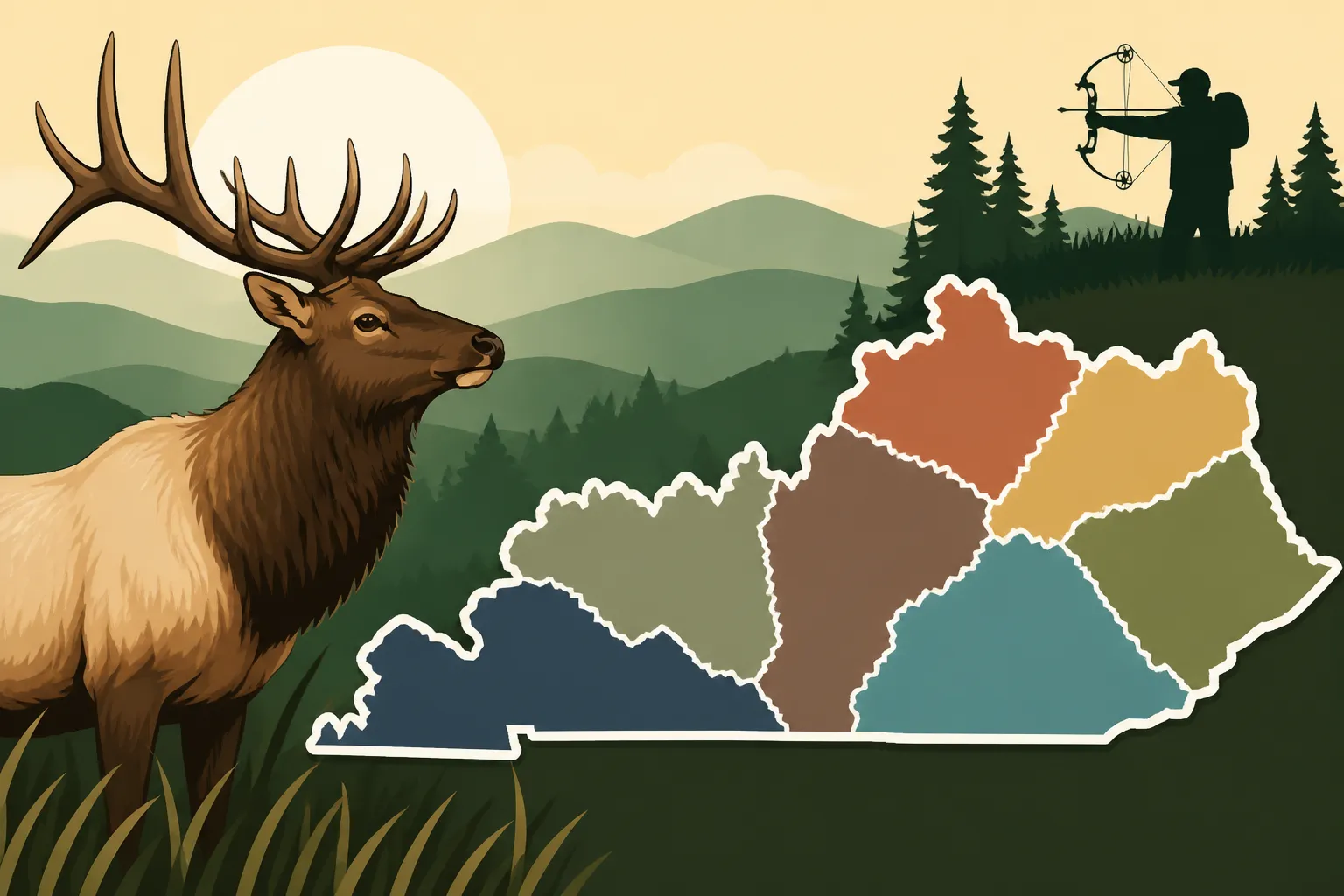
Kentucky’s Seven Elk Hunting Units
The allure of a Kentucky elk permit is undeniable, offering a chance to pursue magnificent animals in the rugged beauty of the Appalachian foothills. However, the system can feel like a labyrinth, with specific hunting units dictating where and when you can hunt. This comprehensive guide aims to demystify Kentucky's seven elk hunting units, providing insights into what makes each one unique and how to approach your application and hunt.
The Dream of Elk Hunting in Kentucky: An Overview
Kentucky's elk herd is a true conservation success story, transforming the southeastern part of the state into an elk hunting destination that draws passionate hunters from all over. It’s an opportunity many dream of, but understanding the lay of the land, especially the specific Elk Hunting Units (EHUs), is critical to making that dream a reality.
A Brief History of Kentucky's Elk Restoration Success
It's hard to imagine, but Kentucky's native elk population was completely extirpated by the mid-19th century, victims of habitat loss and unregulated hunting. Fast forward to the late 1990s, and the Kentucky Department of Fish and Wildlife Resources (KDFWR), along with partners, began an ambitious reintroduction program. Over several years, more than 1,000 elk were transplanted from western states into the rugged coalfield regions of eastern Kentucky. This monumental effort paid off spectacularly, and today, Kentucky boasts the largest free-ranging elk herd east of the Mississippi River, estimated at over 10,000 animals.
This incredible rebound has created an equally incredible hunting opportunity. Hunters now flock to the state, hoping to draw one of the coveted permits. The success of this program isn't just about numbers; it's about bringing a majestic animal back to its historical range, creating economic opportunities for local communities, and offering an unparalleled wilderness experience. When you're out there, glassing a distant ridge, you truly feel a part of something special, witnessing the success of dedicated conservation firsthand. It’s a testament to what thoughtful management and community support can achieve.
Understanding Kentucky's Elk Quota Hunt System
With such a thriving herd, the KDFWR carefully manages elk hunting through a quota system, ensuring sustainable populations while providing quality hunting experiences. This isn't a simple over-the-counter tag situation; permits are limited and awarded through a lottery draw system. Each year, thousands of hopeful hunters apply for a chance to pursue a Kentucky bull or cow elk. The draw odds can be challenging, but the potential reward makes it worth the effort for many.
The quota hunt system is designed to distribute hunting pressure and target specific management goals within different areas of the elk zone. This is where the Elk Hunting Units (EHUs) come into play. When you apply, you don't just apply for an "elk permit"; you apply for a specific type of permit (bull, cow, or either-sex) within a specific EHU. This means that if you draw a permit for EHU 1, you can only hunt in EHU 1. Understanding the nuances of each EHU before you even submit your application is absolutely paramount. It dictates your strategy, your scouting efforts, and ultimately, your chances of success. Hunters serious about drawing a tag need to understand the application windows and requirements, as outlined in the KDFWR's guide on Applying for a Kentucky Elk Permit.
Navigating Kentucky's Seven Designated Elk Hunting Units (EHUs)
The vastness of Kentucky's elk restoration zone, spanning over a million acres across 16 counties, is broken down into distinct Elk Hunting Units. These units are more than just lines on a map; they represent different ecological characteristics, accessibility levels, and elk population densities. For any prospective elk hunter, truly getting to know these units is the first step toward a successful hunt.
The Importance of Knowing Your EHU
Imagine drawing an elk tag, only to realize your unit is entirely composed of private land with no public access, or that the terrain is far more rugged than you anticipated. This nightmare scenario is precisely why understanding each EHU is critical before you apply. Each unit has its own personality, dictated by its geography, the mix of public and private land, and the primary industries that shaped its landscape—like coal mining or timber operations. Some units might be dominated by deep, forested hollows and steep ridges, while others feature sprawling, reclaimed mine lands with more open visibility.
Your drawn permit is tied directly to a specific EHU, making unit-specific knowledge non-negotiable. This means scouting and research must be focused on that particular area. Knowing the general topography, major roads, potential access points, and even the local communities within your chosen EHU will provide a significant advantage. This foundational understanding allows you to tailor your scouting efforts, choose appropriate gear, and develop a realistic hunting plan. Without this detailed knowledge, you might find yourself literally lost, or simply unprepared for the unique challenges your unit presents.
How EHUs Dictate Hunt Types and Seasons
It's not just where you hunt, but also what you hunt and when you can hunt it that's influenced by the EHUs. The KDFWR uses the unit structure to manage different types of permits – bull, cow, or either-sex – and to set specific season dates. For instance, a particular EHU might have a higher number of cow permits available to help manage population growth, while another might offer more bull permits to target trophy potential. Hunters looking to harvest a bull will apply for a bull permit, while those primarily interested in meat might opt for a cow or either-sex tag. The rules for each are distinct, as detailed in the KDFWR's summary of Bull, Cow and Either-Sex Elk Permit Types.
Furthermore, the season dates themselves can vary slightly between units, or specific weapon types might be restricted in certain areas. For example, some units may have specific archery, muzzleloader, or modern gun seasons that differ from others. This layered system requires meticulous attention to detail during the application process. A hunter must not only select their preferred EHU but also their desired hunt type and season. This level of granularity ensures that management objectives are met across the diverse elk range, providing opportunities while maintaining a healthy, thriving herd. Missing a critical detail here could lead to a drawn permit that doesn't align with your hunting goals or, worse, an unintentional violation of regulations.
Deep Dive into Specific Elk Hunting Units: Eastern Kentucky's Gems
Kentucky's elk restoration zone primarily encompasses the rugged and beautiful Appalachian foothills of eastern Kentucky. This region, deeply shaped by its coal mining history, offers a unique blend of dense forests, steep ridges, and expansive reclaimed mine lands. These landscapes are the battleground for elk hunters, and understanding the core units here is paramount.
EHU 1: The Heart of the Restoration Zone
EHU 1 often feels like the poster child for Kentucky's elk country, situated right in the core of the restoration zone. This unit typically covers parts of counties like Bell, Harlan, Leslie, and Knox, renowned for some of the state's highest elk densities. The terrain here is a true mix: you'll find everything from incredibly steep, timbered mountainsides with deep hollows that demand extreme physical fitness, to sprawling, undulating reclaimed strip mine lands. These reclaimed lands, often replanted with grasses and scattered trees, create ideal elk habitat, offering open feeding areas interspersed with pockets of cover.
Hunting EHU 1 means being prepared for diverse conditions. On the old mine lands, visibility can be good, making glassing a valuable tactic. You might find elk browsing in fields left behind from mining operations or tucked into small timber blocks within these areas. In contrast, the forested mountains require still-hunting or methodical calling through thick cover. Access can range from easily accessible former haul roads on reclaimed lands to incredibly remote, hike-in-only areas in the steeper timber. It's a unit that truly showcases the success of Hunting Kentucky's Record Elk Herd, but also demands a versatile and adaptable hunter. A resource like GoHunt's mapping tools can be invaluable for identifying potential public access points and understanding the topographic features of EHU 1.
EHU 2: Rugged Terrain and Remote Challenges
Just south or west of EHU 1, you'll often find EHU 2, which generally encompasses even more rugged and heavily forested terrain. This unit might include parts of Perry, Knott, and Letcher counties, characterized by some of the steepest slopes and most remote sections of the elk zone. Think deep, dark hollows, narrow creek bottoms, and towering ridges that can make a full day's hike feel like a mountaineering expedition. Public land access here is often tied to Daniel Boone National Forest or large tracts of state-owned timber, which can mean significant walks from paved roads.
Hunting EHU 2 is for the truly adventurous and physically fit. Elk in these areas tend to be more spread out and harder to locate, often favoring the remotest, steepest benches and saddles. Success here often hinges on diligent scouting, understanding elk movement patterns in relation to food and water sources in rugged topography, and mastering calling techniques. Getting an elk out of EHU 2 can be as challenging as finding it, so be prepared for a tough pack out. Hunters often recount how essential calling is in these units; learning how to effectively execute Calling a Southeastern Kentucky Bull Elk is a must. These are the kinds of units where a high-quality GPS unit or a reliable mapping app is not just a convenience but a necessity, especially when venturing deep into the backcountry.
EHU 3: A Mix of Public and Private Access
EHU 3 presents a slightly different set of challenges and opportunities, often serving as a transition unit where the heavy impacts of coal mining might lessen, giving way to more agricultural interfaces or a greater mix of smaller private timber holdings. This unit might include parts of Harlan, Bell, and possibly other counties further north. While still featuring substantial public land and reclaimed mine lands, hunters may encounter more patchwork private parcels. This necessitates a proactive approach to securing landowner permission, which can be the key to unlocking prime hunting grounds.
Elk in EHU 3 might use a broader range of habitats, from dense timber to farm fields bordering woodlands. They might be more accustomed to human activity, but also more sensitive to pressure. Understanding the subtle movements of elk between these diverse areas is crucial. Food sources could include mast crops in the timber, agricultural crops on private land, or revegetated areas on reclaimed sites. This unit demands flexibility and a keen eye for sign in varied environments. It's a unit where having an accurate map showing property boundaries is essential, and where a respectful knock on a farmer's door could lead to a memorable hunting experience.
Exploring Additional Elk Hunting Units: Variety Across the Landscape
Beyond the core units in the eastern coalfields, Kentucky’s elk zone extends into areas that offer different ecological characteristics and hunting experiences. These units represent the fringes and transition zones of the elk range, providing unique challenges and opportunities for hunters willing to explore them.
EHU 4: Transition Zones and Diverse Habitat
EHU 4 typically covers areas that might be a blend of the rugged coalfields and slightly less extreme terrain, perhaps extending into counties like Clay or Knox where the landscape begins to soften slightly, yet still holds significant elk populations. You might find a mix of older growth timber, managed forestland, and some agricultural plots interspersed throughout. This diversity in habitat means elk can utilize a wider array of food and cover sources, from dense forest undergrowth to open clear-cuts, and even venturing into fields near rural communities.
Hunting EHU 4 requires adaptability. Elk movement patterns can be influenced by timber operations, farming practices, and general human presence. Access might be a bit easier in some areas compared to the most remote parts of EHUs 1 and 2, but hunters should still expect challenging conditions. Success often comes from extensive scouting to understand how elk are using the various habitat types and identifying key travel corridors between different feeding and bedding areas. Knowing how to read a ridge for Cumberland deer, or where to find good mast crops, can transfer directly to finding elk here. GoHunt's data on historical success rates for specific EHUs can provide valuable insights for applicants considering EHU 4, helping them weigh their options.
EHU 5: Smaller Pockets, Targeted Opportunities
EHU 5 often represents units that might be a bit more fragmented or have lower elk densities compared to the central strongholds. These units might be on the periphery of the main elk range, perhaps in counties like Owsley or Estill. While still holding huntable populations, these areas may require a more targeted approach. Elk might be found in smaller, isolated herds or more dispersed pockets of habitat, meaning a hunter needs to be exceptionally good at finding fresh sign and covering ground.
Hunting EHU 5 could involve more extensive walking to locate animals, or focusing on specific habitat features like large clear-cuts or remote timber blocks that offer prime feeding and bedding. These units might also have a higher percentage of private land, making permission-seeking even more crucial. The reward, however, can be a hunt with less pressure and a feeling of truly earning your animal. It's about breaking down the unit into manageable chunks and meticulously scouting those areas.
EHU 6: The Westernmost Edge of Elk Country
Moving even further west, EHU 6 might represent the westernmost reaches of the elk restoration zone, potentially encompassing parts of counties like Laurel or Jackson. This unit could feature a landscape that is less intensely impacted by historical coal mining and more characterized by mature timber, agricultural lands, and perhaps even some rolling hills transitioning away from the steeper mountains. While elk are present, their distribution might be more scattered, and they could be more influenced by human development and farming activities.
Hunting EHU 6 offers a unique perspective on Hunting Eastern Kentucky Coalfield Country, as the terrain begins to shift. Hunters here might find elk utilizing larger tracts of private timber interspersed with agricultural fields. Understanding where elk are moving between these food and cover sources, and how they react to pressure in a more populated landscape, is key. Access might involve a greater reliance on securing private land permission, as public land blocks could be smaller or more dispersed. The challenge here is less about rugged remoteness and more about identifying and accessing the smaller, potentially more elusive herds.
EHU 7: The Enigmatic Unit
You might notice that EHU 7 is often listed with a caveat: it's not currently open for quota elk hunting. This unit, which covers some parts of Pike and Martin counties, has a unique designation. The KDFWR periodically evaluates all units for their suitability for quota hunts, considering factors like elk population health, herd growth, and management objectives. For various reasons, typically related to population dynamics, localized distribution patterns, or other specific management considerations, EHU 7 has been designated as a non-hunting unit in recent years.
This designation doesn't mean there are no elk in EHU 7, but rather that the department has determined it's not currently suitable for drawing permits. It’s a testament to the KDFWR's commitment to responsible management, ensuring that hunting opportunities are only offered where they are sustainable and align with broader conservation goals. This is a critical piece of information for any applicant to understand, as applying for a unit that isn't open would obviously be a wasted application. This situation underscores Why Only Six of Seven Elk Units Are Open to quota hunting in any given year, and why checking the most current regulations is always a must.
Strategic Considerations for Applying and Hunting Each EHU
Successfully hunting elk in Kentucky involves more than just luck; it requires a well-thought-out strategy, starting long before you even set foot in the woods. Understanding how to navigate the application process and prepare for your specific unit is paramount.
Researching EHU-Specific Success Rates and Draw Odds
Before you even fill out that application, doing your homework on individual EHU success rates and draw odds is a non-negotiable step. The KDFWR publishes annual harvest reports and draw statistics, which are goldmines of information. These reports will show you how many permits were issued for each EHU, how many applicants there were, and what the success rate was for each hunt type (bull, cow, either-sex). Some units consistently have higher success rates due to higher elk densities or more accessible terrain, while others might have lower odds but could offer a more wilderness-style experience.
This data allows you to make an informed decision about where to apply. Are you prioritizing a higher chance of drawing any tag, or are you willing to take lower odds for a unit known for bigger bulls? For example, if EHU 1 has historically offered slightly better draw odds for cow permits, and your goal is venison for the freezer, that might influence your choice. Conversely, if you're chasing a true trophy, you might accept slim odds in a unit known for mature bulls. This is where advanced tools become incredibly useful. Platforms like GoHunt provide comprehensive data on draw odds, historical harvest reports, and mapping features that can help you strategize your application based on real statistics. Understanding these numbers is a critical component of Kentucky Elk Quota Hunt Rules and can dramatically impact your application strategy.
Scouting and Preparing for Your Chosen Unit
Once you've drawn that coveted permit for a specific EHU, the real work begins: scouting and preparation. This isn't just about throwing on some camo and heading out; it's about meticulously understanding the ground you'll be hunting. Start with maps—topographic maps, aerial imagery, and KDFWR public land maps. Identify potential access points, major ridges and hollows, water sources, and areas of dense cover or open feeding grounds. Tools like OnX Hunt or the Kentucky Hunt Fish App can overlay public land boundaries and topo lines, giving you an invaluable bird's-eye view.
If possible, make a scouting trip or two to your EHU before the season opens. Walk the ground, look for elk sign (tracks, droppings, rubs, wallows), and get a feel for the terrain. Pay attention to prevailing wind directions and thermals, especially in mountainous regions. Identify potential bedding and feeding areas, and key travel corridors between them. Understand that elk will adjust their patterns based on pressure, weather, and food availability. Physically prepare yourself for the hunt; Kentucky elk country is demanding, with steep climbs and long walks often required. Good boots, layers of clothing, and physical conditioning are not luxuries; they are necessities. Knowing how to efficiently execute Scouting Kentucky Public Land Before Season will pay dividends when your season finally arrives.
Important Regulations and Best Practices Across All EHUs
Regardless of which Elk Hunting Unit you find yourself in, a few fundamental regulations and best practices apply across the board. These are in place to ensure hunter safety, responsible wildlife management, and the overall ethical pursuit of these magnificent animals.
Blaze Orange and Safety Requirements
Safety is paramount in any hunting endeavor, and Kentucky's elk woods are no exception. For firearm elk seasons, Kentucky mandates that hunters wear a minimum amount of hunter orange (or "blaze orange" as it's often called). This typically means a minimum of 500 square inches of solid, unbroken hunter orange on the head, chest, and back. The purpose of this requirement is simple: to make hunters highly visible to other hunters, significantly reducing the risk of accidental shootings.
Even during archery-only seasons, while not always legally required, many experienced hunters choose to wear a hunter orange vest when walking in and out of their stand locations, especially in areas with high hunter traffic. It's a common-sense safety measure. Always double-check the current KDFWR regulations for the exact requirements for your specific season and EHU. Staying safe means knowing and following these rules, and setting a good example for others. You can find more detailed information on specific requirements in Kentucky's guide to Kentucky Blaze Orange Requirements.
Telecheck and Harvest Reporting
After the thrill of a successful harvest, your responsibilities as a hunter don't end there. Kentucky, like most states, has mandatory harvest reporting, which is crucial for wildlife management. In Kentucky, this is done through a system called Telecheck. After harvesting an elk, hunters are required to telecheck their animal by phone or online within a specified timeframe, usually by midnight on the day of harvest. This process registers your animal and provides the KDFWR with vital data on harvest numbers, locations, and other statistics that help them manage the herd.
Failing to telecheck an animal is a serious violation and can result in fines and loss of hunting privileges. It’s a simple process that takes only a few minutes, but it’s absolutely essential for ensuring the long-term health and sustainability of Kentucky's elk population. Keep your license and permit information handy, as you'll need it for the Telecheck process. It’s an integral part of being a responsible hunter and contributes directly to the data that informs future quota allocations and management decisions across all EHUs.
Ethical Hunting and Respecting Landowners
Hunting elk in Kentucky is a privilege, not a right, and it comes with a deep responsibility to act ethically and respect the land and its owners. This means always identifying your target beyond a doubt before taking a shot, knowing your limitations as a shooter, and being prepared to recover your animal efficiently and humanely. It also means following all game laws and regulations, even when no one is watching. Our reputation as hunters hinges on our collective conduct.
A significant portion of Kentucky’s elk range, even within the EHUs, is private land. Gaining permission to hunt private land is a cornerstone of ethical hunting in these areas. Always ask for permission before entering private property, and always treat landowners and their property with the utmost respect. Leave gates as you found them, don't litter, and report any suspicious activity you might observe. Even on public lands, treating the resource with respect means packing out all your trash, leaving no trace, and being courteous to other users of the land, whether they are hikers, campers, or fellow hunters. Tools such as those provided by GoHunt can assist in identifying landowner information, making the process of respectfully requesting access more straightforward. Our actions in the field reflect on all hunters, and upholding a high ethical standard ensures that the privilege of elk hunting in Kentucky can be enjoyed for generations to come.
EHU Overview Table
To help consolidate some of the complex information, here's a general overview of Kentucky's Elk Hunting Units. Please remember that specific regulations, permit allocations, and open/closed status for EHU 7 can change annually, so always consult the most current KDFWR regulations.
| Elk Hunting Unit (EHU) | Primary Counties (General) | General Terrain Description | Typical Public Land Access | Common Challenges |
|---|---|---|---|---|
| EHU 1 | Bell, Harlan, Leslie, Knox | Mix of steep timbered mountains, deep hollows, extensive reclaimed mine lands (grass/scattered trees) | Moderate to High (DBNF, WMAs, reclaimed lands) | Diverse habitats require varied tactics; high elk density can mean more hunter pressure; extremely rugged areas |
| EHU 2 | Perry, Knott, Letcher | Extremely rugged, heavily forested mountains, very steep slopes, remote hollows | Moderate (DBNF, large timber tracts, less accessible areas) | Extreme physical demands; widely dispersed elk; difficult pack-outs; very remote |
| EHU 3 | Harlan, Bell, (parts of other transition counties) | Mix of timbered ridges, some reclaimed areas, increasing private land interface | Moderate (some WMAs, DBNF, more reliance on private access) | Securing private land permission; elk movement influenced by human activity and varied habitat |
| EHU 4 | Clay, Knox, (transitioning counties) | Varied: older timber, managed forests, some agriculture, less extreme relief than EHUs 1/2 | Moderate (scattered WMAs, smaller DBNF parcels) | Understanding diverse habitat use; scattered elk pockets; balancing public/private access |
| EHU 5 | Owsley, Estill (peripheral counties) | Fragmented timber blocks, more agricultural influence, smaller elk populations | Low to Moderate (smaller WMAs, greater private land percentage) | Low elk density requires extensive scouting; high reliance on private land access; targeted opportunities |
| EHU 6 | Laurel, Jackson (western fringes) | Rolling hills, mature timber, more agriculture, westernmost extent of elk range | Low (isolated public parcels, high private land reliance) | Very scattered elk; significant private land hurdles; elk may be more wary of human presence |
| EHU 7 | Pike, Martin | Currently closed to quota elk hunting. Often rugged, forested. | Not applicable for quota hunts | No hunting opportunities for drawn permits |
Disclaimer
The information provided in this guide is for general informational purposes only and is subject to change. Hunting regulations, season dates, unit boundaries, and permit allocations are set by the Kentucky Department of Fish and Wildlife Resources (KDFWR) and can be modified annually. Always consult the most current KDFWR hunting guide and official regulations before planning any hunt or applying for permits. The author and publisher are not responsible for any inaccuracies or outdated information. Hunters are solely responsible for understanding and complying with all applicable laws and regulations.