Why Only Six of Seven Elk Units Are Open
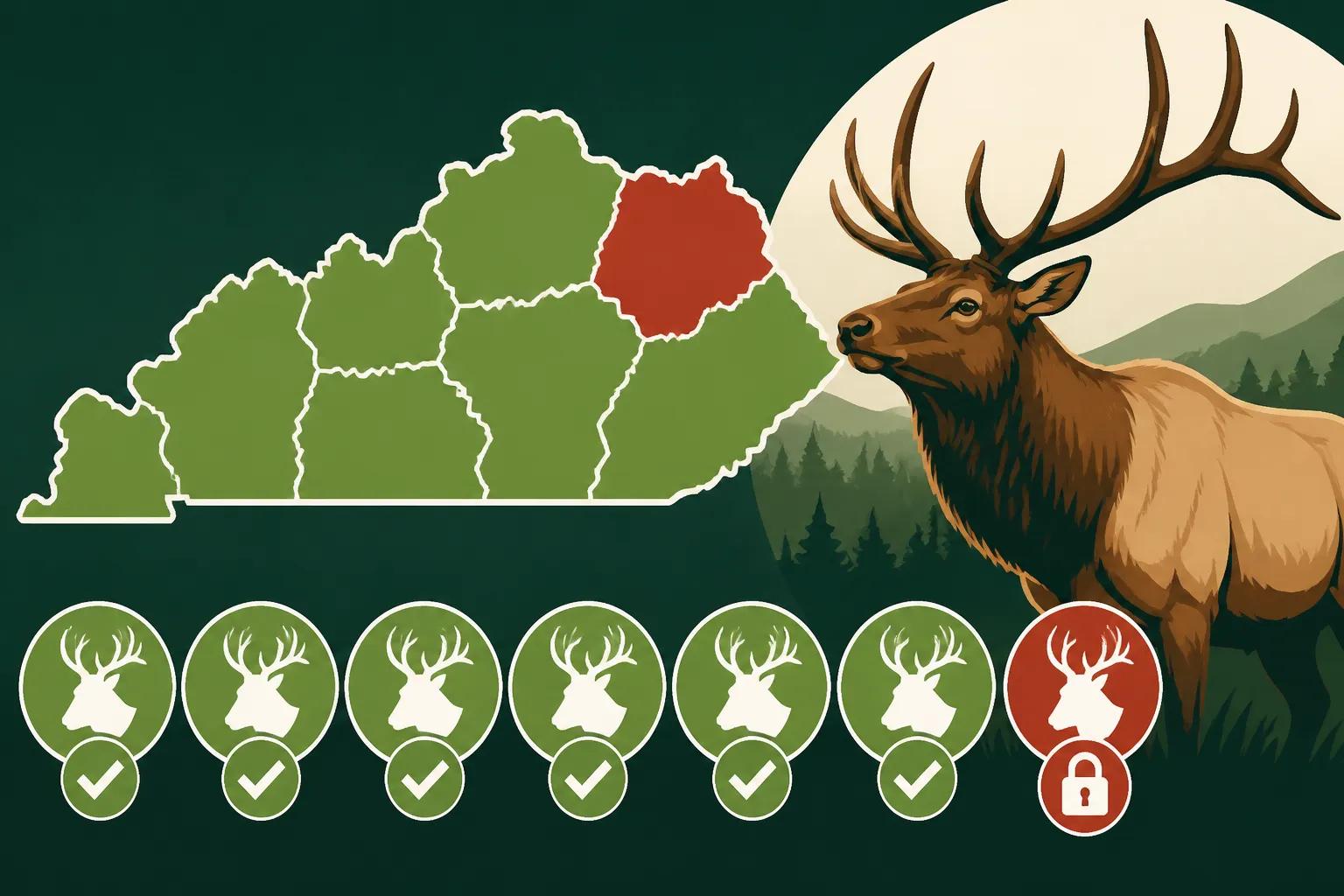
For those of us dedicated to chasing elk in Kentucky, it can be a real head-scratcher when you're looking at the permit application and realize that out of the state's seven designated elk management units, only six are actually open for hunting. This isn't just a minor detail; it significantly impacts how and where you can apply for one of those coveted tags. Understanding the "why" behind this closed unit is crucial for planning your strategy and making the most of your hunting opportunities in the Bluegrass State. This guide will walk you through the specifics, helping you decipher Kentucky's unique elk unit system.
Understanding Kentucky's Elk Restoration Success
Kentucky's elk herd is truly one of the greatest conservation stories in North America, especially east of the Mississippi. It wasn't that long ago that elk were completely extirpated from the state, vanishing due to overhunting and habitat loss by the mid-1800s. The idea of ever hunting a wild elk in Kentucky again felt like a distant dream, if not outright fantasy, for generations of hunters.
A Brief History of Kentucky's Elk Comeback
The monumental effort to bring elk back to Kentucky began in December 1997, when the Kentucky Department of Fish and Wildlife Resources (KDFWR) initiated its ambitious restoration project. Over the next five years, they reintroduced 1,000 elk, primarily from states like Kansas, Arizona, Utah, and New Mexico, into the vast, rugged landscapes of the state's eastern coalfields. This wasn't just a haphazard release; careful planning went into selecting suitable habitat, ensuring genetic diversity, and monitoring the animals' health and adaptation to their new home. The initial releases were concentrated in counties like Breathitt, Knott, Leslie, and Perry, areas known for their expansive forested lands and a mix of reclaimed strip mines that provided ideal forage and cover.
The success of this program has been nothing short of phenomenal. From that initial 1,000 animals, Kentucky's elk herd has burgeoned to become the largest east of the Rocky Mountains, with estimates often ranging well over 10,000 animals. This thriving population is a testament to dedicated conservation efforts, careful habitat management, and the incredible resilience of the elk themselves. It's a point of immense pride for Kentucky hunters and conservationists alike, transforming a region that once faced economic hardship into a premier destination for elk viewing and, for the lucky few, elk hunting. To truly appreciate the scale of this achievement, you can delve into the full story of Kentucky's Record Elk Herd.
The Establishment of Hunting Units
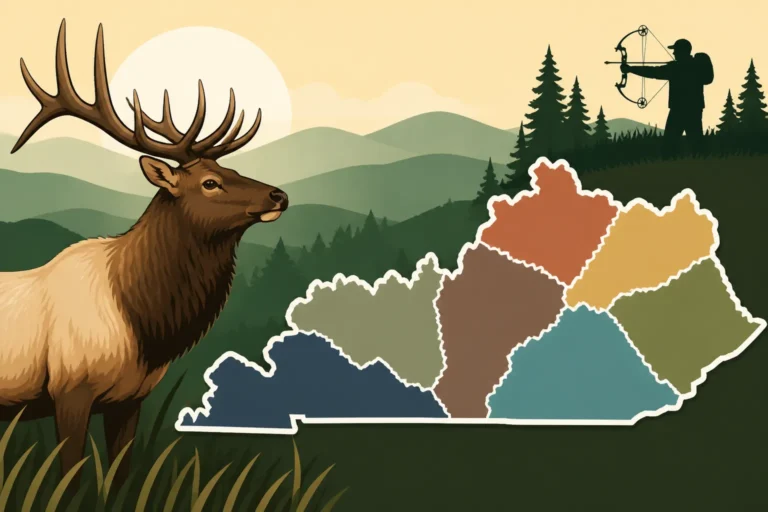
With the herd growing and expanding its range, the KDFWR recognized the need for a structured management plan to ensure sustainable hunting opportunities while continuing to foster herd health. This led to the establishment of the Kentucky Elk Restoration Zone, a sprawling area encompassing 16 counties in Eastern Kentucky. Within this zone, the KDFWR divided the elk range into specific management units, initially numbered 1 through 7. These units were designed based on a variety of factors, including elk distribution, habitat quality, geographic features, and access points, to help manage harvest quotas and spread hunting pressure effectively.
The primary goal of these units is to balance the desires of hunters with the biological needs of the herd and the interests of landowners. By breaking the large restoration zone into smaller, manageable pieces, the KDFWR can implement tailored harvest strategies. For example, some units might have higher antlerless quotas to manage herd numbers, while others might focus on mature bull opportunities. This unit-based approach allows for precision in management, preventing overharvest in one area while addressing population needs in another. Understanding these zones is critical for anyone considering applying for a permit, as it directly influences your chances and the type of hunt you're likely to experience. Many hunters rely on resources like GoHunt to research these units and their historical draw odds before applying.
The Curious Case of Unit 7: Why It's Closed to Hunting
Now, let's get to the heart of the matter that puzzles so many prospective elk hunters: what's the deal with Unit 7? When you look at the official maps or the application portal, you'll clearly see "Kentucky's Seven Elk Hunting Units" listed, but Unit 7 consistently remains off-limits for hunting permits. It's a common point of confusion, and frankly, a bit frustrating when you're trying to figure out every possible angle for an elk tag.
Identifying the Elusive Seventh Unit
Unit 7, known officially as the Central Zone, is located in a specific geographic area that sets it apart from the other six units. While the exact boundaries can shift slightly with KDFWR management updates, it generally encompasses parts of counties that are either on the fringes of the primary elk restoration zone or represent newer, expanding elk ranges. Unlike the core units that form the historical backbone of the restoration area, Unit 7 is often characterized by a mix of smaller, more fragmented habitat, and a higher density of human population, including suburban areas.
Think of it this way: Units 1 through 6 are largely concentrated in the rugged, heavily forested, and often sparsely populated eastern coalfields, where large tracts of public and private land lend themselves well to traditional elk hunting. Unit 7, however, is a different beast. It’s an area where elk have naturally expanded their range, sometimes moving into landscapes that aren't quite as wild or expansive as their original stomping grounds.
The Specific Reasons for Its Restricted Status
The KDFWR maintains Unit 7 as a non-hunting unit for several very practical and important reasons, primarily centered around human-elk conflict management and public safety.
First and foremost, the elk population within Unit 7 is still relatively low and dispersed compared to the robust herds found in the other units. The KDFWR's priority is to allow this population to establish and grow without the additional pressure of hunting. Introducing hunting too early could jeopardize these budding herds, undermining the long-term goal of natural expansion and self-sustaining populations across a broader range.
Secondly, and perhaps most critically, are the human population dynamics and land ownership patterns within Unit 7. As mentioned, this unit often includes areas with more residential development, more agricultural land, and a higher density of roads and infrastructure. Hunting elk in such an environment presents significant challenges related to public safety. Imagine a large bull elk being pursued near a residential area, or a hunter attempting to field dress an animal close to a busy road. The risk of accidental shootings, property damage, and general public disturbance is significantly higher. The KDFWR has a responsibility to manage wildlife in a way that prioritizes public safety and minimizes conflicts between wildlife and people.
Thirdly, the fragmented habitat and access issues in Unit 7 make traditional hunting difficult and potentially inefficient. Public land access might be scarce, and securing private land permission could be a complex, piecemeal endeavor. This contrasts sharply with the expansive public lands and larger private tracts available in many of the core hunting units. The KDFWR doesn't want to issue permits for areas where hunters would struggle to ethically and effectively pursue elk, leading to frustration and potential game loss. While we all dream of applying for a permit, sometimes the best management decision is to hold off.
Finally, the KDFWR actively uses Unit 7 as a relocation zone when elk stray too far into problematic areas outside the Elk Restoration Zone or cause significant damage to crops or property. Instead of culling these animals, they can be tranquilized and moved to Unit 7 to bolster its population and help establish new, viable breeding groups. This management tool is vital for reducing human-elk conflicts elsewhere and contributing to the overall health and expansion of the herd. This unit serves as a buffer and a breeding ground rather than a harvest area.
How This Affects Permit Holders and Application Strategy
For you, the prospective elk hunter, the closed status of Unit 7 means that your application choices are effectively narrowed to the other six units. This isn't necessarily a bad thing; it simply means you need to adjust your strategy. When applying for a Kentucky elk permit, you'll notice the options clearly delineate between the available units for various permit types (bull, cow, either-sex, archery-crossbo).
It’s essential to focus your research and preference points on the six open units. Utilize tools like GoHunt's Insider platform or the KDFWR's own historical draw odds to understand which units offer the best chances for the type of hunt you're after. Some units, due to their size, habitat, or elk density, might consistently have higher draw odds than others. Conversely, some might offer a better chance at a truly trophy bull, but with significantly tougher odds.
Knowing Unit 7 is off-limits allows you to avoid wasting a preference point or a valuable application on a unit that isn't producing tags. Instead, concentrate on understanding the nuances of the open units, their terrain, access, and the specific elk opportunities they provide. This might involve looking into things like what kind of terrain you'll encounter in Daniel Boone National Forest, or how to scout Western Kentucky Bottomland Deer and elk habitat.
Navigating the Open Elk Hunting Units
Kentucky's six open elk hunting units each offer unique characteristics, terrain, and hunting experiences. While the draw odds for any of the limited permits are tough, understanding what each unit generally offers can help you refine your application strategy and, if you're lucky enough to draw, prepare for your hunt.
Overview of the Six Active Units
The KDFWR doesn't provide public boundaries for the specific Elk Hunting Units, instead referring to the Elk Restoration Zone as a whole within 16 counties. However, we can understand the general distribution and characteristics of the herd across this zone, which informs how permits are allocated and which areas are actively hunted. Essentially, while the KDFWR has internal unit designations, for the public, the six "open units" refer to various areas within the broader elk zone where permits are distributed, excluding the specific, smaller "Central Zone" that is Unit 7.
These active hunting areas are primarily concentrated in the core 16-county Elk Restoration Zone, particularly in counties like Breathitt, Clay, Floyd, Harlan, Knott, Leslie, Letcher, Magoffin, Martin, Owsley, Perry, Pike, and Bell. Within these counties, hunters encounter a diverse landscape:
- Rugged Mountainous Terrain: Much of the elk zone is characterized by steep ridges, deep hollows, and dense hardwood forests. This is challenging hunting, requiring good physical conditioning and the ability to navigate difficult terrain. Areas within the Daniel Boone National Forest, for instance, are known for this type of landscape.
- Reclaimed Surface Mines: Many parts of the elk zone are on former strip mining lands that have been reclaimed. These areas often feature a mosaic of open grasslands, regenerating timber, and thick brush, providing excellent forage and bedding cover for elk. These reclaimed lands are often where hunters have their best opportunities for glassing large herds, similar to glassing an Elk Restoration Zone Meadow.
- Private vs. Public Land: Access varies significantly. There are substantial tracts of public land, including portions of the Daniel Boone National Forest and various Wildlife Management Areas (WMAs). However, a great deal of the elk zone is private property, so securing landowner permission is often crucial, especially if you draw a permit for an area predominantly made up of private holdings.
Each of these general areas presents different challenges and opportunities. For example, some may favor still-hunting Eastern Kentucky Ridges, while others might be better suited for calling tactics. The key is to research the general area you intend to apply for (or where you've drawn a tag) to understand the landscape and local conditions.
Tips for Researching and Applying to Open Units
Drawing an elk tag in Kentucky is an incredibly tough feat, but strategic research can improve your odds, or at least ensure you're applying for the right kind of hunt for you.
- Utilize KDFWR Resources: The Kentucky Department of Fish and Wildlife Resources website is your primary source for up-to-date information on application windows, rules, and regulations. They publish an annual Kentucky Elk Application Window Dates and often provide statistics on draw odds by permit type. Pay close attention to these details, as they can change year to year.
- Study Draw Odds: While specific unit draw odds aren't always publicly broken down for all units, general odds for bull, cow, and either-sex permits are available. Use this information to gauge the competition. If your primary goal is simply to hunt any elk, you might consider applying for a cow permit, as these often have slightly better odds than bull tags. Websites like GoHunt provide excellent data analysis and insights into draw probabilities, helping you make informed decisions about your application.
- Consider Your Preference Points: Kentucky uses a preference point system, meaning each year you apply and are unsuccessful, you accrue a point, which increases your chances in subsequent years. This system rewards persistence. Don't skip a year if you're serious about drawing an elk tag! The more points you have, the better your chances become, though a tag is never guaranteed.
- Understand Permit Types: Kentucky offers various permit types: bull firearm, cow firearm, either-sex archery/crossbow, and youth-specific hunts. Each has different seasons and regulations. For instance, knowing the Kentucky Bull Firearm Elk Season Dates or Kentucky Cow Firearm Elk Season Dates is critical. Decide which type of hunt best suits your preferences and abilities. Are you keen on a bugle hunt with a bow, or are you hoping for a firearm opportunity? Your choice will dictate which draw you enter.
- Scout Remotely: If you're serious about applying, start researching the general topography and land ownership of the open elk areas. Use online mapping tools like the Kentucky Hunt Fish App or ONX Hunt to look for remote areas, potential access points, and areas that might hold elk. Even if you haven't drawn a tag yet, understanding the terrain will help you plan if you do get lucky.
Looking Ahead: Future Possibilities for Elk Hunting in Kentucky
Kentucky's elk program is dynamic, constantly adapting to herd health, habitat changes, and landowner needs. The KDFWR continuously monitors the herd, and this ongoing assessment means that rules, unit boundaries, and even the status of units like Unit 7 could potentially change in the future.
Potential Changes to Unit Boundaries or Status
While Unit 7 has remained closed to hunting for sound management reasons, it's not set in stone forever. As the elk population in the Central Zone continues to grow and expand, and as management strategies evolve, there's always a possibility that the KDFWR might revisit its status. This could manifest in several ways:
- Limited Draw Opportunities: If the population in Unit 7 reaches a sustainable level and human-elk conflicts become manageable through specific targeted efforts, the KDFWR might introduce a very limited number of permits, perhaps initially focused on antlerless animals to help control herd growth in specific problem areas. This would likely be a highly controlled, small-scale draw, perhaps tied to specific hunting methods or access requirements.
- Boundary Adjustments: The boundaries of all elk units, including the non-hunting ones, are subject to periodic review. As elk expand their range, some areas currently considered part of the "Central Zone" might eventually be absorbed into adjacent hunting units, or new sub-units might be created. Such changes would reflect the KDFWR's commitment to adapting its management strategies to the ever-changing reality of the elk population.
- Special Management Hunts: In some cases, to address specific issues like localized overpopulation or crop damage, the KDFWR might implement special, highly targeted management hunts within areas like Unit 7, often involving landowner cooperation. These aren't typically part of the general public draw but are a tool for precision management.
Hunters should always stay updated by checking the KDFWR hunting guides annually, as these details are subject to change. Resources like GoHunt are excellent for tracking these regulatory updates as they occur.
Ongoing Management Goals and Their Impact
The KDFWR's overarching goal for Kentucky's elk herd is to maintain a healthy, sustainable population that provides recreational opportunities while minimizing negative impacts on landowners and local communities. This involves several key management objectives that directly influence hunting:
- Herd Health Monitoring: Regular disease surveillance (like for Chronic Wasting Disease), population surveys, and calf recruitment studies ensure the herd remains robust. A healthy herd is essential for maintaining hunting opportunities. You can learn more about Kentucky's Chronic Wasting Disease Surveillance Zone for instance.
- Habitat Management: Efforts to improve and maintain elk habitat, both on public and private lands, are continuous. This includes managing forest health, creating food plots, and encouraging diverse vegetation, all of which support larger, healthier elk populations.
- Public Education and Outreach: Managing human-elk interactions is crucial, especially as elk expand into areas with more human presence. Education helps prevent conflicts and fosters public appreciation for the herd.
- Balancing Opportunity and Conservation: The KDFWR must constantly balance the high demand for elk permits with the need to ensure the long-term health and growth of the herd. This is why draw odds are so tough, and why Unit 7 remains a non-hunting zone for now. The focus is on quality, sustainable hunting, not simply maximizing tags.
Ultimately, while Unit 7 currently remains off-limits, its status is a reflection of careful, science-based management. The KDFWR is committed to the long-term success of Kentucky's elk program, and every decision, including which units are open for hunting, is made with that critical objective in mind. Hunters who engage with the KDFWR and understand these management principles can better appreciate the challenges and successes of this incredible conservation story.
| Elk Unit Management Zone Status | Primary Focus / Reason for Status | Typical Elk Population Density | Human-Elk Conflict Potential | Hunter Access |
|---|---|---|---|---|
| Units 1-6 (Active Hunting) | Sustainable Harvest & Population Control | High (Core Elk Range) | Moderate (Managed) | Varies, often good |
| Unit 7 (Central Zone – Closed) | Population Growth, Relocation, Conflict Mitigation | Low to Moderate (Expanding Range) | High (Urban/Suburban Interface) | Limited, fragmented |
Disclaimer
Please note: Hunting regulations and unit boundaries can change. Always consult the most current Kentucky Department of Fish and Wildlife Resources (KDFWR) hunting guide and official regulations before planning any hunt or applying for permits. This guide provides general information and should not be considered legal advice.