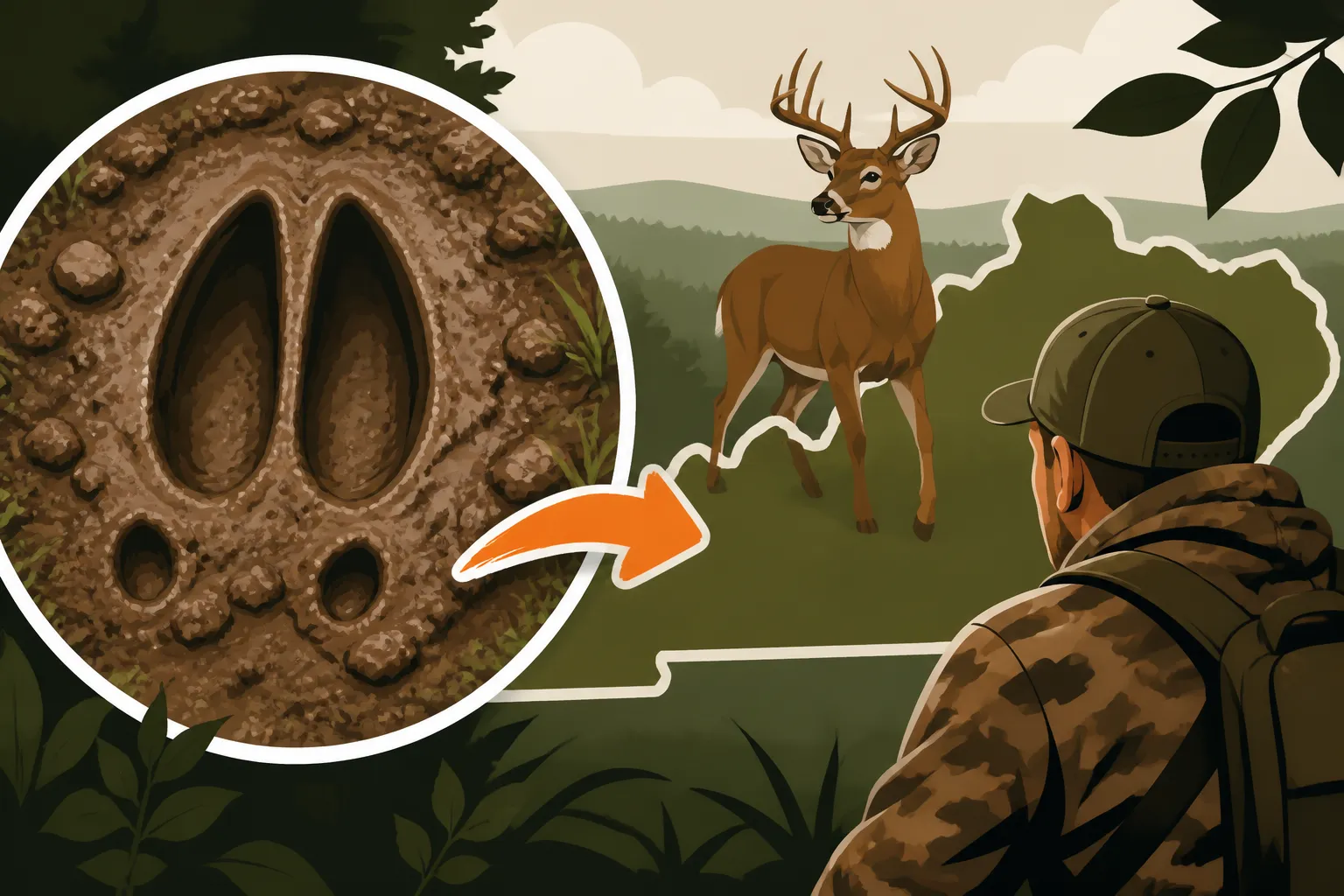
Reading Kentucky Mud for Fresh Deer Movement
Every Kentucky deer hunter knows the feeling: you find a promising area, maybe a pinch point or a food source, but you’re left wondering if deer are actually using it now, or if that impressive track in the mud is from last week. It’s frustrating to sit a stand for hours, only to realize the deer have completely changed their patterns or aren't even visiting the spot you thought was hot. This guide is all about equipping you with the crucial skill of reading Kentucky's often muddy terrain, helping you accurately interpret fresh deer movement and significantly increase your chances of being in the right place at the right time.
Why Reading Mud Matters More Than You Think
In Kentucky, especially after a good rain, the forest floor often turns into a giant ledger, recording every step a deer takes. Ignoring this valuable intel is like trying to navigate the woods blindfolded. While trail cameras are fantastic tools, they can’t be everywhere, and the ground itself tells a story that’s often more immediate and comprehensive. Learning to read those stories means understanding not just that deer are here, but when they were here, where they were going, and even what they were doing.
Beyond Just a Track: What Mud Reveals
A deer track isn't just an imprint of a hoof; it's a timestamp and a directional arrow all rolled into one. When you find a track in the mud, you’re not just confirming a deer was present; you're gathering data points. Consider the depth of the track—a deeply sunken print suggests a heavier deer or one moving quickly, perhaps spooked. The drag marks from hooves can tell you if the deer was walking casually or in a hurry. You might even find where a deer paused, pawing at the ground, or where a buck scraped its antlers on a low-hanging branch, leaving behind a muddy rub.
Beyond individual tracks, the overall pattern of disturbance in muddy areas can be incredibly insightful. Are there multiple tracks moving in the same direction, suggesting a group of does? Is there a single, large track weaving through the timber, perhaps a wary old buck checking a scrape line along a logging road? Learning to see these broader patterns, rather than just individual prints, gives you a huge advantage in understanding the daily lives of the deer you’re pursuing. Tools like the GoHunt app can help you mark these signs on your map, creating a mosaic of deer activity over time.
The Elusive "Fresh" Sign vs. Old Sign
Distinguishing fresh sign from old sign is arguably the most critical aspect of reading mud. An area might be riddled with deer tracks, but if they’re all days or even weeks old, you're essentially hunting ghosts. Fresh sign, however, means deer are currently utilizing that specific spot, making it a prime location for your next sit. The challenge is that "fresh" can be subjective and depends heavily on weather conditions. A track made an hour ago on a dry, sunny day will look different from a track made an hour ago during a drizzly morning.
The key to mastering this is paying close attention to the small details: the sharpness of the edges, the presence of dew or moisture within the print, and the overall integrity of the disturbed earth. An old track will have blurred edges, possibly filled with dry leaves or dirt blown in by the wind. A truly fresh track will often have crisp edges, and the mud within it might still appear moist, even if the surrounding ground has dried a bit. It’s a skill that improves with practice, but understanding the nuances will save you countless hours of hunting unproductive spots.
Deciphering the Dirt: A Kentucky Hunter's Guide to Mud Tracks
Once you've committed to looking for sign, the real work begins: interpreting what you find. Every track has a story, and the more you learn to read its language, the better you’ll become at predicting deer movement. It's not just about seeing a hoof print; it's about seeing the characteristics of that print.
Size and Shape: Buck, Doe, or Fawn?
While it’s true that you can’t always definitively identify a deer's sex purely from a track, there are strong indicators. Generally, a mature buck will leave a larger, broader track than a doe. Their hooves are often more splayed, especially the front hooves, and they tend to drag their feet more, leaving subtle scuff marks ahead of the print. A doe's track will typically be daintier, narrower, and more pointed. Fawn tracks are, of course, noticeably smaller.
Beyond sheer size, look at the overall shape. Buck tracks often have a slightly blunter, more rounded toe, while doe tracks can be a bit more elongated and pointed. When you find a larger track alongside smaller, daintier ones, it’s a good bet you’re looking at a doe with her fawns, or perhaps a small group of does. For a true behemoth buck, you might notice the impression of the dewclaws (the small secondary hooves) in softer mud, especially if the deer was running or on a steep incline. This is a tell-tale sign of a heavy animal.
Edges and Clarity: How Old Is That Track?
This is where the rubber meets the road (or the mud meets the boot, as it were). The sharpness and clarity of a track's edges are your primary indicators of age.
- Razor-sharp edges: A track with perfectly defined, crisp edges, where the mud appears freshly disturbed and perhaps still a bit slick inside, is very fresh. We're talking hours old, sometimes even minutes. If it rained recently, and you find a print with perfect edges, you know that deer passed through after the rain stopped.
- Slightly rounded or soft edges: As time passes, the sun and wind begin to dry out the exposed mud, causing the edges of the print to soften and lose their sharpness. Dust or fine debris might start to settle into the bottom of the track. This typically indicates a track that is several hours to a day old.
- Blurred, crumbled, or filled-in edges: Tracks that are a day or more old will have noticeably degraded edges. The mud might be completely dry and brittle, possibly crumbling into the print. Leaves, twigs, or dirt will often have blown into the track, partially obscuring it. If you see spiderwebs stretched across the inside of a track, you know it’s old.
Consider the weather. A track made during a downpour might look fresh for longer if the area remains wet. Conversely, a track made on a hot, sunny, windy day will dry out and degrade much faster. This is why consistent scouting, sometimes daily, is so important to calibrate your "freshness meter."
Associated Sign: Connecting the Dots
Tracks rarely exist in a vacuum. The most effective mud readers don't just see the tracks; they see the story around them. Look for other disturbed vegetation, broken twigs, or scuff marks. If a deer was browsing, you might see bite marks on low-hanging branches near the tracks, or even where they dropped some fresh pellets. If it's a buck, especially during the rut, look for where they might have rubbed on a tree or made a small scrape nearby.
During archery season, I’ve often found muddy trails leading to areas with fresh rubs on small saplings, indicating bucks are working specific travel corridors. A very fresh track leading directly into a known bedding area, combined with a bit of disturbed leaves where a deer settled down, gives you an immediate picture of where that deer might be right now. Don't forget to look for droppings. Fresh deer droppings are shiny and moist, while older ones are dull and dry. Combining these pieces of evidence helps create a full picture of current deer activity.
| Track Characteristic | Indication of Freshness (Soft Mud) |
|---|---|
| Edges | Crisp, sharp, well-defined |
| Moisture | Still moist or slightly damp |
| Clarity | Clear impression, minimal debris |
| Dewclaws | Visible, especially if running |
| Surrounding Mud | May show fresh displacement |
| Associated Sign | Fresh droppings, browsed vegetation, active rubs/scrapes |
Prime Mud Hotspots for Deer Activity
Deer aren't just walking aimlessly; they move with purpose, often using the path of least resistance or traveling between critical resources. Certain areas naturally collect and hold moisture, making them ideal places to find tracks. Focusing your scouting efforts on these hotspots will yield the most intel.
Creek Crossings and Stream Beds
Kentucky is crisscrossed with countless creeks, streams, and wet-weather drains. Deer have to cross these water features to get from one section of their range to another. These crossings, especially those with muddy banks or shallow beds, are absolute goldmines for tracks. Think about where a deer might prefer to cross – perhaps a narrow section, or where the banks are less steep. Often, there will be one or two dominant crossing points that deer use repeatedly.
I've spent hours walking creek beds in the Daniel Boone National Forest Hunting, especially after a heavy rain, and the stories they tell are incredible. You’ll see everything from solitary buck tracks to herds of does and fawns moving together. Not only do you get a good read on direction and frequency, but you also learn how many deer are using a particular travel corridor. Sometimes, a creek bed is the travel corridor, especially in dense bottomland areas. Don't just look for tracks where they exit; look for tracks within the wet bed itself.
Field Edges and Food Plot Entrances
Deer are creatures of habit, and their commute between bedding areas and food sources is often consistent. Field edges, especially where agriculture meets dense timber, are natural travel routes. The soft, worked earth of a farm field or the cultivated soil of a food plot often holds tracks exceptionally well. Pay close attention to gates, fence crossings, and natural funnels that lead into a green field planted for deer or a cornfield.
These areas are fantastic because they often reveal activity related to feeding. You might see tracks coming out of the woods, walking parallel to the field edge, and then entering the field itself. If you're hunting in farm country, scouting the edges of freshly tilled fields or those planted with wheat and alfalfa will give you a real-time update on where deer are entering and exiting. This is especially true during the late season when late-season food sources for Kentucky whitetails are critical, and deer are concentrating their efforts on reliable nourishment.
Logging Roads and ATV Trails
In many parts of Kentucky, especially public lands, old logging roads and ATV trails cut through otherwise dense forest. While these aren't always ideal for hunting from, they are invaluable for scouting. The packed earth, often mixed with softer sections after rain, creates a perfect canvas for deer tracks. Deer use these clearings as easy travel routes, moving between different sections of the timber or accessing various habitats.
Walking these roads and trails, especially early in the morning, can quickly tell you what deer have been doing overnight. You'll find tracks leading off into thicker cover, indicating bedding areas, or emerging from it, heading toward food or water. It’s also common to find where bucks have made scrape lines along a logging road or rubbed trees directly on the edges. When I'm scouting Kentucky public land before season, these trails are always my first stop to get a general overview of deer presence and movement patterns before I dive into the thicker stuff. A good mapping app like GoHunt can show you these old logging roads and allow you to quickly mark any hot sign you find.
Beyond Tracks: Other Mud Indicators of Deer Presence
While tracks are undeniably the most common sign you'll find in the mud, deer leave behind other clues that are just as, if not more, indicative of their recent presence and behavior. Don't let your focus on hoof prints make you miss these other vital pieces of the puzzle.
Rubs and Scrapes in Muddy Areas
During the rut, bucks become very active in signaling their presence, and soft, muddy ground can play a key role. A scrape is an area where a buck paws away the leaf litter to expose bare earth, then urinates in it, often beneath a low-hanging "licking branch" that they chew and rub their preorbital glands on. Finding a fresh scrape where the exposed earth is still muddy and wet, perhaps with fresh deer tracks leading to or from it, is a clear indicator of recent buck activity.
Similarly, rubs, where a buck rubs its antlers against a tree, can sometimes incorporate mud, especially if the ground is soft. You might see mud caked on the tree bark where the buck has been rubbing, or even muddy hoof prints directly adjacent to the rub. If you find a freshly made rub or scrape in the mud, you know a buck has been there very recently, making that area a prime candidate for a stand. These are the kinds of signs you want to mark on your GoHunt map to track buck movement.
Muddy Beds and Wallows
Deer, like many animals, will sometimes bed down in areas that are slightly damp or even muddy, especially if it offers better insulation or is a particularly secure spot. Finding a fresh "bed" – an impression in the leaves or mud where a deer has laid down – that still retains moisture or has sharp edges from a deer's body impression is incredibly fresh sign. It means a deer was just there, perhaps even within the last few hours.
Bucks, particularly during the rut, will also create wallows – muddy depressions where they roll around, usually to cool off or to spread their scent. These are less common than scrapes, but when you find one, especially an active one with fresh mud and a strong deer odor, it tells you a buck is frequently using that specific area. A wallow can be a significant draw for a dominant buck, making it an excellent spot for an ambush during peak rut.
Droppings and Urination in Soft Ground
While deer droppings are a common find anywhere deer are present, finding them in soft, muddy ground provides additional context and a strong freshness indicator. Fresh droppings, whether individual pellets or a clump, will appear shiny, dark, and moist. As they age, they dry out, become duller, and might even crumble. Finding fresh droppings directly in a muddy track or disturbed area confirms immediate presence.
Similarly, deer urination in mud leaves a distinct, often dark, wet spot that takes time to dry out. A very fresh urination spot in mud will still be highly saturated and perhaps even emit a faint odor. Combining the sight of fresh tracks with fresh droppings or urination spots in the mud creates an undeniable picture of recent deer activity. These multiple layers of sign tell you not just "a deer was here," but "a deer was here, recently, and likely engaged in specific behaviors."
It's truly amazing what the ground can tell you if you take the time to look and learn its language. The more you practice reading Kentucky mud for fresh deer movement, the more intuitive it becomes, and the more successful you'll be in your Kentucky hunting adventures.
Disclaimer
Hunting involves inherent risks, and conditions in the field can change rapidly. This guide offers general advice for reading deer sign in Kentucky. Always prioritize safety, understand and follow all Kentucky Department of Fish and Wildlife Resources regulations, and obtain appropriate licenses and permits before hunting. Local conditions, weather, and specific deer behavior can vary.