Breaking Up a Fall Turkey Flock
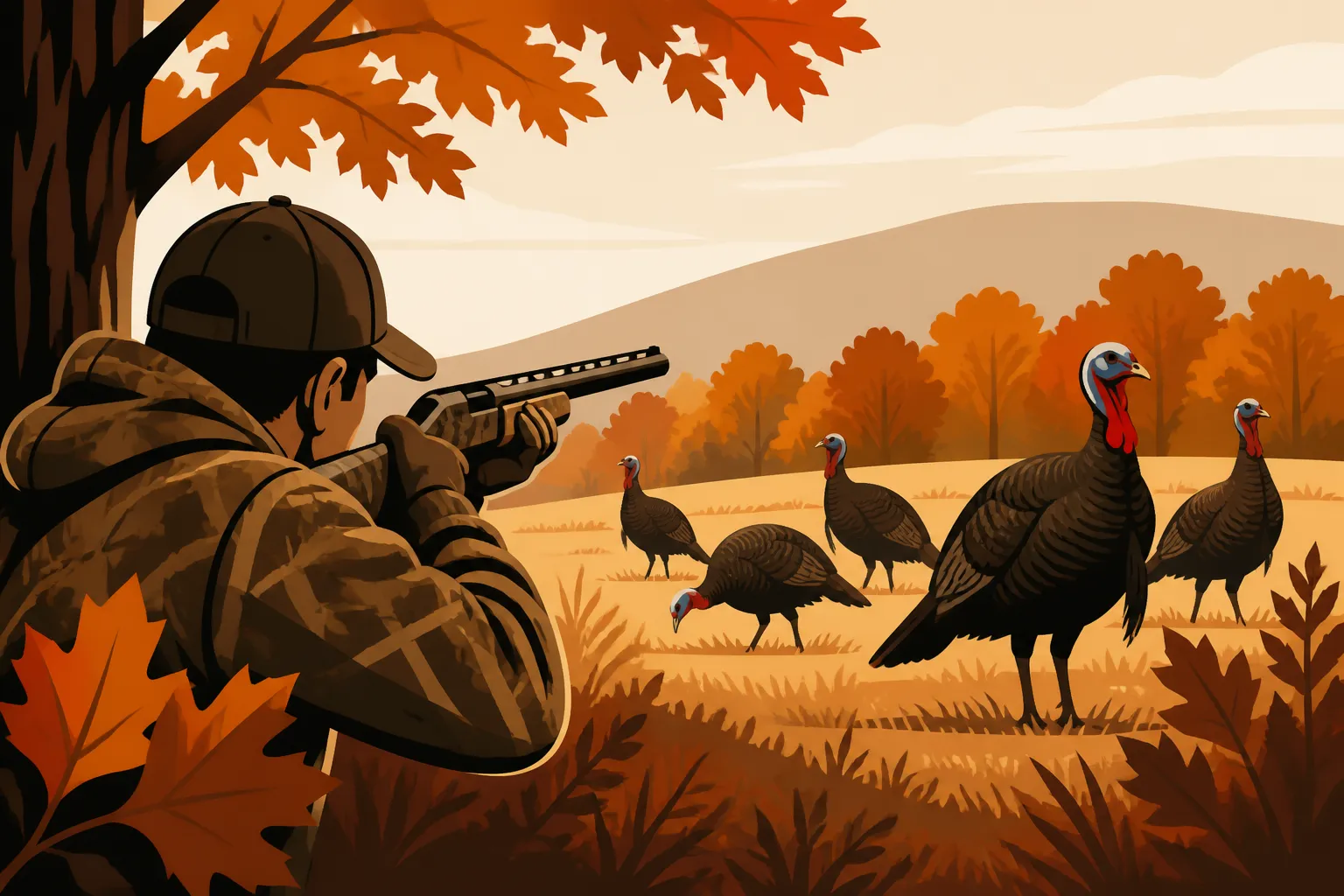
Trying to hunt wild turkeys in Kentucky during the fall can be a real challenge. Unlike the boisterous spring season when gobblers are actively seeking hens, fall birds are often grouped into larger, warier flocks, making them incredibly difficult to approach and call in. This guide will walk you through the proven strategy of breaking up a fall turkey flock, a tactic that turns their natural instinct for regrouping into your biggest advantage.
Understanding Fall Turkey Dynamics and Why a Scatter Works
In the fall, wild turkeys operate under a completely different set of rules compared to the spring. Instead of the male-dominated breeding season, fall birds are typically found in larger, mixed-sex flocks, often led by an experienced hen. These flocks, which can range from a handful of birds to several dozen, focus primarily on foraging for food and remaining safe. Their eyes and ears are multiplied, making them incredibly vigilant.
Approaching such a large, cohesive group silently enough for a clean shot is almost impossible, especially in the dry, leaf-littered woods of Kentucky. They’ll spot you long before you get within range, and then you’re left with nothing but a fleeting glimpse of their retreating forms. This is precisely why the "break-up" strategy is so effective. It disorients the birds, scatters them, and then capitalizes on their strong social instinct to reassemble.
The Social Nature of Fall Turkeys
Wild turkeys are intensely social animals, especially outside of the spring breeding season. Fall flocks are their safety in numbers, their collective intelligence for finding food, and their protection against predators like coyotes and bobcats. When these flocks are suddenly and violently separated, each individual bird's primary drive becomes finding its flock mates again. This deep-seated instinct creates the perfect window for a hunter.
Imagine a group of adolescent jakes and jennies, still learning the ropes, suddenly cut off from their wise old hen. They're going to be nervous, vocal, and eager to reconnect. Even the older birds, momentarily startled and alone, will feel vulnerable and want to get back with the group. This social cohesion, usually a hunter's bane, becomes the very lever we use to pull them back in. Their vulnerability after a scatter is the key to successfully Hunting Kentucky's Fall Turkey Season.
Why Direct Calling is So Difficult in Fall
Many new fall turkey hunters try to directly call a large, intact flock. They'll set up, let out some yelps and clucks, and then watch as the entire group either ignores them or slowly drifts away in the opposite direction. The reason for this is simple: why would a contented flock break ranks to investigate a distant call when they already have all the social interaction and safety they need right there?
A single call is rarely enough to pull an entire, happy flock toward you. It might pique their interest, but it’s unlikely to override their collective sense of security and foraging priorities. You're essentially asking an entire party to leave their fun gathering to come check out some stranger making noise in the woods. It almost never works. That's why breaking them up first is essential; it creates a need they can't ignore, making them receptive to your calls.
Scouting for Fall Flocks and Planning Your Attack
Successfully breaking up a fall turkey flock begins long before you ever step foot in the woods with your shotgun. It's all about diligent scouting to locate where these birds are feeding, roosting, and traveling. Without this foundational knowledge, you're just wandering aimlessly, hoping for a lucky encounter. Fall turkeys, even more so than spring birds, are creatures of habit, especially when it comes to food sources.
Think about what's available in Kentucky woods during the fall. Acorns, beechnuts, wild grapes, even waste grain in agricultural fields—these are all prime targets. Locating these food sources and then finding fresh sign, like droppings, tracks, and scratchings, is the first critical step. This pre-season reconnaissance can make or break your hunt, guiding you to areas where you're most likely to encounter multiple birds.
Locating Roosts and Feeding Areas
Fall turkeys tend to use the same roosting areas night after night, often large hardwood trees along creek bottoms, ridgelines, or near open fields. Listening for their evening fly-up calls or morning fly-down cackles can pinpoint these locations. If you can locate a roost, you've got a significant advantage. Just before fly-up or just after fly-down are excellent times to try and scatter a flock.
Similarly, identifying their primary feeding areas is crucial. In October and November, focus on oak ridges where acorns are plentiful. In western Kentucky, that might mean scouting large bottomland hardwoods. Later in the season, if hard mast is scarce, they might be frequenting areas with wild persimmons, cornfields, or even green clover plots. Using tools like the Kentucky Hunt Fish App or even GoHunt's mapping features can help identify these potential habitat types and landowner boundaries, allowing you to focus your efforts. Look for fresh scratchings in the leaves, indicating they've been busy digging for food.
Understanding Travel Corridors
Turkeys aren't just in roosts or feeding areas; they travel between them. Identifying these travel corridors—logging roads, old overgrown paths, creek beds, or natural funnels between topographical features—can give you the opportunity to intercept a flock. Sometimes, the best way to break up a flock isn't to try and stalk them at their food source, but to position yourself along a path you know they'll take.
For example, if you've found a roost on one ridge and a prime acorn flat on another, there's likely a well-worn path or drainage they use to go back and forth. Setting up near one of these routes, perhaps even doing a slow, quiet still-hunt along it, can put you right in their path. Being in the right place at the right time is half the battle, and scouting these corridors greatly improves your odds.
| Fall Turkey Sign | Description | Best Times to Find It |
|---|---|---|
| Droppings | Varies by sex and age; small, coiled for hens/jakes, larger, J-shaped for gobblers. | Anywhere turkeys frequent (roosts, feeding areas, travel lanes). |
| Tracks | Three distinct toes, easily visible in soft earth, mud, or snow. | Muddy creek banks, field edges, damp logging roads. |
| Scratchings | V-shaped patterns in leaf litter where turkeys have dug for food. | Oak ridges, bottomland hardwoods, near wild persimmons. |
| Feathers | Large flight feathers, smaller body feathers. | Underneath roost trees, dusting bowls, near predator kill sites. |
| Dusting Bowls | Shallow depressions in dry soil where birds dust themselves. | Sunny, dry spots near feeding areas or roosts. |
The Art of the Scatter and Setting Up for Success
Once you've located a fall turkey flock and decided on your approach, the moment of truth arrives: the scatter. This isn't a subtle maneuver; it's a deliberate, aggressive act designed to panic the birds and send them flying or running in every conceivable direction. Your goal is to separate every single bird from the main group. If even a few birds remain together, they might not be as eager to call back to you.
Executing a proper scatter requires a good sense of timing and a bold approach. It’s counterintuitive to how most hunters operate, but it’s essential for this method. After the chaos, your immediate next steps are just as critical. The way you set up, the calls you make, and your patience will determine whether those scattered birds come back within range.
Executing the Perfect Scatter
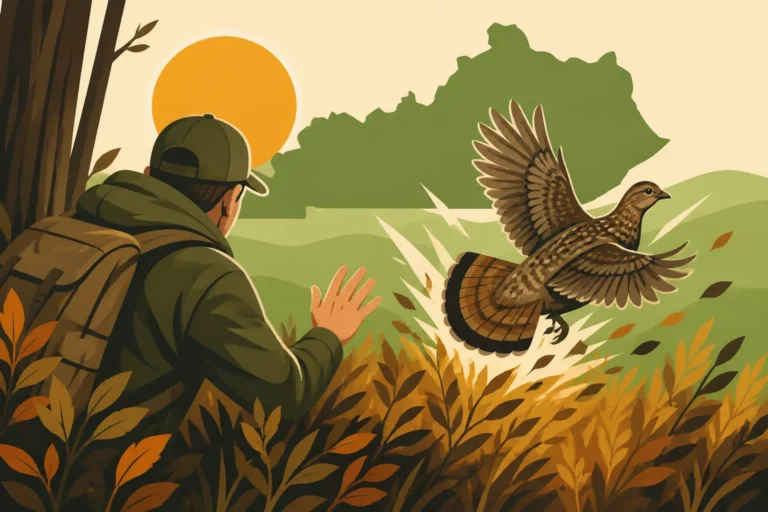
The best way to scatter a flock is to run directly at them, yelling and making as much noise as possible. Don't worry about being stealthy; subtlety is your enemy here. If you can get within 30-40 yards before they break, that's ideal. The closer you are when they panic, the more effectively they'll scatter. Some birds might fly up into trees, others will run across the ground, and many will simply fly off through the timber.
If you’re hunting with a partner, position yourselves on opposite sides of the flock before making your move. This creates a pincer-like effect, ensuring a wider dispersal. The key is to be aggressive. Imagine you're a predator, making the birds fear for their lives and scatter wildly. This is often an effective strategy for Deer Drives With Three or Four Hunters, and the same principle of causing a disturbance applies to turkeys.
Finding Your Setup Spot
Immediately after the scatter, you need to quickly but calmly assess the situation and find your setup spot. Ideally, you want to get to a point near where the flock was originally located, but with good visibility and a clear shooting lane. Look for a natural rise, a large tree for back cover, or a strategic point where scattered birds are likely to regroup. Often, this is right where they were feeding before you busted them.
Think about the terrain. If you're in open hardwoods, you might have more options. If you're in thick cover, finding a small clearing or a less dense area is vital. Pay attention to the direction the birds flew. You want to be positioned to call them back, typically from a direction they'd feel safe approaching. It’s also wise to set up where you can use a ground blind or natural cover effectively, especially if you're on public land where Using a Ground Blind on Kentucky Public Land can be a real game-changer.
Waiting and Listening
Once you’re set up, the hardest part for many hunters begins: waiting. After the initial chaos, there will likely be a period of silence. Don't rush to call immediately. Give the birds 15-30 minutes, sometimes even longer, to settle down and start feeling the urge to reconnect. During this time, listen intently. You might hear faint clucks or yelps from distant birds testing the waters.
This waiting period is crucial because it allows the panic to subside and the social instinct to kick in. If you start calling too soon, they might still be too wary to respond. Patience is a virtue in fall turkey hunting; let the woods calm down, and let the birds start feeling that undeniable pull to find their lost flock.
Calling Strategies After the Break
The scatter has happened, you're set up, and the woods are beginning to settle. Now it’s time to use your calls. This is where you leverage the birds' natural desire to regroup. Unlike spring calling, where you might be trying to imitate a hen to attract a gobbler, in the fall, you're primarily mimicking the sounds of lost turkeys trying to find their flock. Your calls should convey a sense of urgency and loneliness.
There's no single "magic call" that works every time. Instead, a varied approach, listening carefully to responses, and adjusting your calling sequence are key. Remember, you're playing on their social instincts, so sounds of other "lost" birds are often the most effective.
Loneliness Calls: Yelp and Assembly Yelp
The most crucial call after a scatter is the assembly yelp. This is a loud, excited series of yelps, often 10-20 notes long, designed to announce your presence to any scattered birds within earshot. It essentially says, "I'm here! Where are you?!" You're mimicking an anxious hen trying to call her brood back together, or a lost jake desperate to find his siblings.
Start with a series of loud, pleading assembly yelps every 10-15 minutes. Listen carefully for responses. Scattered birds often respond with soft clucks or single yelps, trying to pinpoint the source of your call before committing. As they get closer, you can scale back the volume and intensity of your calls, transitioning to softer clucks and short yelps to coax them the final distance. For tips on different calling techniques, you might want to review Grunt Calls in Mature Kentucky Timber, though that focuses on deer, the principle of varying calls applies.
Kee-Kees and Fly-Down Cackles
Kee-kees, particularly the "kee-kee run" (a series of kee-kees followed by yelps), are also incredibly effective in the fall. This sound is made by young birds or jakes and jennies, conveying a sense of youth and vulnerability. It's a distress call from a lost bird, and older hens often respond with urgency, seeking to gather the young ones.
If you know birds flew up to roost in trees during the scatter, consider using a fly-down cackle after a period of silence, especially at dawn or dusk. This simulates a bird flying down from the roost, and it can entice others to either fly down or move toward the sound. However, use this sparingly and only if it truly fits the scenario. Decoy placement, while typically for spring, can also be experimented with, though in fall it's usually less critical than the calling itself. Decoy Placement for Pressured Kentucky Birds can still offer some relevant insights.
Being Patient and Reading the Responses
This isn't a quick hunt. You might sit for an hour or more, calling periodically, before you get a response. And when you do, it might be faint. Pay close attention to the direction of the calls. Birds will often circle, trying to pinpoint your location before coming into view. They'll use terrain features and cover to their advantage.
If you get a strong response, ease off the calling and let them come. Sometimes, less is more. If they're hung up, try a soft cluck or two to reassure them. Avoid overcalling, which can make them suspicious. If they approach and hang up out of range, resist the urge to move. A slight adjustment to your call, or simply waiting them out, is usually a better strategy than blowing your cover with movement. Knowing When Kentucky Gobblers Go Quiet in May can inform you on how silence affects turkey behavior, even if it's a different season.
Advanced Tactics and Troubleshooting a Tough Flock
Even with the best planning and execution, fall turkey hunting can throw curveballs. Sometimes a flock just doesn't want to scatter well, or they ignore your calls after a perfect break. This is where advanced tactics and a willingness to adapt become critical. Experienced hunters know that every flock is different, and what worked yesterday might not work today.
Don't get discouraged if your first attempt isn't perfect. Fall turkeys are intelligent and wary animals. Persistence, patience, and a bit of ingenuity will often pay off. Think about the specific conditions you're facing and how you can adjust your strategy to overcome the challenges.
The Re-Scatter and Follow-Up
What if you scatter the flock, but they only fly a short distance and regroup quickly? Or what if you only manage to scatter a portion of the flock? Don't hesitate to re-scatter them. If you see them reforming, get up and run at them again, trying to break them up more thoroughly. Your goal is maximum dispersal.
Sometimes, after a scatter, you might only hear one or two distant responses. In this case, you have a few options. You can stay put and continue calling, hoping more birds will eventually make their way back. Or, if you have a good idea of which direction the bulk of the flock went, you can slowly and stealthily move in that direction, trying to set up closer to them for another calling sequence. This is where your GoHunt map data can be invaluable for navigating quietly and efficiently.
Using Decoys (With Caveats)
While not as critical as in spring, fall turkey decoys can sometimes be beneficial, especially if you're dealing with very wary birds that are hanging up out of range. A single hen decoy or a jake decoy can provide a visual reassurance that there are indeed other turkeys in the area. Set the decoy up where it's visible but not directly in your line of sight for shooting.
However, use fall decoys with caution. Fall turkeys are more visually oriented towards real birds moving naturally within their flock. An obviously fake decoy can sometimes make wary birds even more suspicious. It's often better to rely on your calling skills and concealment than to risk spooking birds with a poorly placed or artificial-looking decoy. If you're hunting during Kentucky Fall Archery Turkey Dates, decoys might offer a slight advantage for closer shots, but for shotgun hunting, it's often optional.
Adapting to Weather and Terrain
Kentucky's fall weather can be unpredictable. A quiet, still morning might turn into a windy, rainy afternoon. Wind can make it incredibly difficult to hear distant turkey calls and for birds to hear yours. On windy days, try to set up in sheltered areas or call more frequently and loudly. Rain can make birds less vocal, but also less wary, as their hearing is compromised.
Terrain also plays a huge role. In the steep, rugged terrain of eastern Kentucky, sounds don't travel as far, and turkeys will use ravines and ridges to approach cautiously. In the flatter, more open country of western Kentucky, they might come in more directly but also spot you from further away. Always consider the local topography and how it impacts sound and sight lines when choosing your setup after a scatter. Learning to read a ridge for deer can also help with turkey movement patterns, as described in Reading a Ridge for Cumberland Deer.
The Rewards of a Successful Fall Scatter
There's a unique satisfaction that comes with successfully breaking up a fall turkey flock and calling a bird back in. It truly feels like outsmarting nature, using their own instincts against them. When that wary old hen or jake finally appears, cautiously picking its way through the timber, responding to your lonely kee-kees or assembly yelps, it's a moment of pure hunting exhilaration.
Fall turkey hunting isn't about the thunderous gobble of spring. It's a quieter, more tactical pursuit, demanding patience, keen observation, and an understanding of turkey behavior. It's a hunt that truly tests your woodsman skills.
Honoring the Harvest and Sharing the Experience
Just like any other hunting endeavor, the harvest is just one part of the overall experience. Whether you're successful in bringing home a bird or not, the time spent in the Kentucky woods, learning about its wildlife, and honing your skills is invaluable. If you do harvest a bird, remember to telecheck it according to Kentucky Fish and Wildlife regulations.
The meat from a fall turkey is delicious and provides a healthy, organic meal for your family. There's a deep connection to the land and the food chain when you provide for yourself in this way. Sharing stories of your hunts, teaching new hunters, and fostering a love for the outdoors is what keeps our traditions alive. Whether you're pursuing these birds with a shotgun during Kentucky's Statewide Modern Gun Season or utilizing Fall Turkey Tactics With a Shotgun specifically, the process of the fall scatter is a deeply rewarding challenge.
Disclaimer
Hunting is an activity that carries inherent risks. Always prioritize safety, understand and follow all Kentucky Department of Fish and Wildlife Resources regulations, and obtain proper licenses and permits before heading afield. This guide is for informational purposes only and does not supersede official hunting regulations.