E-Collar Use on Public Ground
It's easy to feel a bit lost when it comes to using training collars, often called e-collars, on Kentucky's public hunting lands. There’s a lot of chatter out there, and navigating state regulations, respecting other outdoor enthusiasts, and ensuring you're being a responsible handler can feel like a maze. This guide is here to untangle that knot, offering a clear, empathetic look at how to use e-collars effectively and ethically while enjoying Kentucky’s incredible public hunting opportunities with your canine partner.
Understanding Kentucky's Public Land Rules for Dogs
Hunting with dogs in Kentucky is a time-honored tradition, but just like any other aspect of hunting, it comes with a set of rules and unwritten etiquette, especially when you step onto public ground. These areas are shared spaces, and ensuring everyone has a positive experience often comes down to responsible dog handling.
General Dog Management on WMAs and Forests
Most Wildlife Management Areas (WMAs) and portions of the Daniel Boone National Forest welcome hunters and their dogs, particularly for specific seasons like small game, turkey, waterfowl, or bear hunting. However, "welcome" doesn't mean "anything goes." Generally, your dog needs to be under your control at all times. This often means having them on a leash in parking areas, campgrounds, or designated high-traffic zones. When you're actively hunting, off-leash control is expected, but that control needs to be absolute. You don't want your bird dog flushing deer or your bear hound chasing a hiker’s pet.
Think about it from the perspective of the land manager. They want to provide diverse recreational opportunities, but they also have a responsibility to protect wildlife and ensure safety. This means that while your dog might be a highly trained hunting machine, their presence still needs to be managed to prevent conflicts. Always check the specific WMA or National Forest regulations before you go, as some areas might have unique rules. The Kentucky Department of Fish and Wildlife Resources (KDFWR) website is your best friend here, often outlining dog-specific rules for particular areas. For example, some WMAs might have restrictions during deer season that differ from those during small game season. Kentucky Wildlife Management Areas are diverse, and so are their regulations.
Specific Restrictions and Considerations
Beyond general control, certain situations might have tighter restrictions on dog use. During periods of high deer activity, for instance, you might find regulations limiting dog use to prevent accidental harassment of deer, especially during peak fawning season or the rut. It’s also common for WMAs to have "quiet periods" or specific closures for certain wildlife management practices like prescribed burns or habitat restoration, during which dog use might be prohibited. Always be aware of signs posted at trailheads or entry points, as these often contain critical, real-time information about temporary restrictions.
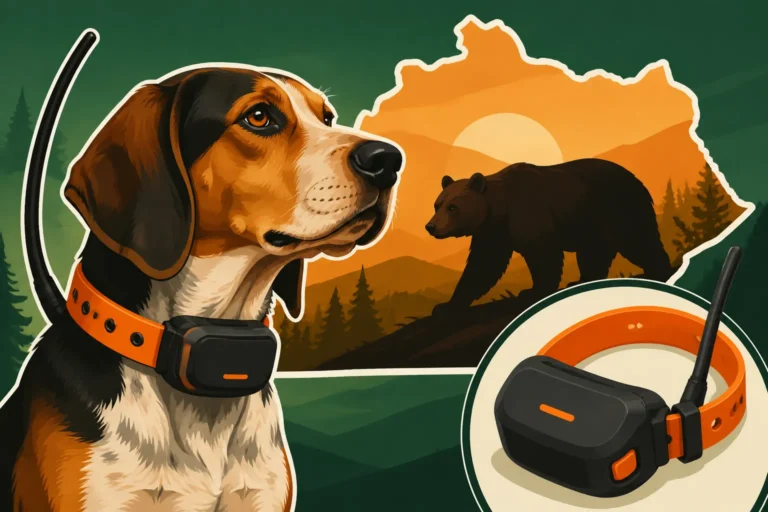
Another important consideration is the type of hunting. While many people associate e-collars with bird dogs ranging out for quail or pheasants, or even beagles working a rabbit trail, they are also invaluable for houndsmen running bear or raccoon. If you're Running Hounds for Pine Mountain Bears, an e-collar with GPS tracking becomes an indispensable tool for safety and recovery in that vast, rugged terrain. Similarly, for Running Beagles on Kentucky Cottontails, an e-collar can prevent your dog from venturing onto private land or into dangerous areas.
Respecting Fellow Outdoor Enthusiasts
This is where common sense and courtesy truly shine. Kentucky's public lands are magnets for all kinds of outdoor lovers: birdwatchers seeking rare warblers, hikers enjoying a peaceful trek, horseback riders exploring forest trails, and even other hunters pursuing different game. An uncontrolled dog, even a well-meaning one, can quickly sour someone else's experience. Imagine you’re still-hunting for deer, carefully moving through the timber, and a pack of hounds suddenly bursts through, hot on a rabbit trail. While it's part of the small game hunting experience, understanding the larger context of a shared space is key.
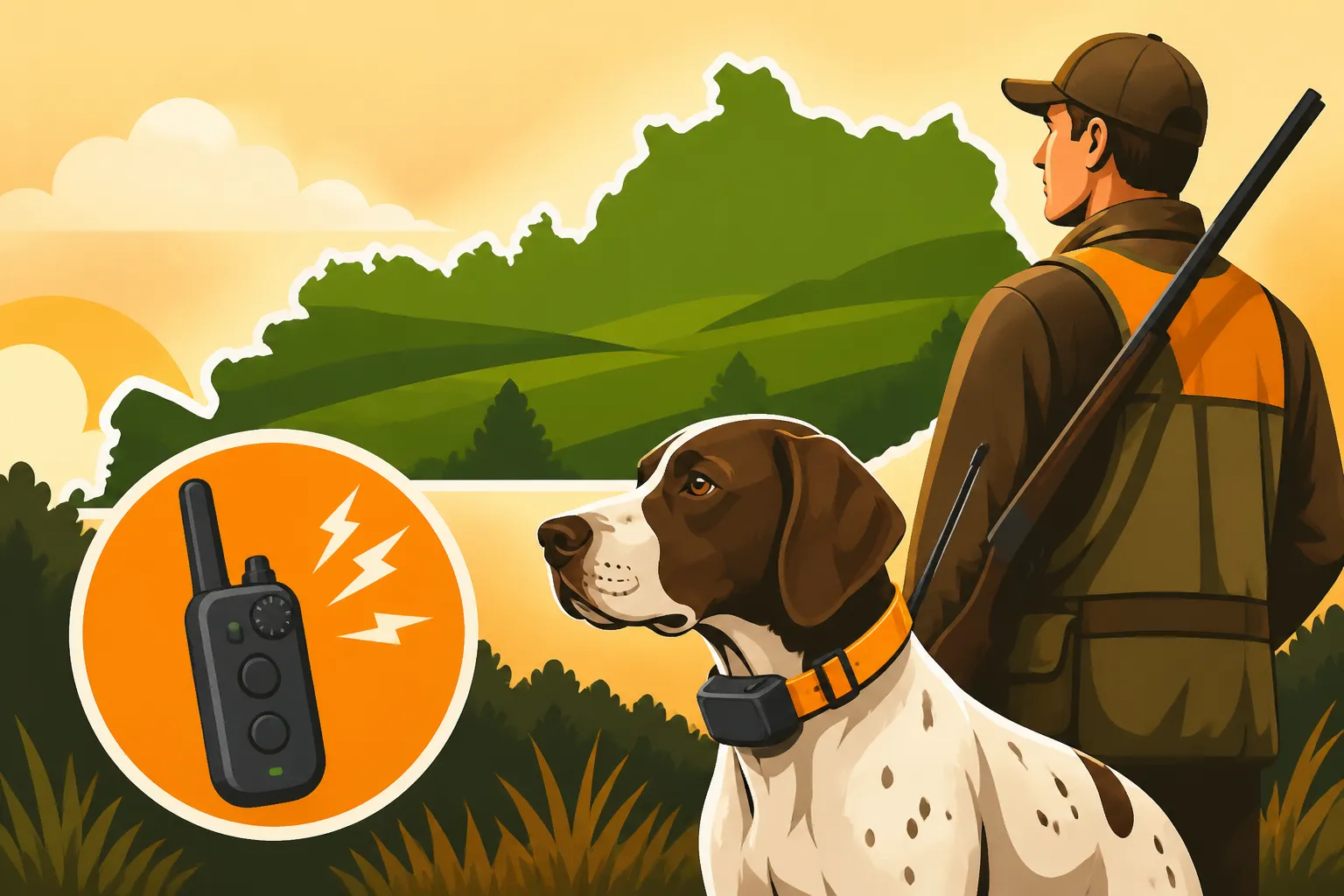
Your e-collar, when used correctly, is a vital tool for ensuring your dog doesn’t interfere with others. It allows you to recall them instantly if they start to get too close to another group, or to correct them if they show too much interest in a non-target species. This isn't just about avoiding conflict; it's about being a good ambassador for hunting. When non-hunters see well-behaved, controlled hunting dogs, it fosters a positive image of our sport. Utilizing resources like the Using the Kentucky Hunt Fish Map Tool can help you scout areas that might have less pressure from other users, reducing potential conflicts.
Why E-Collars Can Be a Game Changer for Kentucky Hunting Dogs
Let's be real, a good hunting dog is an investment of time, training, and emotion. You want them to perform their best in the field, and you want them to be safe. E-collars, despite some past misconceptions, are incredibly effective tools when used properly, offering a level of control and communication that traditional leashes simply can’t provide in the expansive, often unpredictable environments of Kentucky's public lands.
Enhanced Safety and Off-Leash Control
Kentucky's hunting grounds are rarely flat, manicured fields. They feature everything from steep eastern Kentucky ridges to dense western Kentucky bottomlands, crisscrossed with creeks, logging roads, and often, less-than-obvious property lines. A dog, even one with a strong recall, can get distracted by a scent, sight, or sound and disappear in an instant. This is where an e-collar shines for safety. It provides a reliable, consistent way to communicate with your dog at a distance, far beyond the reach of a leash or your voice.
Imagine your pheasant dog suddenly locking up on a bird, but they're dangerously close to a busy road or an unmarked property line. A quick, consistent tone or vibration from the e-collar can stop them, get their attention, or reinforce a "whoa" command, bringing them back to you or holding them steady. This isn't about punishment; it's about communication and establishing boundaries for their own protection. It protects them from traffic, from getting lost, or from straying into areas where hunting dogs aren't permitted. This reliable control also gives you confidence when Scouting Kentucky Public Land Before Season with your dog, knowing you can manage them effectively even when facing new terrain and novel distractions.
Effective Training for Specific Game
From flushing pheasants to retrieving ducks from icy waters, Kentucky offers a diverse range of hunting opportunities where a well-trained dog is invaluable. E-collars are incredibly versatile tools that can enhance training for virtually any type of game. For bird dogs, they can reinforce commands like "whoa," "fetch," and "heel" with consistency, even when the dog is focused on game. They are excellent for extending your command reach during drills in open fields or dense cover, where your voice might get lost or your dog might get "ear blind" to your calls.
For waterfowl hunters, an e-collar can be critical for teaching steady behavior in a blind, preventing early breaks, and guiding retrieves in choppy water or thick reeds. It allows for subtle corrections without breaking the quiet of a morning duck hunt. For those engaging in Predator and Furbearer Hunting in Kentucky, especially with hounds, e-collars with integrated GPS features are indispensable. They help you keep tabs on your dog's location in challenging terrain, guide them back to you, and ensure they are staying on task, not chasing non-target animals. It’s about building a consistent language that your dog understands, regardless of the environment or the excitement of the hunt.
Managing Challenging Kentucky Terrain and Distractions
Kentucky's varied landscapes mean your dog will encounter everything from deep ravines and dense undergrowth to agricultural fields and swampy river bottoms. Each environment presents its own set of challenges and distractions. A strong scent trail might lead your dog deeper into a thicket than you'd like, or the sight of another animal could send them off course. Without an e-collar, regaining control in such situations can be incredibly difficult, or even impossible.
The immediate feedback an e-collar provides is invaluable here. It cuts through environmental noise and distractions, delivering a clear message to your dog. This isn't about being harsh; it's about being understood when it matters most. For instance, if your dog is about to jump into a dangerous creek or run across a busy trail, a quick vibration or low-level stimulation can snap them out of their focused pursuit and get their attention back on you. This responsiveness is key to maintaining control in situations where conventional methods would fail, making for safer, more productive hunts across all of Kentucky's diverse habitats.
Selecting the Right E-Collar System for Your Kentucky Adventures
With so many e-collar systems on the market, choosing the right one can feel overwhelming. It's not just about picking the most expensive or the cheapest; it's about finding a system that fits your dog's needs, your hunting style, and the unique demands of Kentucky's terrain. Durability, range, and specific features tailored to hunting are paramount.
Key Features for Reliability and Effectiveness
When you're out in the field, reliability is non-negotiable. You need an e-collar that will work when you need it, every time. Look for systems that offer a wide range of stimulation levels, from gentle vibrations or tones to higher static corrections. This allows you to customize the intensity for your dog’s temperament and the specific situation. Most trainers advocate starting with the lowest effective level and only increasing if necessary. Water resistance is also crucial, as Kentucky weather can be unpredictable, and your dog might be working in wet conditions, whether it's Waterfowl Hunting Kentucky Lakes and Rivers or simply walking through dew-soaked grass.
Battery life is another huge factor. There’s nothing worse than an e-collar dying halfway through a hunt. Look for systems with long-lasting rechargeable batteries for both the remote and the collar, and consider carrying a portable power bank for multi-day trips. Ergonomics of the remote are also important – you want something that’s easy to hold, intuitive to operate, and robust enough to handle being dropped or jostled in a hunting pack. Look for large, tactile buttons that you can operate without looking, even with gloves on.
Integrating GPS and Tracking Systems
For serious hunters, especially those whose dogs range widely or pursue game in dense cover, an e-collar with integrated GPS tracking is a game-changer. These systems not only provide remote training capabilities but also show you your dog's precise location on a handheld device or even your smartphone. This is incredibly valuable in large, wild areas like the Daniel Boone National Forest or when running hounds on challenging terrain. Knowing exactly where your dog is at all times provides immense peace of mind and significantly reduces the risk of losing them.
Many modern GPS-enabled e-collars also offer mapping capabilities. Some premium services, like those found through GoHunt, integrate seamlessly with these devices, allowing you to see your dog's movements overlaid on detailed topographical maps, property boundaries, and even satellite imagery. This level of detail helps you guide your dog, understand their hunting patterns, and quickly recover them if they go out of sight. Imagine your pointer is on a distant point, and you can see their exact location on your GoHunt app, allowing you to plan the most efficient approach. This technology empowers you to hunt more effectively and safely.
Ensuring Proper Fit and Function
Even the best e-collar system is useless if it doesn't fit your dog correctly. A collar that's too loose won't make consistent contact, leading to unreliable stimulation. One that's too tight can cause discomfort or skin irritation. The prongs (contact points) should make firm, consistent contact with your dog's skin, typically on the side of their neck. Most collars come with different length prongs to accommodate various coat thicknesses.
Regularly check your dog's neck for any redness, irritation, or sores, especially when first introducing the collar or during extended use. It’s a good practice to move the collar slightly each day if your dog wears it for long periods. Always introduce the e-collar in a positive, controlled environment, pairing it with known commands before heading into the chaotic excitement of a hunt. A properly fitted and functioning e-collar is the foundation for effective and humane training.
Here's a quick comparison of common e-collar features:
| Feature Category | Basic E-Collar | Advanced GPS E-Collar |
|---|---|---|
| Primary Function | Remote training/correction | Remote training + real-time dog tracking |
| Range | Up to 1/2 mile, often line-of-sight | Up to several miles, less affected by terrain |
| Stimulation Levels | Fixed levels or limited variable control | Wide range of static, vibration, and tone options |
| Waterproofing | Splash-resistant or water-resistant | Fully submersible (collar unit) |
| Battery Life | Often shorter, may require frequent charging | Typically longer, optimized for tracking and training |
| Remote Display | Basic LED or small LCD | Larger color screen, often with mapping capabilities |
| Additional Features | Usually none | GPS mapping, geofencing, activity tracking, multi-dog sync |
| Best Use Case | Close-working dogs, shorter hunts | Wide-ranging dogs, dense cover, long hunts, multiple dogs |
Responsible E-Collar Training Practices
Using an e-collar isn't about brute force or quick fixes; it's about communication and consistent reinforcement. Just like any powerful tool, its effectiveness and humanity depend entirely on how it's wielded. Approaching e-collar training with patience, understanding, and a commitment to your dog's welfare is paramount.
Building a Solid Foundation Before the Collar
Before you ever put an e-collar on your dog, they need a solid foundation in basic obedience. Commands like "sit," "stay," "come," and "heel" should be well-established using traditional, positive reinforcement methods. The e-collar isn't a substitute for this foundational training; it's an enhancement. It extends your ability to communicate these commands reliably at a distance and in distracting environments. If your dog doesn't understand "come" on a long lead in your backyard, they certainly won't understand it with an e-collar when a rabbit bolts across their path on public land.
Think of the e-collar as a long-distance voice or a tap on the shoulder. If you're trying to give a command your dog doesn't even know, that tap won't mean anything. This initial groundwork builds trust and understanding, making the transition to e-collar training much smoother and less stressful for your dog. For more information on general hunting dog training, you might find valuable insights in articles about specific game, even if they don't directly mention e-collars, as the underlying obedience principles remain. Kentucky Small Game Season Rules often involve dogs, and those same rules of obedience apply.
Gradual Introduction and Consistent Reinforcement
When you introduce the e-collar, the key is gradualism and consistency. Start by simply having your dog wear the collar without any stimulation, allowing them to get used to the feel of it. Then, begin pairing familiar commands with very low-level stimulation. The goal is for your dog to associate the e-collar's sensation (whether it's a tone, vibration, or static correction) with the command they already know, not with punishment. For example, when you say "come," simultaneously activate a low-level continuous stimulation. As your dog responds and comes to you, release the stimulation and offer praise. They quickly learn that turning off the sensation is as simple as performing the desired action.
Consistency is everything. Every time you give a command that you expect to reinforce with the e-collar, follow through. Inconsistent training will only confuse your dog and diminish the effectiveness of the tool. Always end training sessions on a positive note, with success and praise. Remember, the e-collar should be a teaching tool, a way to clarify and reinforce, not an endless source of correction. Over time, your dog should respond to the command itself, with the e-collar serving as a backup for high-distraction environments or long distances.
Real-World Application in Kentucky Hunting Scenarios
Once your dog understands the basic concepts in a controlled environment, it's time to transition to real-world scenarios on public land. Start in areas with minimal distractions, gradually increasing the complexity of the environment. Practice recalls, "whoa" commands, and steadying behavior around mock game scenarios or in actual hunting situations. This is where the e-collar's ability to provide instant, consistent feedback at a distance becomes truly invaluable.
Imagine you're hunting pheasants in a thick CRP field on a Kentucky WMA, and your dog starts to range too far or ignores a "whoa" command as a bird flushes. A timely, low-level correction can immediately bring their attention back to you, reinforcing the desired behavior. Or perhaps you're walking along a river's edge for Waterfowl Hunting Kentucky Lakes and Rivers, and your retriever eyes a goose across a busy channel. An e-collar can enforce "stay" until you're ready for the retrieve, preventing a dangerous situation. Always keep the experience positive, focusing on success and rewarding good behavior. This builds a confident, obedient hunting partner ready for anything Kentucky's public lands throw at them. GoHunt's mapping tools can also help you identify suitable training grounds on public land that mimic actual hunting conditions.
Ethical Considerations and Public Perception
Using e-collars on public land isn't just about technical proficiency; it's also about ethics and public perception. As hunters, we are constantly under scrutiny, and how we handle our dogs reflects on the entire hunting community. Being a responsible e-collar user is a powerful way to demonstrate our commitment to humane animal handling and outdoor stewardship.
Being an Ambassador for Dog Hunters
Every time you step onto public land with your dog, you are an ambassador for dog hunters. Your actions, and your dog's behavior, influence how non-hunters perceive our sport. A well-trained dog that responds instantly to commands, doesn't harass other wildlife or people, and respects boundaries, is a testament to responsible dog ownership and ethical hunting practices. When a hiker sees your dog calmly heeling or returning to you on command, even without a physical leash, it changes their perception.
Conversely, a dog that is out of control, barks excessively, or chases non-target animals reflects poorly on everyone. This is precisely where the e-collar, used correctly, becomes an invaluable tool for positive public relations. It allows you to maintain control in high-stress or high-distraction situations, preventing those negative encounters that can fuel anti-hunting sentiment. Just as we adhere to Kentucky Blaze Orange Requirements for safety, we should adhere to high standards of dog control for the health of our hunting heritage.
Avoiding Misuse and Prioritizing Welfare
The most critical ethical consideration is preventing misuse and always prioritizing your dog's welfare. An e-collar is not a substitute for training or leadership; it's a communication tool. It should never be used out of anger, frustration, or as a primary source of punishment. Its purpose is to get your dog's attention and reinforce known commands consistently. Prolonged or overly harsh stimulation can cause fear, anxiety, and damage the bond you share with your dog.
Always use the lowest effective level of stimulation. What might be a tap for one dog could be an unbearable shock for another. Take the time to find your dog's "working level" – the lowest setting at which they acknowledge the stimulation and respond to the command. Regular checks of your dog's neck for skin irritation are also crucial. If you're unsure about proper e-collar training techniques, seek guidance from a qualified, ethical professional dog trainer who specializes in hunting dogs. Resources and guidance on responsible hunting and dog handling are often available through state wildlife agencies and various reputable training organizations. Kentucky Hunter Education Requirements cover general safety and ethics; extending that mindset to dog handling is only natural.
Navigating Potential Conflicts with Non-Hunters
Despite your best efforts, you might occasionally encounter individuals on public land who have negative perceptions of e-collars or hunting in general. While it can be frustrating, approaching these situations with courtesy and education is always the best path. Keep your dog under control, be polite, and briefly explain that the e-collar is a humane training tool used to keep your dog safe and ensure they are well-behaved in shared spaces.
Often, people's concerns stem from a misunderstanding of how modern e-collars work and the philosophy behind their use. Avoid getting into heated arguments. A calm, confident demonstration of your dog's responsiveness can speak volumes. Ultimately, by consistently showcasing responsible dog handling and a deep respect for both your animal and the shared outdoor environment, you contribute positively to the broader perception of hunters and hunting dogs across Kentucky's cherished public lands.
Disclaimer
This article is for general informational purposes only and does not constitute professional advice. Laws, prices and regulations vary by location and change over time. Consult a qualified professional for guidance on your specific situation.