Sabot Versus Conical for Deer
One of the trickiest decisions for any Kentucky muzzleloader hunter isn't just where to hunt, but what to load into their trusty smoke pole. The debate between saboted bullets and traditional conical projectiles has probably caused more head-scratching around deer camp than trying to figure out if that barely visible scrape line means a buck is really working the area. It can feel overwhelming, especially when you're looking for that perfect blend of accuracy, knock-down power, and ease of loading that will perform when that big Kentucky buck finally steps out. This guide is here to untangle that knot, helping you understand the real-world differences between sabots and conicals so you can choose the best projectile for your specific hunting situation in the Bluegrass State.
Understanding Muzzleloader Projectile Types
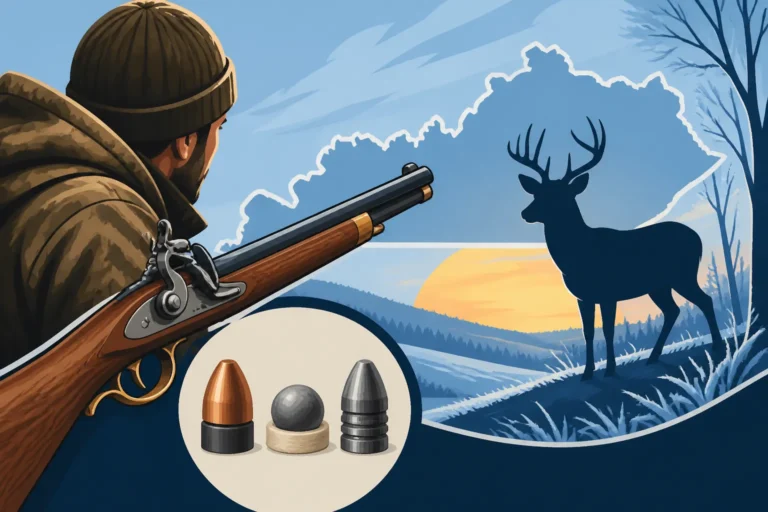
Before we dive deep into the pros and cons of each, let's clarify what we're actually talking about. Muzzleloader projectiles have come a long way from the simple round ball and patched ball of our ancestors. Today, hunters have incredibly advanced options, but they generally fall into two main categories: saboted bullets and conical bullets. Both are designed to deliver a lethal blow to game, but they achieve that goal through very different means, impacting everything from accuracy to terminal performance.
The fundamental difference lies in how they interact with your rifle's barrel and rifling. A rifle barrel has helical grooves, or "rifling," that impart a spin to the projectile, stabilizing it in flight. This spin is crucial for accuracy. How well a projectile engages that rifling determines a lot about its performance downrange.
The Evolution of Modern Muzzleloader Projectiles
Back in the day, a round lead ball wrapped in a lubricated patch was king. The patch helped seal the bore and engaged the rifling, imparting spin. While incredibly simple and effective for its time, it had limitations in terms of velocity, energy retention, and consistent accuracy at longer ranges. As firearms technology advanced, so did the desire for greater power and precision from muzzleloaders. This led to the development of more aerodynamic and heavier projectiles, moving away from the spherical design to more bullet-like shapes.
Eventually, this desire pushed manufacturers to find ways to shoot modern rifle bullets — which are typically smaller than the bore diameter — through muzzleloaders. This innovation spurred the creation of the sabot, a plastic sleeve that allows a smaller-diameter bullet to be shot from a larger-diameter muzzleloader bore. Conversely, advancements in traditional conical bullet design focused on improving aerodynamics, expansion, and ballistic coefficients for those who preferred a more "pure" muzzleloading experience.
Sabot Projectiles for Deer Hunting
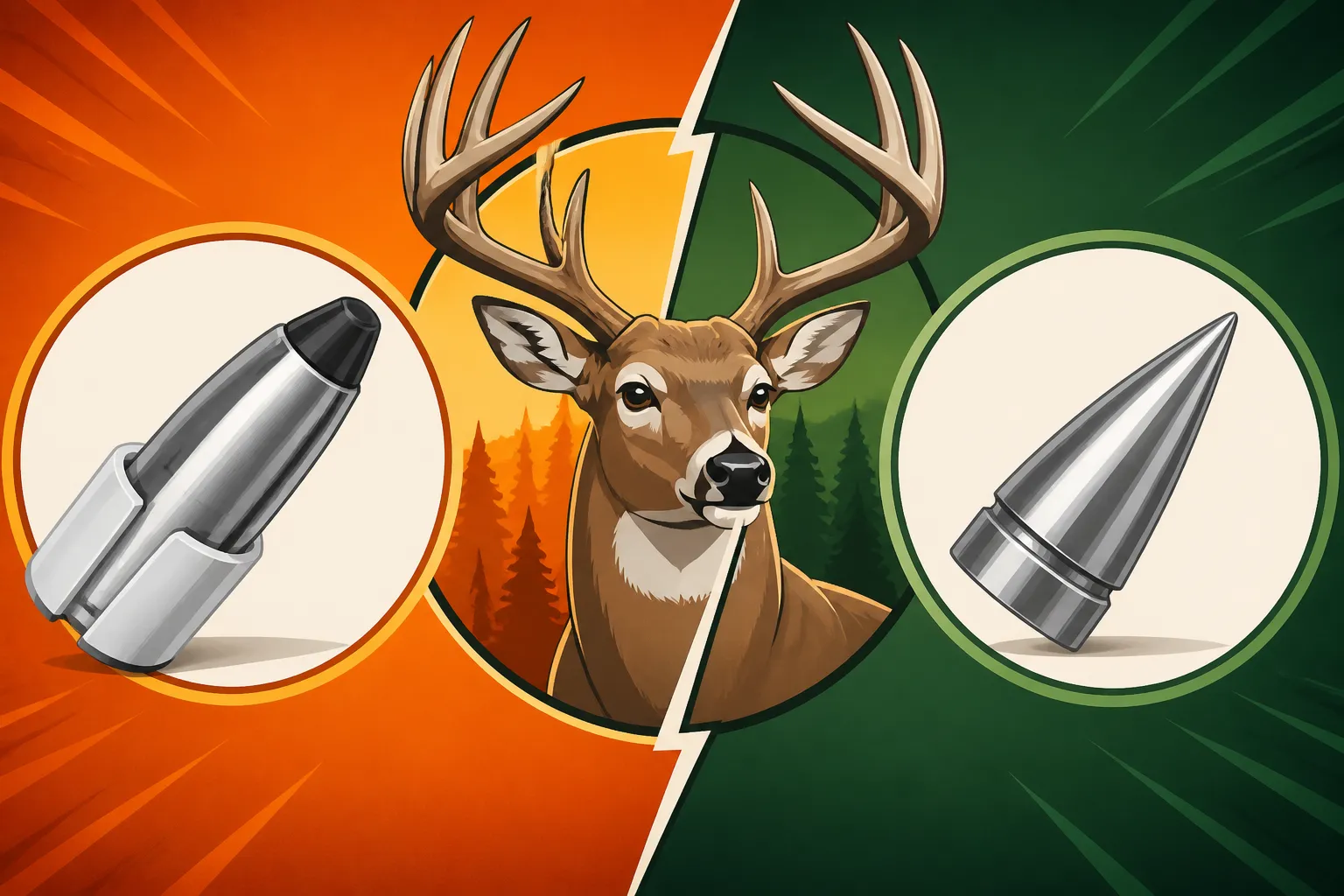
Saboted bullets are essentially modern rifle bullets (usually .45, .44, .40, or .357 caliber) encased in a plastic sleeve, or "sabot," that matches the bore diameter of your muzzleloader (most commonly .50 caliber). When fired, the sabot expands to engage the rifling, spins the bullet, and then separates from the bullet shortly after leaving the barrel, allowing the smaller, more aerodynamic bullet to continue its flight. This ingenious design essentially gives muzzleloaders the ballistic performance of a centerfire rifle.
Many Kentucky hunters, particularly those who might be hunting more open field edges or powerline cuts, really appreciate the flatter trajectory offered by sabots. If you’re sitting over a food plot in the fall, or even pushing deer through some of the more open tracts of reclaimed mine land, that extra range and precision can make a huge difference. Sabots open up possibilities for shots that might be ethically questionable with traditional conicals due to their more rainbow-like trajectory.
Advantages of Sabot Bullets
One of the most compelling reasons hunters choose sabots is their superior accuracy and flatter trajectory at extended ranges. Because they utilize modern bullet designs, they often have higher ballistic coefficients, meaning they cut through the air more efficiently and lose less velocity over distance. This translates to less drop and less wind drift, which is a huge benefit when you're trying to make a clean shot on a whitetail that might be standing a bit further out than you'd prefer. For those deer management zones in Kentucky where antlerless deer limits are generous and you're trying to fill the freezer, the ability to make confident shots at 100-150 yards with consistency can be a game-changer.
Furthermore, sabots allow you to use a vast array of proven hunting bullets designed for controlled expansion and deep penetration. Whether it's a bonded bullet, a partitioned bullet, or a solid copper projectile, you can select a bullet that's specifically engineered for reliable performance on deer. This gives hunters a lot of flexibility to match their projectile to the anticipated shot distance and the size of game they're pursuing. Many hunters find that the easier loading, especially after multiple shots, is a huge plus, as the plastic sabot compresses more readily than a full-bore conical. You'll often hear hunters talking about their preferred sabot load after a successful hunt, touting its incredible accuracy and terminal performance.
Disadvantages of Sabot Bullets
While sabots offer many benefits, they do come with a few drawbacks. Perhaps the most common complaint is that they can be challenging to load, especially if your bore is fouled after a few shots. The plastic sabot can grab the rifling tightly, requiring considerable force to seat the bullet properly. This can be a real struggle in cold weather or when you're trying to reload quickly in a high-pressure hunting situation. Some hunters also find that sabots can leave plastic residue in the bore, which can accumulate and affect subsequent shots if not cleaned regularly. Cleaning a Rifle After a Wet Sit is crucial for any firearm, but perhaps even more so for a muzzleloader shooting sabots to prevent accuracy issues from fouling.
Another potential issue is that sabots can be sensitive to barrel twist rates. Some older muzzleloaders or those with slower twist rates might not stabilize lighter, shorter sabot bullets as effectively, leading to reduced accuracy. It's always a good idea to check your rifle's twist rate and consult projectile manufacturers' recommendations. Also, the plastic sabot itself can sometimes shear or fail if loaded improperly or if the gun is over-pressured, which can lead to poor accuracy or even a dangerous situation. Finally, sabots tend to be more expensive per shot than traditional conicals, which can add up if you do a lot of practice shooting.
Conical Projectiles for Deer Hunting
Conical bullets are full-bore projectiles, meaning they are the same diameter as your muzzleloader's bore (e.g., a .50 caliber conical for a .50 caliber rifle). They typically feature skirts or driving bands that engage the rifling directly, without the need for a separate sabot. These bullets are often made of pure lead or a lead alloy and are generally heavier than saboted bullets of the same caliber. Think of them as a modern, more aerodynamic version of the old patched round ball, designed to maximize mass and impact energy.
For many Kentucky hunters who value tradition or hunt in extremely thick cover, conicals hold a special place. If you're still-hunting Eastern Kentucky ridges where shots rarely exceed 75 yards, a heavy conical can deliver an immense amount of energy at impact, often punching clean through a deer. The confidence in a heavy lead slug hitting home is a powerful thing, especially when Hunting a Funnel Between Two Hollows where deer are likely moving at close range.
Advantages of Conical Bullets
The primary advantage of conical bullets is their tremendous knockdown power at closer ranges. Their heavy weight and large diameter mean they carry a lot of energy, and when made of soft lead, they expand readily upon impact, creating a massive wound channel. If you're hunting dense woods or thickets where shots are typically under 100 yards, a heavy conical can be incredibly effective. They tend to penetrate deeply, which is critical for reaching vital organs, even on larger, tougher deer.
Conicals are also often easier to load than sabots, especially in a fouled barrel. Because they are full-bore, they typically have shallow driving bands or a slightly smaller overall diameter that allows them to slide down the bore with less resistance. This can be a significant benefit if you need to reload quickly in the field or if you're hunting in conditions where cleaning after every shot isn't practical. Furthermore, conical bullets are generally less expensive than sabots, making them a more economical choice for practice and hunting. For hunters who appreciate the history and simplicity of muzzleloading, conicals offer a connection to the past while still providing modern terminal performance. They are often a great choice for Muzzleloaders for a Kentucky December when conditions might be cold and wet.
Disadvantages of Conical Bullets
The main drawback of conical bullets is their ballistic performance compared to sabots. Due to their less aerodynamic shape and heavier weight, they typically have a more pronounced trajectory, meaning they drop more significantly over distance. This makes accurate shot placement at longer ranges (beyond 100-125 yards) more challenging, requiring precise range estimation and holdover. Wind drift can also be more of a factor. This reduced effective range might be a concern for hunters who encounter deer in more open settings.
Another consideration is that conicals can sometimes deform more easily than jacketed sabot bullets, especially if they hit bone. While soft lead expands well, too much deformation can reduce penetration. While the pure lead conicals are great for energy transfer, some hunters find they lack the controlled expansion of modern jacketed rifle bullets. Barrel twist rate is also important for conicals; generally, slower twist rates (like 1:48 or 1:60) found in some traditional muzzleloaders are better suited for conicals, while faster twists (1:28 or 1:24) are often optimized for sabots. Matching the bullet weight and length to your barrel's twist rate is critical for achieving optimal accuracy.
Making Your Choice: Sabot or Conical?
The decision between a sabot and a conical often boils down to a few key factors: your hunting style, the terrain you hunt, your rifle's characteristics, and your personal preference for ballistics. There's no single "best" answer that applies to every Kentucky hunter, but by evaluating these points, you can make an informed choice.
Consider the typical shot distance you anticipate. If you're primarily hunting thick cover in the Daniel Boone National Forest where shots are almost always under 75 yards, the raw power and deep penetration of a heavy conical might be your best bet. However, if you're hunting sprawling fields in Western Kentucky bottomland where a 120-yard shot isn't uncommon, the flatter trajectory and increased accuracy of a sabot will likely serve you better.
Factors to Consider for Kentucky Hunting
1. Terrain and Expected Shot Distance:
- Thick Woods/Mountainous Terrain (e.g., Eastern Kentucky ridges): If your hunting involves dense timber, steep hollows, and close-quarters encounters, conicals excel. Their heavy weight helps them punch through brush, and their terminal performance at close range is devastating. You won't be taking many long shots, so the flatter trajectory of a sabot isn't as critical. Reading a Ridge for Cumberland Deer often means finding deer moving through thick cover.
- Open Fields/Farm Country (e.g., Western/Central Kentucky): For more open areas, particularly where you might be sitting on a field edge, sabots offer a significant advantage. Their flatter trajectory and better accuracy at 100-150 yards can be crucial for making ethical shots on deer that might not present closer opportunities.
- Mixed Environments: If your hunting grounds include both dense woods and open areas, you might lean towards sabots for their versatility, provided your rifle handles them well.
2. Muzzleloader Twist Rate:
- Check your rifle's manual for its twist rate. A faster twist rate (e.g., 1:28, 1:24) is generally better for stabilizing shorter, lighter sabot bullets. Slower twist rates (e.g., 1:48, 1:60) often perform better with longer, heavier conicals. Some rifles, particularly those with a 1:48 twist, can be a good compromise and shoot both reasonably well.
3. Terminal Performance:
- Sabots: Offer a wide range of bullet designs for controlled expansion and deep penetration, similar to modern centerfire rifles. You can choose specific bullet types for specific needs, like tougher bullets for potential bone hits or rapid expansion bullets for quicker energy transfer.
- Conicals: Tend to deliver massive energy transfer due to their weight and soft lead composition. They create a large wound channel and often achieve full pass-throughs at moderate ranges.
4. Ease of Loading and Cleaning:
- If you value ease of loading, especially when your barrel is fouled after a few shots, conicals often have an edge. Sabots can be tighter to load. For multi-shot hunting scenarios or extended hunts like Kentucky's Statewide Modern Gun Season (where muzzleloaders are legal), quick and easy reloading can be important.
- Consider the cleaning regimen. Sabots can leave plastic residue, requiring more diligent cleaning to maintain accuracy.
5. Cost:
- Conicals are generally more budget-friendly, which is a factor if you do a lot of practice shooting or if you're trying to save a few dollars.
Practical Tips for Choosing and Testing
The absolute best way to decide is to try both in your specific muzzleloader. Buy a few different brands and weights of both sabot and conical projectiles and head to the range. Your rifle will "tell" you what it likes best.
- Clean Your Barrel: Always start with a clean barrel for consistency, especially when testing new loads.
- Consistent Loading: Use a consistent powder charge (always within manufacturer specifications) and loading pressure. Inconsistent loading is a major killer of muzzleloader accuracy.
- Shoot Off a Bench: Use a stable rest to eliminate human error and focus on the projectile's performance.
- Check Point of Impact: Muzzleloaders can be finicky, and different projectiles, even with the same powder charge, will likely have different points of impact. You'll need to re-zero your rifle if you switch between sabots and conicals.
- Practice from Hunting Positions: Once you've found an accurate load, practice shooting from hunting positions – sitting, kneeling, off shooting sticks – at various distances. This will build confidence for the field. Many hunters find resources like GoHunt useful for tracking their shot data and comparing different loads over time.
- Consider a Variety of Loads: Don't be afraid to experiment. A particular brand of sabot or a specific conical bullet might perform exceptionally well in your rifle, even if others in the same category don't. Sometimes, a slight variation in bullet weight or design can make all the difference. Ammunition Availability Before Opening Day can sometimes be an issue, so finding a few reliable options is a good strategy.
| Feature | Saboted Bullets | Conical Bullets |
|---|---|---|
| Projectile Type | Modern rifle bullet in a plastic sleeve (sabot) | Full-bore, often pure lead or alloy |
| Primary Advantage | Flatter trajectory, better long-range accuracy | High impact energy, deep penetration at close range |
| Effective Range | Up to 150+ yards (depending on rifle/load) | Up to 100-125 yards (more pronounced drop) |
| Barrel Fit | Smaller bullet, sabot engages rifling | Full bore, driving bands engage rifling |
| Loading Ease | Can be tight, especially with fouling; plastic residue | Generally easier, especially in fouled barrels |
| Bullet Construction | Wide variety of jacketed designs (bonded, partitioned, copper) | Often soft lead or lead alloy, good expansion |
| Barrel Twist Rate | Generally prefers faster twist (1:28, 1:24) | Often prefers slower twist (1:48, 1:60) |
| Cost | Generally more expensive per shot | Generally more economical |
| Typical Use | Open fields, longer shots | Thick cover, close-range power |
Ultimately, the best projectile is the one you can shoot most accurately and consistently from your specific muzzleloader. Confidence in your equipment is paramount in the field. Whether you opt for the extended reach of a sabot or the raw stopping power of a conical, make sure you spend ample time at the range with your chosen load. Knowing your rifle's limitations, and your own, is key to success and ethical hunting. Sometimes, I'll even consult detailed ballistic information or hunting forums, often found through platforms like GoHunt, to get a better understanding of how different loads perform in various Kentucky hunting scenarios. Happy hunting!
Disclaimer
This article is for general informational purposes only and does not constitute professional advice. Laws, prices and regulations vary by location and change over time. Consult a qualified professional for guidance on your specific situation.