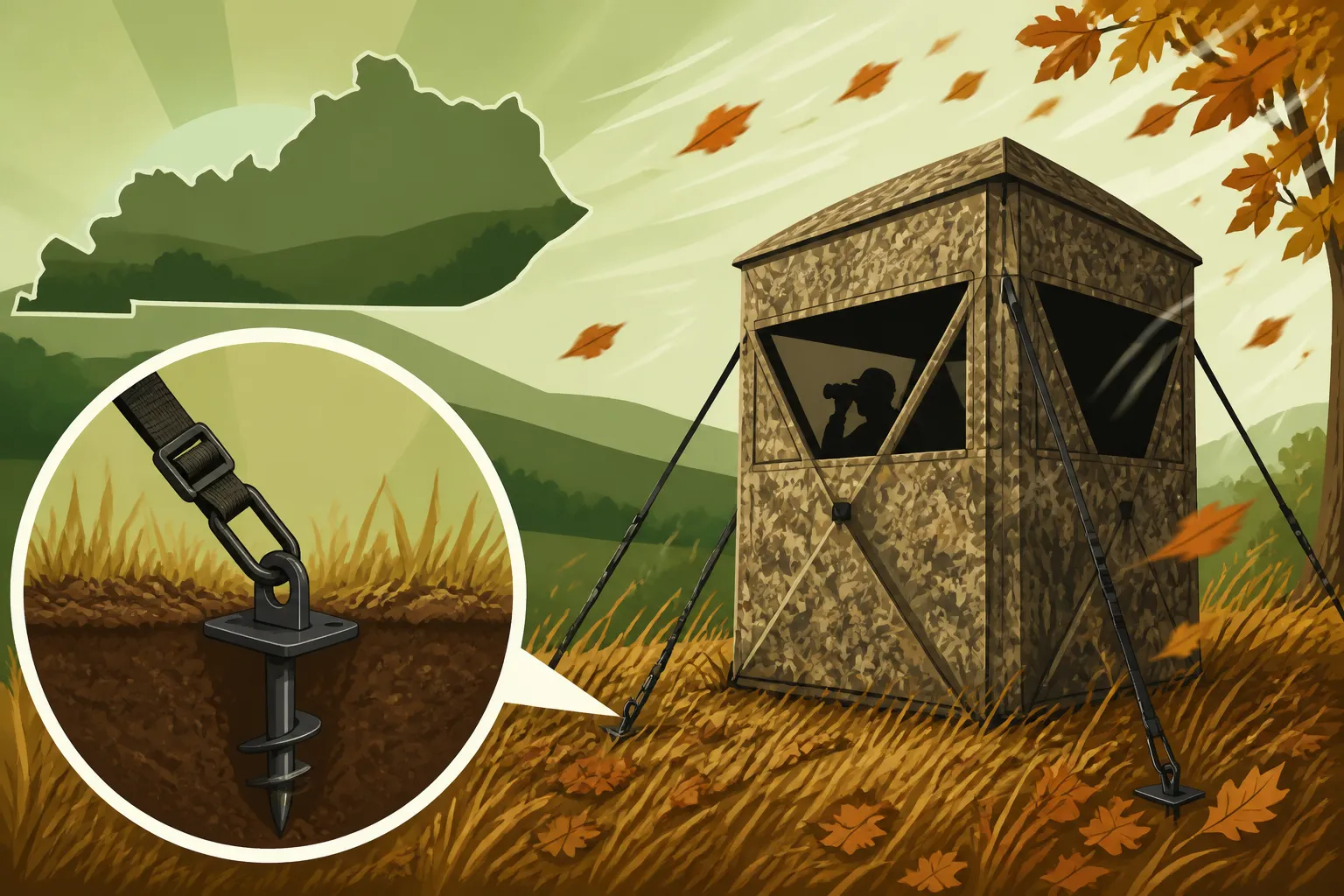
Ground Blind Anchoring in Wind
There’s nothing quite as frustrating as putting in the effort to set up your ground blind, carefully brushing it in, only to return a few days later—or worse, on the morning of your hunt—to find it crumpled, torn, or simply blown away by a stiff Kentucky breeze. We’ve all been there, staring at what looks like a deflated hunting marshmallow. The good news is, with a little foresight and the right techniques, you can anchor your ground blind so securely it will stand up to even the most blustery days Kentucky throws its way, keeping you concealed and comfortable.
Why Ground Blinds Become Windblown Fliers
Before we dive into the solutions, it helps to understand why these pop-up shelters are so prone to becoming airborne or collapsing in a strong wind. It's often a combination of design, placement, and the sheer power of Mother Nature.
The Inherent "Sail Effect" of Ground Blinds
Think about the structure of a typical ground blind. It’s essentially a box made of fabric, designed to be lightweight and portable. When a strong gust of wind hits that flat, broad side, it acts just like a sail on a sailboat. The wind catches the fabric, creating immense pressure that lifts and pushes the blind. If it's not adequately secured, it's going to move. This is especially true in open areas like the wide-open fields of Western Kentucky, where there's little to break the wind's force. Imagine a blind set up along a cut cornfield edge; without proper anchoring, it becomes a giant kite in a stiff northwest wind.
The Limitations of Factory-Provided Anchoring
Let's be honest: the stakes that come with most new ground blinds are rarely up to the task. They're often thin, flimsy wire or plastic pins, designed for ideal, soft soil conditions, not the variable terrain of a Kentucky deer woods or an exposed hilltop. In hard, rocky ground, they bend or break. In wet, muddy soil, they pull out with surprising ease. They might hold up in a gentle breeze, but the moment a strong front pushes through, bringing sustained winds or sharp gusts, those factory stakes are often the first point of failure. It's a classic case of getting what you pay for, or rather, getting what's cheapest to include in the box.
The Consequences of Poor Placement and Preparation
Sometimes, it’s not just the stakes, but where and how the blind is set up. Placing a blind on a completely exposed ridge top or in the middle of a wide-open pasture without considering the prevailing winds is asking for trouble. Many hunters rush the setup, not taking the time to fully extend the blind's frame, secure all corners, or utilize all available tie-down points. A blind that isn't fully tensioned in its frame, or one that has a loose skirt at the bottom, offers more surface area for the wind to grab and begin its destructive work. Even a slight weakness can be exploited by a persistent wind, starting a ripple effect that leads to complete collapse.
Essential Anchoring Techniques for Unwavering Stability
Now that we understand the enemy, let's talk about building a fortress. Proper anchoring isn't just about sticking stakes in the ground; it's about a multi-pronged approach that leverages better gear and smart application.
Upgrading Your Stakes: Beyond the Basics
The first and arguably most critical step is to ditch those wimpy factory stakes. Invest in high-quality stakes designed for camping tents or hunting blinds in challenging conditions.
- Screw-in Stakes: These are often made of sturdy plastic or metal and have a helical design that literally screws into the ground. They provide excellent holding power, especially in softer or loamy soils common in river bottomlands or agricultural fields. Many come with T-handles or can be used with a cordless drill adapter for quick installation and removal. These are a fantastic option if you're frequently setting up in varied terrain.
- Rebar or Heavy-Duty Metal Stakes: For rocky or extremely firm ground, nothing beats a robust metal stake, like short pieces of rebar (with flattened or bent tops to prevent tearing the fabric loops) or purpose-built heavy-duty tent stakes. These require a small sledgehammer or mallet to drive in, but once seated, they're incredibly stable. Be cautious not to hit any underground utilities if you're on private land near buildings.
- Length Matters: The longer the stake, the more purchase it gets in the ground. Opt for stakes that are at least 8-10 inches long, preferably more, especially if you anticipate soft soil or serious wind.
Don't just anchor the four corners. Most quality blinds also have guy-out points halfway up the walls or at the top of the frame. Use these! They help distribute the load and prevent the blind from flexing inwards or outwards under heavy wind. A good rule of thumb is to use at least eight stakes for a typical four-sided blind: one at each corner, and one at each of the four mid-panel guy-out points. For larger blinds, more is definitely better.
Leveraging Guy Ropes and Tie-Downs
Stakes do a great job of holding the blind to the ground, but guy ropes add an extra dimension of stability by pulling the blind taut against lateral forces.
- Ropes to Natural Anchors: If you're setting your blind near trees, stumps, or large rocks, use robust rope (paracord or nylon utility rope works well) to tie off the upper corners or guy-out points. Run the ropes at an angle, away from the blind, and tie them securely. A taut rope pulls against the blind, preventing it from flapping or collapsing inwards. Just make sure your ropes aren't creating a trip hazard!
- Bungee Cords for Flex: While not for primary anchoring, bungee cords can be useful in conjunction with ropes or stakes. They provide a little give, absorbing some of the shock from sudden gusts rather than transferring all the force directly to the stakes or blind fabric. This can prevent tearing in extreme conditions. Attach bungee cords from your blind's loops to a solid stake, or loop them around a heavy object on the inside of the blind.
- Weighting the Interior: If you're in an open area with no natural tie-off points, consider adding weight inside the blind. Sandbags, large rocks, or even bags of feed can be placed in each corner and along the base to help hold the blind down. While this won't prevent the blind from bowing in strong winds, it will make it much harder for the entire structure to lift off the ground. When planning your setup using mapping tools like those from GoHunt, you can even pre-mark potential anchor points like sturdy saplings or large rocks.
Integrating Natural Elements for Enhanced Stability
Nature often provides the best solutions. Use the environment around you to bolster your blind's defense against the wind.
- Brush and Berms: Don't just brush in your blind for concealment; use it for stability too. Piling brush, logs, or even digging a shallow dirt berm around the exterior base of your blind adds significant weight and helps break the wind before it hits the fabric directly. This is especially effective if you can create a low wall on the side facing the prevailing wind. Think about how a good deer drive might be structured around natural cover – apply that same principle to your blind. For more on this, check out Brushing In a Blind on a Field Edge.
- Against Sturdy Cover: Whenever possible, position your blind directly against a solid windbreak like a thick cedar thicket, a dense stand of pines, or even a large fallen log. This significantly reduces the surface area exposed to the wind and provides a natural barrier. This technique is particularly effective when Hunting Western Kentucky Bottomland Deer where thickets might be the only robust cover available.
| Stake Type | Pros | Cons | Best Use |
|---|---|---|---|
| Factory Wire | Lightweight, included | Poor holding power, bends easily | Calm weather, extremely soft ground (rare) |
| Plastic Screw-in | Excellent grip in soft/loamy soil | Can break in hard ground, slower install | Field edges, creek bottoms, garden soil |
| Heavy-Duty Metal | Very strong, penetrates hard ground | Heavier, requires mallet, can bend at top | Rocky terrain, frozen ground, high wind areas |
| Rebar (modified) | Extremely strong, cheap | Heavy, requires tools to modify & install | Permanent setups, very high wind, hard ground |
Pre-Season Planning and Strategic Blind Placement
The best defense against wind damage often starts long before you ever set foot in the woods with your blind. Planning is paramount.
Scouting for Natural Windbreaks and Sheltered Locations
Before you even unpackage your blind, spend some time scouting your hunting area, specifically looking for spots that offer natural protection from the wind. This is where modern mapping tools really shine. Programs like GoHunt or even the Kentucky Hunt Fish App can help you analyze terrain and tree cover from above.
- Lee Side of Ridges: In hilly terrain, like parts of Eastern Kentucky or the knobs, positioning your blind on the lee side (the side sheltered from the wind) of a ridge is incredibly effective. The ridge itself acts as a massive windbreak. Understanding Wind and Thermals on a Kentucky Ridge will help you predict these patterns.
- Thick Conifer Stands: Areas with dense evergreens like pine or cedar thickets offer fantastic wind protection. These trees block and diffuse the wind's force, creating calm pockets.
- Thick Undergrowth and Bottomland Swamps: Dense brush, briar patches, and even flooded timber in bottomlands can significantly reduce wind penetration. While these spots can be challenging to access, they offer excellent concealment and protection. When considering Hunting a Standing Cornfield in Farm Country, remember that corn, while tall, doesn't offer much wind resistance once it's dry and stalks are brittle. You'll need extra anchoring here.
Take note of the typical prevailing wind directions during hunting season. A quick online search will usually give you this information for your specific region. Then, position your blind accordingly to take advantage of natural shelter.
Early Setup and Brushing In for Maximum Stability
Don't wait until opening morning to set up your blind. Whenever possible, deploy your blind several weeks before you plan to hunt it. This gives the blind time to air out, allows local wildlife to get used to its presence, and most importantly, gives you time to properly anchor and brush it in.
- Gradual Brushing: When you first set up, you might only add a little brush. Over subsequent visits, you can add more, letting it settle and intertwine with the blind's structure. This layered approach helps the brush become a solid part of the blind's wind defense. The more natural material you can incorporate around and over the blind, the more it will shed wind and remain stable.
- Observing Performance: An early setup also allows you to observe how the blind performs in real-world wind conditions. Did a corner flap? Did a stake pull? You can make adjustments and reinforce weak points before it really matters. If you're using your blind for Cold-Weather Sitting Strategy in Kentucky, you'll appreciate the extra stability when temperatures drop and the winds seem to bite harder.
Considering Local Regulations for Public Land Use
If you're hunting public land, like a Wildlife Management Area (WMA) or portions of Daniel Boone National Forest, always double-check the specific regulations regarding ground blinds. Most WMAs allow ground blinds but might have rules about when they can be set up, whether they need to be removed after a certain period, and what types of materials can be used for brushing in. Some even have rules about leaving stakes in the ground. Knowing these rules beforehand is crucial. For detailed information, consult Ground Blind Rules on Kentucky WMAs. Using an app like GoHunt can sometimes overlay WMA boundaries, helping you stay compliant.
Dealing with Unexpected Weather and In-the-Field Adjustments
Even the best-laid plans can go awry. Sometimes, Mother Nature throws a curveball, and you find yourself facing unexpectedly high winds when you're already out hunting. Being prepared for field fixes can save your hunt and your gear.
Improvised Anchors and Quick Reinforcements
What if you arrive at your blind, and the wind is howling, or you realize you forgot some of your heavy-duty stakes? It happens to the best of us.
- Heavy Objects: Look around for anything heavy you can use. Large rocks, heavy logs, chunks of concrete (if on private land or near old structures), or even buckets filled with dirt can be placed inside the blind's corners or tied to the exterior loops.
- Deadfall and Limbs: Search for sturdy, heavy limbs or small logs. You can lay these across the bottom skirt of the blind, or even prop them up against the blind's exterior walls (especially on the windy side) to create an additional barrier and add weight. If you have extra cord in your Packs for a Day on Public Land, you can use it to lash these to the blind.
- Digging In: If the ground is soft enough, you can use your boot or a small shovel to dig a shallow trench around the base of the blind. Bury the bottom skirt of the blind in this trench, then pack dirt or rocks on top. This creates a solid anchor point and eliminates flapping along the bottom edge.
Monitoring Wind Conditions and Making Mid-Hunt Adjustments
Paying attention to the wind throughout your hunt is not just about scent control; it's also about blind integrity.
- Listen and Watch: If you hear excessive flapping, or see the blind bowing significantly, take a moment to assess. Is a stake pulling out? Has a tie-down come loose? A quick check and re-tension can prevent a small issue from becoming a big problem.
- Reinforce the Windward Side: If the wind shifts or intensifies, focus your efforts on the side of the blind taking the brunt of the force. Add more weights, tighten ropes, or pile up extra brush on that side.
- When to Concede: There will be rare days when the wind is simply too strong, making the blind unsafe or too noisy to hunt effectively. If your blind is shaking violently, threatening to collapse, or making so much noise it spooks everything, it might be time to pack it up and try again another day. Your safety and the longevity of your gear are more important than pushing through a dangerous situation.
Protecting Your Investment: Maintenance and Storage
Proper care extends the life of your blind and ensures it's ready for next season's winds.
- Clean and Dry: After each use, especially if it's been wet, fully open and dry your blind before packing it away. Moisture leads to mildew, which not only smells awful but also degrades the fabric and can weaken attachment points.
- Inspect Regularly: Before and after each season, inspect your blind for any tears, frayed ropes, or bent poles. Patch small holes with repair kits designed for tents or blinds. Replace any damaged stakes or ropes. This preventative maintenance saves headaches down the road.
- Store Properly: Store your blind in a cool, dry place, away from direct sunlight, which can degrade the fabric over time. Keep your heavy-duty stakes and guy ropes with the blind so they're always ready to go.
By taking these steps, from upgrading your basic stakes to strategic placement and timely adjustments, you can confidently deploy your ground blind across Kentucky's diverse landscapes, knowing it will stand firm against the elements, providing you a reliable, comfortable, and well-concealed hunting platform.
Disclaimer
This article is for general informational purposes only and does not constitute professional advice. Laws, prices and regulations vary by location and change over time. Consult a qualified professional for guidance on your specific situation.