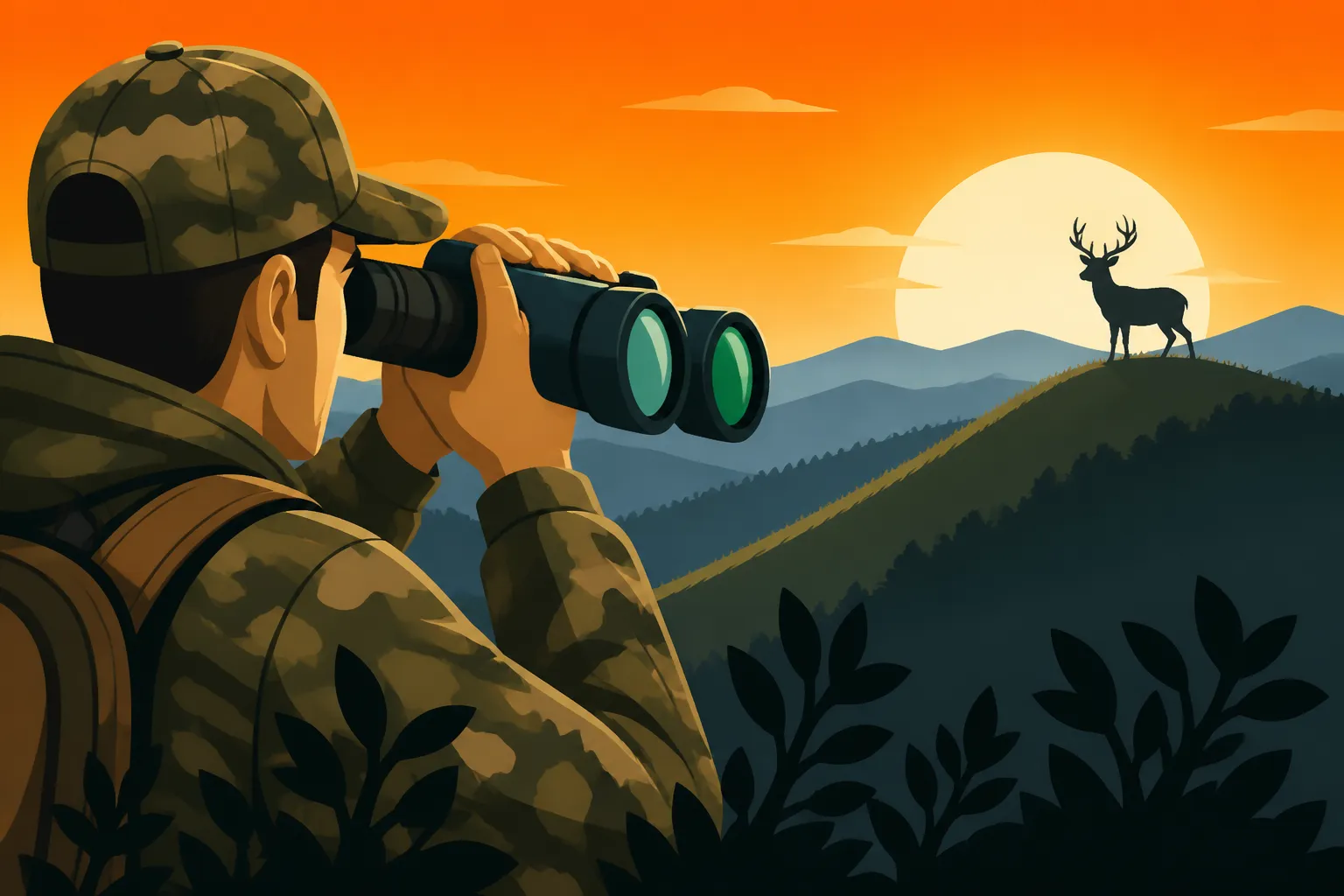
Binocular Power for Ridge Hunting
One of the trickiest decisions for any hunter gearing up for a season in Kentucky's diverse terrain is choosing the right optics, especially binoculars. If you've ever found yourself squinting into a distant hollow or struggling to pick apart a dark ridge line, you know the frustration of having binos that just don't cut it. This guide will walk you through everything you need to know about binocular power, field of view, and light gathering, helping you select the perfect pair for spotting whitetails and other game across the rolling hills and deep hollows of Kentucky.
Understanding Binocular Basics for Ridge Country
Before we dive into the nuances of specific powers, let's break down what those numbers on a binocular actually mean. It's not just about how "close" an image appears; it's a complex interplay of factors that affect your ability to see clearly, especially when you're perched on an Eastern Kentucky ridge or scanning a distant field.
Magnification: What the Numbers Mean
When you see "8×42" or "10×50" on a pair of binoculars, the first number (8x, 10x, 12x) refers to the magnification power. Simply put, an 8x binocular makes an object appear 8 times closer than it would with your naked eye. A 10x binocular makes it appear 10 times closer, and so on. For hunters in Kentucky, higher magnification might seem like a no-brainer – who wouldn't want to see farther?
However, it's not always that simple. While a 12x binocular will indeed bring that deer on the opposite ridge much closer, it comes with trade-offs. The higher the magnification, the harder it is to hold the binoculars steady, and the narrower your field of view becomes. Imagine trying to find a squirrel in a dense oak canopy with a telescope versus a wide-angle lens; the same principle applies. In the thick woods and broken terrain of Kentucky, where you often need to scan for movement in tight windows, too much magnification can actually be a hindrance.
Objective Lens Diameter: Gathering Light
The second number in those binocular specifications (42mm, 50mm, 56mm) indicates the diameter of the objective lens – the large lenses at the front of your binoculars. This number is crucial because it directly relates to how much light the binoculars can gather. A larger objective lens means more light enters the optic, resulting in a brighter, clearer image, particularly in low-light conditions.
Think about those crucial moments at dawn or dusk when deer are most active, or when you're peering into a shadowed hollow where the sun never quite reaches. A binocular with a larger objective lens will provide a significantly brighter image, allowing you to identify game when other hunters might just see shadows. This is especially important in Kentucky, where much of the prime hunting action happens in the first and last hours of daylight, and the rolling terrain creates many deep, dark pockets of cover. Combine this with magnification, and you get the "exit pupil," which is the diameter of the light beam that reaches your eye. A larger exit pupil (calculated by dividing objective lens by magnification, e.g., 42mm / 8x = 5.25mm) generally means better low-light performance.
The Trade-Offs: Higher Magnification vs. Field of View and Stability
Choosing the right binocular power isn't about finding the "most powerful" option; it's about striking a balance that suits your hunting style and the specific terrain you're tackling in Kentucky. Higher magnification brings certain advantages, but it also introduces significant challenges, especially in our rugged, tree-covered landscape.
Field of View and Scanning Efficiency
When you increase magnification, you inherently decrease your field of view (FOV). Field of view is simply the width of the area you can see through your binoculars at a given distance, typically measured in feet at 1,000 yards. For instance, an 8x binocular might offer a FOV of 400 feet at 1,000 yards, while a 12x pair might only give you 300 feet.
Imagine you're trying to locate a deer moving through thick timber on a distant ridge. With a wider field of view, you can quickly scan a larger area, increasing your chances of catching movement or spotting a subtle antler tip. A narrow field of view, typical of higher magnifications, forces you to constantly pan and re-pan, making it much easier to miss game that might be just outside your optical window. This constant movement can also tire your eyes and make you less efficient at spotting. For hunters trying to pick apart a Funnel Between Two Hollows or analyze a vast expanse of Daniel Boone Forest Timber, a wider field of view often proves more effective for initial detection.
Stability and Handheld Shake
This is perhaps the most significant drawback of higher magnification, particularly for handheld use. The more powerful your binoculars, the more any slight movement of your hands is amplified in the image you see. Trying to hold a 12x or 15x binocular steady enough to discern details of a deer at long range, especially after a strenuous hike up a steep slope or in cold, shaking hands, can be incredibly frustrating. The image bounces and jiggles, making it nearly impossible to focus.
Many seasoned hunters find that 8x or 10x binoculars are the practical limit for consistent handheld use in the field. Beyond that, you'll likely need a tripod or some form of steady rest to get a clear, stable image. While a tripod can be invaluable for stationary glassing sessions, such as when you're Glassing an Elk Restoration Zone Meadow, it's often cumbersome for mobile hunters who are constantly on the move, still-hunting through the woods, or setting up quickly on a new vantage point. The added gear, weight, and setup time can quickly negate the benefits of higher magnification if you're not planning for it.
Practical Applications for Kentucky Ridge Hunting
Kentucky's hunting grounds offer a blend of open fields, dense timber, and undulating terrain. Your binocular choice should reflect the specific conditions you anticipate most often. Let's look at how different binocular powers apply to typical Kentucky hunting scenarios.
Spotting Deer on Distant Ridgelines
This is often where the appeal of higher magnification truly shines. If you frequently hunt areas where you need to glass across large valleys, open logging cuts, or multiple ridges to locate game, then a 10x or even a 12x binocular can be highly advantageous. For example, if you're set up on a high point, trying to spot deer feeding in a distant food plot or moving along a timber edge half a mile away, that extra magnification can help you confirm antlers, assess body size, or identify subtle movements that an 8x pair might miss. This can be common in parts of the Daniel Boone National Forest or the larger WMA properties.
However, even with higher power, remember the stability issue. If you plan to spend significant time glassing these distant features, seriously consider bringing a monopod or a lightweight tripod. It allows you to effectively use that extra magnification without fighting a shaky image. Some hunters like to pair a high-power binocular with a Rifle Setups for Kentucky Deer Hunting that can reach out and touch those distances, but spotting them is the first step.
Navigating Thick Cover and Timber
Conversely, when you're hunting dense woods, creek bottoms, or areas with thick undergrowth – which describes a lot of Kentucky's prime deer habitat – higher magnification often becomes a liability. In these environments, shots are typically close, and the challenge isn't seeing far, but rather seeing clearly and broadly in a confined space. A wider field of view is paramount here.
An 8x binocular truly excels in these conditions. It provides enough magnification to pick out details like an ear twitch or a leg behind a sapling, but with a generous field of view that allows you to quickly scan through brush and timber. You can track a moving deer without constantly losing it from your view, and your eyes will be less fatigued from the constant panning. Whether you're still-hunting a mature oak stand or working a logging road for scrapes, the ability to rapidly acquire and follow targets in dense cover is invaluable.
Low-Light Performance in Kentucky Hollows
Kentucky is famous for its deep hollows and shadowed creek bottoms, places where the sun struggles to penetrate even midday. This makes low-light performance a critical factor for any binocular. As mentioned earlier, objective lens diameter and exit pupil play a huge role here.
A binocular with a larger objective lens (e.g., 50mm or 56mm, paired with 8x or 10x magnification) will transmit more light to your eyes, providing a brighter image during legal shooting hours when the light is dimmest. This can be the difference between confidently identifying a legal buck or letting him walk because you can't quite make him out in the gloom. An 8×50 or 10×50 binocular offers a better exit pupil than an 8×42 or 10×42, making those critical first and last minutes of light more productive. Quality of glass matters immensely here too; premium binoculars from top brands will gather and transmit light more efficiently than cheaper optics, even with similar specs.
Choosing the Right Power: Recommendations and Considerations
So, after considering all the factors, what's the verdict for a Kentucky hunter navigating ridge country? There's no single "best" answer, but rather a set of common choices that balance the trade-offs beautifully.
The 8×42 Sweet Spot
For most Kentucky deer hunters, an 8×42 binocular is often considered the ideal all-around choice. This configuration offers a fantastic balance:
- Magnification (8x): Provides enough power to pick out deer at reasonable distances across hollows or on opposing ridges without being overly prone to hand shake. It's also very manageable in closer timber.
- Objective Lens (42mm): Gathers a good amount of light, offering solid performance in those critical low-light periods at dawn and dusk. The 5.25mm exit pupil is excellent.
- Field of View: Generally wide enough to scan efficiently through broken timber and dense cover, making it easier to acquire moving targets or locate subtle details.
An 8×42 is lightweight enough for long hikes up and down Kentucky's hills, balances well in the hand, and is versatile enough for nearly any hunting scenario you'll encounter, from Still-Hunting Eastern Kentucky Ridges to picking apart a field edge. Many popular models from various manufacturers fall into this specification, making it a highly accessible and widely recommended option.
When to Consider 10×42 or 10×50
If your primary hunting strategy involves a lot of glassing over longer distances, or if you often hunt more open landscapes like the Western Kentucky Bottomland Deer country where shots might be longer and cover less dense, then a 10×42 or 10×50 might be a better fit.
- 10×42: Offers that extra bit of magnification over the 8x while still maintaining a reasonable 4.2mm exit pupil for decent low-light performance. The trade-off is a narrower field of view and increased hand shake. If you're disciplined about resting your elbows or using a tripod, this can be a powerful tool for picking apart distant terrain.
- 10×50: Bumps up the objective lens size, improving low-light performance with a 5mm exit pupil, comparable to the 8×42. This is a great choice if you prioritize that extra magnification for identifying game at distance and need strong low-light capabilities, but you're willing to carry a slightly heavier and bulkier binocular. This setup is excellent for hunters who might be perched in a stand, glassing a large field or clear-cut edge for extended periods.
Many online resources, like those found on GoHunt, often provide detailed reviews and comparisons of these popular configurations, helping hunters make informed decisions based on their specific needs and budget.
Beyond 10x: Specialized Needs
While less common for general deer hunting in Kentucky, higher-power binoculars (12x, 15x, or even spotting scopes) do have their place for specialized situations.
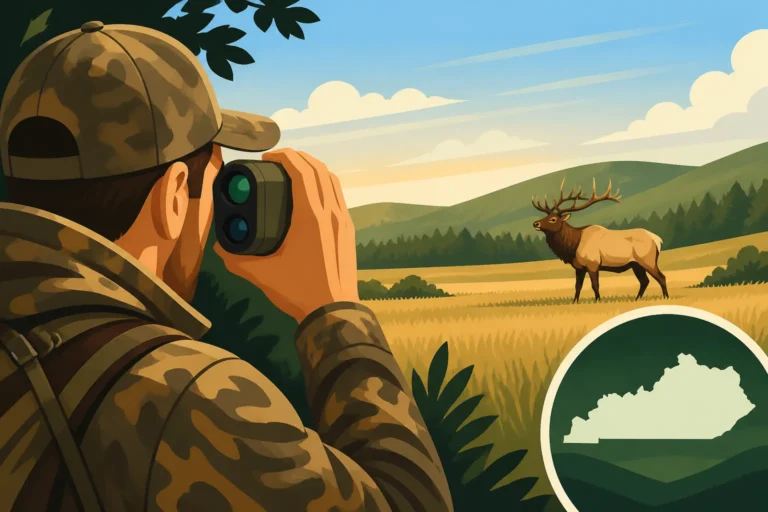
- Long-Range Elk Hunting: If you're one of the lucky few drawn for a Kentucky elk tag, especially if you're planning to hunt the more open areas within the Elk Zone, a higher-power binocular or a spotting scope becomes incredibly useful. These are essential for Calling a Southeastern Kentucky Bull Elk from afar or Applying for a Kentucky Elk Quota Hunt and then glassing vast, reclaimed mine lands. Here, the ability to discern antler points at extreme distances is paramount.
- Open Private Land: Some private land holdings in Kentucky feature expansive agricultural fields or open pastures. If you hunt these specific areas and need to identify deer at distances of 500 yards or more, a 12x binocular (ideally tripod-mounted) can be a game-changer.
- Dedicated Scouting: For pure scouting purposes, when you're not concerned about carrying a rifle or moving quietly, a powerful binocular on a tripod lets you observe deer behavior from a distance without disturbing them.
Just remember, going beyond 10x power without a stable rest negates much of the benefit. Your image will likely be too jumpy to provide meaningful detail. When researching high-power optics, platforms like GoHunt often showcase gear tailored for these more specialized, long-range applications.
Here's a quick comparison of common binocular powers for Kentucky ridge hunting:
| Magnification x Objective | Exit Pupil (mm) | Field of View (Relative) | Low-Light Performance | Handheld Stability (Relative) | Best Use Case in Kentucky |
|---|---|---|---|---|---|
| 8×42 | 5.25 | Wide | Very Good | Excellent | All-around, balanced for woods & ridges |
| 10×42 | 4.2 | Moderate | Good | Good (prone to shake) | More open country, longer distances |
| 10×50 | 5.0 | Moderate | Very Good | Good (heavier) | Low-light, longer distance, static glassing |
| 12×50 | 4.16 | Narrow | Good | Fair (tripod recommended) | Specialized long-range glassing (e.g., elk) |
Ultimately, the best binocular power for your Kentucky ridge hunting adventures comes down to your personal hunting style, the specific terrain you frequent most, and your budget. For a truly versatile optic that performs well across the diverse landscapes of the Bluegrass State, the 8×42 often remains the top recommendation. However, don't shy away from a 10x option if your hunting consistently demands more reach, as long as you account for the stability considerations. Regardless of your choice, investing in quality glass will pay dividends in clarity, brightness, and durability for many seasons to come.
Disclaimer
This article is for general informational purposes only and does not constitute professional advice. Laws, prices and regulations vary by location and change over time. Consult a qualified professional for guidance on your specific situation.