Elk Calls and Cow Decoys
Few things get an elk hunter's heart pumping quite like the sound of a bull bugle echoing through the crisp autumn air of southeastern Kentucky. But for many, the world of elk calls and decoys feels intimidating, a complex language they worry they'll never master. You've probably heard stories of hunters who blew one wrong note or placed a decoy in the wrong spot, spooking the elk of a lifetime. This guide will demystify elk vocalizations and the strategic use of decoys, giving you the confidence to communicate effectively with Kentucky's majestic elk.
Understanding Elk Vocalizations: Beyond the Bugle
Kentucky's elk herd is a true testament to conservation, thriving in the rugged terrain of the Appalachian foothills. But these aren't just magnificent animals; they're incredibly vocal, constantly communicating with each other. Understanding their language is like unlocking a secret code, and it's far more nuanced than just a loud bugle. Truly successful elk hunters learn to interpret the full spectrum of sounds these animals make, from the most subtle to the most booming.
The Language of Kentucky Elk
Elk vocalizations are a rich tapestry of sounds, each carrying a specific message. During the rut, the iconic bugle is certainly dominant, signaling a bull's presence, challenging rivals, and attracting cows. However, there are different types of bugles – a deep, roaring challenge bugle sounds very different from a soft, searching bugle from a lone bull. Learning to distinguish these subtle differences, and when to mimic them, is crucial. It’s not just about making noise; it’s about making the right noise for the situation.
Beyond the bugle, cows and calves have an entire vocabulary of their own. Cow calls, often described as mews or chirps, are used for reassurance, contact, and maternal communication. A lost calf's plaintive cry can draw in protective cows, and even curious bulls looking for an unattached female. These sounds convey emotion and intent, providing valuable clues to an observant hunter. Knowing when to use these softer, more intimate calls can often be more effective than an aggressive bugle, especially when trying to pinpoint the location of a herd or draw in a wary bull.
Reading Elk Body Language and Vocal Cues
Interpreting elk vocalizations isn't a standalone skill; it goes hand-in-hand with reading their body language. A bull that's raking a sapling and bugling aggressively is sending a very different message than one quietly herding his cows with soft mews. When you hear a certain call, observe the surrounding environment and listen for other cues. Are there multiple bugles? Does a cow immediately respond to a bull's call? These interactions paint a picture of the herd dynamics.
For example, a short, sharp bark from a cow often means alarm or warning, signifying that an elk has spotted something it doesn't like. If you hear this, it's a sign to freeze, evaluate your position, and consider your next move very carefully. Conversely, a rhythmic, contented mewing often suggests a herd at ease, perhaps feeding in a secluded hollow. Learning these cues helps you understand the elk's mood and react accordingly, making your calling efforts far more natural and believable. Hunters who spend time observing elk, whether in the Elk Viewing in the Restoration Zone or by reviewing trail camera footage, gain an invaluable understanding of these complex interactions.
Essential Elk Calls for Kentucky Hunters
The market is flooded with elk calls, and it can feel overwhelming trying to choose the right ones for hunting in Kentucky's specific terrain. While some hunters swear by a single, trusty call, having a diverse toolkit allows you to adapt to various scenarios and communicate a broader range of messages. The key isn't necessarily having every call, but mastering the ones you do carry.
Mastering the Bugle: Challenge and Location Calls
The bugle is undeniably the most iconic elk call, and for good reason. It’s a powerful tool for locating bulls, especially in the vastness of the Daniel Boone National Forest Hunting areas within the elk zone. A loud, searching bugle can often elicit a shock gobble-like response from a bull, telling you exactly where he is. Once you've located a bull, your bugle can transition into a challenge call, intended to provoke an aggressive response and draw him closer.
There are various types of bugle calls, from diaphragm calls that require significant practice to produce authentic sounds, to external reed calls that are easier for beginners. Practice is paramount. You need to be able to mimic the full range of a bull's bugle, from the initial deep growl to the high-pitched squeal and the finishing grunt. Understanding the nuances of a challenge bugle versus a herd bull's typical vocalization can make all the difference between bringing a bull in or sending him running. GoHunt, for instance, offers extensive educational content on various calling techniques, helping hunters refine their skills.
The Importance of Cow and Calf Calls
While the bugle gets all the glory, cow and calf calls are often the secret weapon of successful elk hunters. These softer, more subtle sounds can be incredibly effective, especially when a bull is "hung up" out of sight or when you're trying to draw in an entire herd. Cow mews and chirps can convey curiosity, loneliness, or contentment, often appealing to a bull's natural instinct to seek out a female. A lost calf call can also pique the interest of a herd, bringing them into range.
Consider using a combination of cow and calf calls when a bull isn't responding to a bugle. Sometimes, a series of soft mews will encourage a bull to investigate, especially if he believes he's approaching a lone cow or a small, vulnerable group. These calls are also excellent for calming nervous elk that may have been spooked, as they convey a sense of normalcy and safety. A good quality estrus cow call, used sparingly and realistically, can be particularly potent during the peak of the rut, drawing in a Calling a Southeastern Kentucky Bull Elk.
Specialty Calls for Specific Scenarios
Beyond the basic bugle and cow calls, there are specialty calls designed for very specific situations. For instance, a "hyper-estrus" cow call, often louder and more urgent, can be used to simulate a cow in heat, potentially triggering a strong response from a dominant bull. Likewise, a young bull bugle, less aggressive and often higher pitched, might be used to challenge a more mature bull without appearing overly threatening, which could work well for a cautious bull.
Another less common but effective call is the "chuckle" or "grunting" sound often made by bulls as they move or herd cows. These are low, guttural sounds that indicate a bull's presence without being an outright challenge. Learning to replicate these subtle sounds can add realism to your calling sequence, making it more convincing to wary elk. The goal is to create a complete vocal picture of a herd or a specific interaction, drawing the elk into your ambush point.
| Call Type | Primary Use | Tone/Sound Description | Best Time to Use |
|---|---|---|---|
| Location Bugle | Locating distant bulls | Loud, drawn-out, often ends with a chuckle | Early morning, late evening, blind calling |
| Challenge Bugle | Aggressively calling in a dominant bull | Deep, roaring, often with aggressive grunts | Responding to another bull's bugle, during the rut |
| Estrus Cow Mew | Attracting bulls, simulating a receptive cow | Soft, nasal, pleading, varied pitch | Anytime a bull is present or you're searching |
| Contact Cow Chirp | Reassurance, calling in cows or curious bulls | Short, sharp, higher pitched mew | As elk are moving, or for a "lost" cow effect |
| Calf Whine | Simulating a lost or distressed calf | High-pitched, desperate, often repetitive | To draw in protective cows or curious bulls |
| Bull Chuckle/Grunt | Indicating a bull's presence, contentment | Low, guttural, rhythmic | When a bull is close, adding realism to other calls |
Employing Cow Decoys in Kentucky's Elk Zone
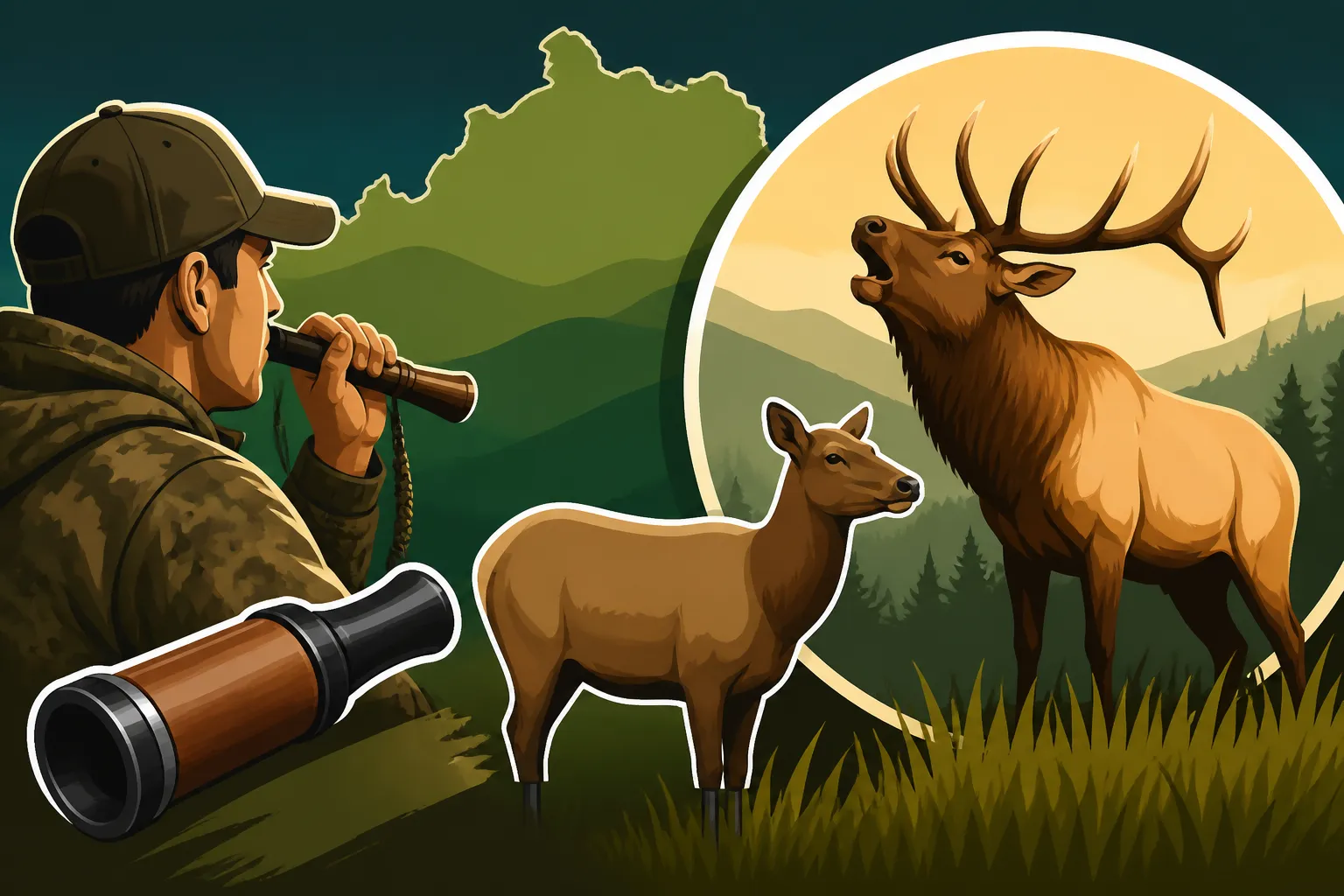
While calling draws an elk's attention with sound, decoys seal the deal with visual confirmation. In the dense timber and rolling hills of Kentucky's elk zone, where sightlines can be limited, a decoy can be the missing piece of the puzzle that turns a "hung up" bull into a charging one. Elk are intensely visual animals, and seeing what they think is another elk can override their caution, especially during the rut.
Why Decoys Work: Visual Confirmation in Thick Cover
Elk, particularly mature bulls, are often wary. They've survived multiple hunting seasons and are acutely aware of danger. When they hear calls, they'll often try to circle downwind to scent check or hang up just out of sight, trying to visually locate the source of the sound. This is where decoys become invaluable. A well-placed cow decoy gives the bull the visual confirmation he's looking for, convincing him that the sounds he's hearing are indeed real elk. This visual reassurance can often be enough to pull him those last crucial yards into shooting range.
In the thick cover common in Kentucky's elk areas, like those found in Hunting Eastern Kentucky Coalfield Country, a decoy creates the illusion of accessibility. A bull might be hesitant to step into a small opening if he just hears calls, but if he sees a cow decoy calmly standing there, he might believe the coast is clear. It gives him permission, in a sense, to commit. Furthermore, a decoy can sometimes distract a bull, drawing his attention away from the hunter and allowing for a better shot opportunity, especially during archery or muzzleloader seasons.
Strategic Decoy Placement for Success
Decoy placement is an art, not a science, but there are some fundamental principles to follow for hunting Kentucky's Record Elk Herd. First and foremost, you want the decoy to be highly visible from the direction you expect the elk to approach, but also positioned so that the elk is looking at the decoy, not at you. Often, this means placing the decoy slightly off to your side and in front of your shooting lane. You want the bull to focus on the "other" elk, giving you time to draw a bow or raise a rifle.
Secondly, consider your wind and thermals. Elk will almost always try to come in downwind. Position your decoy so that the approaching bull will expose himself for a shot before he gets directly downwind of your position. Think about sightlines and natural openings. A decoy placed at the edge of a small clearing or on a slight rise can be incredibly effective. Also, ensure the decoy is stable and won't wobble or fall, which can instantly spook an animal. Some hunters even use a single, mobile cow decoy on a stick that can be moved quickly to simulate movement.
Decoy Types and Their Applications
There's a variety of elk decoys on the market, each with its own advantages. Full-body 3D decoys offer the most realism but are often bulky and heavy to pack into remote areas. They are excellent for static setups in more open terrain where they can be seen from a distance. Flat, two-dimensional decoys are much lighter and more portable, making them ideal for run-and-gun tactics or hunting in rugged Kentucky hills. While less realistic up close, they can be surprisingly effective at creating the illusion of an elk, especially when combined with good calling.
Some decoys feature photo-realistic images printed on fabric or durable plastic, which can be very convincing. Others are designed to be used in conjunction with a hunter, allowing you to hold the decoy and peek around it. The key is to choose a decoy that suits your hunting style and the terrain you're in. For hunters who apply for a Bull, Cow and Either-Sex Elk Permit Types, having a cow decoy can increase your odds for both bull and cow hunts by providing that crucial visual element. Remember to check the regulations for your specific hunt unit, as some public lands may have restrictions on decoy use.
Integrating Calls and Decoys for a Complete Strategy
Calling and decoying are powerful on their own, but their true potential is unlocked when you integrate them into a cohesive strategy. Think of it as creating a theatrical play in the woods, where your calls set the scene, and your decoy provides the visual character that draws the audience in. It’s about more than just making noise; it’s about telling a story that the elk believes.
The Call-and-Decoy Symphony: Setting Up Your Scenario
When combining calls and decoys, you're not just making random noises; you're creating a scenario. Perhaps you're portraying a lone cow looking for a bull, or a small group of cows and calves. Your calling sequence should support the visual provided by your decoy. If you have a cow decoy, consistent cow mews and chirps will make your setup more believable. If you're using a bull decoy (which is less common in Kentucky but can be effective in specific challenge scenarios), a strong, confident bugle should accompany it.
A common and highly effective strategy involves setting up your decoy about 20-30 yards from your position, angled slightly to present a broadside shot to an approaching bull. Begin with subtle cow calls to pique curiosity. If a bull bugles back, escalate your calling slightly, perhaps with a more urgent cow mew or a soft, subordinate bugle, all while the decoy remains visible. The visual of the decoy and the realism of your calls work in concert, drawing the bull in. Remember, GoHunt resources often highlight detailed calling and decoying setups used by successful hunters across various terrains, which can offer useful insights.
Wind, Thermals, and Cover: The Environmental Factors
No matter how good your calling and decoy setup, ignoring environmental factors like wind and thermals will lead to failure. Elk have an incredible sense of smell, and they will almost always approach downwind to scent-check the source of calls. You must position yourself and your decoy so that the elk approaches, offers a shot, and then ideally moves past you before catching your scent. This means understanding prevailing winds and how thermals shift throughout the day, especially in the mountainous terrain of eastern Kentucky.
In the morning, thermals typically rise, pulling scent uphill. In the evening, they fall, pushing scent downhill. During midday, winds can be fickle. Always factor these into your approach and setup. Use terrain features like ridges and hollows to your advantage, creating natural funnels or obstacles that force elk into your desired shooting lane. Understanding these elements is paramount for success when Hunting Kentucky's Elk Restoration Zone, as the landscape dictates so much of the animals' movement.
Safety First: Hunting with Calls and Decoys
Hunting with elk calls and decoys, especially during the rut, introduces unique safety considerations. When you're actively bugling and using a decoy, you are essentially mimicking an elk, which can attract other hunters as well as actual elk. Always wear plenty of blaze orange, even in areas where it might not be strictly required for archery hunters (though Kentucky has Kentucky Blaze Orange Requirements that apply to all gun hunters). Make sure other hunters can clearly identify you as a human, not an elk.
When setting up your decoy, ensure you are clearly visible from your shooting position, and always be aware of what is beyond your target. Never stalk directly towards another hunter's calls or move aggressively when you hear another hunter's bugle. Communication is key, especially if hunting with a partner. Discuss your strategy beforehand, including calling sequences and decoy placement. Your primary goal is a safe and ethical hunt, not just a successful one.
Common Mistakes and How to Avoid Them
Even seasoned hunters can make mistakes when calling and decoying for elk. The key to improving is recognizing these common pitfalls and actively working to avoid them. Elk hunting is a continuous learning process, and every trip into the woods offers new lessons.
Over-Calling and Under-Calling
One of the biggest mistakes novice elk callers make is over-calling. They get excited, blow call after call, and often too loudly. Imagine if someone kept yelling at you from across a field – you'd probably get annoyed or suspicious and try to avoid them. Elk are no different. Over-calling can make you sound unnatural, like a desperate or panicked animal, or worse, make you sound like an aggressive threat that a bull would rather avoid.
Conversely, under-calling can also be a missed opportunity. Sometimes, a bull just needs a little more encouragement, a softer mew, or a subtle grunt to seal the deal. The trick is to find the balance. Start with soft, conservative calls, listen intently to any responses, and then adjust your calling volume and intensity based on the elk's reaction. Are they getting closer? Back off a bit. Are they hanging up? Try a different call or a subtle sequence. Observing other hunters, perhaps through online videos or forums that GoHunt hosts, can show you what effective calling sounds like.
Misunderstanding Elk Behavior
Another common mistake is applying deer hunting logic to elk. While there are some overlaps, elk behavior, especially during the rut, is distinctly different. Bulls, for example, can be extremely territorial and possessive of their cows. If you come in with an aggressive bugle to a bull that already has a harem, he might round up his cows and leave, rather than come fight you. Or, he might come in, but be looking for a fight, not a love interest.
Understanding When Kentucky Elk Bugle and the different phases of the rut is critical. Early in the rut, bulls might be more responsive to challenge bugles. Later, as cows become receptive, they might be more swayed by estrus mews. Pay attention to how the elk are interacting with each other. Are the cows receptive to the bull, or are they being pushed around? Are there multiple bulls vying for attention? Your calling strategy should reflect these observations, catering to the current social dynamics of the herd. Don't be afraid to experiment, but always pay close attention to how the elk react.
Decoy Blunders and How to Fix Them
Decoys can be incredibly effective, but they can also be a liability if not used correctly. A common blunder is poor placement, such as positioning the decoy so it blocks your shot, or worse, placing it directly downwind of your position, allowing the bull to scent you before he ever commits. Another mistake is using a decoy that is clearly visible to the elk before you've had a chance to set up and get ready. Spooking an elk with a decoy that simply appears out of nowhere is a quick way to blow a hunt.
To fix these blunders, always pre-plan your setup. When scouting, identify potential ambush points where you can position a decoy effectively, considering wind, thermals, and shooting lanes. When approaching an area where you suspect elk, carry your decoy in a way that keeps it concealed until you're ready to deploy it. If using a mobile decoy, make sure any movement is slow, deliberate, and natural. Remember, the decoy is meant to enhance the illusion, not break it. A well-chosen and strategically placed decoy, especially when paired with authentic calls, can be the deciding factor in your next Kentucky elk hunt.
Disclaimer
This article is for general informational purposes only and does not constitute professional advice. Laws, prices and regulations vary by location and change over time. Consult a qualified professional for guidance on your specific situation.