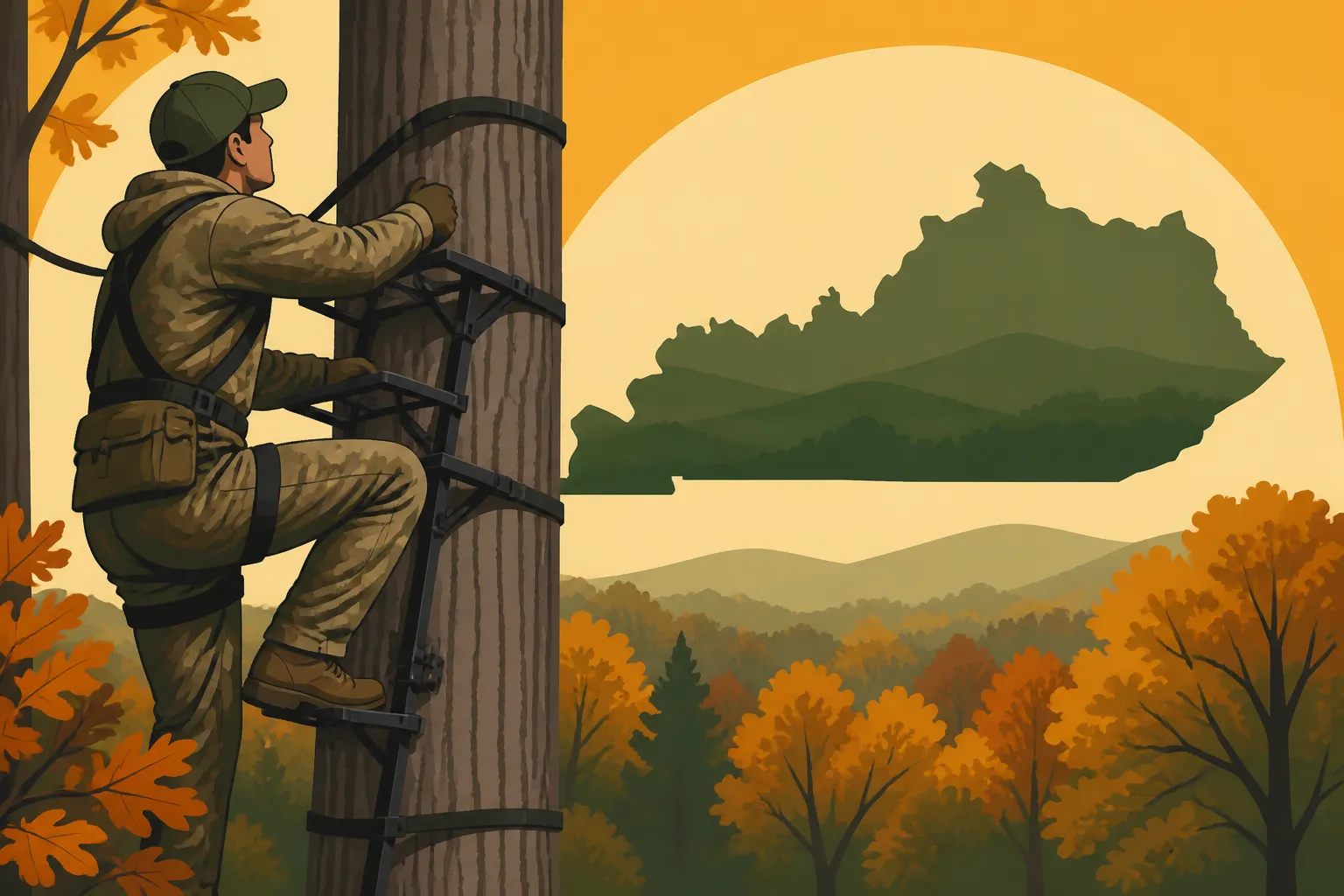
Climbing Sticks for Kentucky Hardwoods
Navigating the dense, often unforgiving hardwoods of Kentucky can make setting up a traditional ladder stand or even a bulky hang-on feel like an impossible task, especially if you're trying to stay nimble and adapt to deer movement. Many hunters find themselves frustrated by the limited options for quick, quiet, and versatile elevated positions. This guide is all about mastering the art of using climbing sticks to open up a whole new world of hunting opportunities in the challenging Kentucky timber, helping you stay mobile and effective.
Why Climbing Sticks are Essential for Kentucky Hardwoods
Kentucky's landscape is a diverse tapestry of rolling hills, steep hollers, vast timber tracts, and creek bottoms. This variety, while beautiful, presents unique challenges for hunters trying to get elevated. Traditional treestands often require permanent placement or are simply too cumbersome for quick, quiet adjustments. That's where climbing sticks really shine, offering an unmatched blend of portability, versatility, and stealth.
The Need for Mobility in Diverse Terrain
Imagine scouting a new public land tract in Daniel Boone National Forest. You've hiked deep into a promising area, found fresh sign, and identified a perfect ambush point near a ridge-top saddle. But there isn't a single tree perfectly suited for your bulky ladder stand, and dragging it in would be a noisy, exhausting endeavor. This is precisely where the lightweight and packable nature of climbing sticks comes into play. They allow you to respond quickly to new information – whether it's a fresh rub line appearing overnight or a shift in wind direction that necessitates a new approach.
Consider the dynamic nature of deer behavior. During the early season, deer might be focused on soft mast in one section of the woods, but come the rut in early November, they could be cruising entirely different terrain, perhaps Hunting a Ridge-Top Saddle for Rutting Bucks. Being able to pack up your sticks and move to a new location in an hour or two is a game-changer. This agility is particularly valuable on public lands where other hunters might be pushing deer, creating new travel patterns you need to intercept.
Accessing Difficult and Remote Stand Locations
Kentucky's public hunting grounds often require a good hike to get away from the road noise and crowds. Think about areas deep within Daniel Boone National Forest or some of the more rugged Wildlife Management Areas. These places are frequently characterized by steep, broken terrain, thick undergrowth, and large, mature hardwood trees that defy easy setup. Trying to haul a bulky stand and sections of a climbing ladder through this kind of country is not only physically demanding but also creates a significant amount of noise and disturbance.
Climbing sticks break down into manageable, lightweight sections that can be easily strapped to a backpack. This modularity means you can navigate dense thickets, cross steep ravines, and generally access areas that would be impossible with traditional, heavier setups. For instance, when you're Still-Hunting Eastern Kentucky Ridges, you might find the perfect tree to hang a stand in a remote hollow, far from any established trails. Without climbing sticks, reaching and setting up in such a spot would be a monumental, if not impossible, task. The ability to discretely carry your climbing system allows you to penetrate deeper into undisturbed zones, increasing your chances of encountering less pressured deer.
Types of Climbing Sticks and Their Features
When you're looking at climbing sticks for Kentucky's hardwoods, you'll quickly realize there's a good variety out there. Each type has its own pros and cons, especially when considering the specific challenges of our diverse terrain. Understanding these differences will help you pick the right gear for your hunting style.
Material and Weight Considerations
The material a climbing stick is made from directly impacts its weight, durability, and ultimately, how comfortable it is to pack deep into the woods.
- Aluminum Sticks: These are arguably the most popular choice for mobile hunters, and for good reason. Aluminum offers an excellent balance of strength and lightweight design. You can often find individual stick sections weighing as little as a couple of pounds, making a full set incredibly manageable for long hikes. This is crucial when you're trekking through the dense forests, especially on private tracts where you've managed to secure permission, or deep into a remote WMA. The lighter weight reduces fatigue, allows you to carry more essential gear, and most importantly, keeps you quieter on the move. When you're trying to slip into a bedding area before dawn, every ounce and every rattle matters. Saddle Hunting in Kentucky Hardwoods often pairs perfectly with ultralight aluminum sticks.
- Steel Sticks: While more robust and often more budget-friendly, steel climbing sticks are significantly heavier than their aluminum counterparts. For hunters who primarily hunt from one or two semi-permanent stands on private land and don't plan on moving much, steel might be a viable option. However, if your plan involves scouting new areas, adapting to shifting patterns, or accessing hard-to-reach locations in the Daniel Boone National Forest Hunting region, the added weight of steel will quickly become a deterrent. It's a trade-off: durability versus portability. For the vast majority of mobile hunters in Kentucky, the weight savings of aluminum usually win out.
- Hybrid or Carbon Fiber Sticks: These are often at the higher end of the price spectrum but offer exceptional strength-to-weight ratios. Carbon fiber is incredibly strong and light, making it a dream for hunters who prioritize ultralight setups and demand top-tier performance. While less common, some manufacturers offer hybrid designs combining aluminum and composite materials to achieve an optimal balance. For the hunter who counts every ounce and regularly tackles the most rugged terrain Kentucky has to offer, these premium options can be a worthwhile investment.
Attachment Methods and Quietness
The way a climbing stick attaches to a tree is critical for both safety and stealth. A noisy attachment system can blow your hunt before you even get off the ground.
- Cam Straps: This is the most common and generally most secure attachment method. Cam straps typically involve a heavy-duty nylon strap with a cam buckle. The strap wraps around the tree, threads through the buckle, and is then pulled tight, creating a rock-solid connection. The key here is quietness. Look for straps with a silent cam buckle or methods to secure the loose end of the strap so it doesn't flap in the wind or make noise. Some hunters even add small pieces of felt or athletic tape to the buckle to further dampen sound. Proper tensioning is crucial – a loose strap can creak or slip, which is both dangerous and alarming to nearby deer.
- Rope Attachments (e.g., Aider, Amsteel): Some ultralight climbing sticks utilize rope systems, often made from high-strength synthetic materials like Amsteel. These systems are incredibly light and can be very quiet if used correctly. They typically involve a loop that goes around the tree and then a knot or buckle that cinches it tight. The learning curve can be a bit steeper than cam straps, and proper knot-tying is essential for safety. However, for those looking to shed every possible ounce and master a minimalist setup, rope attachments are an excellent choice. They are often favored by saddle hunters who want a streamlined, quiet system.
- Chain or Cable Attachments: Less common on modern, mobile climbing sticks, these methods are more often found on older, heavier hang-on stands. While secure, chains and cables are inherently noisier due to metal-on-metal or metal-on-tree contact, and they add significant weight. They are generally not recommended for a mobile hunting setup in Kentucky's hardwoods where stealth and lightweight gear are paramount.
Regardless of the attachment method, practicing in your backyard is non-negotiable. Learn to attach your sticks silently and securely in the dark, because that's often when you'll be doing it in the field. Every click, clank, or scrape can send deer scurrying, especially when you're close to a prime bedding area.
Here's a quick comparison of common climbing stick materials:
| Feature | Aluminum Sticks | Steel Sticks | Carbon Fiber/Hybrid Sticks |
|---|---|---|---|
| Weight | Lightweight to Ultralight | Heavy | Ultralight |
| Durability | Good, resistant to corrosion | Excellent, very strong | Excellent, exceptional strength |
| Noise | Can be very quiet with proper technique | Prone to noise, especially when cold | Generally very quiet |
| Cost | Mid-range to High | Low to Mid-range | High to Premium |
| Portability | Excellent for mobile hunting | Poor for mobile hunting | Excellent for mobile hunting |
| Ideal Use | Frequent moves, deep penetration, public land | Static setups, budget-conscious, minimal movement | Extreme ultralight, demanding terrain, premium performance |
Strategic Placement and Ascent Techniques
Having the right climbing sticks is only half the battle; knowing how to strategically place them and efficiently ascend the tree in Kentucky's challenging hardwoods is where skill truly comes into play. It's about blending into the environment, minimizing noise, and maximizing your vantage point.
Scouting for the Perfect Tree
Before you even think about attaching a stick, you need to find the right tree. This isn't just about finding one that's straight enough; it's about finding one that serves your hunting objective while offering concealment and a safe ascent. When I'm Scouting Kentucky Public Land Before Season, I'm looking for several key characteristics:
- Concealment: Look for trees that offer natural cover. A cedar or a pine might offer year-round concealment, but in hardwoods, aim for trees with branches at your hunting height, or those located within a cluster of other trees. You want to break up your silhouette. Don't pick the lone, perfectly straight oak in the middle of an open timber stand unless absolutely necessary.
- Vantage Point: Ensure the tree provides a clear line of sight to expected deer travel routes, scrapes, rubs, or food sources. Crucially, think about your shooting lanes. Will you have clear shots at the distances you expect deer to appear? Too many branches can block shots, but too few can leave you exposed.
- Tree Health and Structure: This is paramount for safety. Choose a live, healthy tree with sturdy bark. Avoid dead trees, those with significant rot, or trees with loose bark that might peel off, causing noise or instability. Also, consider the diameter – most sticks are designed for a range of tree sizes. A tree that's too small might not offer enough stability, while one too large might make strap attachment difficult.
- Entry and Exit: Your chosen tree should also allow for a quiet, undetected entry and exit. Can you approach it from downwind without crossing open ground? Is there enough undergrowth to hide your ascent and descent? Tools like the
GoHuntapp can be incredibly helpful here, allowing you to mark potential stand trees on aerial maps and plan your approach routes while you're still at home. You can map out your entire path, noting topographical features that might hide your movement or funnel deer.
Silent and Efficient Climbing
Once you've found your tree, the ascent itself needs to be executed with precision and stealth. This is where practice really pays off.
- Gear Preparation: Before you even leave the truck, organize your climbing sticks so they're easily accessible and can be deployed without fumbling. Many hunters use bungee cords or specialized straps to keep their sticks bundled tightly to their pack, preventing any rattling or clanking as they walk. When you get to the base of your tree, lay out your sticks in the order you'll use them. Have your safety harness ready to attach as soon as you're off the ground.
- First Stick Placement: The first stick is often the trickiest. You want it high enough that it's difficult for deer to mess with, but low enough that you can safely step onto it. Depending on your height and arm reach, you might be able to get the first step 6-8 feet off the ground. Use your body weight to ensure the stick is secure before committing your full weight.
- Progressive Attachment: As you climb, you'll attach subsequent sticks. The goal is to do this silently. Avoid letting the metal parts of the stick bang against the tree or against each other. If using cam straps, pull them tight with steady pressure rather than sudden jerks that can creak or squeak. Some hunters pre-set their straps before going up, so they just need to cinch them.
- Aiders and Step Extensions: For those looking to maximize height with fewer sticks or navigate tricky sections, aiders can be incredibly useful. An aider is essentially a short rope or webbing ladder with one or two steps, allowing you to gain extra height from each stick. This is particularly effective if you're trying to reach a higher stand height to shoot over brush or get above a deer's line of sight on a steep ridge. However, like rope attachments, aiders require practice to use safely and efficiently.
Remember, the goal is not just to get up the tree, but to get up the tree undetected. Every movement, every sound, needs to be deliberate and quiet. Think of it as a silent dance with the tree.
Advanced Strategies for Hardwood Hunting
Climbing sticks aren't just for getting up a tree; they're a tool that enables a dynamic, adaptive hunting style, particularly well-suited for the challenges of Kentucky's diverse hardwood forests. Mastering their use opens up strategies that go beyond a simple sit-and-wait approach.
Utilizing Aiders and Stick Mods for Optimal Height
Sometimes, you need more height than your standard stick setup provides, especially when you're dealing with thick undergrowth, want to gain an advantage on a steep slope, or just prefer to be higher for better scent control. This is where advanced stick modifications and aiders come into play.
- Single-Step Aiders: These are typically made from lightweight webbing or rope and add an extra step to each climbing stick. By using an aider, you can effectively double the height gained per stick, meaning you can reach a desirable hunting height with fewer sticks. This translates to less weight to carry and a faster, quieter setup. Imagine you've located a prime Scrape Lines Along a Logging Road in a remote part of the woods. You might need to get 20 feet up to shoot over some saplings, and aiders allow you to do that efficiently with a compact setup. Practice using them on low sticks first to build muscle memory and confidence.
- Double-Step Aiders: For even more height per stick, double-step aiders offer two additional steps. These are more challenging to use and require excellent balance, but they are fantastic for minimalist setups, especially when paired with ultralight sticks. They are not for beginners, but for seasoned mobile hunters, they unlock incredible efficiency.
- Platform Extensions: Some climbing stick systems offer modular platform attachments or "stand extensions" that screw into the top stick. These create a larger, more comfortable platform than a typical stand's small platform, which is a huge advantage for all-day sits. They can improve stability and provide more room for foot placement, which reduces fatigue and allows for better shot angles.
- Stick Mods for Stealth: Many hardcore mobile hunters modify their sticks to further reduce noise. This might involve wrapping bungee cords or athletic tape around metal components to prevent rattling, or adding limb silencers. Even painting sticks with a flat, non-reflective finish can help them blend better into the tree bark.
Playing the Wind and Thermals with Multiple Setups
One of the biggest frustrations in Kentucky hunting is how quickly the wind can change, especially in hilly terrain, or how thermals affect scent dispersal at dawn and dusk. Relying on a single stand location can mean blowing out your hunting area if the wind shifts. This is where the portability of climbing sticks shines through – allowing you to have multiple potential setups.
- Pre-Scouting Multiple Trees: Instead of committing to one spot, use your scouting time (perhaps leveraging mapping tools from
GoHuntto mark several promising locations) to identify 2-3 "stand-ready" trees in a specific hunting area. These trees should offer different wind advantages or access different deer travel patterns. For example, one tree might be perfect for a north wind to catch deer coming off a bedding ridge, while another down in a hollow might be better for a south wind hitting a food plot. - Adapting to Daily Conditions: On the morning of your hunt, check the wind and thermal forecast. Then, based on where you expect deer movement, pick the best tree for that day's conditions. With climbing sticks, you can pack in, set up, and be hunting in less than 30 minutes. This beats silently slipping away from a blown stand and trying to find a new one, hoping you didn't disturb the entire area.
- Understanding Thermals: In Kentucky's rugged terrain, thermals are incredibly important. At dawn, air cools and sinks, carrying your scent downhill into the bottoms. In the evening, the air warms and rises, carrying your scent uphill. If you're Hunting a Funnel Between Two Hollows, knowing how the thermals will draw your scent can dictate which side of the funnel you set up on, or if you need to be higher or lower in the tree. Having multiple pre-scouted trees allows you to adjust to these subtle shifts in air current.
This adaptable approach is incredibly powerful. It means you're always hunting with the advantage, rather than hoping the wind holds.
Safety and Maintenance for Long-Term Use
Safety in the deer woods is non-negotiable, and when you're relying on climbing sticks to get you high above the ground, it becomes even more critical. Proper maintenance ensures your gear remains reliable season after season. Don't let complacency lead to a mishap; a fall from a treestand can have devastating consequences.
Always Use a Full-Body Safety Harness
Let's be absolutely clear: never use climbing sticks without a full-body safety harness. This isn't just a suggestion; it's a lifeline. A safety harness is designed to prevent you from falling to the ground if you slip or lose your grip during ascent, descent, or while in your stand.
- Continuous Connection: The goal is a continuous connection to the tree from the moment your feet leave the ground until you're back on solid earth. This means using a safety line, or "lifeline," that you attach to the tree as soon as you begin climbing your first stick. As you ascend, your harness tethers to this lifeline, which has a Prusik knot or similar device that slides up with you. If you slip, it catches immediately.
- Proper Fit and Inspection: Ensure your harness fits correctly. It shouldn't be too loose, nor should it restrict your movement excessively. Before every hunt, inspect your harness, tether, and all straps for any signs of wear, fraying, cuts, or damage. Even a small nick can compromise its integrity. Pay close attention to stitching.
- Practice Retrieval: While no one ever plans to fall, knowing what to do if you do can save your life. Understand how to use your suspension relief device (often a loop of webbing that allows you to stand, relieving pressure on your legs if you're suspended) and how to self-rescue or call for help. Being suspended for too long can lead to suspension trauma, a serious medical condition. Ensure someone knows where you are and when to expect you back, especially if you're hunting alone on Public Hunting Land in Kentucky.
Regular Inspection and Cleaning
Climbing sticks are exposed to the elements, mud, sweat, and sometimes even blood. Regular inspection and cleaning are vital to ensure their longevity and safe operation.
- Post-Season Deep Clean: After the season wraps up, take the time to give your sticks a thorough cleaning. Remove any dirt, mud, or debris. A stiff brush and some warm water with mild soap usually do the trick. Pay special attention to cam buckles and moving parts to ensure they are free of grit. Let everything air dry completely before storage.
- Pre-Season Check-Up: Before the next hunting season kicks off, perform a detailed inspection.
- Sticks: Check aluminum or steel frames for any bends, cracks, or deep gouges. Even minor damage can compromise structural integrity. Ensure all welding points are solid.
- Steps: Make sure all steps are securely attached and not wobbly.
- Attachment Straps/Ropes: Inspect cam straps for fraying, cuts, or weak spots. Check the stitching where the buckle attaches. If using rope attachments, examine the rope for any cuts, abrasions, or excessive wear. If in doubt, replace the strap or rope – it's far cheaper than a hospital bill.
- Noise Check: Reassemble your sticks and check for any new squeaks or rattles. Address these by tightening bolts (if applicable), wrapping noisy sections with tape, or applying a dry lubricant to cam buckles.
- Proper Storage: Store your climbing sticks in a dry, cool place, away from direct sunlight or extreme temperature fluctuations. This helps prevent degradation of straps and corrosion of metal components. Many hunters hang their sticks in a garage or shed.
When to Replace Your Sticks
It can be tempting to try and squeeze another season out of old gear, but when it comes to climbing sticks, it's not worth the risk.
- Visible Damage: Any significant bends, cracks, or structural deformation means it's time for new sticks. Do not attempt to repair compromised structural components.
- Worn Straps/Ropes: If your attachment straps are heavily frayed, cut, or the cam buckles are no longer biting securely, replace them immediately. The same goes for worn or abraded rope systems.
- Excessive Rust/Corrosion: For steel sticks, extensive rust can weaken the metal. For aluminum, heavy corrosion can indicate material degradation.
- Manufacturer Recommendations: Always adhere to the manufacturer's recommendations for lifespan and inspection. Some components might have a recommended replacement schedule regardless of apparent wear.
Investing in quality climbing sticks and rigorously maintaining them is an investment in your safety and your hunting success for years to come.
Combining Sticks with Treestands and Saddles
Climbing sticks are incredibly versatile on their own, but their true power for Kentucky hunters often comes from how seamlessly they integrate with other elevated hunting systems. Whether you're a traditional hang-on user or a dedicated saddle hunter, sticks enhance your mobility and options.
Enhancing Hang-On Treestand Setups
For many hunters, a classic hang-on treestand is their go-to. These stands offer a comfortable platform for longer sits and often a bit more room than a saddle. However, getting into them quietly and efficiently can be a challenge, especially if you're frequently moving stands. That's where climbing sticks become invaluable.
- Mobile Hang-On System: Instead of hauling heavy ladder sections or relying on screw-in steps that damage trees, climbing sticks provide a safe, silent, and tree-friendly ascent for your hang-on. You can pack your hang-on stand and a bundle of sticks together, hike to your spot, and set up quickly. This is a far cry from the days of permanent stands that limit you to one location. If you're Hunting Western Kentucky Bottomland Deer, where conditions like water levels or crop rotation can change deer patterns quickly, being able to move your hang-on with sticks is a huge advantage.
- Optimal Stand Height: Sticks allow you to easily reach any desired hunting height for your hang-on. Sometimes, you need to get 20 feet up to clear a brush line, or maybe only 12 feet to keep a low profile in dense cover. Sticks give you that flexibility.
- Stealthy Entry: By deploying sticks quietly and efficiently, you can minimize your disturbance at the base of your chosen tree. This is critical when you're setting up before daylight, trying to avoid spooking deer that might already be in the area. The ability to use the same setup on different trees also helps reduce human scent buildup around a single stand location.
Integrating with Saddle Hunting
Saddle hunting has exploded in popularity, and it's almost universally paired with climbing sticks. The two systems are designed to complement each other, offering the ultimate in lightweight, mobile, and versatile elevated hunting.
- Ultimate Mobility: Saddle hunting, by its nature, demands mobility, and climbing sticks are the perfect partner. The entire setup – saddle, sticks, and ropes – can fit into a compact backpack, allowing you to hike deep into public land, such as the more remote sections of the Daniel Boone Forest's Proclamation Boundary, with ease. This combination makes it possible to hunt areas that are simply inaccessible with heavier gear.
- 360-Degree Shot Opportunities: Unlike a hang-on stand where your shooting angles are often limited by the stand itself, a saddle allows you to swing around the tree, providing 360-degree shot opportunities. Climbing sticks get you to the height you need, and a small, lightweight platform or ring of stick steps gives you the foot support to comfortably move around the tree. This is particularly advantageous when Rattling and Grunting in Kentucky, as bucks can approach from any direction.
- Increased Concealment: When saddle hunting, the tree itself becomes your primary concealment. By using climbing sticks to get to the ideal height, you can leverage branches, tree trunks, and natural cover to break up your outline more effectively than sometimes possible in a traditional stand. You become part of the tree, which can fool even wary Kentucky bucks.
- Adapting to Terrain: Kentucky's terrain can be incredibly varied, from flat river bottoms to steep, rocky ridges. Saddle hunting with sticks adapts beautifully to this. You can comfortably hunt trees on a side hill that would be awkward in a hang-on, or set up on a tree with a limb that would interfere with a traditional stand. The flexibility is unparalleled.
Whether you're sticking with a hang-on or embracing the saddle revolution, climbing sticks are a fundamental component for enhancing your elevated hunting game in the Kentucky hardwoods. They provide the access, flexibility, and stealth needed to stay ahead of the game.
Disclaimer
This article is for general informational purposes only and does not constitute professional advice. Laws, prices and regulations vary by location and change over time. Consult a qualified professional for guidance on your specific situation.