Rifle Ranges Realistic in Ridge Country
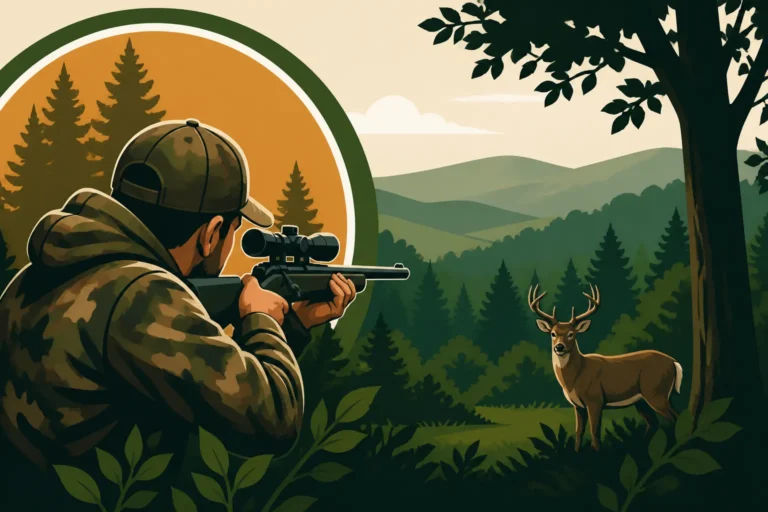
One of the biggest eye-openers for hunters new to Kentucky, especially those accustomed to flatter terrain or open Western landscapes, is just how close most shots truly are in our ridge country. You might envision epic, long-range shots across vast valleys, but the reality is often a quick, close-quarters engagement through thick timber and steep hollows. This guide is all about setting realistic expectations for rifle ranges in Kentucky's challenging ridge country, helping you prepare for the shots you’re most likely to encounter and making sure you’re ready when that moment of truth arrives.
Understanding Kentucky's Ridge Country Topography
Kentucky's ridge country, particularly in the eastern and southeastern parts of the state, presents a unique and often demanding environment for rifle hunters. It's not a place for consistent long-range opportunities, but rather a land that demands patience, keen observation, and proficiency at closer distances.
The Interplay of Steep Slopes and Dense Cover
When you picture Kentucky's ridge country, don't just think "hills." Think steep, sometimes nearly vertical, slopes that plunge into deep, winding hollows and then rise sharply again. These aren't rolling foothills; they are rugged, ancient mountains carved by time and water. This dramatic elevation change inherently limits line of sight. You might be standing on a ridgetop, but the next ridge over could be completely obscured by the deep valley between, or by the dense canopy of oaks, hickories, and pines that cling to the slopes.
Add to this the ubiquitous cover: thick stands of timber, rhododendron thickets so dense you could lose a small car in them, mountain laurel that forms impenetrable walls, and an understory of saplings and briars. This isn't wide-open Western sagebrush. Even mature timber has a surprising amount of visual obstruction within 100 yards. This combination of steep terrain and heavy cover means that most deer encounters will be fleeting, often happening as an animal slips through a narrow opening or pauses momentarily before disappearing into the brush. It's a game of inches, not hundreds of yards, for clear shooting lanes.
Identifying Common Shot Scenarios
Hunting in this rugged landscape means adapting to scenarios that are vastly different from what you might find in, say, a flat agricultural field. You're far less likely to see a deer grazing calmly at 250 yards and much more likely to catch one slipping through a saddle between two ridges, cresting a hardwood knob, or navigating a creek bottom. These scenarios dictate the range and angle of your shot.
Consider a deer moving along a bench on a steep hillside. Your shot might be quartering away, steeply downhill, and only visible for a brief window between trees. Or perhaps you're still-hunting a ridgetop, and a deer jumps from its bed only 60 yards away, presenting a quick, quartering-to shot as it tries to escape. Another common scenario is a deer crossing a logging road or an old gas line right-of-way, offering a slightly longer, but still often under 150-yard, opportunity. Understanding these common scenarios helps you mentally prepare for the distances and angles you'll actually encounter, rather than fantasizing about shots that rarely materialize. If you're looking for more specific tactics on how to move quietly and observe effectively, check out our guide on Still-Hunting Eastern Kentucky Ridges.
Factors Influencing Shot Ranges in the Mountains
The unique environment of Kentucky's ridge country introduces several critical factors that directly impact the practical and ethical range at which you can make a successful rifle shot. Ignoring these can lead to missed opportunities or, worse, wounded game.
Line of Sight and Obstructions
This is perhaps the single biggest limiting factor. Unlike a vast prairie, where you might see an animal a mile away, in Kentucky's timbered hills, your effective line of sight is drastically reduced. A small dip in the terrain, a cluster of saplings, or even a single tree limb can block your view of a deer just a few dozen yards away. It’s a constant dance of trying to find clear shooting lanes, and often, those lanes are narrow and short-lived.
You might be able to glass a distant ridge, but actually getting a clear shot at an animal on that ridge through the foreground of trees is a different story entirely. Hunters often discover that even when they hear deer or see movement, getting a clean, unobstructed shot requires the animal to be within a much closer radius than they initially anticipate. This "tunnel vision" effect is very real; your world shrinks to the immediate area around your stand or your position on the ground. This is why scouting before the season, perhaps with the GoHunt app to understand elevation changes and potential natural clearings, is so vital for finding those rare spots that offer a slightly longer view.
Shot Angles and Bullet Trajectory
Hunting steep country isn't just about horizontal distance; it's about vertical distance too. Uphill and downhill shots significantly affect your bullet's trajectory, requiring an adjustment to your aiming point. Gravity doesn't pull on the bullet for as long when shooting up or down a steep incline compared to a flat shot of the same horizontal distance. This means your bullet will impact higher than it would on flat ground. Forgetting this can lead to a clean miss over the animal's back or, more critically, an impact high in the shoulder or spine instead of the vitals.
Many modern rangefinders include an angle compensation feature that calculates the "shoots like" distance, which is the equivalent horizontal distance your rifle is zeroed for. Using such a tool is almost mandatory in steep terrain. For example, a deer 150 yards away horizontally but 50 yards below you on a steep grade might "shoot like" 120 yards. You'd hold for 120, not 150. Mastering these angle adjustments through practice is crucial for ethical hunting in Kentucky's hills.
Wind and Weather Considerations
Kentucky weather, especially during deer season, can be fickle. Rain, fog, and even light snow can drastically reduce visibility, shortening your effective range even further. A light drizzle might turn the woods into a muffled, misty realm where a deer at 100 yards appears as a ghost. Strong winds, common on exposed ridgetops, can also play havoc with bullet trajectory, especially on those rare longer shots. However, more often in the timbered hollows, the wind can swirl unpredictably, making scent control a constant challenge, which in turn means deer are often alerted to your presence before you can get a shot.
Understanding how wind behaves in relation to topography is key. Wind and Thermals on a Kentucky Ridge is a topic that dives deep into this phenomenon. A consistent breeze at the top of a ridge might be completely different in the protected hollows below. These dynamic weather conditions are another reason why reliable, closer-range shooting is prioritized in our Kentucky mountains. You can't control the weather, but you can control your preparedness for it.
Realistic Engagement Distances for Kentucky Ridges
Let's get down to brass tacks: what kind of distances are you actually looking at when hunting deer in Kentucky's ridge country? The numbers might surprise those who primarily hunt more open terrain.
Average Shot Distances in Eastern Kentucky Timber
In the dense, broken country of Eastern Kentucky, most deer are taken within a surprisingly short range. While you might occasionally hear of a hunter making a heroic 200-yard shot, the vast majority of opportunities arise at 150 yards or less. In fact, many experienced hunters would tell you that shots inside 100 yards are the norm, especially if you're actively still-hunting or positioned in thicker cover. A 50 to 75-yard shot is incredibly common, often presenting itself quickly as a deer moves through a thicket or crosses a game trail.
The thick understory, the constant dips and rises, and the generally low visibility mean that anything beyond 150 yards often means either an obstructed shot, a partially visible deer, or an animal moving too fast to confidently acquire a target. It's a testament to the effectiveness of close-range hunting tactics like patience, camouflage, and understanding deer movement through complex terrain.
Maximizing Opportunities in Shorter Ranges
Given the prevalence of shorter-range encounters, your strategy should revolve around maximizing these opportunities. This means honing your skills for quick, ethical shots at closer distances. Forget the bench rest and focus on shooting from field positions: kneeling, standing, or sitting with a rest. Practice should simulate real hunting conditions as much as possible, including shooting from a treestand if that's your preferred method.
Stand placement becomes critical. Instead of trying to find the longest view, focus on funnel points, saddles, and pinch points where deer are forced to travel through a smaller area, bringing them within your preferred range. Understanding Where Daniel Boone Forest Bucks Bed can help you set up closer to their daytime haunts, increasing your chances of a close encounter. Being quiet, blending in with your surroundings, and minimizing movement are paramount when most of your shots are under 100 yards.
The Exception: Long-Range Shots in Clearings or Powerlines
While short-range shots dominate in Kentucky's ridge country, there are exceptions. Powerline cuts, old logging decks, reclaimed mine land, or even unusually wide, straight logging roads can occasionally offer longer shots. These are typically the only places where a shot exceeding 200 yards becomes a realistic possibility. If you intend to hunt these specific types of areas, then practicing at extended ranges is absolutely necessary.
These longer shots demand a different level of preparation. You need a rifle zeroed for such distances, a rangefinder with angle compensation, and a deep understanding of your bullet's ballistic performance. Furthermore, you need to recognize that these opportunities are rare, and you should not build your entire hunting strategy around them. Always be prepared for the close shot, but if you find yourself overlooking a clear-cut and are prepared for a longer poke, you can confidently take it. For more on this, our article on Glassing a Powerline Cut at Last Light can offer valuable insights.
| Terrain Type | Typical Visibility Range | Common Shot Distance | Max Ethical Shot (Experienced Hunter) | Key Challenge |
|---|---|---|---|---|
| Steep Eastern Ridges | 50-150 yards | 75-125 yards | 200 yards | Dense cover, steep angles, swirling winds |
| Western KY River Bottoms | 100-250 yards | 125-200 yards | 300 yards | Interspersed thickets, river fog, flat angles |
| Bluegrass Farm Edges | 150-400+ yards | 150-300 yards | 400+ yards | Open fields, wind, finding cover for approach |
| Powerline Cuts/Clearings | 200-500+ yards | 200-350 yards | 400+ yards | Long shots, wind, knowing bullet drop |
Gear and Practice for Mountain Shots
Equipping yourself correctly and practicing effectively are non-negotiable for success and ethical hunting in Kentucky's ridge country. The right gear won't make you a better shot, but it will certainly enable you to make the most of the opportunities the mountains present.
Caliber and Ammunition Choices
When it comes to rifle calibers for Kentucky deer, especially in the thick stuff, reliability and sufficient knockdown power at moderate ranges are key. While any legal deer cartridge can work, something in the .270, .30-30, .308, or even a 6.5 Creedmoor range offers a good balance. These calibers deliver ample energy for clean kills at typical Kentucky ranges without excessive recoil. The focus should be on good bullet construction – a quality controlled-expansion bullet that will penetrate heavy muscle and bone if needed, ensuring maximum energy transfer on short to medium shots.
For discussions on specific rifle characteristics, you might find our guide Choosing a Rifle Caliber for Kentucky Deer quite useful. If you’re also considering elk hunting in Kentucky’s restoration zone, which shares similar rugged terrain, Rifle Calibers for Kentucky Elk offers more specialized advice, but the principles of bullet performance and ethical range remain consistent. Forget ultra-flat shooting magnum cartridges if your shots are consistently under 150 yards; reliability and accuracy at these distances are far more important.
Optics and Rangefinders for Challenging Terrain
Good optics are paramount. A quality rifle scope with excellent low-light gathering capabilities can make all the difference in the dim hollows or at dusk and dawn. Variable power scopes, perhaps a 3-9x or 4-12x, offer the versatility to handle both a quick close shot and a slightly longer poke across a clearing. Overpowering your scope for the typical short ranges in this terrain can actually be a hindrance, narrowing your field of view too much for fast target acquisition.
A rangefinder, as mentioned, is an indispensable tool, especially one with angle compensation. This allows you to quickly and accurately determine the "shoots like" distance, taking the guesswork out of steep uphill or downhill shots. For detailed topographic scouting and understanding terrain features like saddles, benches, and steepness before you even step foot in the woods, consider tools like GoHunt with its advanced mapping and layer options. This kind of digital scouting can save you miles of walking and help you identify potential shooting lanes from home, integrating real-world topography into your planning. For more specific advice on rangefinders for our challenging cover, check out Rangefinders in Thick Eastern Kentucky Cover.
Shooting Practice and Field Positions
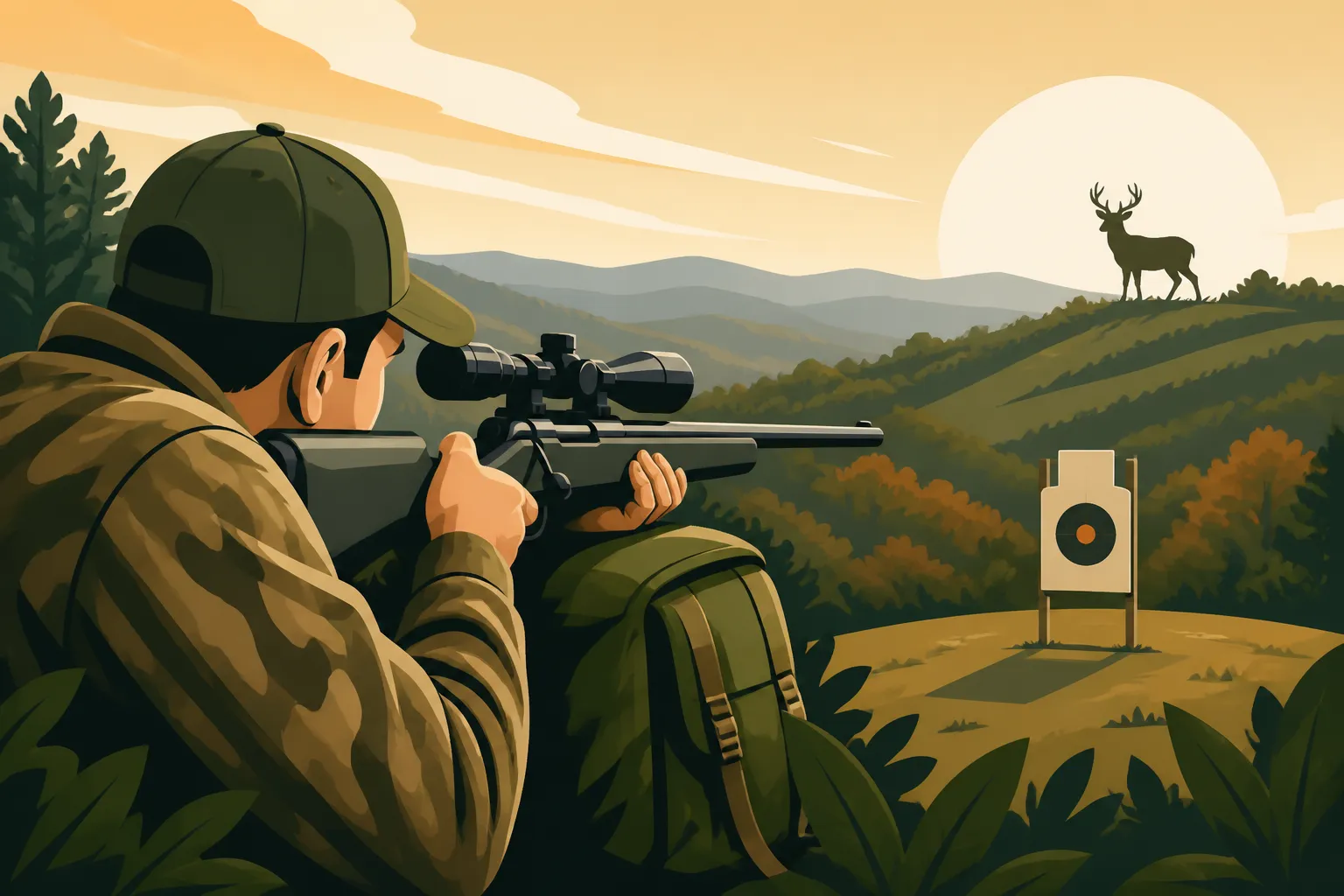
This is where many hunters fall short. It's easy to get comfortable shooting from a bench rest at a square target. But how often does a deer present itself neatly in front of you while you're seated at a stable table? Rarely, if ever. For Kentucky's ridge country, practice needs to reflect reality. This means shooting from various field positions: off-hand, kneeling, sitting with trekking poles or a pack as a rest, and even from a simulated treestand or ground blind.
Practice shooting quickly, acquiring the target, and making the shot within seconds. Simulate uphill and downhill shots at various angles on your local range (safely, of course, by elevating your target or shooting platform). The goal is to build muscle memory and confidence so that when that deer appears briefly through the timber, you can react instinctively and ethically. Remember, a well-placed shot from an improvised rest at 75 yards is far more ethical than a rushed, unstable shot at 200 yards. Our article Zeroing a Rifle for Mixed Distances can provide insights on how to prepare your rifle for the varied shot scenarios you'll encounter.
Ethical Considerations and Shot Placement
Beyond gear and practice, responsible hunting in Kentucky's ridge country hinges on sound ethical judgment and a deep understanding of shot placement, especially given the terrain.
Knowing Your Personal Limitations
One of the most crucial aspects of ethical hunting is knowing, and respecting, your personal limitations. Just because your rifle can shoot 300 yards accurately on a calm day at the range doesn't mean you can make that shot under pressure, with adrenaline pumping, in low light, on a steep hillside, with a deer that's only visible for a moment. Be honest with yourself about your effective range, factoring in all the variables that a real hunting scenario throws at you.
It's far better to pass on a marginal shot than to take it and risk wounding an animal. Patience is a virtue in these mountains, and often, if you wait or move carefully, a better, closer opportunity will present itself. Don't let buck fever or the excitement of the moment override your good judgment. The goal is a quick, clean kill, always.
The Importance of a Clean Kill
The rugged and thick nature of Kentucky's ridge country means that tracking a wounded animal can be incredibly difficult, often turning into an arduous and heartbreaking task. Even with a well-placed shot, a deer might run a short distance, and then you're faced with trying to follow a faint blood trail through dense rhododendron or down into a steep, rocky hollow. This makes the accuracy of your initial shot even more critical.
For steep angle shots, remember that the point of impact on the vitals will shift. For an uphill shot, you'll aim lower than you would on flat ground to hit the heart/lungs. For a downhill shot, you'll aim higher. Practice visualizing the internal organs relative to the external point of aim for these angled shots. Understanding Tracking a Deer Through Kentucky Leaf Litter and Recovering a Deer From a Steep Hollow are vital skills for hunting this terrain, but the best approach is to minimize the need for them through a precisely placed shot in the first place.
Using Technology Wisely
Modern technology, from sophisticated rangefinders to mapping apps, can be powerful tools in the hands of a responsible hunter. Services like GoHunt offer satellite imagery, topographic maps, and public/private land boundaries that can be invaluable for scouting, planning access, and identifying potential clearings or funnels. They allow you to understand the lay of the land, predict deer movement, and even mark potential shot locations based on terrain features, all from your living room.
However, technology is a supplement, not a replacement, for fundamental hunting skills. It can help you make informed decisions about where to hunt and what kind of shot opportunities to expect, thereby improving your chances of an ethical shot. But no app can pull the trigger for you, or teach you to identify a clear shooting lane in the moment. Use these tools to enhance your preparedness, but always rely on your judgment, practice, and respect for the animal when that deer steps out.
Disclaimer
This article is for general informational purposes only and does not constitute professional advice. Laws, prices and regulations vary by location and change over time. Consult a qualified professional for guidance on your specific situation.