Best Kentucky Ground for Public Land Deer
Finding quality public land to hunt deer in Kentucky can feel like searching for a needle in a haystack, especially when you pull up to a trailhead on opening morning and see a dozen other trucks already there. It's frustrating to invest your time, scout hard, and then feel like you're constantly competing for space. This guide is here to help you cut through the noise, offering strategies and pointing you towards some of the most promising public lands where you can consistently find deer, even in highly pressured situations.
Understanding Kentucky's Public Land Landscape for Deer
Kentucky is blessed with a surprising amount of public land, but not all of it is created equal when it comes to deer hunting. You can't just throw a dart at a map and expect to find your dream spot. Understanding the nuances of these areas and the pressures they face is the first step to success.
The Reality of Public Land Pressure
Let's be honest, public land hunting isn't always the serene, solo experience we see in magazines. Especially during the early archery season or the modern gun season opener, some areas can feel more like a community park than a wilderness hunting ground. You might have found a promising ridge in your pre-season scouting, only to discover three other hunters have set up stands within a stone's throw of your spot on opening day. This shared-space reality is a major frustration for many hunters, leading them to believe that all public land is "hunted out."
However, this isn't universally true. While some popular WMAs and easily accessible tracts of national forest do see heavy traffic, especially on weekends and during the peak of the rut, there are always pockets that get overlooked. The key is to recognize that pressure is real, but it's also unevenly distributed. Deer, being smart creatures, learn to adapt to this pressure, often becoming more nocturnal or relocating to less disturbed areas. Our job as public land hunters is to understand this dynamic and adjust our tactics accordingly. It might mean walking a little further, hunting tougher terrain, or simply thinking outside the box.
Diversity of Public Land Types
Kentucky's public hunting lands come in various flavors, each with its own characteristics, regulations, and potential for deer. It's not just one big block of "public land." We have a diverse array, including Wildlife Management Areas (WMAs), portions of the Daniel Boone National Forest, sections of Land Between the Lakes, and even some limited hunting opportunities on State Park lands. This variety means that what works in one area might be entirely different in another.
For instance, Kentucky's Wildlife Management Areas are typically managed intensively for wildlife, often featuring specific habitat improvements, food plots, and sometimes even unique drawing or quota hunts for certain species. They can offer excellent hunting, but their accessibility often means higher hunter density. The Daniel Boone National Forest, on the other hand, is vast and rugged, covering over 700,000 acres across the eastern part of the state. While it might have fewer deer per square mile than some prime WMA bottoms, the sheer size and challenging terrain mean that the deer that live there are often less pressured and more mature. You can learn more about How Many Acres of Public Land Kentucky Has to get a better sense of the scale we're talking about. Then there's Land Between the Lakes, a unique federal recreation area with its own set of rules and an extensive permit system that limits hunter numbers in certain zones. Knowing these distinctions is crucial because it helps you select the right strategy and anticipate the type of hunting experience you'll have.
Strategies for Finding Unpressured Public Deer Ground
So, how do you find those hidden gems where the deer haven't seen a dozen camo-clad figures stomping through their bedroom? It often comes down to effort, intelligent scouting, and strategic timing.
Go Where Others Won't (or Can't)
This is perhaps the oldest and most effective piece of advice for public land hunting: put in the work that others aren't willing to do. Deer, especially mature bucks, are masters at finding sanctuary, and often that sanctuary is in places most hunters deem too difficult to access or too challenging to navigate.
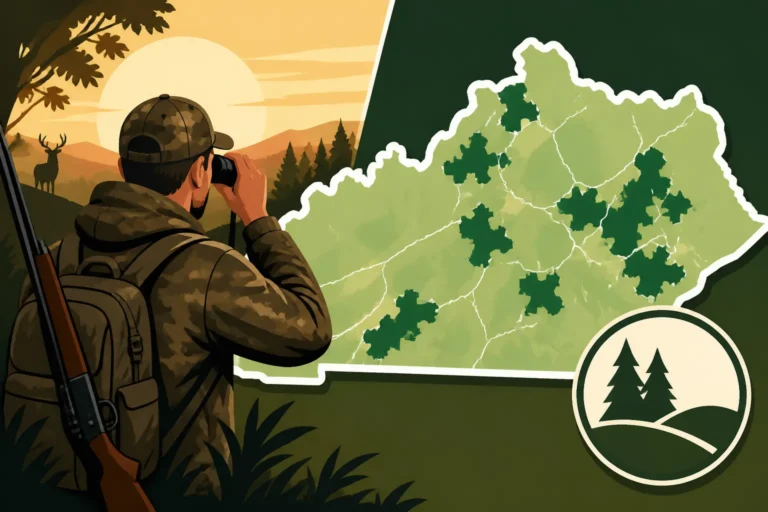
Think about steep terrain. Eastern Kentucky, with its Cumberland Mountains and countless hollows, is full of formidable slopes. While it's grueling to hike up and down those hills, it's precisely why many hunters stick to flatter, more accessible areas. If you're willing to trek deep into a steep hollow or climb to a remote ridge line, you'll often find less pressured deer. Just be prepared for the challenge of Dragging a Deer Out of a Steep Hollow if you're successful. Similarly, areas with thick cover, such as regenerating clear-cuts, dense briar patches, or swampy bottomlands, are often avoided. These places are hard to walk through, visibility is limited, and they're just plain uncomfortable. But for a deer looking for a safe bed or escape route, they're perfect. Learning to navigate and hunt these seemingly impenetrable areas can unlock incredible opportunities. Look for those dark, ugly green splotches on an aerial map – those are your tickets to avoiding the crowds and Finding Ground Others Walk Past.
Leverage Mapping and Scouting Tools
In today's hunting world, digital mapping tools are an absolute game-changer, transforming how we approach public land. Gone are the days of relying solely on paper maps and endless boot leather. Apps like onX Hunt and GoHunt (and even the state's own tools) allow you to conduct extensive pre-season scouting from the comfort of your home, saving you countless hours in the woods.
These tools provide detailed aerial imagery, topographical maps, and clearly marked public/private land boundaries. With them, you can identify key features like pinch points, saddles, hidden benches, remote food sources, and potential bedding areas without ever setting foot in the woods. Look for creek drainages that funnel deer movement, identify logging roads or old homesteads that create natural openings, or pinpoint thick, secluded pockets of cover on otherwise open ground. Understanding the topography is especially vital in rugged areas; a seemingly insignificant ridge line on a flat map can be a massive barrier or a perfect travel corridor in real life. Use these apps to mark potential stand locations, entry and exit routes, and areas you want to physically scout. Pair this digital recon with the Kentucky Department of Fish and Wildlife Resources' own resources—for example, Scouting With the Kentucky Hunt Fish App is a great way to access WMA-specific details and regulations right on your phone. Taking the time to understand the lay of the land digitally, perhaps by Reading Aerial Photos for Eastern Kentucky Deer, will give you a significant advantage in finding those less-pressured areas.
Timing Your Hunts Strategically
Beyond where you hunt, when you hunt can make a huge difference in encountering less-pressured deer. Most hunters hit the woods hard on opening day, the first week of modern gun season, and during the peak of the rut. If you can hunt outside of these high-pressure windows, your chances of a more peaceful and productive experience will often increase.
Consider hunting mid-week instead of on weekends. The difference in hunter numbers can be dramatic. Many public land areas that feel swamped on a Saturday morning will be nearly empty on a Tuesday. The late season, specifically December and January, is another fantastic opportunity. By this point, many fair-weather hunters have packed it in, and the remaining hunters are spread thin. Deer are still actively feeding, especially as food sources become scarcer, making them predictable if you can locate those late-season food plots or mast crops. This is when patience and cold-weather gear truly pay off. Don't overlook the potential of Hunting the Late-Season January Lull or even trying to pattern deer after a significant Hunting Deer After a January Cold Front. Inclement weather, too, can be your friend. A steady rain, a heavy fog, or a light snowfall will deter many hunters, leaving the woods quieter and often prompting deer to move more confidently.
Promising Regions and Specific Public Land Examples
Kentucky offers diverse terrain, and with it, diverse opportunities for public land deer hunting. Each region presents its own set of challenges and rewards.
Eastern Kentucky's Rugged Mountains and Forests
If you're willing to work hard and embrace solitude, Eastern Kentucky is your playground. The dominant feature here is the Daniel Boone National Forest, a sprawling wilderness that often intimidates hunters with its vastness and challenging topography. This is not manicured farmland; this is rugged, steep, heavily timbered country. Deer densities might not be as high as in some agricultural areas, but the mature bucks found here are often older, wiser, and have learned to evade pressure. You can dive deeper into Daniel Boone National Forest Hunting to understand its unique characteristics.
Focus on finding remote saddles, benches, and thick transition zones far from roads. These are the places Where Daniel Boone Forest Bucks Bed, escaping the constant disturbance closer to human activity. Beyond the DBNF, numerous state forests and smaller WMAs like Begley, Redbird, Robinson Forest, and Pine Mountain State Forest offer similar steep, timber-dominated hunting. Expect to earn your deer here with tough hikes and patient hunting. The reward, however, is the chance at an unpressured animal and a truly wild hunting experience. While the Eastern Kentucky Deer Density might seem lower on paper, the quality of the hunt can be exceptional.
Western Kentucky's Bottomlands and Lakes
Shifting gears to the west, you'll find a different kind of public land hunting. This region is characterized by extensive river bottoms, agricultural fields, and massive lake systems like Kentucky Lake and Lake Barkley, which form the Land Between the Lakes (LBL) National Recreation Area. LBL offers significant deer hunting opportunities, though it often requires a permit and careful navigation of its unique regulations. Learn more about Land Between the Lakes Hunting before you plan a trip there.
Beyond LBL, WMAs like Sloughs, Peabody, and Ballard are excellent choices. These areas often feature a mix of bottomland hardwoods, sloughs, and fields, providing rich food sources and diverse cover. Hunting Western Kentucky Bottomland Deer means understanding how deer utilize these fertile areas, often funneling between water features and agricultural lands. While these regions can hold higher deer densities, which is reflected in the generally higher Kentucky Deer Density by Kentucky Region compared to the mountains, they can also attract more hunters due to easier access and historically larger deer harvests. Success here often comes down to precise scouting, understanding deer movement patterns along agricultural edges, and leveraging cover like fencerows and thick creek bottoms.
Central and South-Central Kentucky's Diverse Lands
This region offers a blend of terrains, often centered around the numerous Army Corps of Engineers lakes. Public hunting grounds can be found around Green River Lake, Barren River Lake, Nolin River Lake, and others. These areas typically feature mature timber, rolling hills, and sometimes small clearings or old fields. They often provide a good balance between accessibility and the opportunity to find less-pressured areas, especially if you're willing to walk.
The key here is often identifying funnels created by the lake shorelines, changes in topography, and remaining timber blocks amidst more developed areas. Look for public land fingers that stretch into private property, creating natural travel corridors. Even smaller, seemingly insignificant WMAs in these counties can produce excellent hunting if you scout them thoroughly and avoid the most obvious access points. Focus on areas that offer diverse food sources and thick cover. A good strategy here might involve focusing on features like a Hunting a Ridge-Top Saddle for Rutting Bucks, which can be productive across various land types.
Here's a quick overview of some public land types and their general characteristics for deer hunting in Kentucky:
| Public Land Type | Typical Terrain | Deer Density | Hunter Pressure | Key Opportunities |
|---|---|---|---|---|
| Daniel Boone National Forest | Rugged mountains, thick timber | Medium-Low | Medium | Less pressured, older bucks; solitude |
| Wildlife Management Areas (WMAs) | Varied, often managed for wildlife | Medium-High | High (accessible areas) | Habitat improvements, diverse food sources |
| Land Between the Lakes | Rolling hills, timber, water | Medium-High | Medium (permit dependent) | Unique habitat, managed hunts |
| Army Corps of Engineers Lands | Rolling timber, lake access | Medium | Medium | Water access, diverse habitat adjacent to lakes |
| State Forests | Steep timber, similar to DBNF | Medium-Low | Medium-Low | Challenging access, potential for solitude |
Essential Considerations for Public Land Deer Hunters
Finding the best public land is only part of the equation. Once you're out there, a few critical considerations will ensure you have a safe, ethical, and successful hunt.
Know the Regulations Inside and Out
This cannot be stressed enough: public land regulations can vary significantly from statewide hunting laws. What's legal on private land or in one WMA might be strictly prohibited in another. Ignorance of the rules is never an excuse, and a violation can quickly turn a great hunt into a costly and disappointing experience.
Before you even load your truck, consult the Kentucky Department of Fish and Wildlife Resources (KDFWR) annual hunting guide specifically for the WMA, National Forest unit, or other public land you plan to visit. Pay close attention to season dates, bag limits, and any special restrictions. For example, some WMAs have archery-only zones, different antlerless deer limits, or specific rules regarding Kentucky Deer Management Zone Rules. You'll need to know Kentucky Blaze Orange Requirements even if you're an archery hunter during certain seasons. Beyond hunting, understand the rules for vehicle access, camping, and the use of stands. For instance, Treestand Rules on Kentucky Public Land often require portable stands to be removed daily, and screw-in steps might be prohibited. And don't forget to check the regulations on using trail cameras; while generally allowed, some areas have specific rules about Trail Camera Rules on Kentucky Public Land or their placement. A little homework upfront can save you a lot of trouble later.
Prioritize Safety and Preparedness
Hunting on public land, especially in more remote or rugged areas, requires a heightened sense of safety and preparedness. You are often further from immediate help, and conditions can change rapidly. Never venture into unfamiliar territory without a solid plan and the right gear.
If you're hunting solo, always tell someone exactly where you're going and when you expect to return. Carry a fully charged cell phone, but don't rely on it for navigation in areas with spotty service. A dedicated GPS unit or a downloaded offline map on your phone is essential for finding your way in and out. Pack a small but comprehensive first aid kit, especially if you're deep in the Daniel Boone National Forest where a twisted ankle or a deep cut could become a serious problem. Remember, First Aid Kits for Remote Daniel Boone Forest Ground should include items for basic wound care, pain relief, and emergency communication. Dress in layers, carry extra water, and have a fire starter and emergency shelter, even if it's just a space blanket. Respect other hunters by giving them ample space and being mindful of your shot angles. The woods are big enough for everyone, but common courtesy and an emphasis on safety are paramount for a positive experience for all.
Finding the best public land for deer in Kentucky is an ongoing adventure, not a one-time discovery. It requires dedication, a willingness to get off the beaten path, and smart use of the tools available to you. While the challenges of hunting public ground are real, the rewards—the solitude, the satisfaction of outsmarting a pressured animal, and the beauty of Kentucky's wild spaces—are immeasurable. By understanding the landscape, employing smart scouting strategies, and always prioritizing safety and ethical hunting, you can consistently find success and create lasting memories on Kentucky's public lands.
Disclaimer
This article is for general informational purposes only and does not constitute professional advice. Laws, prices and regulations vary by location and change over time. Consult a qualified professional for guidance on your specific situation.