Wayne County Bear Zone Ground
Navigating the unique regulations and understanding the specific characteristics of bear hunting in Wayne County can feel like deciphering a complex wilderness map. With its rugged terrain and status within Kentucky's dynamic bear management system, it's easy for hunters to feel overwhelmed trying to pinpoint the best strategies and locations. This comprehensive guide will illuminate the ins and outs of bear hunting in Wayne County, offering practical insights and detailed advice to help you prepare for a successful and ethical pursuit.
Understanding Wayne County's Place in Kentucky's Bear Zones
For many years, black bears were a rare sight in Kentucky, a ghost from the past. But thanks to incredible conservation efforts, their numbers have rebounded, particularly in the southeastern part of the state. This resurgence has led to the establishment of specific bear zones, each with its own set of rules and seasons, to manage the growing population responsibly. Understanding where Wayne County fits into this picture is the first crucial step for any aspiring bear hunter.
The Evolution of Kentucky's Bear Zones
Kentucky's bear population has seen a remarkable comeback, spreading from its initial strongholds in the far southeastern mountains. As bear numbers grew and their range expanded, the Kentucky Department of Fish and Wildlife Resources (KDFWR) implemented a zone-based management system. This system allows for more targeted management, opening certain areas to hunting while protecting others where populations might still be establishing or are more sensitive. It’s a flexible system designed to adapt as the bear population continues to thrive and expand its footprint across the landscape. The goal is to provide hunting opportunities while ensuring the long-term health and stability of the bear population.
The regulations and zone boundaries can change, reflecting population trends and distribution, so staying current is paramount. You can find detailed information on the KDFWR website. This is particularly important because what might have been a non-hunting zone a few years ago could now be open, and vice-versa, as bears move and establish new territories. Keeping up with these changes is part of being a responsible hunter. For a broader overview of the state's approach, check out Kentucky's Bear Zone System.
What Zone Three Means for Hunters in Wayne County
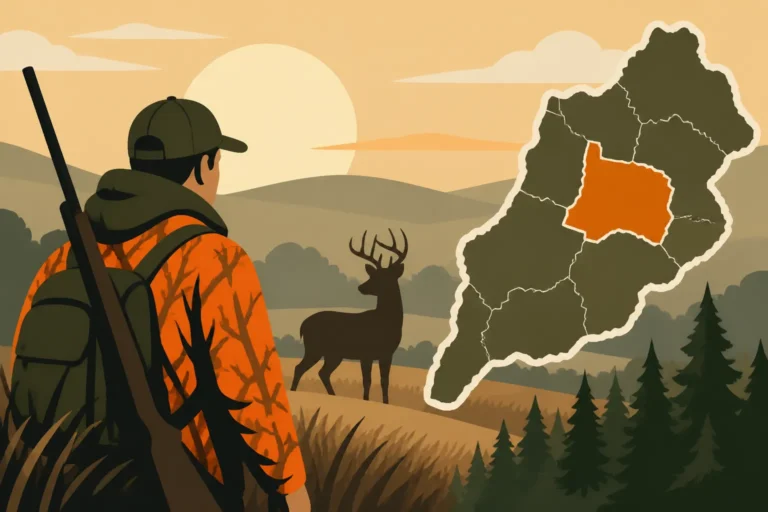
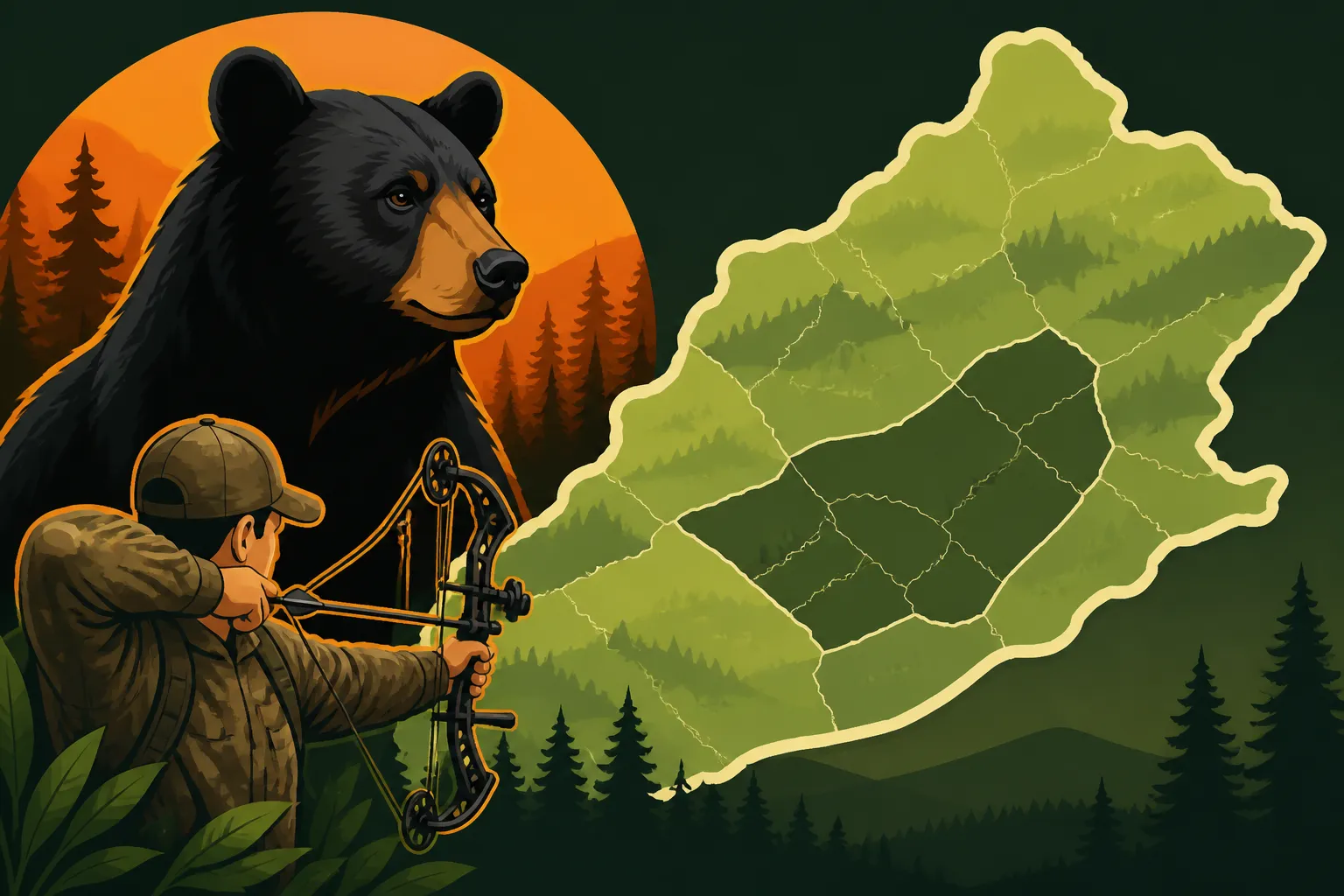
Wayne County, along with neighboring Clinton County, was brought into Kentucky's Bear Zone Three. This designation is significant because it indicates a specific management approach for these areas. Typically, Zone Three counties represent areas where bear populations are present but may still be expanding or are at a lower density compared to the primary core zones. This often translates to different season lengths, quota structures, or even specific methods allowed.
For hunters, this means you need to pay extra close attention to the specific regulations for Zone Three. The season dates might be shorter, or there might be an overall harvest quota that, once met, closes the season for everyone. It's not uncommon for these zones to have archery-only or firearms-only periods, or different rules regarding the use of hounds, compared to the more established Zone One or Two areas. It’s a dynamic situation that requires diligence on your part. For instance, sometimes these zones open with specific restrictions on the take of sows to help further population growth. Always verify the precise regulations for Wayne County before planning your hunt, as failing to do so could result in a violation and impact conservation efforts.
Navigating Wayne County's Diverse Terrain for Bear Hunting
Wayne County offers a varied landscape, from steep, forested ridges to more accessible valleys and scattered agricultural lands. This diversity means that understanding the terrain is crucial for locating bears and planning your hunt. It's not a one-size-fits-all approach here; successful bear hunters in Wayne County learn to read the land and adapt their strategies accordingly.
Public Land Access Points and Challenges
A significant portion of Wayne County falls within the proclamation boundary of the Daniel Boone National Forest. This means a lot of public land is available for hunting, which is a huge advantage for those who don't have access to private property. However, "available" doesn't always mean "easy to access." Many areas within the Daniel Boone National Forest are rugged, with limited road access, deep hollows, and steep climbs. You might find yourself hiking miles from the nearest road or trailhead to get into prime bear habitat.
When planning to hunt public land in Wayne County, it's essential to consult detailed maps. Digital tools like onX Hunt are invaluable here, allowing you to clearly see land ownership boundaries, forest roads, trails, and topography. You can pinpoint potential bedding areas, travel corridors, and water sources before ever setting foot in the woods. Remember that while public, these lands can still be busy, especially on opening weekends. Finding ground others walk past might require a willingness to go deeper, climb higher, or push further than most. Check out Daniel Boone National Forest Hunting for more tips on navigating this vast area.
Private Land Opportunities and Considerations
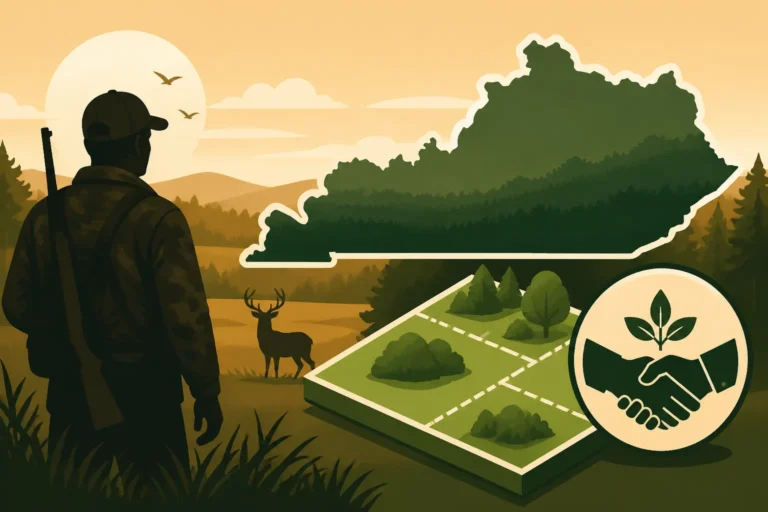
Beyond the national forest, Wayne County has a mix of private timber tracts, farms, and smaller homesteads. Gaining permission to hunt these private lands can sometimes offer less pressured opportunities, but it requires diligent effort and good old-fashioned manners. Farmers and landowners might be more receptive to hunters who offer to help with chores or respect their property boundaries meticulously.
When approaching landowners, always be prepared and respectful. Have a clear idea of where you want to hunt, when, and how you will access the property. A professional attitude goes a long way. Some private lands might be adjacent to public forest, creating ideal pinch points or travel corridors for bears moving between different habitat types. While onX Hunt is great for public land, it also clearly delineates private property, making it easier to identify landowners to contact. Always obtain explicit permission before stepping onto private ground, as trespassing laws are strictly enforced.
Key Habitat Features for Bear Sign
Regardless of whether you're on public or private land, bears are creatures of habit and often frequent areas offering food, cover, and water. In Wayne County, this often means focusing on certain habitat features:
- Mast-producing Ridges: Oak and hickory ridges are critical, especially during the fall. Bears gorge themselves on acorns and other nuts to pack on fat for winter. Look for overturned rocks, claw marks on trees, or scat full of acorn shells.
- Thick Laurel and Rhododendron Thickets: These dense areas provide excellent bedding and escape cover. Bears often retreat to these impenetrable areas to rest undisturbed. While challenging to hunt in, their edges can be prime ambush spots.
- Creek Bottoms and Water Sources: Bears need water, and creek bottoms often provide lush vegetation, softer ground for foraging, and travel routes. Look for tracks in muddy areas or along stream banks.
- Berry Patches: In late summer and early fall, berry bushes (blackberries, raspberries, blueberries) can be bear magnets. Keep an eye out for fresh droppings or broken branches in these areas.
- Old Clear-cuts and Reclaimed Mine Lands: While less common in all parts of Wayne County, these areas can offer diverse food sources and thick cover as they regrow. They create edges where different habitat types meet, which bears often utilize for travel and foraging.
Here's a quick look at common bear signs and where you might find them:
| Sign Type | Description | Typical Location | What it Means for Hunters |
|---|---|---|---|
| Scat | Varies greatly by diet; often contains berries, nuts, insects | Trails, creek beds, feeding areas, near dens | Freshness indicates recent activity; diet reveals food source |
| Tracks | Distinctive five-toed paw prints; hind track resembles human | Muddy trails, creek banks, soft ground | Presence, direction of travel, size of bear |
| Claw Marks | Vertical scratches on trees (usually softer bark like beech) | Large trees, especially mast producers, rubbing posts | Bear uses area for marking territory or feeding |
| Rub/Hair | Bark rubbed smooth, hair left on trees or fences | Scent marking trees, den entrances, crossing points | Active bear movement in the area |
| Turned Rocks | Rocks and logs flipped over, ground dug up | Forest floor, foraging areas | Bear foraging for grubs and insects |
| Broken Branches | Branches broken high up in fruit/nut trees | Apple trees, oak trees, berry bushes | Bear climbing to access food |
Tactics and Considerations for Bear Hunting in Wayne County
Hunting bears in Wayne County, with its specific zone regulations and rugged landscape, requires thoughtful strategy. It's not just about finding a bear; it's about understanding their behavior in this particular environment and employing methods that are both effective and ethical.
Hunting Over Natural Mast
Kentucky bears, like most ursids, are highly opportunistic omnivores, but a significant portion of their diet revolves around natural mast – especially acorns. During the fall hunting seasons, focusing your efforts on mature hardwood ridges heavy with red and white oaks can be incredibly productive. Bears will spend a great deal of time in these areas, feeding relentlessly to build up fat reserves for winter denning.
Scouting these mast crops before the season or even during it is crucial. Not every oak tree will drop acorns, and some years are better than others. Look for fresh mast on the ground, and more importantly, signs that bears have been there. Overturned rocks, broken branches in the canopy from bears climbing, and distinct bear scat filled with acorn fragments are all indicators you're in the right place. Setting up a stand or ground blind downwind of an active feeding area, particularly near a well-used trail leading to or from bedding cover, can yield excellent results. Remember that bears can feed at any time, but often move most actively in low light conditions, dawn and dusk. For more on this, consider Hunting Bears Over Natural Mast in the Mountains.
Spot-and-Stalk vs. Still Hunting
In the dense forests and broken terrain of Wayne County, pure spot-and-stalk hunting as seen in western states is often challenging due to limited visibility. However, elements of both spot-and-stalk and still hunting can be incredibly effective.
- Still Hunting: This involves moving extremely slowly through the woods, pausing frequently (often for 5-10 minutes) to observe, listen, and scan your surroundings. You're effectively hunting with your feet, but at a snail's pace. Focus on areas with good cover and fresh sign, such as along creek bottoms, through thickets, or on ridges connecting different feeding areas. The key is patience and meticulous attention to detail, looking for any anomaly in the forest — a dark shape, a flick of an ear, or movement that doesn't quite fit.
- Spot-and-Ambush: A more practical approach for many is to "spot" a promising area through extensive scouting (identifying mast, water, cover) and then "ambush" it. This means carefully approaching and setting up in a concealed position, like a treestand or ground blind, allowing the bear to move naturally into your area. Given the topography of Wayne County, sometimes gaining elevation to glass down into a hollow or across a ridge before making a move can be beneficial, akin to Spot-and-Stalk Tactics for Pine Mountain Bears, even if the distances are shorter.
Hound Hunting Considerations
The use of hounds for bear hunting is permitted in certain Kentucky bear zones during specific seasons. If hound hunting is an option in Wayne County's Zone Three during your chosen season, it's a completely different style of hunting. This method relies on trained dogs to track and tree or bay a bear, allowing the hunter to move in for the shot.
Hound hunting requires specialized equipment, well-trained dogs, and a deep understanding of dog handling and bear behavior. It's often done in groups, requiring coordination and physical stamina to keep up with the chase across rugged terrain. Ensure you are intimately familiar with all regulations concerning hound hunting, including specific season dates, dog training rules, and any limitations on the number of dogs or harvest quotas. Not all public lands may be suitable or permissible for hound hunting, so verifying local rules, especially within the Daniel Boone National Forest, is critical.
Essential Preparation and Resources for Wayne County Bear Hunters
A successful bear hunt in Wayne County isn't just about knowing where to go or how to hunt; it's also about thorough preparation. From understanding the legal requirements to utilizing modern tools, being well-prepared significantly increases your chances of a safe and successful experience.
Understanding Licensing and Permits
Before you even think about stepping into the woods, you must have the appropriate Kentucky hunting licenses and bear permits. Kentucky requires a general statewide hunting license, and then a specific bear permit. These permits are typically limited and often part of a quota system, meaning only a certain number are issued, or the season closes once a specific harvest number is reached.
Always check the current year's KDFWR hunting guide for precise details on permit costs, application deadlines, and any specific requirements for Zone Three in Wayne County. For non-residents, the fees are often higher, and you might want to look into Kentucky Nonresident Hunting License Options. It’s also crucial to understand the bear checking requirements once you harvest an animal; typically, bears must be telechecked and often physically presented at a KDFWR check station for biological data collection. This provides vital information for managing the growing Kentucky's Black Bear Population. Always keep your proof of license and permit with you while hunting.
Mapping Tools and Scouting Aids
Modern technology has revolutionized how hunters approach scouting and navigation. Given the expansive and often challenging terrain of Wayne County, utilizing digital mapping tools is almost a necessity.
- onX Hunt: This application is a hunter's best friend. It provides detailed satellite imagery, topographic maps, and crucially, property line information that clearly distinguishes public land (like the Daniel Boone National Forest) from private parcels. You can mark waypoints for bear sign, food sources, bedding areas, and potential ambush sites. It also works offline, which is vital in areas with spotty cell service, common in the deep hollows of Wayne County. Being able to see onX Layers for Kentucky Land Status can save you from accidental trespassing and guide you to hidden pockets of public ground.
- GoHunt: While often associated with western big game, platforms like GoHunt can sometimes offer valuable insights into draw odds, harvest data, and general species information that might inform your overall strategy, even if it's not hyper-specific to Kentucky bears. It's a great resource for hunters looking to dive deep into planning their hunts.
- Kentucky Hunt Fish App: The KDFWR also provides its own app, which can be invaluable for finding public lands, checking regulations, and even telechecking your harvest. It's a fantastic official resource to complement other mapping tools. Scouting With the Kentucky Hunt Fish App is a must for any Kentucky hunter.
Beyond digital tools, good old-fashioned binoculars are essential for glassing distant slopes or picking apart dense cover. A rangefinder is also critical for ethical shot placement, especially in undulating terrain where distances can be deceptive. A reliable headlamp, a well-stocked first-aid kit, and a compass (even if you rely on GPS) are non-negotiable safety items for hunting the remote corners of Wayne County.
Safety and Ethical Considerations
Bear hunting, particularly in rugged country, demands a heightened awareness of safety. Always inform someone of your hunting plans, including your specific location and expected return time. Be prepared for rapidly changing weather conditions; Kentucky's fall can deliver everything from warm, sunny days to cold, driving rain or even early snow. Layered clothing and quality rain gear are vital.
Ethically, remember that bears are powerful animals. Shot placement is paramount to a quick, humane harvest and efficient recovery. Know your effective range and stick to it. If you make a shot, always wait a reasonable amount of time before tracking, giving the bear time to expire, especially in thick cover. Having a plan for game recovery, including potentially needing help to drag a heavy bear out of a hollow, is part of responsible hunting. Be mindful of other hunters, especially on public land, and always identify your target absolutely positively before taking a shot.
Disclaimer
This article is for general informational purposes only and does not constitute professional advice. Laws, prices and regulations vary by location and change over time. Consult a qualified professional for guidance on your specific situation.