Where Kentucky Black Bears Live
There's a unique thrill, and let's be honest, a little bit of awe, that comes with knowing black bears are once again calling Kentucky home. For decades, they were just a whisper of the past, a ghost in our mountains. Now, seeing their tracks or getting a fleeting glimpse of a shadowy form is a real possibility, especially for those of us who spend a lot of time in the woods. But where exactly are these incredible creatures making their dens and foraging for food? This guide will dive deep into the natural range of Kentucky's black bear population, helping you understand not just where they are but where they're going and why, so you can appreciate their presence and know what to expect when you're out there.
The Historical Comeback of Kentucky's Black Bears
It wasn't that long ago that the idea of a thriving black bear population in Kentucky seemed almost like a tall tale, something from another century. Our grandfathers might have heard stories, but for many of us, the forests felt empty of these magnificent creatures. But things have changed, dramatically and wonderfully.
From Near Extinction to Resurgence
Imagine a time when bears roamed almost every corner of what would become Kentucky. That was once the reality. But as European settlers moved in, bringing agriculture, logging, and extensive hunting, the black bear population plummeted. By the early 20th century, they were all but extirpated from the state. It's a sad chapter in our wildlife history, reflecting a common narrative across much of the Eastern US.
However, nature, given a chance, often finds a way to reclaim what was lost. Starting in the 1980s, black bears began to naturally recolonize Kentucky. These weren't reintroductions by wildlife agencies; these were pioneering bears, primarily from thriving populations in Virginia and West Virginia, making their way across the Cumberland Plateau and into the rugged, regenerating forests of southeastern Kentucky. It speaks volumes about the resilience of these animals and the improving habitat. This natural expansion has led to a population that continues to grow and spread, a testament to conservation efforts and the wildness that still exists within our state borders. If you're curious about the overall picture, you can find more details in our post about Kentucky's Black Bear Population.
Expanding Territory Beyond the Mountains
While the core population is firmly established in the eastern mountains, one of the most exciting — and sometimes surprising — aspects of this comeback is the bears' willingness to explore new territories. It’s not just a handful of animals restricted to the deepest wilderness; young bears, especially males, are known for their dispersal habits, venturing far beyond their birth territories in search of new food sources and mates.
This drive to expand means that while the heart of bear country remains in the southeast, sightings are becoming more common in areas that previously hadn't seen a bear in over a century. It's truly wild to think about a bear wandering through a county where its ancestors haven't stepped foot in generations. This expansion isn't always a smooth process, and it certainly presents new challenges for both bears and the people who live in these areas, but it undeniably signals a healthy and growing population. The narratives around Bears Moving Into Central Kentucky are becoming more frequent, and it's a topic that fascinates many hunters and nature enthusiasts alike.
Core Bear Habitat: Southeastern Kentucky's Mountainous Terrain
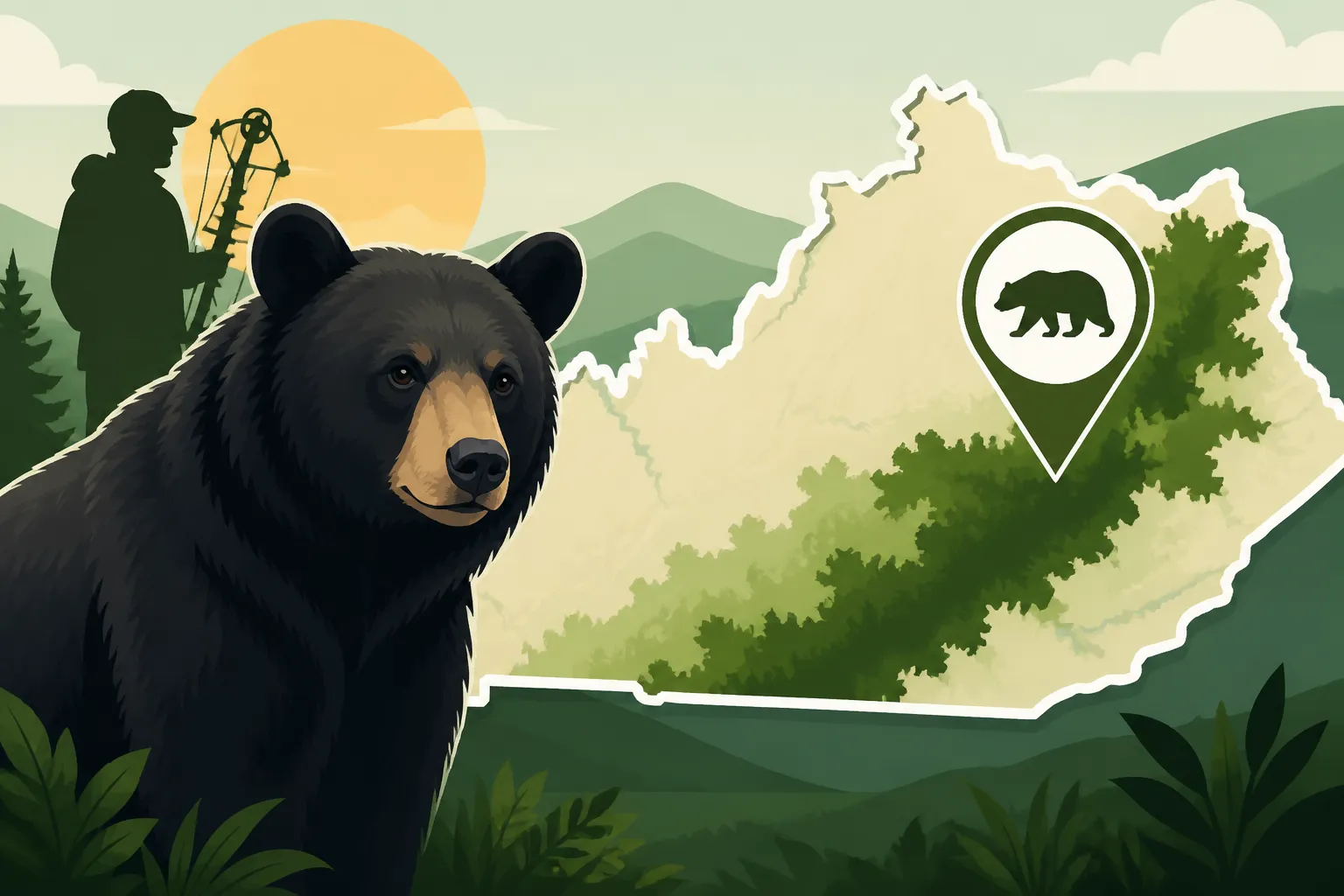
When we talk about where Kentucky black bears truly live and thrive, our eyes immediately turn to the southeastern part of the state. This is their stronghold, the heart of their resurgence, and where you're most likely to encounter them.
Daniel Boone National Forest and Surrounding Counties
The rugged, expansive landscapes of southeastern Kentucky provide the ideal environment for black bears. At the absolute center of this habitat is the vast Daniel Boone National Forest. This isn't just a place with a few trees; it's hundreds of thousands of acres of dense, unbroken forest, characterized by steep hollows, rocky outcrops, and a rich diversity of plant life that's crucial for bear foraging. If you're thinking about Daniel Boone National Forest Hunting, understand that you're entering prime bear territory.
Beyond the national forest, you'll find a contiguous spread of bear activity through counties like McCreary, Whitley, Bell, Harlan, Leslie, Perry, and Pike. These areas often feature private timberlands, state forests such as Pine Mountain State Forest Hunting, and other large tracts of mostly undeveloped land. This vast expanse of wild country is exactly what bears need: security from humans, abundant food sources, and plenty of space to roam and establish territories. The Big South Fork National River and Recreation Area, straddling the Kentucky-Tennessee border, also plays a significant role, providing a protected corridor for bears, and you can learn more about accessing the Big South Fork Kentucky Side Access for hunting and exploration.
When I'm scouting these areas, whether for deer, elk, or just exploring, I'm always looking for specific habitat features. I use mapping tools like GoHunt to zoom in on dense timber blocks, identify steep, north-facing slopes that hold moisture and thick undergrowth, and locate potential denning sites. The platform's satellite imagery can really help pinpoint those hard-to-reach areas where bears feel most secure. Look for areas with diverse tree species, indicating varied mast crops, and always keep an eye out for water sources, which are essential for all wildlife.
The Importance of Mast Crops and Remote Areas
Bears are incredible omnivores, and their diet shifts dramatically with the seasons. However, the abundance of mast crops — especially acorns from various oak species — is paramount to their survival and reproductive success. Southeastern Kentucky is rich in diverse hardwood forests, providing a buffet of acorns, hickory nuts, beechnuts, and wild fruits like black gum, elderberries, and wild grapes. These resources dictate where bears spend their time, particularly in late summer and fall as they pack on calories for winter. A good mast year means healthier bears, more cubs, and generally, a more stable population.
Equally important are the remote, undisturbed areas these mountains offer. Bears, especially sows with cubs, need seclusion. The deep hollows, rugged ridgelines, and impenetrable thickets of places like the Cumberland Mountains provide natural sanctuaries. These are the places they choose for their dens, often tucked away in rock crevices, hollow trees, or dense brush piles. Understanding Kentucky Bear Denning Behavior is crucial for appreciating their need for solitude. It's in these remote pockets that they truly thrive, largely away from human disturbance. When you're out scouting, especially during quieter times of the year, venturing into those steep, less-traveled spots often reveals old bear sign – a rub on a tree, claw marks on a bark, or a torn-up log from foraging.
The Expanding Frontier: Where Bears Are Showing Up
While the core population remains firmly in the mountains, the story of Kentucky's black bears isn't static. Their range is dynamic, and increasingly, bears are being spotted in places that might surprise both long-time residents and seasoned hunters. This expansion means we all need to be a bit more "bear-aware," no matter where we are in the state.
Central Kentucky Sightings and Transient Bears
It can be quite a shock to see a bear in a county like Pulaski, Rockcastle, or even as far west as Hardin or Bullitt. These sightings, once rare anomalies, are becoming more frequent. What's often happening here is that young, dispersing males are pushing out from the established populations in the east. They're on the hunt for new territory, new food sources, and eventually, a mate. Sometimes these are just transient bears passing through, looking for a place to call home, much like a young adult leaving their hometown to find their own way in the world. They might travel hundreds of miles, navigating through a patchwork of rural landscapes, small towns, and even suburban fringes.
The challenges for these pioneering bears are immense. They face more human encounters, cross more roads, and often find less continuous habitat than in their mountain strongholds. For us, these sightings serve as a powerful reminder that wildlife is constantly on the move and that what was once "bear country" is increasingly becoming "bear-adjacent." If you live near large timber blocks or river corridors anywhere in the eastern two-thirds of the state, it's wise to be informed about how to handle Bear Encounters Around Eastern Kentucky Cabins and in less traditional bear areas.
River Corridors and Woodlots as Travel Routes
How do these bears manage to travel so far from their mountain homes? Often, they use what I like to call "green corridors." These are natural travel routes that offer cover, food, and water, allowing them to move with relative safety. River bottoms are classic examples. The dense vegetation along the Green River, Kentucky River, and other major waterways provides excellent concealment, and the associated floodplains often hold rich food sources. A bear can follow a river system for dozens of miles, remaining largely unseen.
Large, interconnected woodlots, even if interspersed with agricultural fields, also serve as crucial pathways. Picture a string of isolated timber blocks, connected by fencerows or small creek drains – a bear might navigate this patchwork, utilizing the cover to move between larger forested areas. They're incredibly intelligent and adaptable animals, able to survive in surprisingly fragmented landscapes if there's enough food and cover to go around.
This is where mapping tools become invaluable. When I'm looking at potential bear range or even just scouting for deer in areas outside the core bear zone, I'll pull up my GoHunt map and look for these linear features – river systems, extensive creek drains, or continuous stretches of timber that might link up bigger chunks of forest. These are the routes a dispersing bear might take, and knowing how to identify them can help you understand potential bear movement, whether you're a hunter or just a curious outdoors person. Understanding the specifics of Kentucky's Bear Zone System also gives a regulatory framework to where bears are officially recognized and managed.
Understanding Bear Behavior and Seasonal Movements
Knowing where bears generally live is one thing, but understanding how their activities shift throughout the year helps fill in the picture. Bears aren't static residents; their lives are governed by the seasons and, most importantly, by the availability of food.
Spring Foraging and Den Emergence
As the frigid grip of winter loosens and the first hints of green emerge, black bears begin to stir from their dens. This usually happens around March or April, depending on the severity of the winter and the specific bear. They emerge, often lean and hungry, after months of dormancy. Their initial focus is on finding easily digestible, high-energy foods to replenish their depleted fat reserves.
In early spring, this means seeking out young, tender vegetation, grasses, and sedges. They'll also turn over rocks and logs looking for insects, grubs, and larvae. Unfortunately, a scarcity of natural food in early spring can sometimes draw bears closer to human habitations, as they might be tempted by bird feeders, pet food, or garbage left accessible. It's a challenging time for them, and one where we can inadvertently create problems if we're not careful about securing attractants around our homes and camps.
Summer and Fall Mast Hunting
As spring transitions to summer, the bear's diet diversifies significantly. They'll consume a wide array of soft mast – berries like blackberries, blueberries, and raspberries, as well as wild grapes and cherries. During this time, they’re often found in areas with open canopies that allow these fruiting plants to thrive. Creek bottoms, clear-cuts, and the edges of fields can be prime locations.
But the real feast begins in late summer and autumn. This is when the hard mast crops, especially acorns from oak trees and nuts from hickory trees, ripen and fall. Bears become incredibly focused on these calorie-dense foods, consuming vast quantities to build up the fat reserves they'll need to survive winter denning. Their movements during this period are often dictated by where the best mast crops are. They'll move up and down ridges, spending days or weeks in areas with an abundant supply.
Hunters often encounter bears during the fall hunting seasons precisely because both humans and bears are drawn to the same food sources. If you're out Hunting Kentucky's Record Elk Herd or pursuing whitetails during Bowhunting Kentucky's Long Archery Season, especially in the eastern counties, remember that bears are likely in the area, gorging themselves on mast. A good year for acorns means a good year for bears, and you’ll see more activity, from fresh scat to claw marks on trees.
Winter Denning and Preparation
As colder temperatures set in and natural food sources become scarce, black bears begin their final preparations for winter denning. This isn't true hibernation, but rather a deep sleep or torpor. Their metabolic rate slows, heart rate drops, and body temperature decreases, allowing them to survive on their accumulated fat stores.
Choosing a den site is a critical decision. Bears seek out secure, sheltered locations that offer protection from the elements and predators. This could be a hollow log, a rock cave, a dense brush pile, or even a cavity dug into the base of a large tree. The goal is to find a spot where they can remain undisturbed for several months. Sows will often give birth to their cubs in the den during late winter, typically in January or February, making the security of these sites even more vital.
Understanding these seasonal patterns not only helps us appreciate the bears' survival strategies but also informs responsible outdoor recreation. Knowing when bears are most active and what they're looking for can help minimize human-bear conflicts and ensure these magnificent animals continue to thrive in Kentucky's wild places.
Core Bear Counties and Key Habitat Types
To give you a clearer picture of where Kentucky's black bears really hang out, here’s a breakdown of the core counties and what kind of habitat you can expect to find them in. This isn't an exhaustive list of every county with a bear sighting, but rather the regions where they are most firmly established and regularly found.
| County Group | Primary Counties Involved | Key Habitat Features | Likelihood of Encounter |
|---|---|---|---|
| Core Bear Zone (SE) | Bell, Clay, Harlan, Leslie, Letcher, McCreary, | Rugged mountains, dense hardwood forests, extensive mast production, large tracts of | High & Established |
| Perry, Pike, Whitley | undeveloped land, numerous hollows and rock shelters. | ||
| Adjacent Expanding | Breathitt, Floyd, Jackson, Johnson, Knox, Laurel, | Interconnected forests, substantial river corridors (e.g., Kentucky River), | Increasing & Regular |
| Magoffin, Martin, Owsley, Pulaski, Rockcastle, Wayne | mix of private timber and smaller public land parcels, some reclaimed coal lands. | ||
| Peripheral Sightings | Boyle, Breckinridge, Clinton, Green, Hardin, | Large woodlots, isolated forest blocks, major river systems (e.g., Green River), | Occasional & Transient |
| Madison, Taylor | agricultural interfaces, typically dispersing young males. |
This table provides a snapshot, but it's important to remember that bears are wild animals and can turn up anywhere there's suitable habitat and a drive to explore. The "Core Bear Zone" is where the densest populations and the most consistent activity occurs. The "Adjacent Expanding" counties are seeing more resident bears, not just transients, suggesting potential new population centers. "Peripheral Sightings" are those fascinating, but less frequent, appearances outside the traditional range, often attributed to solitary males on long journeys.
When scouting for anything in these regions, keep your eyes peeled for bear sign. Things like tracks in mud, fresh scat with berry seeds or acorn hulls, claw marks on trees from climbing, or even overturned rocks and logs where they’ve been foraging for insects. These small details can tell you a lot about the health and activity of the local bear population.
Disclaimer
This article is for general informational purposes only and does not constitute professional advice. Laws, prices and regulations vary by location and change over time. Consult a qualified professional for guidance on your specific situation.