How KDFWR Counts the Kentucky Deer Herd
When you head out into the Kentucky woods, whether it's for deer, turkey, or small game, you might occasionally stop and wonder: just how many deer are out here? And how does the Kentucky Department of Fish and Wildlife Resources (KDFWR) even begin to figure that out? It's a question many of us ponder, especially when we see a great season or a tough one. This guide is here to pull back the curtain and explain the fascinating, complex methods KDFWR uses to count the Kentucky deer herd, transforming raw data into the season structures we all follow.
The Great Kentucky Deer Census: Why It's More Art Than Science
Let's be honest, trying to get an exact headcount of every single deer running around Kentucky would be an impossible task. Imagine the sheer scale of it – millions of acres of timber, farmland, mountains, and river bottoms, all harboring creatures that are masters of stealth and camouflage. It's a bit like trying to count every squirrel in your backyard on a Tuesday afternoon; you might get some, but you're bound to miss a whole lot more.
The Ghost in the Woods: Why a Headcount is Impossible
Whitetail deer, by their very nature, are designed to be elusive. They're crepuscular, meaning most active at dawn and dusk, when light is low and they can move with greater discretion. They have coats that blend seamlessly with their surroundings, whether it's the mottled shadows of an oak ridge or the golden hues of a winter field. They're constantly on the move, especially during the rut, and can disappear into thick cover with incredible speed and silence.
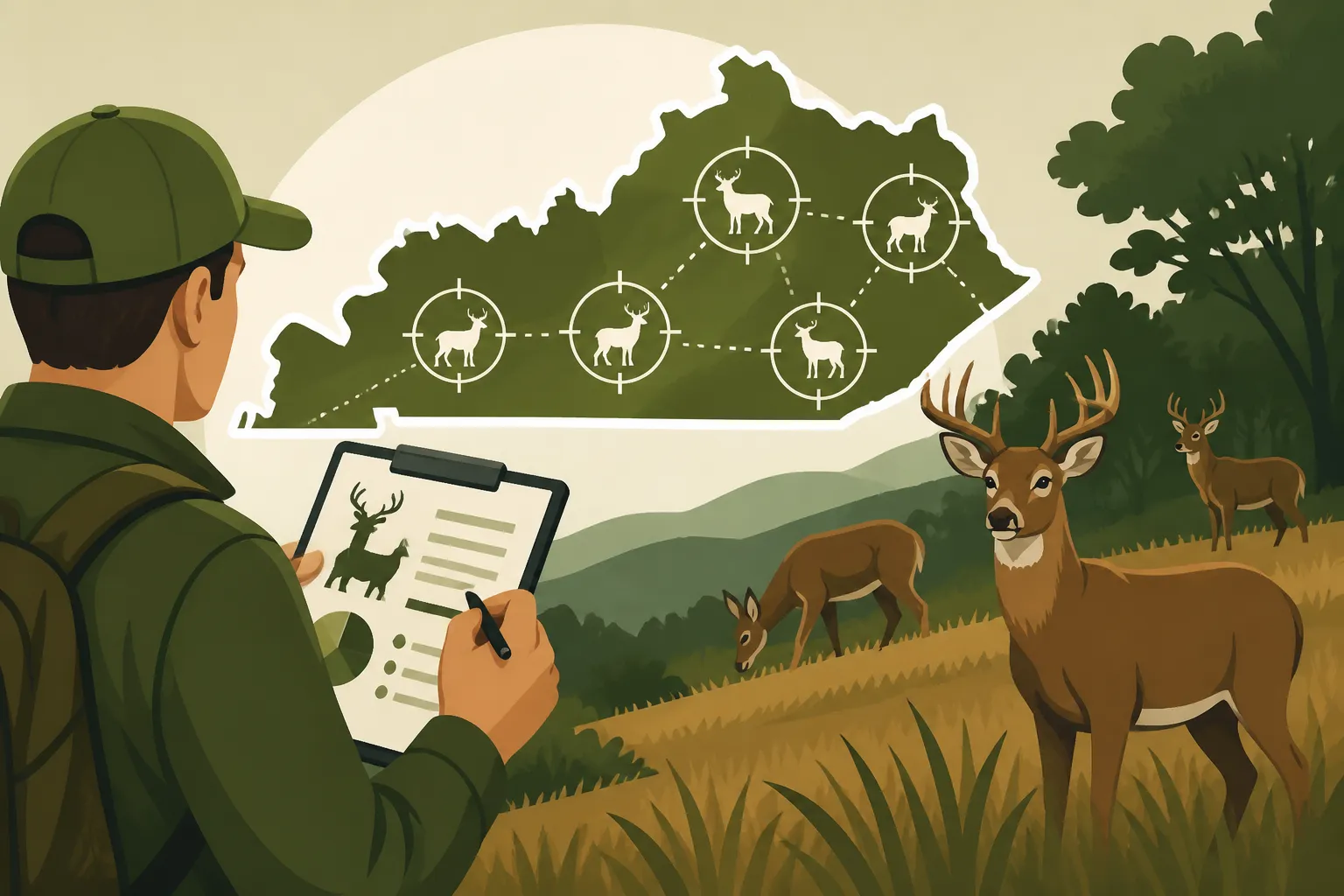
Trying to physically count every deer would require an army of people covering every inch of the state simultaneously, which is simply not feasible. Even with modern technology like thermal imaging or drones, the vastness of the landscape and the deer's ability to hide make a precise, live count impossible. So, KDFWR doesn't attempt a direct "census" in the way a human census is conducted. Instead, they rely on a sophisticated system of sampling, modeling, and trend analysis to arrive at reliable estimates.
More Than Just Numbers: The Goal of Deer Management
Understanding the deer population isn't just about satisfying curiosity; it's absolutely critical for sound wildlife management. A healthy deer herd is one that is in balance with its habitat, that doesn't suffer from widespread disease, and that provides sustainable hunting opportunities for generations to come.
If deer populations get too high, they can decimate habitat, leading to food shortages, smaller deer, and increased disease transmission. This impacts not only deer but also other wildlife species that rely on the same food sources. Conversely, if populations are too low, hunting opportunities diminish, and the genetic health of the herd can suffer. KDFWR's ultimate goal isn't just to count deer, but to manage the population in a way that ensures ecological balance and robust recreational hunting for everyone who loves to chase whitetails across Kentucky's diverse landscapes.
Pillars of Population Estimation: How KDFWR Gathers Its Data
So, if a direct headcount is out, how do they gather the information? KDFWR employs a multi-faceted approach, combining mandatory hunter harvest data with biological surveys and, to a lesser extent, citizen observations. Each piece of data acts like a puzzle piece, contributing to a clearer overall picture of the herd's health and size.
The Power of the Harvest: Telecheck and Mandatory Reporting
This is arguably the most consistent and widespread data source for KDFWR. Every time a hunter harvests a deer in Kentucky, they are legally required to report it through the Telecheck system. This isn't just a formality; it's a vital contribution to wildlife management.
The Telecheck system gathers several key pieces of information:
- Date of Harvest: Helps track hunting pressure and success rates throughout the season.
- County of Harvest: Provides localized data, crucial for understanding regional differences in deer populations.
- Sex of the Deer: Essential for monitoring buck-to-doe ratios, a critical indicator of herd health and breeding potential.
- Antler Points (for bucks): This data is incredibly valuable for understanding the age structure of the buck herd and the impact of antler regulations.
By analyzing the data from hundreds of thousands of deer harvested each year—you can dive deeper into these numbers by checking out resources like Reading a Kentucky Harvest Report—KDFWR can establish minimum population estimates and identify trends. For example, if harvest numbers in a particular county consistently increase year after year, it's a strong indicator of a growing local deer population. Conversely, a sharp decline might signal an issue, like a disease outbreak or habitat loss. Understanding Kentucky Deer Harvest Reporting Rules is crucial for every hunter to ensure this vital data is collected accurately.
Peering Into the Future: Biological Surveys and Field Research
Beyond the harvest data, KDFWR biologists conduct various field surveys and research projects to gather more nuanced information about the deer herd's dynamics. These methods help fill in the gaps that harvest data alone can't provide.
Spotlight Surveys
One traditional method is the spotlight survey. Biologists drive established routes at night, usually after hunting season, using powerful spotlights to illuminate and count deer in open fields or along roadsides. This method provides a "snapshot" of local deer density and helps track trends over time in specific areas. However, these surveys have limitations. They are highly dependent on weather conditions, vehicle access, and the amount of open habitat along survey routes. They don't account for deer in dense cover or those that actively avoid roads. Still, when conducted consistently over many years, they offer valuable trend data for specific regions.
Fawn Recruitment & Survival Studies
The future of the deer herd literally rests on the fawns born each spring. KDFWR conducts studies to estimate fawn recruitment—how many fawns survive to join the adult population each year. This might involve tracking radio-collared fawns, analyzing harvest data for fawn-per-doe ratios, or conducting specific field observations. Factors like predator populations, habitat quality, and weather patterns can all impact fawn survival, so understanding this metric is vital for projecting future herd growth.
Age Structure Analysis
For a healthy, balanced deer herd, you want a good distribution of age classes, especially in bucks. KDFWR sometimes collects jawbones from harvested deer, either through mandatory check stations in specific areas or through voluntary submissions. Biologists then analyze the teeth for wear patterns or perform a technique called cementum annuli analysis (counting growth rings in the tooth cementum, much like tree rings) to determine the deer's exact age.
This data is incredibly insightful. It helps KDFWR understand:
- Hunter Pressure: Are hunters primarily harvesting young bucks, or are older, more mature bucks surviving?
- Population Health: A herd with a good mix of age classes is generally more resilient.
- Buck-to-Doe Ratios: Combining age data with sex data provides a clearer picture of breeding dynamics.
Disease Surveillance
Monitoring the health of the deer herd is a major component of KDFWR's work. Diseases like Chronic Wasting Disease (CWD) pose a serious threat to deer populations and require constant vigilance. KDFWR conducts mandatory and voluntary testing of harvested deer, especially within designated Kentucky's Chronic Wasting Disease Surveillance Zone. This involves taking lymph node samples from deer carcasses. This surveillance helps track the presence and spread of diseases, allowing the department to implement management strategies to mitigate impacts.
Citizen Science and Public Observation Data
While not as scientifically rigorous as mandated harvest reports or biological surveys, observations from the public and hunters can also provide supplementary insights. Hunters are, after all, the eyes and ears of the woods. Reporting unusual sightings, sick animals, or localized population booms or busts, even anecdotally, can help KDFWR identify potential areas of concern or interest for further investigation. Applications like the Scouting With the Kentucky Hunt Fish App can even allow hunters to log observations, although KDFWR's primary data comes from more structured collection methods.
Building the Picture: From Raw Data to Robust Estimates
All this raw data—harvest numbers, age structures, fawn survival rates, disease prevalence—doesn't just sit in a spreadsheet. KDFWR uses it to construct a comprehensive understanding of the deer herd through sophisticated statistical analysis and population modeling.
Mathematical Models: The Science Behind the Estimates
Wildlife biologists use complex mathematical models to estimate the actual deer population. These aren't just guesses; they're educated projections based on all the data collected. The models take into account:
- Known Harvest: The number of deer reported through Telecheck.
- Fawn Recruitment: The estimated number of fawns added to the population each year.
- Mortality Rates: Natural deaths (predation, old age), vehicle collisions, disease, and illegal harvest.
- Known Population Baselines: Starting points derived from previous estimates and surveys.
These models are constantly refined as new data comes in. They allow KDFWR to project the Kentucky Deer Population Estimate and see how it's changing over time. It's an iterative process, meaning they constantly feed new information back into the model to improve its accuracy. No single number is perfect, but these models provide the best available science for management decisions.
Data Interpretation and Trend Analysis
Beyond a single number, KDFWR focuses heavily on trends. Is the population in a specific county or region increasing, decreasing, or stable? Are antlerless harvest numbers meeting management goals? Is the average age of harvested bucks changing?
By analyzing data over multiple seasons and years, KDFWR can identify long-term patterns. For instance, a consistent decline in fawn recruitment might signal a need to adjust antlerless harvest limits to allow more does to reproduce. Conversely, if the buck age structure shows fewer mature deer, it might indicate excessive pressure on young bucks, leading to consideration of adjustments to bag limits or season lengths. Analyzing the Kentucky Annual Deer Harvest helps inform these crucial decisions.
Zone-Specific Management: Applying Data Locally
Kentucky is a diverse state, from the rugged mountains of the east to the agricultural plains of the west. A "one-size-fits-all" management approach simply wouldn't work. That's why KDFWR divides the state into different deer management zones, each with specific objectives and regulations.
The data collected is analyzed at this zone-specific level. For example, a zone with a rapidly growing deer population and significant agricultural damage might have higher antlerless bag limits and longer seasons to reduce the herd. In contrast, a zone where deer populations are stable or slightly declining might have more conservative regulations. This localized approach, informed by targeted data, is why understanding Kentucky Deer Management Zone Rules is so important, as are the specifics of the Kentucky Deer Season Structure Explained. This targeted management ensures that regulations are tailored to the unique ecological and social conditions of each region.
Your Crucial Role: Hunters as Partners in Conservation
As hunters, we aren't just consumers of wildlife resources; we are vital partners in their conservation and management. Our actions directly contribute to KDFWR's ability to count and manage the deer herd effectively.
The Importance of Accurate Reporting
I can't stress this enough: accurate and timely Telecheck reporting is paramount. Every deer you harvest provides a data point that feeds directly into KDFWR's population models and trend analysis. If hunters neglect to report their harvests, or report inaccurate information, it creates gaps and distortions in the data, making it harder for biologists to get a clear picture of the herd. Think of it as your civic duty as a hunter—it's not just about compliance, it's about contribution. Make sure you understand The Kentucky Deer Reporting Deadline and adhere to it.
Ethical Hunting and Beyond the Harvest
Beyond simply reporting, ethical hunting practices play a role. Understanding and adhering to regulations, such as antler restrictions, contributes to KDFWR's goals for herd age structure and health. When asked, participating in programs that collect biological samples (like jawbones for aging or tissue for disease testing) directly helps biologists gather more comprehensive data.
Many hunters use modern tools like GoHunt or other planning apps to identify potential hunting spots, understand regulations, and log their experiences. While these tools don't directly count deer for KDFWR, they help hunters be more informed and engaged participants in the overall hunting ecosystem, indirectly supporting sound management by fostering a more knowledgeable hunting community.
Staying Engaged and Educated
Finally, one of the best ways to contribute is to simply stay informed and engaged. Understanding the "why" behind hunting regulations, season dates, and bag limits helps us appreciate the scientific basis of wildlife management. It empowers us to advocate for sound conservation practices and to share accurate information with fellow hunters and the non-hunting public. Resources like Kentucky Hunter Education Requirements often cover these foundational principles, but continuous learning is key. The more we understand how KDFWR counts and manages the deer herd, the better stewards of Kentucky's wildlife we become.
| Data Source | Primary Information Gained | How It's Collected | Purpose in Management |
|---|---|---|---|
| Hunter Harvest Data | Minimum population, sex/age ratios, harvest pressure | Mandatory Telecheck reports, physical check stations | Track harvest trends, set bag limits, monitor buck age |
| Spotlight Surveys | Local deer density, population trends by region | Driving established routes at night, counting visible deer | Assess localized populations, identify areas of growth/decline |
| Fawn Survival Studies | Fawn recruitment rates, impact of predators | Tracking collared fawns, field observations | Project future herd growth, understand reproductive success |
| Age Structure Analysis | Herd age distribution, hunter selectivity | Analyzing jawbones from harvested deer (tooth wear/cementum) | Assess herd health, evaluate impact of antler regulations |
| Disease Surveillance | Presence/spread of diseases (e.g., CWD) | Collecting tissue samples from harvested deer | Monitor herd health, implement disease control measures |
Disclaimer
This article is for general informational purposes only and does not constitute professional advice. Laws, prices and regulations vary by location and change over time. Consult a qualified professional for guidance on your specific situation.