Kentucky Archery-Crossbow Elk Season Dates
It can feel like navigating a dense thicket trying to pin down the exact dates and regulations for a specialized hunt like Kentucky’s archery-crossbow elk season. Between drawing the coveted tag and then deciphering the various permit types and timeframes, it’s enough to make even a seasoned hunter scratch their head. This comprehensive guide is here to untangle that knot, walking you through everything you need to know about planning your Kentucky archery-crossbow elk adventure, from understanding the precise season dates to essential gear and critical regulations.
Understanding Kentucky's Elk Archery-Crossbow Season Dates
Kentucky's elk herd is a true success story, offering incredible opportunities, but getting a tag is just the first hurdle. Once you're fortunate enough to draw an elk permit, understanding the specific dates for the archery and crossbow season is paramount. Unlike the modern firearm seasons which often have consolidated windows, the archery-crossbow season for elk in Kentucky is strategically split, offering hunters two distinct periods to pursue their quarry. These seasons are specifically allocated for either-sex permits, meaning you could tag a bull or a cow, adding an exciting layer of flexibility to your hunt.
The Split Seasons for Archery and Crossbow Hunters
The Kentucky Department of Fish and Wildlife Resources (KDFWR) structures the archery-crossbow elk season to maximize hunter opportunity while carefully managing the herd. For the 2023-2024 season, the dates were set as follows:
- Season 1: September 16 – September 30, 2023
- Season 2: December 9 – December 17, 2023, and January 1 – January 7, 2024
You might notice that the second season is further split around the New Year. This design provides chances to hunt during the early fall, often coinciding with the tail end of the bugle, and then again later in the winter when conditions can be vastly different. The early season offers warmer weather, full foliage, and the potential for vocal animals, while the late season brings colder temperatures, bare trees, and often forces elk into different feeding and bedding patterns. Hunters holding an either-sex archery-crossbow permit drawn through the quota system must adhere to these specific dates. It’s a good idea to bookmark the KDFWR website or use a reliable hunting app like GoHunt to double-check these dates annually, as they can shift slightly from year to year based on the calendar and management objectives. For a broader look at how these coveted tags are distributed, you might find our guide on Kentucky Elk Quota Hunt Rules particularly helpful.
Why Archery-Crossbow "Either-Sex" Permits are Key
It’s crucial to understand that the archery-crossbow elk permits in Kentucky are almost exclusively designated as "either-sex." This means that when you draw one of these tags, you're permitted to harvest either a bull or a cow elk, regardless of antler points or size, as long as it's within the designated Elk Restoration Zone during your specific season. This flexibility is a significant advantage for archery hunters, as it removes the pressure of solely seeking a bull, which can be an incredibly challenging feat with a bow or crossbow.
This "either-sex" designation also impacts hunt strategy. Some hunters might specifically target a cow for meat, especially in the later season when elk are often grouped up and focused on food sources. Others, during the September window, might still hold out for a bugling bull, knowing they have the fallback option of a cow if a bull doesn't present a clean shot. This provides a balance, giving archers a higher chance of a successful harvest compared to a bull-only archery tag. Understanding these permit types is foundational to your entire hunt plan, and you can delve deeper into this specific topic with our resource on Bull, Cow and Either-Sex Elk Permit Types.
Navigating the Elk Zone and Permit Types for Archery Hunters
Kentucky's elk herd roams a specific, expansive region of the state known as the Elk Restoration Zone. This isn't just a general area; it's broken down into several distinct Elk Hunting Units (EHUs), each with its own nuances and management considerations. For any hunter, especially one with a hard-won archery-crossbow permit, understanding these geographical and administrative boundaries is as important as knowing your bow's exact yardage.
The Kentucky Elk Restoration Zone and Hunting Units
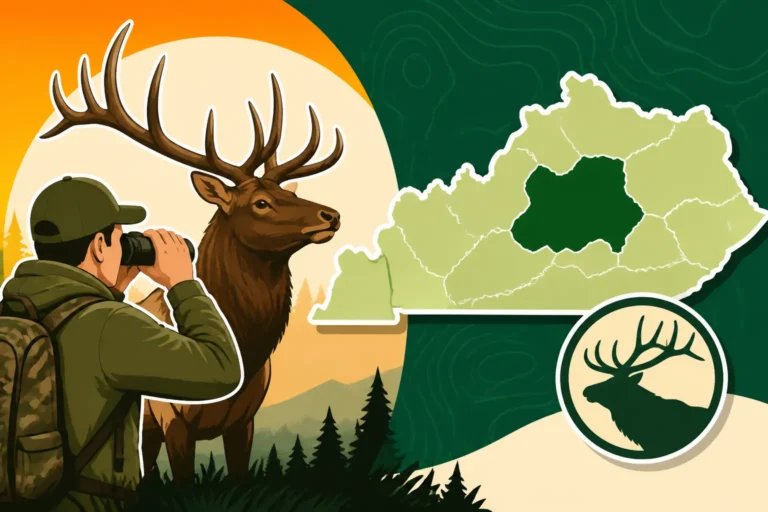
The Kentucky Elk Restoration Zone covers a vast portion of the southeastern coalfields, a landscape characterized by rugged mountains, deep hollows, and reclaimed mine lands. This area, largely comprised of Breathitt, Clay, Floyd, Harlan, Johnson, Knott, Knox, Leslie, Letcher, Magoffin, Martin, McCreary, Morgan, Owsley, Perry, Pike, Wayne, and Whitley counties, is where all elk hunting opportunities exist. Each of these counties and the broader zone presents unique challenges and opportunities for a hunter. For instance, some areas might have more mature timber, while others consist of open, reclaimed grasslands – perfect for spotting elk from a distance.
The KDFWR further divides this zone into specific EHUs. While all archery-crossbow either-sex permits are valid within the entire Elk Restoration Zone, understanding the characteristics of individual EHUs can help you refine your scouting and hunting strategy. Some units might be known for higher concentrations of elk, while others might offer more remote, less pressured hunting. Before you even think about setting foot in the woods, consult the KDFWR maps to pinpoint your EHU and familiarize yourself with its terrain. This granular understanding can give you a real edge, helping you predict elk movement and choose optimal stand locations. For a detailed breakdown of these specific areas, check out our guide on Kentucky's Seven Elk Hunting Units.
The Application Process for Elk Permits
Actually getting an elk permit in Kentucky is a challenging endeavor, largely due to the sheer number of applicants for a limited number of tags. The KDFWR conducts an annual lottery draw for all elk quota hunt permits, including the archery-crossbow either-sex tags. The application window typically opens in the spring, often around April or May, and closes in late spring, usually by the end of May.
Here's how it generally works:
- Purchase a Kentucky Hunting License: This is a prerequisite for applying.
- Purchase an Elk Permit Application: You must buy a specific application for the elk draw. You can choose which permit type you'd like to apply for (e.g., bull firearm, cow firearm, or either-sex archery/crossbow).
- Submit Your Application: This is done online through the KDFWR's licensing portal.
- Wait for the Draw: Results are usually announced in late June or early July.
The odds of drawing a permit are low, especially for non-residents, given the immense popularity of Kentucky's elk herd. However, the excitement of having a legitimate chance at a wild elk makes it worth the annual application fee for many hunters. Tools like GoHunt can be incredibly useful here, offering detailed draw odds, application strategies, and unit breakdowns that can help you make an informed decision when applying. They analyze historical data to give you the best chance possible, even if the odds are long. We’ve put together a comprehensive article on Applying for a Kentucky Elk Permit that dives deep into this process, providing step-by-step instructions and tips to maximize your chances.
Kentucky Elk Permit Types Overview
Kentucky offers several types of elk permits, each with its own season and weapon restrictions. For archery and crossbow hunters, the primary focus is the Either-Sex Archery/Crossbow Permit.
| Permit Type | Weapon | Sex of Elk Allowed | Season Dates (2023-24) | Notes |
|---|---|---|---|---|
| Either-Sex Archery/Crossbow | Archery/Crossbow | Bull or Cow | Season 1: Sept. 16-30 Season 2: Dec. 9-17 & Jan. 1-7 |
Most flexible archery tag; good for first-time elk hunters. |
| Bull Firearm | Firearm | Bull Only | Specific dates in Oct. & Nov. | Highly coveted, tougher draw odds. |
| Cow Firearm | Firearm | Cow Only | Specific dates in Oct. & Nov. | Focus on meat harvest and population management. |
It’s essential to select the correct permit type when you apply. If your dream is to hunt with a bow or crossbow, ensure you're applying for the "Either-Sex Archery/Crossbow" permit. Accidentally applying for a firearm permit will mean you're not eligible to hunt during the archery seasons, regardless of whether you own a bow. Staying informed about the Kentucky Elk Application Window Dates is crucial so you don't miss your chance to enter the draw.
Essential Gear and Preparation for Archery-Crossbow Elk Hunting
Hunting elk, especially with archery equipment, in the rugged terrain of Kentucky's Elk Zone is an intense physical and mental challenge. It requires not only precision gear but also a dedicated commitment to physical fitness and meticulous preparation. The success of your hunt often hinges on how well you're equipped and how ready your body and mind are for the demands of the chase.
Archery and Crossbow Setups for Kentucky Elk
When it comes to your weapon of choice, you need a setup that is reliable, accurate, and powerful enough for elk. For traditional bowhunters, this means a compound bow with a draw weight capable of delivering adequate kinetic energy. While Kentucky doesn't have a specific minimum draw weight for elk, ethical hunting dictates you should be comfortable and proficient with a setup that can achieve a clean pass-through. Most experienced elk hunters will recommend a draw weight of at least 60-70 pounds. Pair this with heavy, well-tuned arrows and razor-sharp broadheads – either fixed blade or mechanicals designed for large game – to ensure maximum penetration.
Crossbow hunters, on the other hand, benefit from the inherent stability and power of their equipment. Just like with vertical bows, ensure your crossbow is well-maintained, sighted in accurately, and capable of generating sufficient bolt speed and energy. Carbon bolts with a good weight forward of center and durable, well-placed broadheads are crucial. For both bow and crossbow hunters, practice, practice, practice! Shoot from various positions, including kneeling, standing, and even slightly awkward angles, to simulate real hunting scenarios. Understand your effective range and stick to it, especially when an animal as grand as an elk is in front of you. You can learn more about specific setups in our guide, Bow and Crossbow Setups for Kentucky.
Optics and Calls for Elk Hunting
Good optics are non-negotiable for elk hunting in Kentucky. The terrain can be vast, with long draws, open reclaimed lands, and dense timber. A high-quality pair of binoculars (10×42 or 10×50 are popular choices) will be your best friend for spotting elk at a distance, identifying legal animals, and navigating the landscape. Given the varied distances you might encounter, a reliable rangefinder is also essential. Knowing the exact yardage to your target is critical for archery shots, where even a few yards can mean the difference between a hit and a miss. For detailed advice on selecting the right tools for challenging terrain, our article on Rangefinders in Thick Eastern Kentucky Cover offers excellent insights.
Elk calls can be incredibly effective, especially during the early archery season when bulls are still vocal. Carrying a bugle tube and a variety of cow and calf calls can help you locate, attract, and potentially stop a traveling elk. Practice your calling techniques well before the season. Learn to mimic the sounds of different elk, understand their responses, and know when to call aggressively versus when to be subtle. Remember, sometimes the best call is no call at all. It's about reading the situation and responding appropriately. Investing in quality elk calls from brands like Rocky Mountain Elk Foundation (RMEF) or Phelps Game Calls can make a significant difference.
Physical Conditioning and Scouting
Hunting elk in Kentucky is not for the faint of heart. The Elk Zone’s topography includes steep ascents, deep descents, and often thick, unforgiving cover. You'll be covering miles on foot, often in challenging conditions, with the potential of packing out hundreds of pounds of meat. Therefore, physical conditioning is paramount. Start a consistent exercise routine months before your hunt that includes cardio, strength training, and hiking with a loaded pack. Don't underestimate the demands this hunt will place on your body.
Scouting, both prior to the season and during, is equally vital. If possible, make a trip or two to your chosen EHU well before the season opens. Look for fresh tracks, droppings, rubs, wallows, and feeding areas. Identify potential travel corridors, bedding grounds, and water sources. Utilizing mapping apps like GoHunt can provide invaluable insights into topography, property boundaries (if hunting near private land), and potential access points. These apps often integrate public land boundaries, allowing you to scout from home and identify promising spots before you ever step foot in the woods. This is especially useful for nonresident hunters. Understanding animal behavior and movement patterns based on the season is a huge part of being successful. You can gain valuable insights by reading up on Scouting Kentucky Public Land Before Season. Even with a tag in hand, the real work begins long before opening day.
Key Regulations and Considerations for Success
Drawing an elk tag in Kentucky is a monumental achievement, and you've invested heavily in your application and preparation. The last thing you want is for your hard work to be undone by a simple misunderstanding of the regulations. From reporting your harvest to understanding where you can and cannot hunt, a thorough grasp of KDFWR rules is essential for a successful and legal hunt.
Mandatory Harvest Reporting and Carcass Movement
Once you've successfully harvested an elk, your responsibilities don't end there. Kentucky has strict regulations regarding harvest reporting, and it's something you must take seriously. All elk harvested in Kentucky must be reported via the Telecheck system by 8:00 p.m. EST on the day the elk is harvested. This can usually be done online or by phone. You’ll need your permit number and some basic information about the elk, such as sex and county of harvest. Failing to report your harvest is a violation and can result in penalties. While our article on Telechecking a Kentucky Deer Harvest focuses on deer, the process is largely similar for elk, making it a useful reference.
Additionally, Kentucky, like many states, has regulations in place regarding the movement of elk carcasses, primarily due to concerns about Chronic Wasting Disease (CWD). While the Kentucky Elk Zone is not currently within a CWD surveillance zone, KDFWR rules can evolve. Generally, for game harvested outside of a CWD zone, certain parts of the carcass (like the brain and spinal column) may need to remain within the harvest county or region until processed. Always consult the most current KDFWR hunting guide for specific carcass movement restrictions, especially if you plan to transport your elk across county or state lines. Staying vigilant on these rules protects Kentucky's valuable wildlife resources.
Blaze Orange Requirements and Ethical Practices
While blaze orange requirements are standard for most modern gun seasons, they can sometimes be confusing for archery hunters. For Kentucky's archery-crossbow elk season, hunters are generally not required to wear blaze orange or pink during the archery-only portions of the season. However, always verify this in the current KDFWR hunting guide, as regulations can change. If you're hunting during an overlap with a youth firearms season or other gun seasons, blaze orange might become mandatory, even for archers. It's always a good practice to carry some blaze orange with you, especially if you're walking in or out during low light, to enhance your visibility to other hunters.
Beyond the legal requirements, ethical hunting practices are paramount. This includes:
- Positive Identification: Be 100% sure of your target and what's beyond it. Elk can be large, but a hasty shot can lead to wounding an animal or, worse, an accidental harvest.
- Clean Kills: Only take shots that are within your effective range and offer a high probability of a clean, ethical kill. With archery equipment, this means waiting for broadside or slightly quartering-away shots that target the vital organs.
- Respect for the Land and Wildlife: Pack out everything you pack in, minimize your impact on the environment, and always follow Leave No Trace principles.
- Respect for Other Hunters: Public lands can be busy. Be courteous, avoid trespassing, and be mindful of your actions.
Navigating the complexities of these regulations is part of the hunting experience. Websites like GoHunt often compile state regulations and provide easy-to-understand summaries, but nothing replaces reading the official KDFWR guide yourself. Understanding and adhering to these rules not only keeps you legal but also contributes to the positive perception and future of elk hunting in Kentucky.
Disclaimer
The information provided in this guide is for general informational purposes only and is subject to change. Hunting regulations, season dates, and permit requirements are established and enforced by the Kentucky Department of Fish and Wildlife Resources (KDFWR). It is the individual hunter's responsibility to consult the most current KDFWR hunting guide and state laws before participating in any hunting activity. Failure to comply with all applicable regulations may result in penalties.