When Kentucky’s Early Muzzleloader Weekend Falls
When you're deeply invested in the Kentucky hunting season, there's nothing quite like the anticipation of a specific opening day. But let's be honest, trying to keep track of all the different seasons, zones, and weapon restrictions can feel like trying to hit a moving target sometimes. Missing a critical date, especially for a unique opportunity like the early muzzleloader weekend, can be incredibly frustrating. This guide is here to cut through the confusion and give you all the detailed information you need to successfully plan for and execute your early muzzleloader deer hunt in Kentucky.
Pinpointing Kentucky's Early Muzzleloader Weekend
The early muzzleloader season in Kentucky is a fantastic, often overlooked, window of opportunity for deer hunters. It typically falls at a time when deer are transitioning from their summer patterns, but before the peak of the rut, and importantly, before the massive influx of hunters that the modern gun season brings. Knowing the exact dates is your first step toward a successful hunt.
The Dates You Need to Mark on Your Calendar
Kentucky's early muzzleloader season for deer is usually a specific three-day weekend, consistently falling in October. While the Kentucky Department of Fish and Wildlife Resources (KDFWR) is the definitive source for official season dates each year, you can almost always count on it to occur during the third full weekend of October. This means it typically starts on a Saturday and runs through Monday. For example, if October 1st is a Tuesday, the first full weekend starts on the 5th, the second on the 12th, and the third on the 19th. That third weekend of October is your prime target.
It's absolutely critical to double-check the current year's hunting guide, available on the KDFWR website or through their mobile app, to confirm these dates. While the pattern is consistent, unforeseen circumstances or rule adjustments, though rare, could always shift things slightly. Don't just rely on memory; verify those dates every season. This small window, often bathed in crisp fall air and vibrant autumn colors, offers a unique experience for those willing to brave the smoke pole.
Why This Specific Window Matters to Deer Hunters
The early muzzleloader season is strategically placed, offering a bridge between the long archery season and the much shorter, more intense modern gun season. During this time, late October, deer are often still focused heavily on available food sources as they build reserves for the upcoming rut. Acorns, especially white oaks, can be drawing deer in significant numbers. Agricultural fields, if still standing or recently harvested, also become major attractants.
What makes this period truly special is the often-lower hunting pressure compared to the modern gun season. While more hunters are afield than during the archery season, it's generally not the wall-to-wall orange you might see a few weeks later. This means deer patterns might be a bit more predictable, and they haven't been as heavily pushed into nocturnal habits. Bucks are beginning to show increased activity, marking their territory with rubs and scrapes, hinting at the impending peak rut. This early activity, combined with still-relatively-stable feeding patterns, makes for an exciting and often productive hunt, allowing you to observe deer behavior that will become less common once the full pressure of November hits.
Essential Gear and Preparations for Success
Hunting with a muzzleloader adds a layer of tradition and a unique challenge to your deer hunt. It requires specific gear and a meticulous approach to preparation to ensure success, especially when dealing with Kentucky's varied October weather.
Choosing and Mastering Your Muzzleloader
When it comes to muzzleloaders, you've got options. Many hunters opt for modern in-line muzzleloaders, which are known for their accuracy, ease of loading, and reliability in inclement weather. Brands like CVA, Traditions, and Thompson/Center offer excellent options. These often use 209 primers, which are extremely hot and reliable, ensuring a good ignition even when it's damp. You'll typically be shooting .50 caliber, which is more than sufficient for Kentucky whitetails.
However, if you're a purist, traditional caplock or flintlock muzzleloaders are also legal, though they demand more skill and careful management of powder and ignition in the field. Whichever style you choose, practice is paramount. Get comfortable with your loading sequence, experiment with different projectiles (saboted bullets for accuracy or traditional lead conicals for impact), and find the powder charge that delivers the best groups at your expected hunting ranges. Remember that consistent ignition and a tight bore fit are key to accuracy. And don't forget your cleaning kit! Black powder and substitutes are corrosive, so proper cleaning after every shooting session is non-negotiable. If you're looking for deeper insights into specific models and maintenance, you might find our guide on Muzzleloaders for a Kentucky December helpful, even though it focuses on a later season, the gear principles remain largely the same.
Strategic Scouting and Stand Placement
Scouting for the early muzzleloader season requires a slightly different focus than other times of the year. You're looking for current food sources that are actively being hit, as well as emerging pre-rut sign. White oak acorns are gold in late October. If you can find a ridge or hollow with a heavy acorn drop, you've likely found a deer magnet. Look for fresh droppings, tracks, and newly worked rubs and scrapes. Bucks will just be starting to get serious about marking their territory, so fresh sign is much more valuable than old.
Identifying potential travel corridors between bedding areas and these food sources is crucial. Deer might still be moving somewhat predictably in daylight, especially away from heavy human pressure. Consider pinch points, saddles, or creek bottoms that funnel deer movement. I often use mapping tools like GoHunt to analyze terrain features, identify potential funnels, and mark active sign. This helps me visualize deer movement and select the perfect stand location. When thinking about your approach and exit routes, consider how you can get in and out undetected. If you need more general advice on pre-season prep, our article on Scouting Kentucky Public Land Before Season offers broader strategies that are still applicable here.
Dressing for Success in October's Unpredictable Weather
Kentucky in October can be a mixed bag. One day might be shirt-sleeve warm, the next could bring a sharp cold front with biting winds and rain. Layering is your best friend. Start with a moisture-wicking base layer to manage sweat, add an insulating mid-layer like fleece or wool, and finish with a quiet, waterproof, and windproof outer shell. Having adaptable clothing is essential, as you might start a morning hunt bundled up and shed layers by midday.
Scent control is always important, but particularly so when deer aren't in the full distraction of the rut. Pay attention to wind direction and thermals, especially in hilly terrain. In the mornings, thermals often drop down into hollows, while in the evenings, they rise. Using this to your advantage can prevent deer from winding you. Don't forget quality waterproof boots, as dew-soaked fields or unexpected rain can quickly make for a miserable hunt. A good pair of gloves and a warm hat are also crucial for those chilly morning sits.
Navigating Kentucky's Muzzleloader Regulations
Understanding the rules and regulations is just as important as knowing your dates and preparing your gear. Kentucky has specific requirements for licenses, permits, and even the type of muzzleloader you can use, all designed to ensure a fair chase and responsible hunting experience.
Understanding Your License and Permit Requirements
Before you even step foot in the woods with your muzzleloader, you need to ensure you're legally licensed. For Kentucky residents, this means having a valid Kentucky hunting license and a statewide deer permit. Non-residents will need a nonresident annual hunting license and a nonresident statewide deer permit. If you're thinking long-term, some resident options like the Kentucky Sportsman's License bundle various permits together, which can be a cost-effective choice for hunters pursuing multiple species.
It's always a smart move to purchase your licenses and permits well in advance through the KDFWR website, a local vendor, or their mobile app. While it’s possible to purchase them on the fly, you don't want to be scrambling on opening morning. Keep proof of your license and permit with you at all times while hunting, whether that's a physical copy or an electronic version on your phone. For a deeper dive into the costs and options, check out our guide on Kentucky Hunting Licenses and What They Cost. It's always a good idea to confirm the exact requirements with the KDFWR directly or by using reliable resources like GoHunt, which often includes up-to-date licensing information as part of its planning tools.
Muzzleloader-Specific Rules and Legalities
Kentucky has some clear guidelines on what constitutes a legal muzzleloader for deer hunting. Generally, any muzzleloading rifle, shotgun, or handgun that is loaded from the muzzle and fires a single projectile is permissible. Most hunters opt for .50 caliber muzzleloading rifles, which are widely available and extremely effective. There are no minimum caliber restrictions for muzzleloaders beyond them being "legal," but typically .45 caliber and up are recommended for deer.
You'll need to ensure your muzzleloader is uncased and unloaded (primers removed or percussion caps removed, and powder poured out if flintlock) during legal shooting hours when not actively hunting. It's also important to remember that during the early muzzleloader season, only muzzleloaders are permitted for deer. No modern firearms, bows, or crossbows (unless specifically allowed under a disability exemption) are to be used for deer during this particular three-day period. This focus on primitive weapons creates a unique hunting atmosphere. Always refer to the current KDFWR hunting guide for the most precise and up-to-date regulations, as interpretations or specific nuances can change.
Reporting Your Harvest and CWD Awareness
Harvest reporting in Kentucky is mandatory and straightforward thanks to the Telecheck system. If you're fortunate enough to harvest a deer during the early muzzleloader season, you must check it in via Telecheck by 8:00 PM on the day you recover the animal. This can be done online through the KDFWR website or by phone. You’ll need information like your license and permit number, the county of harvest, and the type of deer (antlered or antlerless). This data is vital for KDFWR wildlife biologists to manage the deer herd effectively. You can learn more about the specifics in our Kentucky Deer Harvest Reporting Rules article.
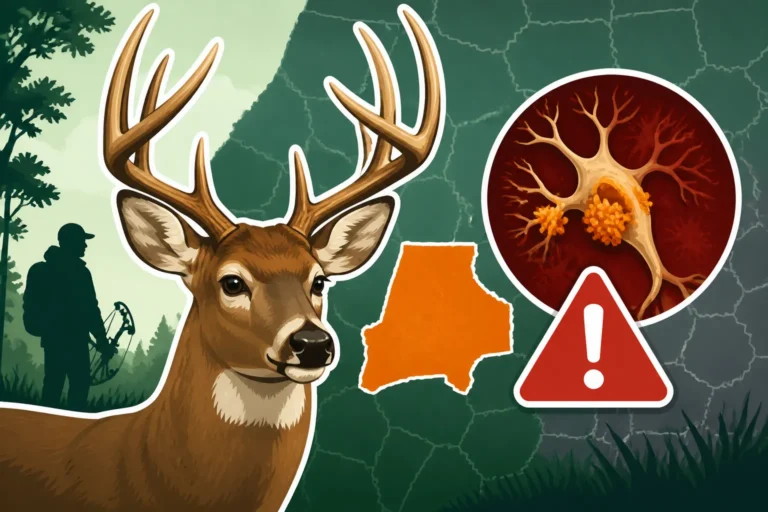
Furthermore, it’s imperative to be aware of Kentucky's Chronic Wasting Disease (CWD) Surveillance Zone. As of recent updates, areas like Ballard, Calloway, Marshall, Graves, and Pulaski counties are part of this zone. If you harvest a deer in one of these CWD counties, specific carcass movement restrictions and mandatory testing requirements apply. You cannot take the whole carcass out of the zone without special processing, and deer harvested there may require mandatory CWD testing at designated sampling stations. Always check the latest CWD map and regulations before heading into these areas. Understanding Kentucky Deer Management Zone Rules is also crucial, as antlerless harvest limits can vary by zone and may impact your decision to take a doe during this early season.
Tactics for a Productive Early Muzzleloader Hunt
The early muzzleloader season presents a unique set of circumstances for deer behavior and hunter interaction. Employing smart tactics can significantly increase your chances of success during this special three-day window.
Capitalizing on Pre-Rut Deer Movement
Late October in Kentucky is that sweet spot when bucks are starting to feel the stirrings of the rut, but aren't yet completely consumed by it. This is a time when they might be more visible during daylight hours as they begin to cruise for does and lay down sign. Focus your efforts around areas with fresh scrapes and rubs. A scrape line along a logging road or a series of rubs leading into a bedding area can be a gold mine. Bucks are checking these areas regularly, scent-checking for does and asserting dominance.
While calling isn't as effective as it will be during the peak rut, light grunt calls or doe bleats can sometimes pique a buck's curiosity if he's passing by. Often, simply being in a high-traffic area between food and bedding, especially on a crisp morning, is your best bet. Bucks might make their way back to bedding cover later than usual, or move to an early food source before heading to bed. This brief window of increased activity before the full chaos of the rut is a prime time. For more in-depth knowledge on this specific time, you might find our article on Hunting the Rut in Early November relevant, as it covers the foundational behaviors leading into this period.
Minimizing Pressure on Public and Private Land
The early muzzleloader season, while typically less crowded than the modern gun opener, still sees its fair share of hunters, especially on popular public lands. To increase your odds, it's crucial to identify and target areas that receive less pressure. This often means being willing to walk farther, climb steeper, or navigate thicker cover than other hunters. Using mapping tools like GoHunt, you can identify remote pockets, overlooked ridges, or deep hollows that are harder to access. These are often where mature deer seek refuge.
On private land, the pressure might be less, but deer will still react to increased human activity. Consider setting up in transition areas that deer use to move between properties or to deeper cover. If possible, coordinate with neighbors to reduce collective disturbance. Early in the season, deer haven't been as educated by hunters, so minimizing your own footprint—using good wind direction, quiet entry/exit routes, and scent control—is paramount. Understanding and adapting to Hunting Pressure on Kentucky Public Land is a skill that will serve you well, regardless of the season.
Tracking and Recovering Your Deer
Successful tracking and recovery are critical skills, especially when hunting with a muzzleloader. A muzzleloader shot can be devastating, but deer can still run a distance, and the one-shot nature means precision is paramount. After the shot, take a moment to compose yourself and observe. Note the direction the deer ran, its gait, and any visible sign of impact (like a tail tuck or kick). If you think it's a good hit, wait at least 30-60 minutes before beginning to track, or even longer (2-4 hours) if you suspect a marginal hit or gut shot.
When tracking, go slowly and systematically. Look for blood, broken branches, disturbed leaves, and tracks. Mark your last sign with flagging tape or toilet paper so you don't lose the trail. Kentucky's leaf litter can make blood trailing tough, so patience is key. If the blood trail peters out, try expanding your search in concentric circles or grid patterns in the direction of travel. Consider the deer's likely path: downhill, towards water, or to thick cover. If the weather is mild, recovering your deer quickly is crucial for meat quality. For more detailed advice on tracking and recovery, our article Tracking a Deer Through Kentucky Leaf Litter offers practical tips for navigating typical Kentucky terrain after the shot.
| Aspect | Details | Key Considerations |
|---|---|---|
| Season Dates | Typically the third full weekend of October (Saturday – Monday) | Always confirm with current KDFWR hunting guide. |
| Allowed Weapon | Muzzleloaders only (rifle, shotgun, handgun). Single projectile. | No modern firearms, bows, or crossbows unless under specific exemptions. |
| License & Permit | Statewide hunting license + Statewide deer permit (resident/nonresident) | Purchase in advance. Keep proof of license. |
| Deer Behavior | Transition period, focused on food (acorns, crops), pre-rut activity | Bucks beginning to cruise and make scrapes/rubs. Lower pressure than modern gun season. |
| Scouting Focus | Fresh food sources (especially acorns), new rubs/scrapes, travel corridors | Use mapping tools like GoHunt to identify key areas and plan access. |
| CWD Zone Awareness | Specific counties (e.g., Ballard, Pulaski) have mandatory testing/restrictions | Check KDFWR CWD map and regulations before hunting in or transporting deer from surveillance zones. |
| Harvest Reporting (Telecheck) | Mandatory by 8 PM on the day of recovery | Online or phone. Have license/permit number, county of harvest, and deer type ready. |
Important Disclaimer
The information provided in this guide is intended for general informational purposes only and is subject to change. Hunting regulations, season dates, and license requirements are set by the Kentucky Department of Fish and Wildlife Resources (KDFWR) and can be modified annually. It is the sole responsibility of every hunter to consult the official KDFWR hunting guide and any applicable local ordinances before participating in any hunting activity. Failure to do so may result in legal penalties.