Kentucky Waterfowl Zones and Seasons
If you're looking to chase greenheads or honkers in Kentucky, you quickly realize it's not as simple as just grabbing your shotgun and heading out. The Bluegrass State's waterfowl regulations can feel like a labyrinth, with different zones, split seasons, and specific permit requirements that can leave even seasoned hunters scratching their heads. This guide is designed to cut through that confusion, breaking down Kentucky's waterfowl zones and seasons so you can spend less time deciphering regulations and more time enjoying the marsh, river, or flooded timber.
Understanding Kentucky's Waterfowl Zones
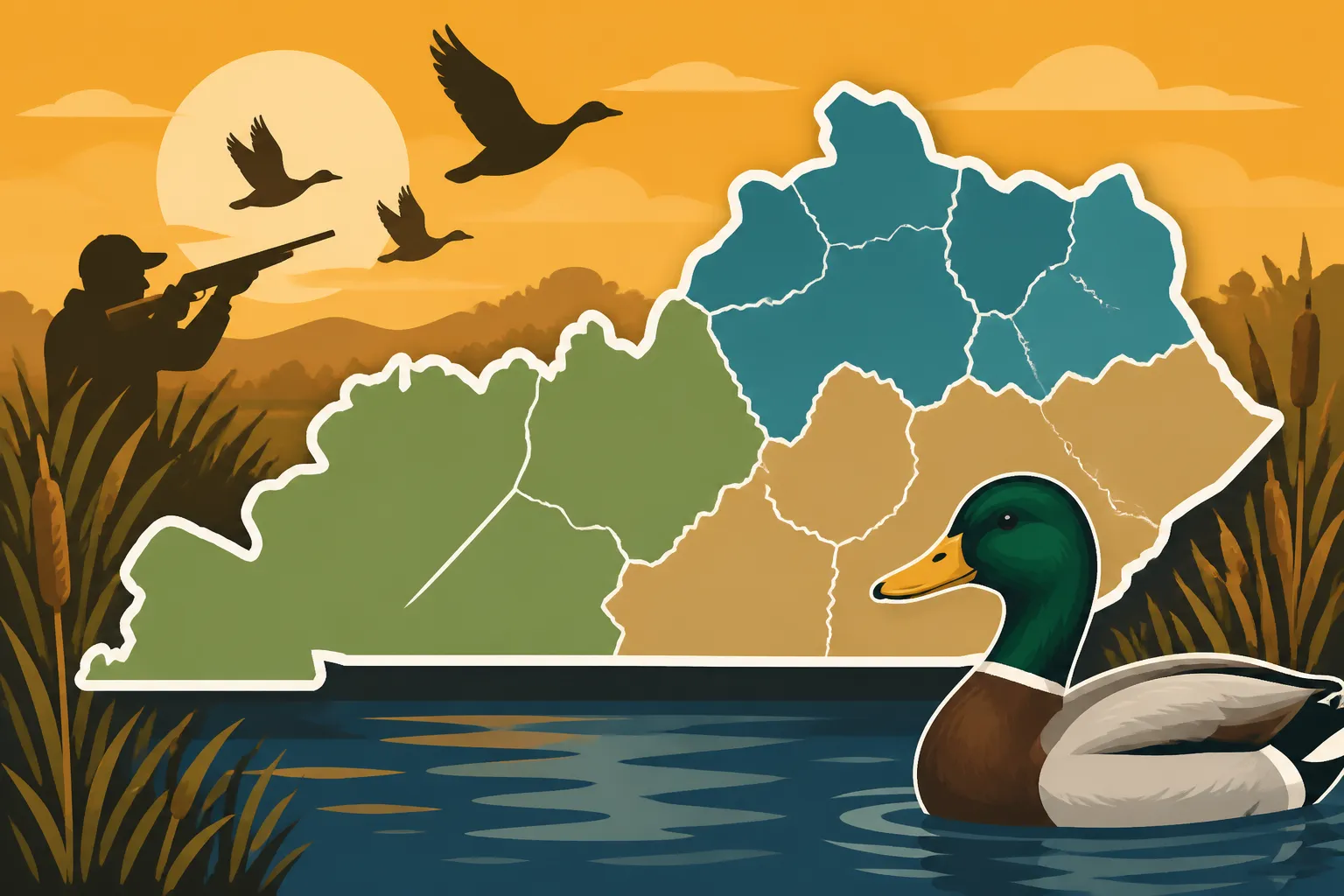
Kentucky isn't a one-size-fits-all state when it comes to waterfowl hunting. The Kentucky Department of Fish and Wildlife Resources (KDFWR) has established distinct zones, each with its own specific season dates, to better manage migratory bird populations and provide optimal hunting opportunities across diverse habitats. Ignoring these zones can quickly put you on the wrong side of the law, not to mention missing out on prime hunting conditions.
Why Zones Matter for Waterfowlers
The primary reason for having different waterfowl zones boils down to geography, habitat, and migration patterns. Kentucky is a state of varied landscapes, from the broad, flat agricultural fields and massive river systems in the west to the rolling hills and smaller waterways of the east. Waterfowl, particularly ducks and geese, utilize these different regions at various times during their annual migration along the Mississippi Flyway. What might be peak migration for ducks in the western part of the state, with its vast wetlands and large bodies of water like Kentucky Lake and Lake Barkley, might be too early or too late for the birds further east.
Think about it: if the seasons were uniform statewide, hunters in one region might be dealing with birds that haven't arrived yet, while hunters in another might be facing birds that have already moved on. By segmenting the state into zones, the KDFWR can tailor season dates to align with historical migration data and local bird behavior, aiming to maximize hunting opportunities while ensuring sustainable harvest levels. It’s a complex balancing act, considering everything from habitat conditions and food availability to weather fronts and the overall health of the breeding populations far to the north. Understanding these zones is your first step to being a successful and compliant waterfowl hunter in Kentucky.
The Western Kentucky Zone
This is arguably the most famous and heavily hunted waterfowl zone in Kentucky, and for good reason. The Western Kentucky Zone encompasses a significant portion of the state's prime waterfowl habitat, dominated by the massive Kentucky Lake and Lake Barkley, as well as the confluence of the Ohio and Mississippi Rivers. This region is a major stopover and wintering ground for a vast array of migratory birds, drawing thousands of ducks and geese annually. The zone includes counties like Ballard, Carlisle, Fulton, Hickman, and parts of McCracken, Graves, and Calloway. It's often characterized by extensive floodplains, large agricultural fields (especially corn and soybeans), and flooded timber areas that provide abundant food and cover for birds.
Hunters in this zone often find themselves targeting a mix of mallards, gadwalls, teal, and sometimes pintails or widgeon on the large lakes, rivers, or within the flooded bottomlands. Goose hunting can also be exceptional, especially for Canada geese, as they utilize the vast fields for feeding. The sheer volume of public hunting opportunities, including world-renowned areas like the Sloughs Wildlife Management Area and Land Between the Lakes, makes this a hotspot. However, this also means competition can be fierce, particularly on opening weekends or during peak migration. If you're planning a trip here, be sure to study the specific boundaries of the zone carefully, as a slight misstep across a county line can put you into a different season structure entirely. Many hunters specifically travel here for the incredible opportunity of Hunting Land Between the Lakes Waterfowl or to try their hand at hunting the Ohio River backwaters, which hold immense potential.
The Eastern Kentucky Zone
Moving eastward, the landscape and waterfowl hunting opportunities shift dramatically. The Eastern Kentucky Zone covers a much larger geographical area, characterized by rolling hills, smaller rivers, creeks, and numerous farm ponds. While it doesn't boast the same vast wetlands as the west, it still offers compelling hunting, particularly for hunters closer to these areas. Counties like Boyd, Carter, Greenup, Lawrence, and Rowan fall within this zone, along with a host of others stretching south and east. Here, hunters are often focused on smaller, more isolated water bodies, river stretches, and local agricultural fields.
The typical waterfowl species encountered here might include a good mix of mallards and wood ducks, especially along river corridors or in flooded creek bottoms. Canada geese, particularly resident populations that don't migrate far, can also be a primary target. Hunting in the Eastern Kentucky Zone often requires a more intimate knowledge of local patterns, scouted farm ponds, or secluded stretches of rivers. It’s less about large-scale decoy spreads on massive lakes and more about stealth, small spreads, and setting up strategically on hidden honey holes. While the bird numbers might not rival the Western Zone, the experience can be incredibly rewarding, offering a more solitary hunt away from the crowds. This zone often sees birds later in the season as colder weather pushes them further south, making careful scouting crucial.
The Northeast Kentucky Zone
The Northeast Kentucky Zone is a distinct, smaller zone wedged between the Eastern and Western zones, primarily along the Ohio River. This zone covers only a handful of counties, usually including parts of Mason, Lewis, Greenup, Boyd, and sometimes Bracken and Campbell. While it's smaller, it's strategically important due to its position along the Ohio River, a major migratory pathway. This river acts as a significant corridor for waterfowl, and the adjacent agricultural lands offer important feeding grounds.
Hunting in the Northeast Kentucky Zone often combines elements of both the Eastern and Western zones. You might find opportunities to set large decoy spreads on the Ohio River or its backwaters, similar to the western style, but also encounter smaller, more intimate creek and pond hunting like in the Eastern Zone. The season dates here are specifically tailored to align with the migratory movements that utilize this segment of the Ohio River corridor. Hunters in this zone need to pay close attention to the specific county lines and river boundaries, as the season dates can be distinct from neighboring zones. The proximity to large population centers can sometimes mean more hunting pressure, but persistent scouting and flexibility can still yield excellent results, especially when a strong cold front pushes new birds down the Ohio River.
Deciphering Kentucky's Duck Seasons
Now that you've got a handle on the zones, let's dive into the specifics of Kentucky's duck seasons. It’s not just one continuous season; the KDFWR strategically splits the season into segments to maximize opportunities when birds are most abundant, often correlating with major migratory pushes. These splits can be a bit confusing at first, but understanding their purpose helps you plan your hunts more effectively.
Early Teal Season Opportunities
Before the main duck season even kicks off, Kentucky offers a fantastic, albeit short, early teal season. This is typically held in September, taking advantage of the early migration of blue-winged and green-winged teal. These speedy little ducks are often the first to head south, and Kentucky provides a prime feeding ground for them on their journey. The early teal season is statewide, meaning the zone restrictions for the regular duck season don't apply here, simplifying things for a moment.
Hunting early teal is a unique experience. The weather is usually still warm, requiring lightweight gear and plenty of insect repellent. Teal often favor shallow water habitats, mud flats, and flooded agricultural fields with plenty of invertebrates and smartweed for food. Decoy spreads can be smaller, often just a dozen or two teal decoys, and a fast-swinging shotgun is crucial to connect with these acrobatic flyers. It's a great way to kick off the waterfowl season, offering exciting, fast-paced shooting before the colder weather and larger duck species arrive. Success often hinges on finding stagnant water with emergent vegetation or freshly flooded areas that attract these early migrants. Many hunters combine this with other early-season pursuits, but a dedicated teal hunt can be incredibly rewarding if you locate a good concentration of birds.
The Main Duck Season Splits
Kentucky's main duck season is characterized by its split structure. Typically, the season will open in late November or early December, run for a week or two, then close for a short period, and reopen for a longer stretch that often runs into late January. The exact dates vary slightly year to year and, critically, by zone. For instance, the Western Kentucky Zone might have slightly different opening and closing dates than the Eastern or Northeast zones. These splits are designed to coincide with major migrations and to provide a mid-season "rest" for the birds, allowing them to redistribute and potentially become less wary after initial hunting pressure.
The first split, usually shorter, often catches the initial wave of mallards, gadwalls, and other early migrants. Weather plays a huge role here; a strong cold front pushing down from the north can bring in a fresh influx of birds, making for incredible hunting. The mid-season closure gives both hunters and birds a breather. When the season reopens for the second, longer split, often running through December and January, hunters are typically dealing with colder weather and more established wintering populations. This is when you might see more diver ducks on larger bodies of water, and the hunting can remain strong as long as food and open water are available. Understanding Duck Migration Timing Through Kentucky is absolutely vital for planning your hunts around these splits, as being in the right place at the right time is half the battle.
Bag Limits and Species Regulations
Kentucky's duck bag limits are set by federal frameworks and then tailored by the KDFWR. It’s crucial to know these limits because they often differ by species, and exceeding them can lead to hefty fines and loss of hunting privileges. Generally, the daily bag limit for ducks is six birds, but this isn't six of any duck. Within that six-bird limit, there are often species-specific restrictions. For example, you might only be allowed two mallards (with specific rules for hen mallards), one pintail, one canvasback, two redheads, three wood ducks, etc. These restrictions are put in place to protect species with lower populations or those that are more susceptible to overharvest.
Possession limits are typically three times the daily bag limit, meaning you can have up to 18 ducks in your freezer at home, but only six (with species restrictions) in your possession while actively hunting or in transit from the field. Accurate bird identification is absolutely paramount. You need to be able to tell a hen mallard from a drake, a pintail from a widgeon, and a canvasback from a redhead before you pull the trigger. Misidentification isn't an excuse in the eyes of the law. Studying field guides, watching identification videos, and practicing with decoys before the season opens will serve you well. These detailed regulations are published annually in the KDFWR hunting guide, so make sure you have the most current version.
Navigating Kentucky's Goose Seasons
Geese offer a different, often more challenging, but equally rewarding waterfowl hunting experience in Kentucky. While ducks dart and weave, geese tend to be larger, more vocal, and often more cautious. Kentucky offers seasons for Canada geese, snow geese, and white-fronted geese (often called specklebellies), each with its own nuances and regulations.
Early Goose Season Strategies
Just like with teal, Kentucky often provides an early goose season, primarily targeting resident Canada goose populations. These are geese that typically breed and raise their young within Kentucky or nearby states and don't undertake the long migrations of their northern counterparts. This season usually runs in September, overlapping with the early teal season, and is often statewide. Hunting resident geese can be quite productive, as they tend to be less wary than migratory birds, especially early in the season before they've been pressured.
The key to success during the early goose season is scouting. Resident geese often feed in agricultural fields, particularly cut wheat, corn, or soybean fields, and loaf on local farm ponds or larger bodies of water. Locating their feeding and loafing patterns is critical. Once you find them, setting up a spread of full-body Canada goose decoys in a field can be highly effective. Unlike ducks, geese are less deterred by warm weather, so you can often hunt them in comfortable conditions. This early opportunity is a fantastic way to fill the freezer and get some big birds under your belt before the full swing of fall hunting. For more in-depth strategies, our guide on Early Goose Season Tactics in Kentucky offers plenty of pointers for making the most of this early window.
Main Goose Season Considerations
Kentucky's main goose season, much like the duck season, is typically split into segments and varies by zone. This season targets both resident and migratory Canada geese, as well as white-fronted geese and snow geese. The dates are usually later in the fall and extend through the winter months, coinciding with the arrival of northern-bred birds. Again, the Western Kentucky Zone often sees the most consistent goose numbers due to its large agricultural landscapes and proximity to major river systems.
Hunting strategies during the main goose season often involve large decoy spreads in agricultural fields, employing both full-body decoys and silhouette decoys. Calling is crucial, and having a diverse set of calls (short-reed, flute, and clucker for Canada geese) can make a big difference. Weather conditions, particularly strong winds and cold temperatures, can dramatically improve goose hunting, pushing birds to feed more aggressively. Snow geese and white-fronted geese have separate, often more liberal, season structures and bag limits, reflecting their healthier populations. Snow geese, in particular, are known for their massive flocks and require completely different tactics, often involving hundreds, if not thousands, of decoys and electronic calls during special conservation order seasons.
Goose Bag Limits and Identification
The bag limits for geese in Kentucky vary significantly by species. For Canada geese, the daily limit is typically two or three birds, depending on the zone and specific regulations for that year. White-fronted geese often have a daily bag limit of one or two, while snow geese (including blue and Ross' geese) have a very liberal daily bag limit, often 20 or more, especially during the special conservation order seasons when electronic calls and unplugged shotguns are legal.
Accurate identification is incredibly important. Canada geese are easily recognizable, but distinguishing between a Greater White-fronted Goose and a Canada, or between a Snow Goose and other white-phase birds, is critical. White-fronted geese have a distinctive white patch around the base of their bill and often mottled plumage on their belly. Snow geese are almost entirely white with black wingtips. Misidentifying a goose can quickly lead to an illegal harvest. Hunters must be diligent in their identification before shooting, especially when different species have vastly different bag limits. Always consult the most current KDFWR waterfowl guide for the exact daily and possession limits for each goose species in your specific zone.
Special Waterfowl Hunting Opportunities
Beyond the general duck and goose seasons, Kentucky offers a few special opportunities designed to foster new hunters and honor veterans. These special hunts have unique dates and often specific eligibility requirements that are worth knowing about.
Youth Waterfowl Hunting Weekends
The KDFWR is committed to ensuring the future of hunting, and one of the best ways to do that is by providing dedicated opportunities for young hunters. Kentucky typically offers one or two youth waterfowl hunting weekends, usually in early February, after the regular seasons have closed. These weekends are specifically for hunters 15 years of age and younger, and they must be accompanied by an adult 18 years or older who is not hunting, but can act as a mentor.
These youth weekends are fantastic for several reasons. First, they provide a less pressured environment where young hunters can focus on learning skills without the intense competition of the regular season. Second, they're often timed when birds are still present and potentially less wary, increasing the chances of success. It’s an ideal setting to teach proper gun handling, decoy placement, calling techniques, and the importance of ethical hunting. The adult mentor's role is critical here, not just for safety, but for passing on the passion and knowledge of waterfowl hunting. It's a cherished tradition for many families and a vital part of hunter recruitment and retention in Kentucky.
Veteran and Active Military Waterfowl Hunts
In recognition of their service, Kentucky also offers special waterfowl hunting days for veterans and active military personnel. These hunts often run concurrently with the youth hunts in early February, providing another dedicated opportunity outside the main season framework. The specific eligibility usually requires proof of veteran status or active military service. This is a small but meaningful way for the state to show appreciation and provide a special hunting experience for those who have served our country.
Similar to the youth hunts, these days often benefit from reduced hunting pressure and potentially cooperative birds. It's an opportunity for veterans and active military members to enjoy the camaraderie of the marsh or blind, without the typical crowds and demands of the regular season. Always check the KDFWR regulations for the specific dates and precise eligibility requirements for these special hunts, as they can be subject to change.
Remote Waterfowl Areas and Quota Hunts
Kentucky manages several Wildlife Management Areas (WMAs) that are specifically renowned for waterfowl hunting, some of which operate under special rules or quota hunt systems. One of the most famous is the Ballard Wildlife Management Area in the Western Kentucky Zone. Ballard WMA is a waterfowl mecca, but due to its popularity and the need to manage hunting pressure, access is often controlled through a quota hunt draw system. Hunters must apply in advance for specific blind locations or hunting units, and a draw determines who gets to hunt on particular dates.
These quota hunts, whether at Ballard WMA or other managed areas, offer a unique, high-quality hunting experience, but they require planning and often a bit of luck in the draw. They ensure a controlled environment, which can lead to better bird numbers and less competition if you're drawn. Beyond quota hunts, some WMAs might have specific walk-in zones, restricted boat access, or other unique regulations to distribute hunters and protect the resource. Areas like Sloughs WMA, for example, have vast flooded timber and open water units that cater to different hunting styles. For anyone looking to hunt at Ballard WMA, understanding the Ballard WMA Duck Blind Draw Rules is essential to even have a chance at stepping foot in some of Kentucky's most legendary waterfowl grounds. Always consult the specific WMA regulations before planning a trip to one of these managed areas.
Essential Licensing and Permits for Waterfowlers
Before you even think about setting out decoys or blowing a call, you absolutely need to make sure your paperwork is in order. Kentucky has a layered system of licenses and permits for waterfowl hunting, and missing even one can result in a hefty fine or, worse, losing your harvested birds. It's not just about the state; federal requirements also come into play for migratory birds.
Kentucky Hunting License Requirements
The very first step for any hunter in Kentucky is acquiring a general statewide hunting license. This is your foundational permit, allowing you to legally pursue game in the state. Kentucky offers various options for residents and nonresidents. Residents often have the choice of an annual license, a short-term license (like a 1-day or 7-day, though less common for waterfowl), or a comprehensive "Sportsman's License." The Sportsman's License is often the best value for avid hunters, as it bundles several permits together, including the hunting license, deer permit, turkey permit, and often the state migratory bird permit.
Nonresidents also have annual and short-term options, but their costs are typically higher. If you're only planning a single trip for a few days, a short-term nonresident license might be more economical. It’s vital to distinguish between a resident and nonresident license based on your actual residency status, as providing false information is a serious offense. For a deep dive into the various choices available, checking out Kentucky Resident Hunting License Options will help you choose the best fit for your hunting plans. Remember, you must have this base license before you can purchase any of the additional waterfowl-specific permits.
State and Federal Waterfowl Stamps
Once you have your general hunting license, there are two critical "stamps" you'll need for waterfowl:
- Kentucky Migratory Bird Permit: This is a state-specific permit required for hunting any migratory birds in Kentucky, which, of course, includes all ducks and geese. It's an annual permit and can usually be purchased online through the KDFWR website, at various vendor locations like sporting goods stores, or even over the phone. The funds generated from this permit directly support Kentucky's waterfowl management and conservation programs, contributing to habitat restoration and research efforts within the state. Understanding the Kentucky Migratory Bird Stamp Cost is important for budgeting your hunting season.
- Federal Duck Stamp: This is a federal requirement for all waterfowl hunters aged 16 and older across the United States. It's officially called the Federal Migratory Bird Hunting and Conservation Stamp. Unlike state permits, the Federal Duck Stamp is physical art stamp that you either carry with you or endorse (sign) and keep readily accessible. You can purchase it at most post offices, many sporting goods stores, or online. The vast majority of the revenue from Federal Duck Stamp sales goes directly to conserving wetlands and purchasing habitat for the National Wildlife Refuge System. This stamp is an absolute must-have; hunting waterfowl without it (if you're 16 or older) is a federal offense.
HIP Certification – Don't Forget It!
Often overlooked, but absolutely mandatory for anyone hunting migratory birds in Kentucky (or any state), is the Harvest Information Program (HIP) certification. This isn't a physical permit or stamp; rather, it's a brief survey you complete when you purchase your first migratory bird license or stamp each season. The survey asks questions about your hunting success from the previous season (e.g., how many ducks, geese, or doves you harvested).
The purpose of HIP is to collect vital harvest data that wildlife managers use to estimate the take of migratory birds and set future hunting regulations. It's how federal and state agencies monitor populations and ensure sustainable hunting. Even if you don't hunt every species or don't harvest any birds, you still need to be HIP certified if you intend to hunt migratory birds. It only takes a minute or two to complete, and it's typically done electronically when you buy your state migratory bird permit online. Make sure you don't skip this step! Failing to be HIP certified is a violation. For more detailed information on why this is so critical, take a look at our guide on Kentucky HIP Certification for Bird Hunters.
Practical Advice for Kentucky Waterfowl Hunters
Waterfowl hunting is often about more than just knowing the rules; it's about understanding the birds, the environment, and how to adapt. Here are some practical tips to boost your success and make your Kentucky waterfowl hunts more enjoyable.
Scouting Your Waterfowl Spots
I can't stress this enough: scouting is arguably the most critical component of consistent waterfowl hunting success. Ducks and geese are creatures of habit, but those habits can change daily with weather, food availability, and hunting pressure. You need to know where the birds are feeding, where they're loafing, and what routes they're taking between these spots. Driving around during the week, glassing fields, watching rivers, and observing public water bodies can give you invaluable intel.
Tools like the Kentucky Hunt Fish App from the KDFWR can be incredibly helpful for identifying public land boundaries, WMA access points, and topographic features. Additionally, satellite imagery on apps like GoHunt can show you current agricultural conditions, standing water, and potential travel corridors that might not be obvious from the road. Look for fresh tracks in mud, droppings in fields, and concentrations of birds flying at dawn and dusk. The more you know about what the birds are doing right now, the better your chances of setting up in the sweet spot. Don't rely on last year's notes; birds change their patterns! If you're serious about finding the best spots, our article on Scouting With the Kentucky Hunt Fish App provides excellent guidance on leveraging technology for better results.
Adapting to Weather and Water Levels
Unlike deer hunting, where stable weather can be a boon, waterfowl hunting often thrives on turbulent conditions. Cold fronts, strong winds, and precipitation are often a waterfowler's best friend. A sudden drop in temperature or a strong north wind can push new birds into the state or make existing birds feed more aggressively. Paying attention to weather forecasts is crucial. Plan your hunts for when the weather turns nasty, not when it's calm and sunny.
Water levels, particularly on rivers and in floodplains, also dictate where birds will be. Heavy rains can cause rivers to rise and flood agricultural fields, creating new feeding grounds in areas that were dry just days before. Conversely, sustained dry periods can concentrate birds on remaining water sources. Always check river gauges and local reports before heading out. What was a productive spot last week might be bone dry or too flooded this week. Flexibility and adaptability are key; be prepared to change your plans based on current conditions, even if it means driving to a different area or trying a new type of habitat.
Gear Considerations for Different Conditions
Kentucky's diverse waterfowl habitats and varied weather conditions demand adaptable gear. Your setup for chasing mallards in flooded timber in the Western Zone will be different from hunting Canada geese in a stubble field in Central Kentucky.
- Decoys: You'll need different spreads for ducks versus geese. For ducks, a mix of mallard and wood duck decoys is a good start, with some motion decoys to add realism. For geese, larger full-body decoys are often more effective, especially for field hunting. Consider specialized decoys for divers if you're hunting large open water.
- Blinds: Layout blinds are excellent for field hunting geese or ducks where cover is scarce. Pop-up ground blinds work well along field edges or in lighter cover. For flooded timber or marsh hunting, a boat blind or natural blind brushed in with local vegetation is often ideal.
- Waders: Good quality waders are non-negotiable. Whether you prefer chest waders or hip boots, make sure they are insulated enough for cold water and durable enough for thick brush and mud. Our guide on Waders for Flooded Timber Hunting dives deep into choosing the right pair for Kentucky's often challenging terrain.
- Clothing: Layering is essential. You might start a hunt in freezing temperatures, but paddling a boat or setting decoys can warm you up quickly. Waterproof outer layers are a must, as are warm, waterproof gloves and headwear. Camouflage patterns suitable for the local environment (e.g., marsh grass, flooded timber, corn stubble) will help you blend in.
Conservation Efforts and Ethical Hunting
Waterfowl hunting in Kentucky is not just a sport; it's deeply intertwined with conservation. Hunters are the primary funders and advocates for wetland and waterfowl habitat protection. Upholding ethical hunting standards is paramount to ensuring these traditions continue for generations.
The Role of Hunters in Conservation
Every time you purchase a hunting license, a state migratory bird permit, or a federal duck stamp, you are directly contributing to conservation. The funds generated from these sales are earmarked specifically for wildlife management, habitat acquisition, restoration, and research. Without hunters, much of the wetland habitat that benefits not only ducks and geese but countless other wildlife species might not exist today. This financial contribution, coupled with direct volunteer efforts from organizations like Ducks Unlimited and Delta Waterfowl, makes hunters the most significant force for wetland conservation.
This direct link means that adhering to all regulations – from bag limits and shooting hours to zone dates and permit requirements – isn't just about avoiding a ticket; it's about upholding your responsibility as a conservationist. Overharvesting, hunting out of season, or ignoring limits undermines the very system that ensures healthy waterfowl populations and sustainable hunting opportunities. It’s a privilege to hunt, and with that privilege comes a profound responsibility to protect the resource.
Ethical Practices and Responsible Hunting
Beyond the legal requirements, ethical hunting practices are fundamental to the integrity of the sport. This includes a number of key considerations:
- Retrieving Birds: Make every effort to retrieve all downed birds. Wounded birds that aren't recovered are wasted game, and an ethical hunter minimizes waste. This means having a good retriever dog if possible, or being prepared to wade into cold water or thick cover to find your bird.
- Respecting Private Property: Always know your boundaries, especially when hunting near private land. If a bird falls on private property, you generally need permission to retrieve it. Using onX or other mapping apps can help you avoid trespassing.
- Knowing Your Limits: Only shoot at birds within your effective range. "Sky-busting" – shooting at birds that are too high – rarely results in a clean kill and often leads to wounded birds that fly off to die elsewhere. Practice your shooting at a range, know your shotgun's effective pattern, and let birds come into decoy range.
- Minimizing Disturbance: Avoid disturbing non-target wildlife or other hunters. Be considerate of other people on public land, and try to minimize your impact on the natural environment. Pack out everything you pack in, including empty shell casings.
Common Questions and Misconceptions
Despite detailed regulations, some questions about Kentucky waterfowl hunting still pop up frequently. Let's clarify a couple of the most common ones.
Sunday Hunting Rules for Waterfowl
For many years, Sunday hunting was severely restricted or outright prohibited in various parts of Kentucky. However, the landscape of Sunday hunting has evolved. As of recent changes, Sunday hunting for migratory birds, including ducks and geese, is now generally permitted statewide on both private and public lands. This is a significant change that has opened up more opportunities for waterfowl hunters, especially those who work during the week.
It's still always a good idea to double-check the very latest KDFWR regulations, as local ordinances or specific WMA rules could still impose restrictions in isolated cases, though statewide migratory bird hunting on Sunday is widely accepted. Don't assume; verify the rules for the specific area you plan to hunt. This change has been a welcome one for many hunters, allowing for more weekend hunting time and making travel from out of state more viable for a full weekend hunt.
Lead Shot Restrictions
This is a critical rule that every waterfowl hunter must know and strictly adhere to: It is illegal to use or possess lead shot while hunting waterfowl (ducks, geese, coots) anywhere in the United States. This federal regulation has been in effect for decades to protect migratory birds from lead poisoning, which can occur when birds ingest spent lead pellets from the bottom of wetlands.
Therefore, you must use non-toxic shot for all waterfowl hunting in Kentucky. Common non-toxic alternatives include steel, bismuth, and various tungsten alloys. Each has its pros and cons in terms of cost, density, and performance. Steel shot is the most common and affordable, but it's lighter than lead, requiring larger shot sizes for equivalent knockdown power. Bismuth and tungsten alloys are denser, performing more like lead, but they come at a significantly higher cost. Even if you're hunting pheasants or grouse with lead shot, if you have lead shells in your possession while waterfowl hunting, you are violating the law. Always verify your ammunition is non-toxic before heading into the marsh. For a more detailed breakdown of what's required, consult our guide on Where Nontoxic Shot Is Required in Kentucky.
Kentucky Waterfowl Season Overview (General Characteristics)
To help you visualize the differences across the zones and species, here’s a quick overview of the general characteristics you can expect. Remember, always refer to the current KDFWR Waterfowl Hunting Guide for precise dates, bag limits, and specific regulations for the current season.
| Feature | Western Kentucky Zone | Eastern Kentucky Zone | Northeast Kentucky Zone | Notes |
|---|---|---|---|---|
| Primary Habitat | Large lakes, rivers, flooded timber, vast agricultural fields | Smaller rivers, creeks, farm ponds, rolling hills, localized fields | Ohio River corridor, adjacent fields, tributary creeks | Habitat diversity dictates bird presence and hunting styles. |
| Duck Species | Mallards, Gadwalls, Widgeon, Pintails, Teal, Divers | Mallards, Wood Ducks, Teal, some resident Canada Geese | Mallards, Wood Ducks, Teal, various migratory ducks | Western sees more overall diversity and numbers of migratory ducks. |
| Goose Species | Canada Geese (migratory & resident), Snow, White-fronted | Resident Canada Geese, some migratory birds | Canada Geese (resident & migratory), Snow, White-fronted | Strong migratory goose presence in West and Northeast along Ohio River. |
| Season Structure | Split season (often early Dec & late Dec-Jan) | Split season (often early Dec & late Dec-Jan) | Split season (often similar to Eastern) | Dates vary annually; generally later openings and longer second splits for migratory birds. |
| Early Teal/Goose | Statewide (September) | Statewide (September) | Statewide (September) | Offers early opportunities before main seasons. |
| Hunting Pressure | Can be very high, especially public lands | Moderate to low, often private land focused | Moderate, especially along Ohio River | Competition can be intense in popular Western Zone WMAs. |
| Key Challenges | Crowds, changing water levels, bird pressure | Finding consistent concentrations, private land access | River fluctuations, balancing with private land access | Scouting and adaptability are crucial in all zones. |
Disclaimer
The information provided in this guide is for general informational purposes only and is based on typical Kentucky hunting regulations. Hunting regulations, season dates, bag limits, and licensing requirements are subject to change annually by the Kentucky Department of Fish and Wildlife Resources (KDFWR). It is the hunter's sole responsibility to consult the most current official KDFWR Waterfowl Hunting Guide and other relevant publications before engaging in any hunting activities. Failure to comply with all applicable laws and regulations can result in penalties. Always prioritize safety and ethical hunting practices.