Calling Crows Over a Winter Feed Site
Winter in Kentucky can present a unique challenge for farmers and a thrilling opportunity for hunters. Crows, while fascinating birds, can quickly become a significant nuisance, congregating in massive numbers around winter feed sites, impacting livestock, and sometimes even spreading disease. This guide is designed to help you tackle this specific issue head-on, providing comprehensive strategies and practical tips for effectively calling crows over winter feed sites, turning a potential headache into an exciting and productive hunt.
Understanding Crow Behavior Around Winter Feed Sites
Before you can effectively call crows, you need to understand why they're there in the first place and what makes them tick during the colder months. Winter changes everything for these intelligent birds, forcing them to adapt their habits in ways that make them particularly vulnerable to specific hunting tactics.
Why Crows are Drawn to Winter Feed Sites
As the natural world goes dormant, food sources for crows become scarce. Berries are gone, insects are burrowed deep, and many smaller animals are hibernating. This is where winter feed sites, like cattle pastures, hog farms, or even grain storage areas, become literal lifelines for large crow populations. They are opportunistic scavengers and predators, always looking for an easy meal.
Think about it: a cattle pasture with hay bales and supplemental feed isn't just a place for cows; it's a buffet line for crows. They’ll pick through spilled grain, scavenge afterbirth from calving cows, or even prey on weak or sick newborn livestock if the opportunity arises. This isn't just a casual visit; it's a critical part of their winter survival strategy. You'll often see them patrolling the edges, perched in nearby trees, or bold enough to land right among the animals, especially if they sense no immediate threat. Their incredible intelligence also means they quickly learn patterns, associating the presence of feed with an easy meal. This behavior makes them highly predictable once you understand their routine.
Identifying Active Feed Sites and Roosts
Finding the right spot is half the battle, much like scouting for deer or turkeys. Crows aren't going to be just anywhere; they'll concentrate their efforts where the payoff is highest. Your first step should be to identify specific areas where crows are consistently gathering. Look for fields where livestock are fed daily, especially those with visible spilled feed or areas where hay is distributed. These are your primary target zones.
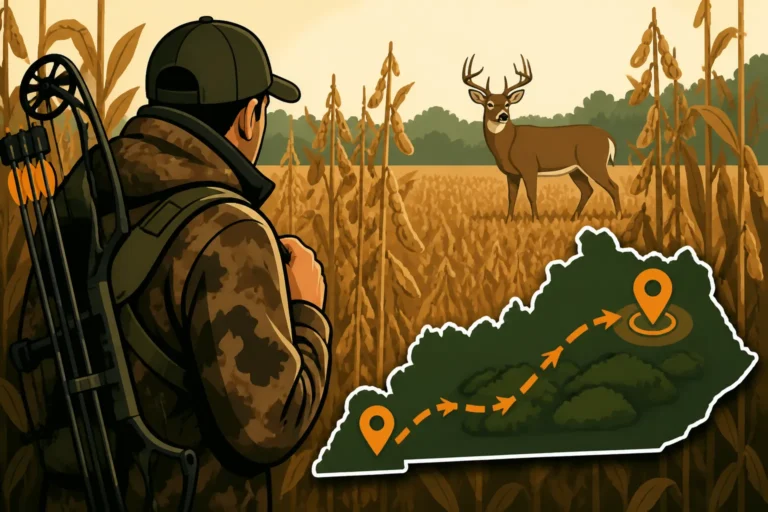
Beyond the feeding areas themselves, you need to locate their communal roosts. During winter, crows will often gather in massive numbers – sometimes thousands – in specific timber blocks to spend the night. These roosts can be several miles from their feeding grounds, but the flight paths between the two will be consistent. Observing these flight paths, particularly at dawn and dusk, can give you invaluable insight. A good mapping tool like GoHunt can be incredibly useful here. You can mark potential feed sites, track observed flight paths, and pinpoint timber blocks where you suspect large numbers of crows might be roosting. Look for heavy concentrations of droppings, ruffled feathers, and often, an overwhelming amount of noise around dusk. Remember, the closer you can set up to these flight paths or staging areas near the roost, the more successful your calling efforts will likely be. You might even find success with Scouting Kentucky Public Land Before Season to identify potential crow hotspots that also offer legal access, although many prime crow opportunities are on private agricultural land.
Essential Gear and Setup for Winter Crow Calling
Successfully calling crows over a winter feed site isn't just about making noise; it's about presenting a convincing scenario. This requires the right tools and a smart, strategic setup. Think of it like a carefully orchestrated play, where every element contributes to drawing the crows into your stage.
Choosing the Right Calls and Decoys
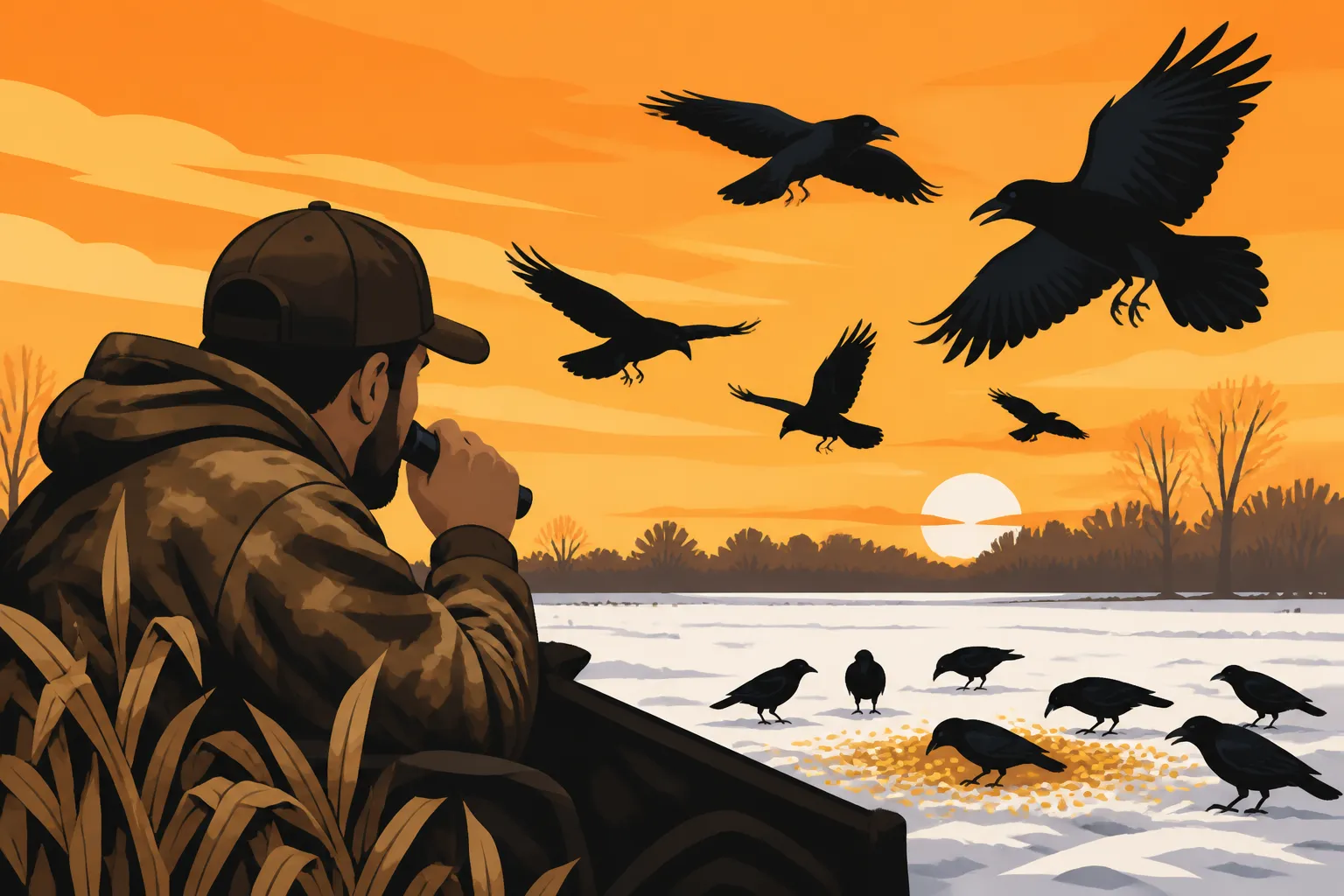
Your calls are your voice, and your decoys are your visual invitation. For crow hunting, you’ll want a good mix of both. Electronic callers have become incredibly popular and effective for crows, offering a wide range of realistic sounds, from individual caws to large mobbing and distress calls. Brands like Foxpro or Icotec offer excellent e-callers with libraries of crow sounds. These allow you to vary your calling sequence, volume, and type of call to adapt to the specific situation. However, don't discount mouth calls. A good hand-held crow call can be invaluable for individual caws, follow-up calls, or when you need to be subtle. Often, a combination of both an e-caller for initial loud, attention-grabbing sequences and a hand call for close-in work or fine-tuning can be devastatingly effective.
When it comes to decoys, realism is key. Crows are wary, and a static, unnatural spread will often send them packing. You'll want a minimum of 4-6 full-body crow decoys, positioned strategically. Some hunters even incorporate owl or hawk decoys. Why? Because a crow's natural instinct is to mob and harass predators, especially when another crow is in distress. If you combine a distress call with decoys appearing to mob a predator, you create a powerful visual and auditory illusion. Consider using a motion decoy, like a "flapping crow" or a "crow on a pole" that rotates, to add movement and bring the scene to life. This movement, combined with a distress call, can trigger an aggressive response, drawing crows in for a closer look.
Here's a quick look at common crow calls and their uses:
| Call Type | Description | Best Use |
|---|---|---|
| Locator Calls | Loud, aggressive caws to grab distant attention. | Initial setup, locating birds, getting a response. |
| Distress Calls | Sounds of a crow in trouble, often being attacked by a predator. | Primary draw, triggers mobbing behavior, very effective. |
| Fighting/Mobbing | Multiple crows cawing excitedly, often combined with distress calls. | Creates a sense of urgency, draws in large numbers. |
| Feeding Chatter | Soft, contented caws indicating a safe, active feeding area. | Finishing call, convincing wary birds to commit. |
| Pupil Calls | Single, sharp caws, usually from an individual crow. | Responding to individual birds, simulating a sentinel. |
Concealment and Blind Placement
Crows have exceptional eyesight, perhaps even better than a turkey's, and they are incredibly intelligent. If they see you, your hunt is over before it begins. Therefore, superior concealment is absolutely non-negotiable. Don't skimp on your blind setup. A pop-up ground blind is often the easiest and most effective option, providing full concealment for you and your gear. When choosing your blind, consider patterns that blend with the winter landscape, often browns, grays, and dead grass patterns.
Placement is critical. You’ll want to set up your blind on a field edge, near a hedgerow, or tucked into a small clump of timber that overlooks the feed site. Position yourself so that the crows will be flying into the sun if possible, making it even harder for them to spot you. It's often best to set up against a dark background, further breaking up your outline. Remember to Brushing In a Blind on a Field Edge by adding natural vegetation around it to break up its perfect shape. This simple step can make a huge difference in fooling those sharp-eyed birds. Make sure your blind entrance faces away from where you expect the crows to approach, allowing you to peek out and get ready without being detected. Always ensure you have a clear shooting lane, keeping in mind that crows often circle overhead before committing. A good vantage point to study crow patterns could also be established by Reading Aerial Photos for Eastern Kentucky Deer to identify potential approach corridors.
Mastering Calling Techniques for Success
Once you have your gear and your hide in place, the real art of crow hunting begins: calling. This isn't just about randomly blasting calls; it's about understanding the language of crows and responding to their behavior in real-time.
Mimicking Distress and Aggression Calls
The most potent tool in your crow-calling arsenal will be distress and aggression calls. These are what consistently trigger a mobbing response, drawing crows in from impressive distances. When a crow hears a fellow crow in distress—perhaps caught by an owl or hawk—its instinct is to rush to the scene, not to help, but to harass the predator and protect its territory. This primal response is what you want to exploit.
Start with a loud, aggressive series of caws, imitating a crow that's spotted a predator. If you're using an e-caller, a "crow distress" or "crow fight" sound file is perfect. Blast it out for 30-60 seconds, then pause for a minute or two. Listen intently. You're trying to get a distant crow to respond, either with a single caw or by starting to fly your way. Once you get a response, you can shorten your calling sequences, perhaps 15-20 seconds at a time, keeping their interest but not overdoing it. Vary the volume, too; if birds are circling high, increase the volume to suggest a more urgent threat. If they're coming in close and getting wary, soften it to mimic a more subtle conversation. Don't be afraid to experiment. Sometimes, a long, drawn-out series of caws, almost sounding like a sustained argument, will bring them in faster than a rapid-fire sequence. Just like a good Coyote Calling in Kentucky Farm Country, variety and responsiveness are key.
Adapting to Crow Responses and Weather
Crow hunting is incredibly dynamic. No two hunts are exactly alike because crows are constantly evaluating the situation. You need to be ready to adapt. If crows are coming in fast and hard, keep up the aggressive calling. If they hang up at a distance, circling cautiously, try switching to a more subtle, curious caw or even a feeding chatter sound to reassure them it's safe. Sometimes, silence is your best call. If a group of crows is actively working its way towards your setup, stop calling and let them commit. They'll often continue their approach, looking for the source of the sound, and you can pick up the calling again if they start to veer off.
Weather plays a huge role in crow behavior. On cold, still days, sounds carry further, and crows might be less active, making them harder to call. Conversely, on windy days, your calls might not reach as far, and crows will often fly lower to avoid the wind, which can be to your advantage. A light rain or overcast conditions can sometimes make crows less wary and more willing to respond. Pay attention to the wind direction. Crows will almost always approach into the wind before setting down, giving them better control for landing and a better sense of smell and hearing. Set your decoys and blind up so that the wind is blowing from the crows to you, so they come into easy shooting range. Always check the weather forecast and adjust your strategy accordingly. Keep a close eye on your surroundings, as you might be surprised by how quickly a large flock can appear, especially if you're Hunting Small Private Tracts in Kentucky where crow numbers can be very dense.
Ethical Considerations and Post-Hunt Practices
As with any form of hunting, responsible crow hunting involves adherence to ethical principles and proper post-hunt procedures. It's about respecting the land, the wildlife, and your fellow citizens.
Respecting Landowners and Wildlife
When hunting crows over winter feed sites, you're almost certainly going to be on private land. This means gaining permission is paramount. Never assume you have permission to hunt. Approach landowners respectfully, explain your intentions (often, they'll be grateful for your help with the crow problem), and always abide by their rules. Using a service like GoHunt can help identify land ownership boundaries, which is crucial before you even think about knocking on a door. Offering to help with chores or sharing some of your harvest (if applicable, though crow isn't typically eaten) can go a long way in building rapport and securing future hunting opportunities. Always carry your license and any necessary permits, and be prepared to show them if asked.
Beyond landowner relations, remember that you are still interacting with wildlife. While crows are not a regulated game bird in Kentucky and typically have no bag limit, responsible hunting means making clean, ethical shots. Avoid sky-busting or taking shots that are beyond your effective range, leading to wounded birds. Use appropriate firearms—a 12-gauge shotgun with a modified or full choke and heavy loads (like 7 ½ or 6 shot) is typically ideal for crows. Always be aware of your surroundings, especially if livestock or residential areas are nearby. Bullet or pellet trajectory can carry a significant distance, so know your backstop and shoot safely. Understanding the specifics of Crow Hunting Seasons and Tactics in Kentucky will keep you compliant with any nuanced state regulations, even for unregulated species.
Handling Your Harvest and Learning from the Hunt
After a successful hunt, proper handling of your harvest is important. While crows are generally not consumed, leaving them scattered inappropriately can be disrespectful to the landowner and can attract unwanted attention from other scavengers or even create an unhealthy environment. Gather your harvested crows and dispose of them properly, ideally burying them or placing them in a designated disposal area with the landowner's permission. Some hunters will use their harvested crows as additional decoys for subsequent hunts, enhancing realism.
Every hunt is a learning experience. Take time after each outing to reflect on what worked and what didn't. Did the crows respond better to distress calls or mobbing calls? Did they shy away from your decoys, or did they commit hard? Was your concealment adequate? Did the wind or weather play a role in their approach? Keeping a mental note, or even a brief journal, can help you refine your techniques and improve your success on future hunts. Don't be discouraged by slow days; crow hunting, like Hunting the Kentucky Rut in Early November, can be feast or famine. The more you observe and adapt, the better you'll become at mastering these intelligent birds. Finally, remember to always properly Telechecking a Kentucky Deer Harvest or any other species that requires it, even though crows don't fall under this category, it's a good reminder of general hunting responsibilities. For gaining access, don't forget the power of Knocking on Doors in Western Kentucky Farm Country – a direct conversation can open many doors.
Disclaimer
The information provided in this guide is for informational purposes only and is not intended as legal advice. Hunting regulations, seasons, and licensing requirements can change. Always consult the most current Kentucky Department of Fish and Wildlife Resources regulations before planning any hunting trip. It is your responsibility to know and follow all applicable laws.