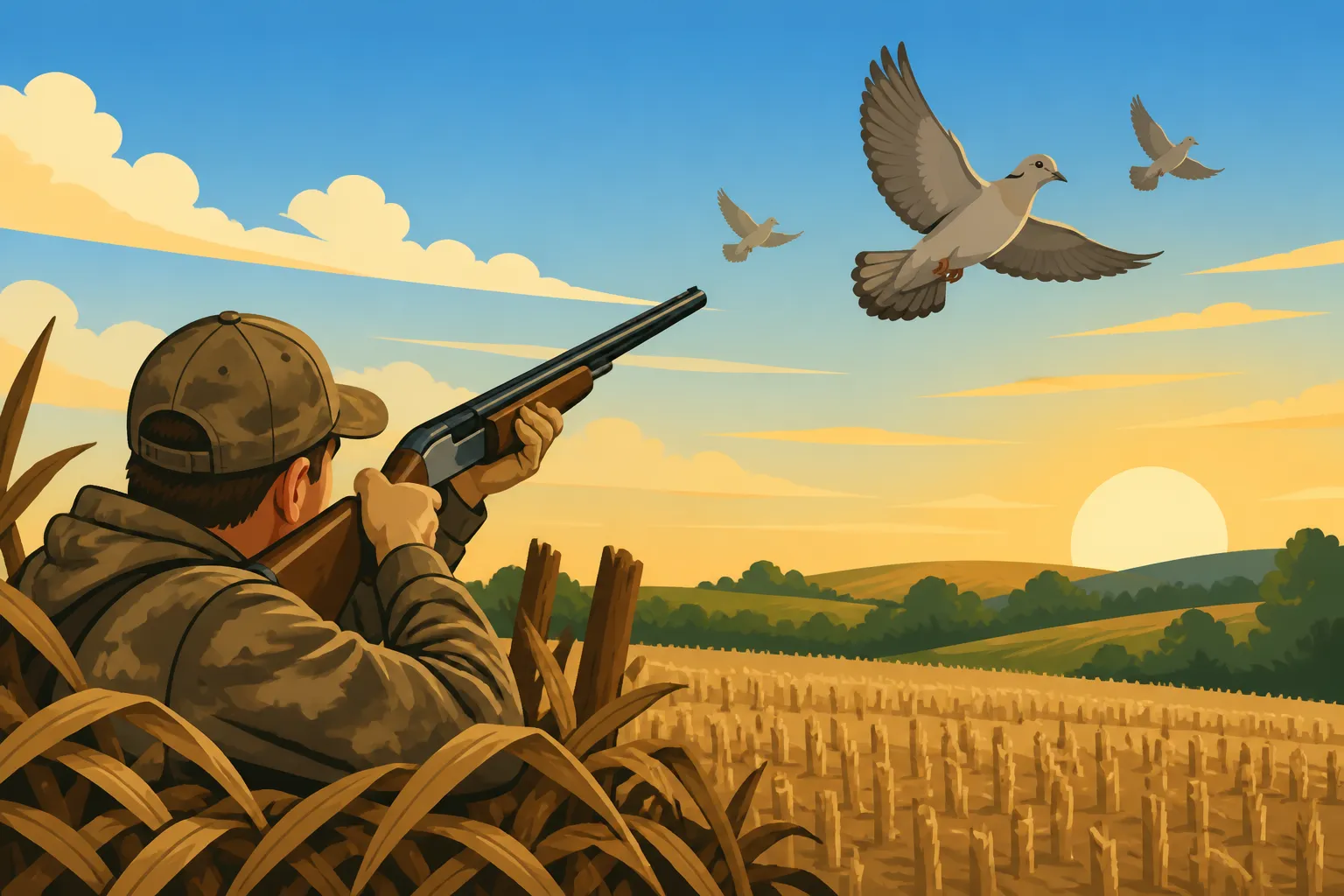
Dove Hunting a Cut Kentucky Field
The thrill of dove hunting in Kentucky can be absolutely incredible, but let's be honest, trying to figure out where the birds are going to fly and how to set up for success in a vast, open field can feel like a real puzzle. It's frustrating to sit out there, decoys meticulously placed, only for the doves to sail by just out of range. This comprehensive guide is here to break down the nuances of dove hunting a cut Kentucky field, ensuring you're in the right place at the right time, with the right strategy.
Understanding Kentucky Dove Behavior in Cut Fields
Doves are creatures of habit, and their habits are almost always tied to food, water, and grit. In Kentucky, particularly during the early dove season, cut agricultural fields are often the epicenter of their world. Knowing why and how they use these areas is your first step to a successful hunt.
Why Cut Fields Are Dove Magnets
Think about it: a farmer harvests a field of corn, wheat, or sunflowers, and what's left behind? A veritable smorgasbord of fallen seeds. Doves, especially mourning doves, are primarily seed-eaters, and these fields offer an easy, abundant meal. They don't have to work hard to find food, which makes these spots incredibly attractive. A freshly cut field with plenty of waste grain or seeds scattered on the ground is like a five-star buffet for doves. They'll flock to it, sometimes by the hundreds, making multiple trips throughout the day to feed. This predictability is what makes cut fields so appealing to hunters, but it also means these spots can draw a crowd if not managed wisely.
Beyond just the food, these fields often provide open, relatively safe landing zones. Doves are wary birds, constantly scanning for predators. An open field allows them to see threats coming from a distance, giving them ample time to escape. You'll often see them circling high above, doing reconnaissance before committing to land and feed. Understanding this behavior helps you predict their approach angles and where they're most likely to settle.
The Impact of Crop Type and Harvest
Not all cut fields are created equal in the eyes of a dove. The type of crop harvested plays a huge role in how attractive a field will be. Sunflowers are often considered the gold standard for dove fields. When harvested, they leave behind a ton of seeds that doves absolutely adore. Wheat and milo fields are also excellent choices, providing small, easily digestible grains. Corn can be good, especially if the harvest was a bit messy, leaving smaller kernels accessible on the surface. Soybeans, while common, tend to be less attractive unless they're heavily shattered and leave a lot of broken beans on the ground.
The timing and method of harvest are also critical. A field that's been cut recently, ideally within a week or two of the season opener, will be much hotter than one that's been sitting for a month. Rain can also impact a field's attractiveness, as it might wash seeds away or cause them to sprout, making them less appealing. When you're scouting, pay close attention to the residue on the ground – the more visible seed, the better. Landowners who plan their harvest around dove season are a gem, as they understand the importance of fresh feeding grounds.
Daily Movement Patterns
Doves aren't just in the field all day. They typically follow a predictable daily pattern that hunters can exploit. In the early morning, often right at legal shooting light, they'll fly from their roosting areas – usually dense tree lines or woodlots – to feeding fields. This initial rush can be fast and furious. After a few hours of feeding, they'll head off to watering holes, like ponds or creeks, to drink and then to grit sites (sandy spots, gravel roads) to aid digestion. You might find them loafing in shady trees during the midday heat before returning to feeding fields in the late afternoon.
The evening flight, as they head back to roost, can be just as strong, if not stronger, than the morning flight. Understanding these patterns allows you to position yourself strategically. Are you going for the morning rush, the evening return, or trying to intercept them at a watering hole during the midday lull? The best dove hunters often scout these patterns beforehand, noting flight paths and preferred landing zones. A good mapping app, like what GoHunt provides, can be invaluable for pinpointing these various areas and planning your approach, helping you visualize these flight lines.
Scouting and Setup Strategies for Success
You can't just show up on opening day and expect birds to be everywhere. Dove hunting, like any successful hunt, starts long before you ever pull the trigger. Proper scouting and strategic setup are paramount to filling your bag limit.
Pre-Season Reconnaissance: What to Look For
The real work begins weeks before the season opens. You need to be out there, driving around, observing. Look for those freshly cut fields, especially those that held sunflowers, wheat, or milo. Once you've identified a promising field, spend some time watching it, preferably during early morning or late afternoon.
What are you looking for? First and foremost, birds. Are doves flying in and out? Are they landing and feeding? Pay attention to where they're landing within the field. Doves often prefer specific areas, perhaps a slight rise, a patch with more scattered seed, or an edge near a fence line or treeline. Notice their flight paths as they approach and depart. Are they coming from a particular direction, perhaps from a nearby roost or watering source? These flight lines are crucial. You're trying to identify the "X" on the map, the exact spot where the most birds are concentrating their activity.
Also, look for isolated trees, utility lines, or dead snags on the field edges or even within the field. Doves love to perch on these before dropping down to feed, using them as observation posts. These can be prime locations for setting up, as birds will naturally gravitate to them. Don't forget to look for water sources nearby; a pond or creek within a mile or two of the field will be a major draw for doves after they've filled their crops. Using tools like the Kentucky Hunt Fish App can help you identify public land access points near these potential hotspots, or even help with Scouting Kentucky Public Land Before Season.
Optimal Blind Placement and Camouflage
Once you've found your "X" and observed the birds' behavior, it's time to think about your hide. Doves have excellent eyesight, and they're highly sensitive to movement and unnatural shapes. You need to blend in seamlessly with your surroundings. Natural cover is always best. Look for areas with dense weeds, tall grasses, a fencerow, or the edge of a treeline that breaks up your silhouette.
If natural cover is scarce, you'll need to create your own. A simple camouflage net draped over a few posts or natural brush can work wonders. Some hunters even bring a portable ground blind, but make sure it's well-brushed in and not just a blob in the middle of a field. Position your blind so that you have a clear shot at incoming birds, but also so that you're hidden from their primary flight paths. The sun's position is also important; if possible, position yourself with the sun at your back so that doves are flying into the glare, making it harder for them to spot you. This also illuminates the birds for better targeting. Remember, doves will often circle, so be prepared for shots from multiple angles. For more insights on blending in, especially on public land, consider tips on Using a Ground Blind on Kentucky Public Land.
Decoy Spreads and Motion Devices
Doves are social birds, and they're drawn to other doves. Decoys can significantly increase your success, pulling birds closer to your setup and making them commit to your area. Static dove decoys, placed on the ground in feeding postures, are a good start. Set them up in small clusters, perhaps 10-15 yards in front of your blind, mimicking a flock feeding naturally.
However, the real game-changer is often motion decoys. Spinning-wing decoys, like those from Mojo Outdoors, create flash and movement that doves can see from a long distance. Position these on a pole higher than your static decoys, typically 10-20 yards out, to draw attention. The erratic movement of a "flapper" decoy can also be highly effective. The key is to make your spread look as natural and inviting as possible. If doves are circling high and not committing, your decoys might be the incentive they need. Don't overdo it with decoys, sometimes a few well-placed ones are more convincing than a massive, unnatural spread. Also, ensure your decoys are clean and free of glare from the sun, which can appear unnatural to wary birds.
Essential Gear and Tactics for a Productive Hunt
Having the right gear and employing smart tactics can make all the difference between a frustrating day and a successful one. From your shotgun choice to how you manage your birds, every detail counts.
Shotguns, Ammunition, and Choke Selection
For dove hunting, a 12-gauge or 20-gauge shotgun is the most popular choice. Doves are relatively small, fast-flying targets, so quick handling and a fast swing are important. Semi-automatic shotguns or over/under models are excellent, allowing for quick follow-up shots. A modified or improved cylinder choke is generally ideal. Doves typically come in range at 20-40 yards, and these chokes provide a good balance of pattern density and spread for these distances. You want enough pellets to hit the bird, but also a forgiving enough pattern to account for their erratic flight.
Ammunition-wise, light target loads or game loads with 7.5 or 8 shot are perfect. Doves are not heavily feathered, so high velocities and large shot sizes are unnecessary and can be overkill, often just damaging meat. A standard 2 3/4 inch shell with 1 1/8 oz of shot will do the trick. Many hunters opt for high-quality loads from brands like Federal, Winchester, or Remington for consistent patterns. Always bring plenty of shells – doves can be notoriously difficult to hit, and it's not uncommon to go through a box or two for a limit of birds! Practice shooting clay pigeons before the season to get your swing and lead dialed in.
Field Dressing and Game Care
Kentucky dove season often kicks off in early September, which means warm weather. Proper game care is absolutely critical to prevent spoilage. As soon as you retrieve a bird, dispatch it quickly and humanely if it's not already dead. The best practice for doves is to breast them out immediately. Plucking takes too long and isn't necessary for these small birds.
Simply remove the breast meat by peeling back the skin and pulling the breast away from the keel bone. Place the breasts in a cooler with plenty of ice. Don't just toss them in a game bag to bake in the sun all day, as this will quickly degrade the quality of the meat. Keeping them cool will ensure that your delicious dove breasts make it home in prime condition, ready for the grill or oven. For larger game, like deer, the process is similar when considering Field Dressing a Deer in Cold Weather, but doves require quick cooling due to their small size and the typical warm weather conditions of the season.
Safety and Etiquette in the Field
Dove hunting often involves multiple hunters in the same field, so safety is paramount. Always know where your hunting partners are. Establish clear shooting lanes and zones, and never swing on a bird that crosses into another hunter's safe zone of fire. Wear appropriate eye protection and hearing protection – hundreds of rounds can be fired in a busy dove field. Make sure your firearm is unloaded and actions are open when moving through the field or taking a break.
Etiquette is also crucial. Be respectful of other hunters. Don't crowd someone else's spot, and if you arrive at a field that's already occupied, give them plenty of space. Retrieve your downed birds quickly to avoid losing them, but also be mindful not to interfere with other hunters' shots. Clean up your spent shells and any other trash. Leaving a clean field helps maintain good relationships with landowners and ensures future hunting opportunities. Also, never hunt without permission on private land; Do You Need Written Permission in Kentucky? clarifies these rules.
Navigating Regulations and Seasons
Kentucky has specific regulations for migratory bird hunting, and it's your responsibility as a hunter to understand and follow them. Ignorance of the law is never an excuse.
Kentucky Dove Season Dates and Bag Limits
Kentucky's dove season typically opens around the first Saturday of September and runs in several segments. The exact dates can vary slightly year to year, so always consult the latest Kentucky Department of Fish and Wildlife Resources (KDFWR) migratory bird hunting guide. Generally, the season is split into three parts: an early September segment, a shorter segment in late September/early October, and often a final, brief segment around Thanksgiving or early December.
The daily bag limit for doves is usually 15 birds, with a possession limit of 45 birds. These limits apply to mourning doves, white-winged doves, and Eurasian collared-doves combined, though Eurasian collared-doves can be harvested year-round with no bag limit. However, most hunters in Kentucky will primarily encounter mourning doves. Always double-check the current year's regulations before you head afield to avoid any costly mistakes. This information, along with other critical dates like When Kentucky's Archery Season Opens, is readily available through KDFWR.
Licensing and HIP Certification
To hunt doves in Kentucky, you'll need a valid Kentucky hunting license. If you're a Kentucky resident, the annual resident hunting license is your base. Non-residents will need a non-resident annual hunting license or a non-resident 7-day small game license.
Beyond the general hunting license, all migratory bird hunters in Kentucky, regardless of age, must also be Harvest Information Program (HIP) certified. This is a federal requirement to help gather data on migratory bird harvests. It's a free certification you can get when you purchase your hunting license online or from a vendor. You simply answer a few basic questions about your previous year's migratory bird hunting activity. Without HIP certification, you cannot legally hunt doves, even if you have your general hunting license.
Finally, while not required for doves, if you ever plan to hunt waterfowl, remember you'll also need a federal duck stamp. However, for a pure dove hunt in a cut field, just your hunting license and HIP certification are what you need. Ensure all your documentation is readily accessible, whether it's on your phone or printed out, because a game warden will certainly ask for it. Platforms like GoHunt often have resources that help hunters keep track of these requirements.
Disclaimer
This guide is intended for informational purposes only and does not supersede official Kentucky Department of Fish and Wildlife Resources regulations. Hunters are responsible for knowing and adhering to all current state and federal hunting laws, seasons, and bag limits. Always consult the most recent KDFWR hunting guide before heading afield.