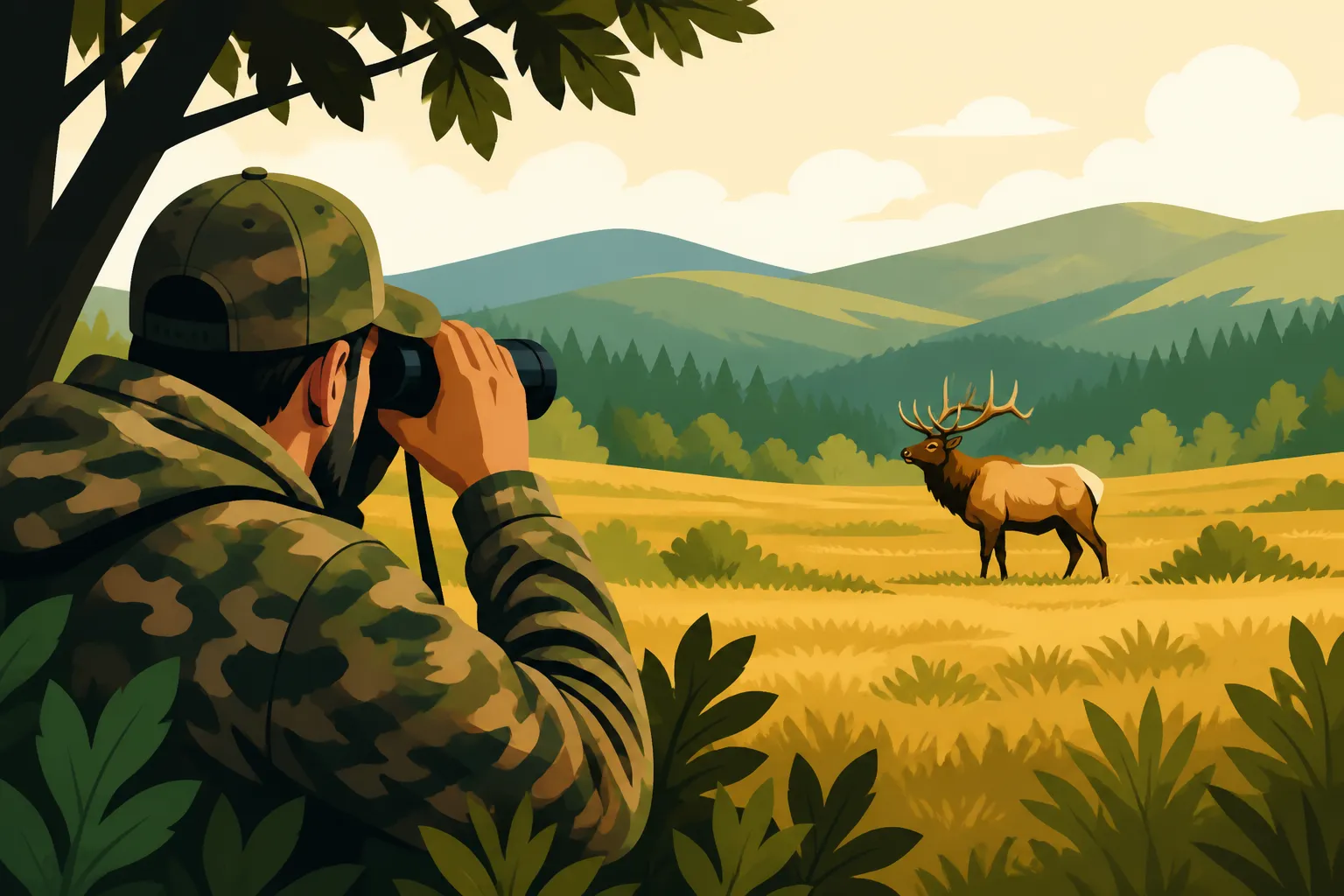
Glassing an Elk Restoration Zone Meadow
The sheer size of Kentucky's Elk Restoration Zone can be overwhelming, making it feel like finding a needle in a haystack, especially when you're trying to locate a mature bull in those vast, rolling coalfield hills. Many hunters struggle with effectively covering so much ground, often hiking miles only to wonder if they just walked past a hidden herd. This guide is designed to equip you with the advanced glassing strategies and gear insights you need to confidently scan those expansive meadows, increase your chances of spotting elk from a distance, and ultimately improve your hunting success in this unique Kentucky landscape.
Understanding the Elk Restoration Zone and its Unique Terrain
Hunting Kentucky's elk is an incredible experience, but it comes with a unique set of challenges. The Elk Restoration Zone isn't your typical flatland deer hunting country; it's a vast, diverse landscape primarily composed of rugged eastern Kentucky coalfields. If you’ve ever tried to scout this area, you know how quickly the terrain can change from dense timber to wide-open reclaimed mine land. Understanding these characteristics is the first step to effective glassing.
Topography of the Eastern Kentucky Coalfields
When we talk about the Eastern Kentucky Coalfields, we're envisioning a world of steep hillsides, deep hollows, and often, expansive flat or gently rolling plateaus created by surface mining operations. These reclaimed lands are the heart of many elk sightings. Imagine miles of undulating grassland, frequently dotted with young saplings, brushy pockets, and scattered mature timber stands. This isn't one monolithic type of terrain; you'll encounter a mosaic of areas that can include everything from tight, almost claustrophobic creek bottoms to high, windswept ridges with panoramic views. The underlying geology, particularly the prevalence of coal seams, dictates much of the landscape. While it might seem counterintuitive to think of a reclaimed mine as prime elk habitat, the mixture of open forage, thermal cover in the surrounding timber, and water sources creates an ideal environment. Recognizing the subtle changes in elevation, the direction of drainage, and the orientation of these large, open areas relative to prevailing winds and sun exposure is crucial for anticipating where elk might be found. Often, the highest points offer the best vantage for glassing, but they also expose you to the elements.
Identifying Prime Meadow Locations
Not all open areas are created equal in the Elk Restoration Zone. While many hunters naturally gravitate to the largest, most obvious reclaimed meadows, the true gems are often smaller, less accessible pockets of forage. These can be old logging clearings, gas line rights-of-way, or even abandoned farm fields tucked away deep within the timber. Elk, being creatures of habit and often seeking solitude, will frequently favor these less-pressured spots. When you're scouting, either on foot or using a mapping application like GoHunt, look for areas where these meadows transition directly into thick timber or heavy brush. These "edge habitats" provide elk with quick access to food while offering security cover from predators and hunters. Pay close attention to meadows that have a water source nearby, even if it's just a small spring seep or a low-lying area that collects water after a rain. Furthermore, consider the aspect of the slopes. During the colder months, south-facing slopes will receive more sunlight, melting snow faster and greening up earlier, making them attractive to elk. Conversely, north-facing slopes might hold more moisture and offer cooler bedding in warmer periods. Understanding these micro-climates within the broader landscape is key to pinpointing where elk will spend their time feeding, bedding, and moving.
Essential Optics for Effective Glassing
You can have all the right intentions and scouted locations, but without the right tools, your glassing efforts will fall short. The vastness of the Elk Restoration Zone demands high-quality optics that can resolve detail at extreme distances and perform in varied light conditions. This isn't the place to skimp on your setup.
Binoculars: Power and Objective Lens Considerations
For most elk hunters in Kentucky, a good pair of binoculars is your primary tool for scanning those expansive meadows and distant hillsides. The most common choices range from 10×42 to 12×50. A 10×42, like those offered by many reputable brands, provides a great balance of magnification and field of view, making it comfortable for long periods of hand-held scanning. They’re excellent for picking out movement or a subtle rack tine against a distant treeline. However, if your primary strategy involves covering vast, open terrain from a fixed position, stepping up to a 12×50 or even 15×56 can offer a significant advantage in gathering light and resolving fine details at longer distances. The larger objective lens (the second number, like the '42' or '50') directly correlates to how much light the binoculars can gather. This is critical during those prime hunting hours of dawn and dusk when elk are most active but light is dim. Remember, while higher magnification seems appealing, it also magnifies hand shake, reducing stability. Therefore, a good tripod adapter is almost essential, especially for anything above 10x. Consider investing in a pair that is fully waterproof and fog-proof, as Kentucky weather can be unpredictable, going from clear to damp and foggy in a matter of hours.
Spotting Scopes: When and Why They're Crucial
While binoculars are your bread and butter, a high-quality spotting scope is an absolute game-changer when you're serious about meticulously dissecting those distant elk-rich meadows. A spotting scope typically offers magnifications ranging from 15x up to 60x or even more, turning distant specks into discernible animals. This level of detail allows you to not only confirm an animal is an elk but also to assess its size, antler configuration, and even its sex from hundreds or thousands of yards away. This is invaluable for avoiding unnecessary long hikes to investigate a deer or a cow when you're specifically targeting a bull during the Kentucky Bull Firearm Elk Season Dates. Imagine scanning a reclaimed mine bench two miles away and being able to clearly see if that brown shape is a bedded elk, and if so, whether it’s a legal bull. A good spotting scope allows you to stay hidden, conserve energy, and make informed decisions about your approach. Look for scopes with large objective lenses (60mm to 85mm are common) for superior light gathering, especially during low-light conditions. Angled eyepieces are often preferred by hunters who spend hours glassing from a comfortable, seated position, while straight eyepieces can be quicker for initial target acquisition.
Tripods and Stabilizers: The Unsung Heroes
It’s easy to focus on the optics themselves, but without stable support, even the most expensive binoculars or spotting scopes lose much of their effectiveness. A sturdy, lightweight tripod is not just a luxury; it’s a necessity for serious glassing, especially with high-magnification binoculars or any spotting scope. Trying to hold 12x binoculars steady for more than a few minutes is exhausting and leads to image shake, which blurs details and causes eye fatigue. A tripod eliminates this shake, allowing you to settle in and truly pick apart distant terrain. Carbon fiber tripods are popular for their excellent strength-to-weight ratio, which is a major benefit when you’re hiking through steep country. You'll also want a quality fluid head on your tripod, which allows for smooth, precise adjustments without jarring your view. This is critical for panning across a wide meadow or slowly following an animal. Don't forget a binocular adapter – a simple attachment that connects your binoculars to the tripod head. Many hunters overlook these "unsung heroes" of their optical setup, but once you experience the stability and reduced eye strain that a good tripod and head provide, you'll wonder how you ever hunted without them. Using a platform like GoHunt to mark your glassing points often pairs perfectly with a stable tripod setup, letting you reference your map and then meticulously scan.
Strategic Glassing Techniques for Meadows
Effective glassing isn't just about staring through glass; it's a methodical process that maximizes your chances of spotting elk. Especially in the expansive meadows of Kentucky's Elk Restoration Zone, a haphazard approach will lead to missed opportunities and wasted time.
The Grid Method: Systematic Scanning
The "grid method" is a cornerstone of effective glassing, especially when dealing with large, open areas like reclaimed mine meadows. Instead of randomly scanning the entire landscape, you mentally divide the area you're observing into a series of smaller, overlapping grids or "boxes." Start with a small section of the meadow, perhaps a hundred yards wide, and slowly scan from left to right, then drop your optics down slightly and scan right to left, and so on, working your way through that grid. Once you've thoroughly covered that section, move your focus to the adjacent grid and repeat. The key is to be excruciatingly slow and deliberate. Don't rush. Take your time, letting your eyes truly absorb every detail. Many hunters make the mistake of scanning too quickly, missing subtle movements or pieces of an animal obscured by vegetation. Elk are masters of camouflage, and often, all you'll see is a flicker of an ear, the horizontal line of a back, or the slight glint of an antler tip. Using a mapping tool like GoHunt can help you define these grids, especially if the terrain has natural features that can serve as boundaries. This systematic approach ensures that you leave no stone unturned, reducing the chance that an elk is bedded or feeding just outside of your quick glance. It takes patience, but it pays dividends in spotting those elusive animals.
Utilizing Early Morning and Late Evening Light
Elk, like most large game, are crepuscular, meaning they are most active during the twilight hours of dawn and dusk. This makes early morning and late evening prime times for glassing. As the sun rises, elk will typically move from their nocturnal feeding areas in the open meadows to more secure bedding cover in the timber. In the evening, the reverse happens: they emerge from the timber to feed in the open. The soft, angled light during these periods also plays a significant role in visibility. The long shadows can make objects stand out more, and the cooler temperatures often mean less heat shimmer, which can distort views during midday. However, low light also presents challenges, demanding optics with excellent light-gathering capabilities. This is where those larger objective lenses on your binoculars and spotting scope truly shine. Position yourself so that the sun is either at your back or to your side, avoiding looking directly into the rising or setting sun, which can cause severe glare and reduce visibility to almost zero. Plan your glassing locations carefully, considering the sun's path throughout the day. Often, an eastern-facing slope offers excellent morning glassing opportunities, while a western-facing slope will be ideal for the evening. If you're Hunting the Kentucky Rut in Early November, these dawn and dusk hours are even more critical as bulls are on the move.
Dealing with Heat Shimmer and Environmental Factors
One of the most frustrating aspects of glassing large, open meadows, particularly during warmer parts of the day or in late summer/early fall, is heat shimmer or "mirage." This atmospheric distortion happens when heat radiates off the ground, causing light waves to bend and creating a wavy, blurry effect through your optics. What might be a clear view in the morning can become an impossible blur by midday. While you can't eliminate heat shimmer entirely, you can mitigate its effects. The best strategy is to simply avoid glassing during the worst of it. Prioritize your intense glassing during the cooler hours of early morning and late evening. If you must glass during midday, try to focus on shaded areas or areas with more vegetation, as these will radiate less heat. Positioning yourself higher than the area you are glassing can also help, as you are looking down through less distorted air. Another environmental factor to consider is wind. Strong winds can make stable glassing difficult, even with a tripod, as it causes your optics to vibrate. Seek out natural windbreaks like large trees or rock outcrops. Rain and fog are also common in Kentucky and will severely limit visibility, making glassing impossible. Always check the weather forecast and plan your hunts and glassing sessions accordingly, understanding that conditions can change rapidly in the mountains.
Reading Elk Behavior and Sign in Open Areas
Spotting an elk is one thing, but understanding what you're seeing and what it means for your hunt is another. Effective glassing in Kentucky's elk country extends beyond just finding an animal; it's about interpreting their actions and the subtle clues they leave behind.
Recognizing Elk Movement and Patterns
When you finally spot elk through your optics, take a moment to observe their behavior. Are they feeding calmly, heads down, slowly moving through the meadow? This often indicates they feel secure and haven't detected your presence. Are they alert, heads up, constantly scanning their surroundings? This might suggest they are nervous, perhaps having heard something or caught a whiff of an unfamiliar scent. Pay attention to their direction of travel. Are they heading toward a specific patch of timber for bedding, or moving to a different section of the meadow to feed? Identifying these patterns over time can help you predict their movements on subsequent days. Also, watch for interactions within the herd. During the rut, you might see bulls sparring, bugling, or herding cows, which can give you clues about the herd's dynamics and location of the dominant bull. During the spring, observing cow-calf pairs can give you a better understanding of the local population distribution. Remember that elk often move along specific routes, using terrain features like benches, saddles, or creek bottoms. By observing their movements through your glass, you can identify these travel corridors and potentially set up an ambush if your tag allows for a bull firearm elk season.
Interpreting Droppings, Beds, and Rubs in Meadows
While glassing often focuses on live animals, don't overlook the importance of finding and interpreting indirect sign. From a distance, you might be able to spot patches of disturbed ground that indicate bedding areas or heavily used trails. Later, if you decide to investigate an area on foot, these ground-level clues become paramount. Fresh elk droppings are a goldmine of information, indicating recent presence. The size and shape can even give you a rough idea of whether it's a bull or a cow, and how long ago they passed through. Elk beds, particularly in the tall grasses of a meadow, will appear as flattened, oval depressions. If the grass springs back quickly, the bed is older; if it remains compressed, the elk was likely there very recently. Look for several beds together, indicating a herd-bedding area. Rubs, where bulls scrape their antlers against trees, are less common in wide-open meadows unless there are scattered saplings, but if present, they are a clear indicator of bull activity, especially during the rut. Scouting with the Kentucky Hunt Fish App or onX and marking these sign locations can help you build a comprehensive picture of elk movement across the landscape. The more sign you can interpret, the better you can predict where elk will be and when.
Understanding Wind and Thermals in Open Terrain
Wind and thermals are arguably the most critical environmental factors for any elk hunter, especially when trying to approach animals you've spotted in open meadows. Elk have an incredible sense of smell, and a single whiff of human scent will send them scattering. Wind direction is fairly straightforward – it's the direction the air is moving horizontally. Always try to approach elk with the wind in your face, or at least a crosswind, never with it blowing from you towards them. Thermals, on the other hand, are vertical air currents driven by temperature changes. In the morning, as the sun heats the ground, warm air (and your scent) rises up the slopes. In the evening, as the air cools, heavy cool air (and your scent) sinks down into the hollows. These thermal shifts are particularly pronounced in the steep, varied terrain of the Elk Restoration Zone. So, if you're glassing elk high on a ridge in the morning, your scent will likely rise, but in the evening, it will fall. Misjudging thermals can blow an otherwise perfect setup. It's often helpful to carry a small bottle of powder or a milkweed pod to visually check wind and thermal direction before making your move. By meticulously studying the wind and thermals and planning your approach routes accordingly, you can dramatically increase your chances of getting within shooting range of an animal you've successfully glassed.
| Optic Type | Primary Use | Pros | Cons | Best for Kentucky Elk Zone Meadows |
|---|---|---|---|---|
| Binoculars | General scanning, quick acquisition, portability | Wide field of view, comfortable for hand-held, lighter, more versatile. | Lower magnification, less detail at extreme ranges, can cause eye strain during prolonged use without a tripod. | Excellent for initial scans, identifying movement, and covering large areas quickly; best paired with a tripod for detailed, long-duration glassing. |
| Spotting Scope | Detailed observation, long-range identification | High magnification, superior detail, ideal for antler assessment. | Narrow field of view, requires a tripod, heavier/bulkier, slower for initial target acquisition, typically more expensive. | Crucial for confirming species, sex, and antler size from extreme distances, especially when deciding if a long hike is justified or in situations where Optics for Glassing Reclaimed Mine Land is critical. |
Disclaimer
The information provided in this guide is for general educational and informational purposes only. Hunting regulations, seasons, and requirements in Kentucky can change frequently. Always consult the latest official regulations from the Kentucky Department of Fish and Wildlife Resources (KDFWR) before planning any hunting trip. Safety should always be your top priority in the field.