Deer Carts on Forest Roads
Let's be honest, few things drain the joy out of a successful Kentucky deer hunt faster than the thought of dragging a heavy buck out of the woods, especially when you're miles deep on a winding forest road. The backaches, the sweat, the sheer exhaustion – it can be brutal. This guide is all about changing that narrative, focusing on how a trusty deer cart can transform your retrieval experience, making those long hauls across Kentucky's forest roads much, much easier.
The Undeniable Advantage of Deer Carts on Forest Roads
There's a reason deer carts have become a staple for many hunters, particularly those who frequent public lands or vast private tracts with extensive road systems. They're not just a convenience; they're a game-changer for preserving your energy and your back, ensuring that the hard work begins and ends with the hunt, not the haul.
Why Traditional Dragging Falls Short
Picture this: you've just put down a beautiful Kentucky whitetail in a remote hollow, and the nearest forest road, while seemingly close on a map, is still a grueling half-mile uphill climb. Trying to drag that deer by hand, even with a strong partner, turns into an epic struggle. The deer's weight, combined with the friction of the ground, the uneven terrain, and obstacles like downed timber and thick undergrowth, quickly saps your strength. You might find yourself stopping every few yards, muscles screaming, wondering if it's all worth it.
Traditional dragging also takes a toll on the deer itself. The hide can get torn, especially if you're pulling it over rocks or through thorny brush. In warmer early-season archery hunts, the added time and physical exertion mean the deer's core temperature stays elevated longer, which can negatively impact meat quality. The sheer effort can also lead to mistakes, like not paying attention to your surroundings or even getting turned around in unfamiliar territory as fatigue sets in. It's a struggle many of us know all too well, and it's precisely why alternatives are so appealing.
How Carts Transform the Recovery
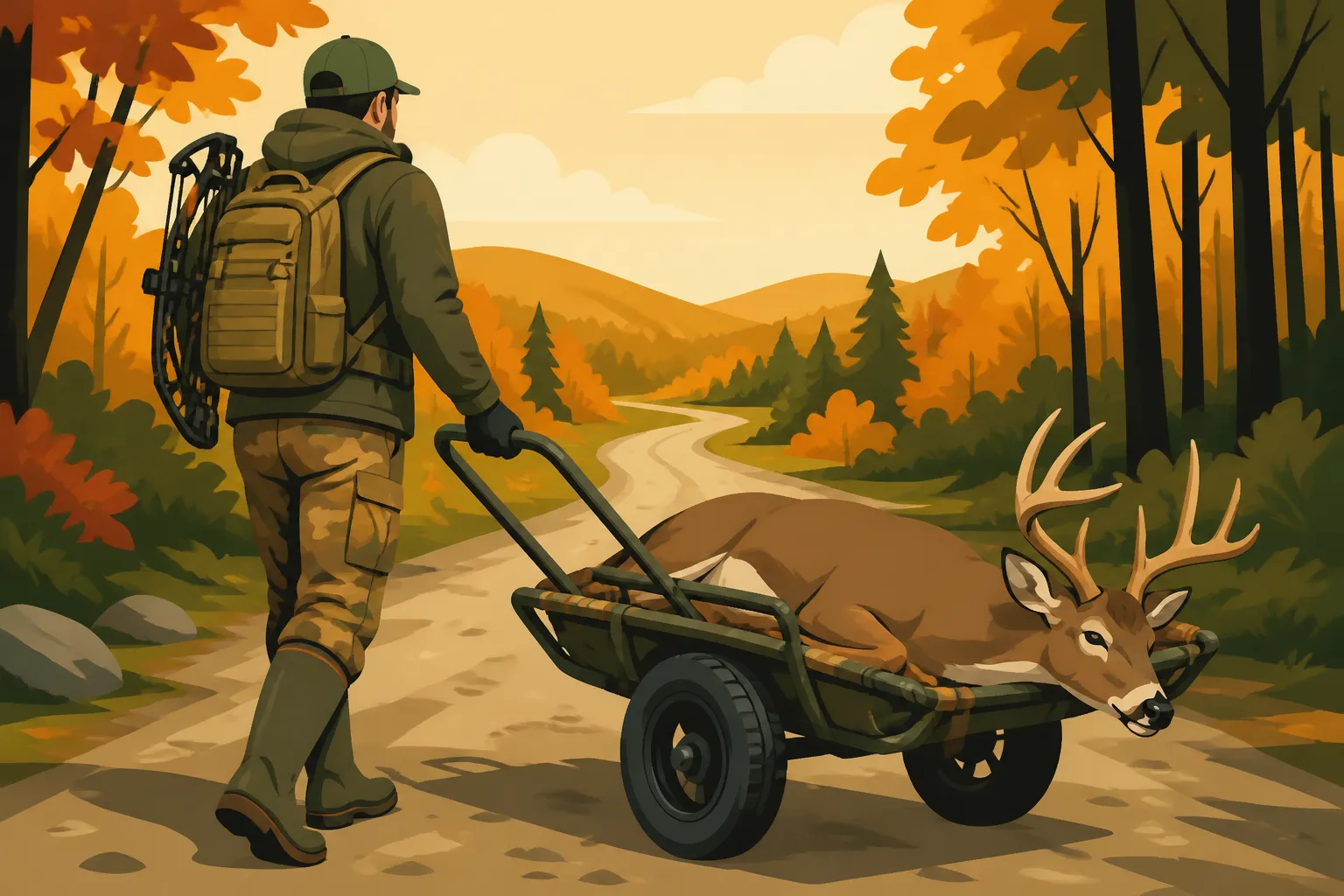
Enter the deer cart. Instead of fighting friction and gravity every inch of the way, a deer cart allows you to lift the bulk of the animal's weight onto a set of wheels. This simple mechanical advantage drastically reduces the effort required to move your harvest. Suddenly, that half-mile uphill slog to the forest road becomes manageable, perhaps even a relatively pleasant stroll compared to what it would have been.
A good cart can handle significant weight, distributing it evenly and letting you navigate obstacles with less strain. The deer is secured, protecting its hide and keeping it cleaner during transport. This means less work for you post-hunt, both physically and in terms of processing the animal. Plus, your energy is conserved, leaving you more refreshed for the field dressing, butchering, and recounting your tale back at camp. It really shifts the entire dynamic of the retrieval from a dreaded chore to a streamlined process.
Types of Forest Roads You'll Encounter
Kentucky offers a variety of public and private lands with diverse road systems, and understanding them helps you pick the right cart and plan your retrieval. You might encounter well-maintained gravel roads that crisscross areas like Daniel Boone National Forest, or smoother, older logging roads that have seen less vehicle traffic over the years. Some WMAs feature dirt paths that can become muddy after a rain, while others might have old, paved sections from past logging or mining operations that are now overgrown.
On national forest land, you'll often find a mix of administrative roads, sometimes gated, and designated trails. Private timberland or reclaimed mine lands might have extensive internal road networks, though public access can be limited. Knowing the typical surface – whether it's compacted gravel, loose dirt, or even rocky, eroded sections – will influence your choice of cart, particularly in terms of tire type and durability. Scouting these roads on a map tool like GoHunt or the Kentucky Hunt Fish App beforehand is crucial for identifying the best access points and potential carting routes.
Choosing the Right Deer Cart for Kentucky's Terrain
Selecting the perfect deer cart isn't a one-size-fits-all situation. The ideal cart for you will depend on the size of game you pursue, the specific terrain you hunt in Kentucky, and how far you typically need to haul your prize.
Key Features to Look For
When you're eyeing deer carts, a few critical features stand out. First, wheel size and type are paramount. Larger diameter wheels (18-24 inches) with pneumatic (air-filled) tires will roll over obstacles like roots, rocks, and mud much more easily than smaller, solid wheels. Think mountain bike tires versus wagon wheels. The wider the tire, the better it performs in soft ground or mud, minimizing sinking. Next, consider the frame material. Aluminum frames are lighter, making the cart easier to carry in to your hunting spot, while steel frames offer greater durability and weight capacity but come with a heavier footprint.
Weight capacity is another big one. A large Kentucky buck can easily weigh 150-200 pounds dressed, and you'll want a cart rated well above that for safety and ease of use. Look for carts that boast 250-300 pounds or more capacity. Finally, folding capability is a huge plus. A cart that folds flat or disassembles easily is much simpler to transport in your truck bed or even strapped to a pack when you're hiking deep into the backcountry, like when you're Packs for a Daniel Boone Forest Day Hunt. Don't forget proper straps or bungees to secure your deer; some carts come with integrated systems, which is a nice bonus.
Different Cart Designs and Their Best Use Cases
Deer carts generally fall into a few categories, each with its strengths:
| Cart Type | Description | Best Use Cases | Considerations |
|---|---|---|---|
| Two-Wheel Cart | Most common; deer lies lengthwise on a frame with two large wheels. | Ideal for relatively flat to moderately hilly forest roads, gravel paths, and open woods. Good balance of capacity and maneuverability. | Can be awkward on steep side-slopes; requires you to bear some of the weight through the handles, especially uphill. |
| Four-Wheel Cart | More like a wagon or ATV trailer; four wheels, often with a wider stance. | Excellent for very heavy game (like a big elk or multiple deer), very rough terrain, or situations where you need to carry a lot of extra gear. Less weight on the user. | Heavier and bulkier to transport; less agile in tight spaces or dense brush; often requires wider trails or roads. Not always practical for deep woods hunting where trails are narrow. |
| Single-Wheel Carrier | A heavy-duty backpack frame with a single wheel at the bottom. Often called a game hauler. | Best for extremely rugged, steep, or narrow trails where a two-wheel cart would snag or be too wide. You "wear" the deer like a pack, with the wheel taking the brunt of the load. | Requires significant upper body strength and balance; can be fatiguing on long hauls; not ideal for very large, bulky deer. More expensive and specialized. |
For most Kentucky deer hunting on forest roads and trails, a sturdy two-wheel cart with large pneumatic tires is usually the best bet. It provides a great balance of capacity, maneuverability, and ease of use. If you're hunting particularly steep areas, or trying to get the deer to the road, a single-wheel carrier might be useful, though many hunters use Deer Sleds for Ridge Country for that initial extraction before transferring to a cart on a clearer path.
GoHunt and Other Tools for Pre-Scouting Road Access
Before you even step foot in the woods, utilizing mapping and scouting tools can save you a ton of grief. Platforms like GoHunt and even the KDFWR's Scouting With the Kentucky Hunt Fish App are invaluable for identifying forest roads, logging trails, and potential access points. You can zoom in on aerial photos to see the condition of these roads, looking for areas that appear clear for carting versus those that are heavily overgrown or washed out.
Pay attention to elevation changes and contours. A road that looks short on a flat map might actually be a steep ascent, making it harder to pull a cart. Identify potential "cart staging areas" – spots where you can park your vehicle, unload your cart, and then head into the woods. Knowing these details ahead of time means you're not guessing in the dark after the shot, and you can formulate a solid retrieval plan, especially if you're on public land where Hunting Pressure on Kentucky Public Land might mean parking is competitive.
Practical Tips for Using Your Deer Cart Effectively
Having the right deer cart is only half the battle; knowing how to use it efficiently is just as important. A few simple techniques can make a world of difference in your retrieval efforts.
Loading and Securing Your Harvest
Proper loading is key to an easy haul. First, always field dress your deer before loading it onto the cart. This reduces weight and helps the animal cool faster, especially important if you're out during early archery season when Coolers and Game Bags for Early Archery are critical. Position the deer on the cart so its weight is balanced over the axle. This prevents the cart from feeling front-heavy or back-heavy, which can make steering and pulling much harder. For a two-wheel cart, placing the deer lengthwise with its head towards the handles usually works best.
Once the deer is positioned, secure it tightly with straps, ropes, or bungees. You don't want the deer shifting around as you navigate uneven terrain. Many carts come with built-in securing straps, but it's always wise to carry extra heavy-duty straps in your pack, just in case. Make sure the straps are tight enough to prevent movement but not so tight they damage the meat or hide. A well-secured deer is a stable load, making the cart much easier to control. If you're on a multi-day hunt and have more gear, you might even find space to Butchering a Deer at Camp if your cart has extra capacity after the harvest.
Navigating Tricky Sections and Obstacles
Not all forest roads are perfectly smooth. You'll inevitably encounter obstacles like loose gravel, muddy patches, fallen logs, or eroded sections. When approaching a steep uphill grade, lean forward, keep your back straight, and use your legs to push, not pull with your arms alone. Short, steady steps are better than trying to power through with bursts of energy. On a downhill slope, control is paramount. Go slow, use the cart's handles to resist gravity, and be ready to brace yourself.
Muddy sections can be challenging. If the mud isn't too deep, momentum can help. If it's a true bog, you might need to temporarily unload the deer, pull the empty cart through, and then drag the deer through the worst of it before reloading. Rocks and roots require careful maneuvering. Lift and guide the wheels over larger obstacles rather than ramming into them. If you're on a very rough stretch, it's sometimes easier to have a partner pull from the front while you lift and guide from the back. Remember that on some public lands, there are Vehicle Rules on Kentucky Public Land to consider, so you'll only be able to use your cart where appropriate.
Maintenance and Storage for Longevity
Your deer cart is an investment, and a little bit of care goes a long way in ensuring it's ready for every season. After each use, especially if it's been through mud or rough terrain, take the time to clean it. Wipe down the frame, making sure to remove any dirt, mud, or blood. Pay particular attention to the wheel axles; dirt and debris can cause them to seize up over time. Lubricate any moving parts, like the axle bearings or folding hinges, with a good quality grease or penetrating oil.
Check the tires regularly for proper inflation and inspect them for any punctures or wear. If you have pneumatic tires, keeping them at the recommended pressure will make the cart much easier to push and prevent flats. Store your cart in a dry place, out of direct sunlight, to prevent rust and material degradation. If it folds, store it in its collapsed state to save space. By performing these simple maintenance tasks, your deer cart will serve you reliably for many hunting seasons to come.
Integrating Your Deer Cart into Your Kentucky Hunt Plan
A deer cart isn't just something you throw in the truck and hope to use. It's a strategic piece of gear that deserves to be part of your comprehensive hunting plan, especially when navigating Kentucky's diverse landscapes.
Scouting for Cart-Friendly Routes
Effective scouting begins long before opening day. When you're Scouting Kentucky Public Land Before Season or even exploring private land, actively look for paths that would be suitable for a deer cart. This means identifying old logging roads, utility rights-of-way, or even well-worn game trails that are wide and clear enough to accommodate your cart's width. Use digital mapping tools, as mentioned earlier, to overlay topo maps with satellite imagery. Look for flatter sections, gradual slopes, and areas with minimal obstructions.
Don't just look for where the deer are; look for how you'll get them out. Sometimes, a slightly longer, less steep cart path is preferable to a shorter, more rugged one that would require you to Dragging a Deer Out of a Steep Hollow by hand. Mark these potential retrieval routes on your GPS or mapping app. Knowing these routes beforehand helps you orient your stand setup or still-hunting direction to be closer to a viable cart path, making the post-harvest work significantly less daunting.
Combining Carts with Other Retrieval Methods
While deer carts are fantastic for forest roads, they aren't always the solution for every single foot of the retrieval process. Sometimes, your deer might go down in a truly impenetrable thicket or at the bottom of a ravine where no cart can realistically reach. In these scenarios, you might need to combine methods. A lightweight deer sled can be invaluable for the initial extraction from dense cover or for getting the deer up a very steep embankment to where a cart can take over.
Think of it as a relay race: sled the deer out of the nastiest stuff, then transfer it to your cart once you hit a more navigable trail or forest road. This strategy allows you to leverage the strengths of each tool, minimizing effort and maximizing efficiency. For really large animals or extremely difficult terrain, considering a small, foldable game carrier that straps onto a pack for the initial extraction might be more practical than a sled.
Public Land Regulations and Cart Use
Most Kentucky public lands, including Daniel Boone National Forest and various Wildlife Management Areas, generally allow the use of deer carts on established roads, administrative routes, and often on designated trails. However, it's absolutely crucial to always check the specific regulations for the WMA or public land you plan to hunt. Some areas might have restrictions on certain types of motorized or wheeled conveyances, even if they're human-powered.
For example, while a cart is perfectly fine on a forest road, trying to push it deep into a "wilderness" or "primitive weapons only" area that restricts wheeled vehicles might not be permitted. Pay attention to signage at trailheads and check the KDFWR Hunting & Trapping Guide carefully. When in doubt, call the local KDFWR office or the land manager's office for clarification. Adhering to these rules ensures you have a smooth hunt and retrieval without any unwelcome surprises from game wardens.
Disclaimer
This article is for general informational purposes only and does not constitute professional advice. Laws, prices and regulations vary by location and change over time. Consult a qualified professional for guidance on your specific situation.