Barrel Length for Walking Thick Cover
Every hunter who's spent time pushing through dense briar patches, navigating tight creek bottoms, or trying to silently climb into a treestand in thick Kentucky timber knows the frustration of a rifle barrel that just seems to snag on everything. It's a common dilemma: you need accuracy, but you also need to move quietly and efficiently through cover. This guide is here to walk you through the nuances of rifle barrel length, helping you understand how it impacts your hunt in Kentucky's diverse, often unforgiving, terrain.
Understanding the Trade-offs of Barrel Length
When you're picking out a new rifle, or even just thinking about what you already have, barrel length might seem like a small detail, but it can make a huge difference in the field. It’s not just about how cool it looks; it directly affects how you carry your rifle, how fast you can get it on target, and even, to some extent, how accurate it performs. For us hunters in Kentucky, where one moment you're in open timber and the next you're crawling through a laurel thicket, these considerations are paramount.
Maneuverability Versus Ballistics
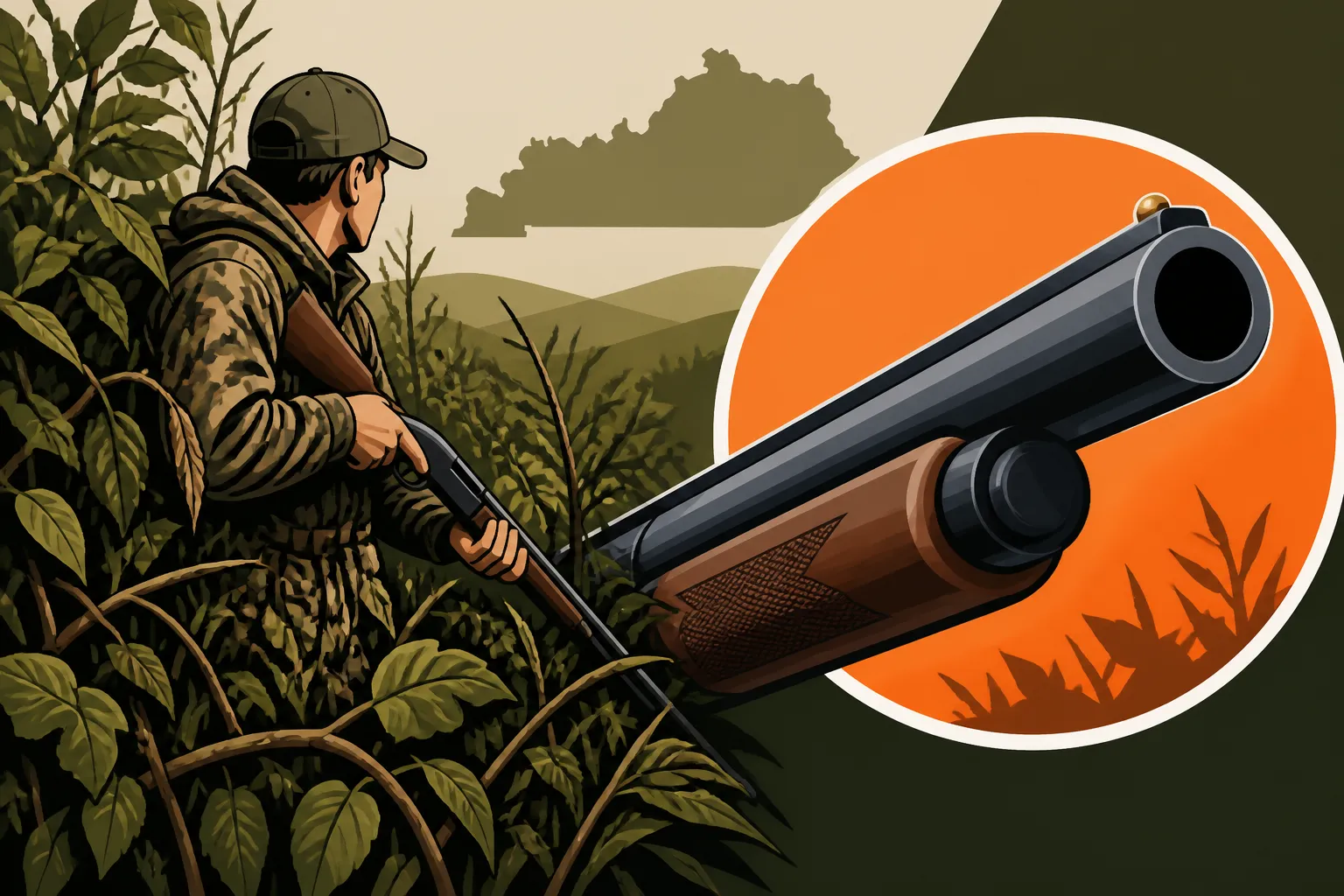
The most immediate and noticeable impact of barrel length is on your rifle's maneuverability, especially when you're still-hunting or trying to slip through dense cover. Imagine trying to thread a 26-inch barrel through a tangle of grapevines and multiflora rose while a deer watches you from 30 yards away. It’s a recipe for snapped twigs and spooked game. Shorter barrels, typically in the 16 to 20-inch range, are simply easier to handle in tight spaces. They're quicker to shoulder, faster to swing, and less likely to get hung up on branches or the edge of a treestand. This is incredibly important when you're deep in the Daniel Boone National Forest Hunting or navigating overgrown logging roads.
However, the trade-off, albeit often minor for typical hunting distances, is ballistic performance. A longer barrel generally allows for a more complete burn of gunpowder, resulting in slightly higher muzzle velocity and, theoretically, a flatter trajectory and more energy delivered downrange. For most deer hunting in Kentucky, where shots rarely exceed 200 yards, and often happen at a mere 50-75 yards, this difference is often negligible in a practical hunting scenario. The minor drop in velocity from a 16-inch barrel versus a 22-inch barrel isn't usually enough to cause a miss on a whitetail within reasonable range, assuming you've practiced and know your rifle's capabilities. What matters more is your ability to get the shot off cleanly and quietly.
Weight and Balance
Another critical factor that barrel length influences is the overall weight and balance of your rifle. A longer barrel naturally adds more weight, and that weight is distributed further from your body. This can make a rifle feel cumbersome and front-heavy, especially on those long treks across Eastern Kentucky Coalfield Country or up steep hollers. When you're packing your gear, scouting with apps like GoHunt, and planning your route, every ounce matters. A lighter, better-balanced rifle means less fatigue over a full day of hunting.
Consider this: a few extra inches of barrel might not seem like much in your hands, but after hours of walking, climbing, and still-hunting, that difference can start to feel significant. A rifle with a shorter barrel, perhaps 18 or 20 inches, will often feel livelier in your hands. It might balance better when slung over your shoulder or when you're quickly raising it for an off-hand shot. This improved handling can directly contribute to better shot placement, as you're not fighting a heavy, unwieldy firearm. For hunters who value agility and stamina, especially during the demanding late season, a shorter, lighter barrel can be a real game-changer.
Optimizing Barrel Length for Kentucky's Diverse Terrain
Kentucky is a state of incredible topographical variation, from the rugged mountains in the east to the flat river bottoms in the west, and the rolling hills of the central Bluegrass region. Each of these areas presents unique challenges and opportunities, and your rifle's barrel length can significantly impact your success and comfort. There's no one-size-fits-all answer, but understanding the specific demands of each landscape can help you make a more informed decision.
Eastern Kentucky Mountains and Brush
If you spend your time hunting the steep, heavily timbered slopes and dense undergrowth of Eastern Kentucky, a shorter barrel is often your best friend. Areas like the Cumberland Mountains are notorious for their thick laurel and rhododendron thickets, vast stands of young timber, and deep, brushy hollows. Navigating these environments requires a rifle that can be maneuvered with minimal effort and noise. A 16 to 20-inch barrel excels here.
Think about a typical scenario: you're Still-Hunting Eastern Kentucky Ridges, carefully picking your way through a regenerating clear-cut. A long barrel would constantly snag on saplings and grapevines, creating noise and slowing your progress. With a compact rifle, you can maintain a tighter profile, slip through openings more easily, and react faster if a deer busts out of its bed nearby. Even when climbing into a treestand, a shorter barrel is less likely to hit branches or the platform, preventing accidental noise that could alert wary whitetails. The ranges are typically short, often inside 100 yards, so the minimal ballistic loss of a shorter barrel is entirely irrelevant here.
Western Kentucky River Bottoms and Farmland
Moving west, Kentucky's landscape shifts to rolling farmlands interspersed with thick creek and river bottoms. While there might be more open fields, much of the deer hunting still takes place in the dense woodlots, fencerows, and riparian zones. These areas, particularly when Hunting Western Kentucky Bottomland Deer, can be just as thick and challenging as the eastern mountains, often with dense honeysuckle, privet, and multiflora rose creating impenetrable walls of vegetation.
For these environments, a barrel length in the 18 to 22-inch range often strikes a good balance. It provides enough length for stable shooting if an opportunity arises across a small field edge, but remains compact enough to navigate the dense cover along a creek bank or within a thick bedding area. Imagine trying to make your way through a standing cornfield or a cut bean field, then transitioning into a gnarly thicket bordering a slough. A rifle that's too long will be a hindrance. Even in these flatter areas, stealth and maneuverability are key to getting close to game without being detected. This is where tools like GoHunt become invaluable, allowing you to identify these dense cover areas and plan your approach accordingly.
Bluegrass Region Woodlots and Fencerows
The central Bluegrass region, with its famous horse farms and smaller woodlots, presents a different set of challenges. Here, hunting often occurs in smaller, isolated pockets of timber, along fencerows, and near agricultural fields. Shots might be slightly longer across a pasture, but the approach and movement through the cover are often short, intense bursts of stealth.
For these situations, a barrel in the 18 to 20-inch range is highly advantageous. It allows you to quickly get in and out of tight spots, navigate dense brush lines, and set up quickly in a ground blind or small treestand. A shorter barrel also makes for a lighter package, which is nice when you might be doing a lot of walking on smaller tracts of land or getting in and out of vehicles frequently. When you're trying to slip unnoticed between a field and a narrow woodlot, having a rifle that won't snag or bang against everything is crucial for success.
Practical Considerations for Hunting in Heavy Cover
Choosing the right barrel length isn't just about inches and ballistics; it's about how that rifle feels and performs when you're truly out in the elements, pushing through the thick stuff. Beyond the raw numbers, there are several practical aspects that Kentucky hunters need to consider to ensure their gear is optimized for the challenges of our terrain.
Common Barrel Lengths for Different Calibers
When you're looking at rifles, you'll notice a range of common barrel lengths. For many standard deer cartridges like .308 Winchester, 6.5 Creedmoor, or .243 Winchester, you'll often find options from 16 to 26 inches. For hunting in Kentucky's thick cover, the sweet spot for maximum maneuverability without significant ballistic compromise often falls in the 16 to 20-inch range. Many modern bolt-action rifles and semi-autos are now offered with these shorter barrels, often referred to as "compact" or "carbine" models, which are excellent for hunters who prioritize mobility.
For instance, a 16-inch barrel in .308 offers plenty of punch for Kentucky whitetails out to typical hunting ranges, while being incredibly handy in a dense laurel thicket. If you prefer a bit more velocity or feel more comfortable with a slightly longer sight radius, an 18 or 20-inch barrel often provides a good compromise. You gain a few extra feet per second, but the rifle still remains nimble enough for most tight situations. Compare that to a 24 or 26-inch barrel, which might be ideal for open country long-range shooting but can quickly become a clumsy liability when you're trying to Find Ground Others Walk Past in deep woods.
When Shorter is Better
Let's be blunt: in the vast majority of Kentucky hunting scenarios, especially when you're actively moving through the woods or hunting from a treestand, a shorter barrel is almost always better. The key advantages are so strong that the minor ballistic differences become irrelevant for most hunters.
Here’s a quick breakdown of why shorter barrels excel in heavy cover:
| Feature | Shorter Barrel (16-20 inches) | Longer Barrel (22-26 inches) |
|---|---|---|
| Maneuverability | Excellent in thick brush and stands | Prone to snagging, difficult in tight spots |
| Weight | Lighter, easier for long carries | Heavier, can feel front-heavy |
| Balance | Often better balanced, quicker to point | Can feel unwieldy, slower to swing |
| Noise | Less likely to bump/snag, quieter movement | Higher risk of accidental noise |
| Muzzle Flash | Potentially more noticeable (minor issue) | Less noticeable (minor issue) |
| Recoil | Can be slightly sharper | Often perceived as softer (due to weight) |
| Ballistics | Slight velocity reduction (often negligible for deer ranges) | Maximizes velocity/energy (beneficial for long range) |
When you're constantly on the move, trying to stay quiet, and anticipate quick shots, that extra length on a barrel can lead to a lot of frustration. It snags, it makes noise, and it can throw off your balance at the worst possible moment. For effective deer hunting in Kentucky, where opportunities often arise quickly and at close range, the benefits of enhanced maneuverability and portability far outweigh the marginal ballistic gains of a longer barrel. Even for a caliber like a .30-06, a 20-inch barrel is still a very potent tool in the woods.
Beyond Barrel Length: Other Gear for Thick Cover
While barrel length is a significant piece of the puzzle, it's certainly not the only factor that will dictate your success and comfort in thick Kentucky cover. A truly optimized setup considers the whole system, from how you carry your rifle to the optics you choose. Thinking holistically about your gear will make those deep woods hunts far more enjoyable and productive.
Slings, Muzzle Brakes, and Suppressors
A good rifle sling is absolutely non-negotiable for hunting Kentucky's tough terrain. When you're constantly climbing, ducking under branches, or pulling yourself over downed trees, you need your hands free. A comfortable, adjustable sling, like those often recommended by hunters using resources such as GoHunt, allows you to carry your rifle securely on your shoulder or across your back, keeping the barrel out of the way until you need it. Consider a padded sling for comfort during long walks, especially when paired with a compact rifle for Packs for a Day on Public Land.
Muzzle brakes can significantly reduce recoil and muzzle rise, which is great for follow-up shots. However, they also make a rifle much louder, and in thick woods, that amplified sound can be a real detriment to your hearing and to any hunting partners nearby. Suppressors, on the other hand, are a game-changer for thick cover hunting. Not only do they protect your hearing, but they also reduce muzzle blast and recoil, making it much easier to concentrate on the shot. While they add length to the overall firearm, a shorter barreled rifle with a suppressor can still be more maneuverable than a long barreled rifle without one. Be sure to check all state and federal regulations concerning suppressors, including any required permits or tax stamps.
Compact Optics and Accessories
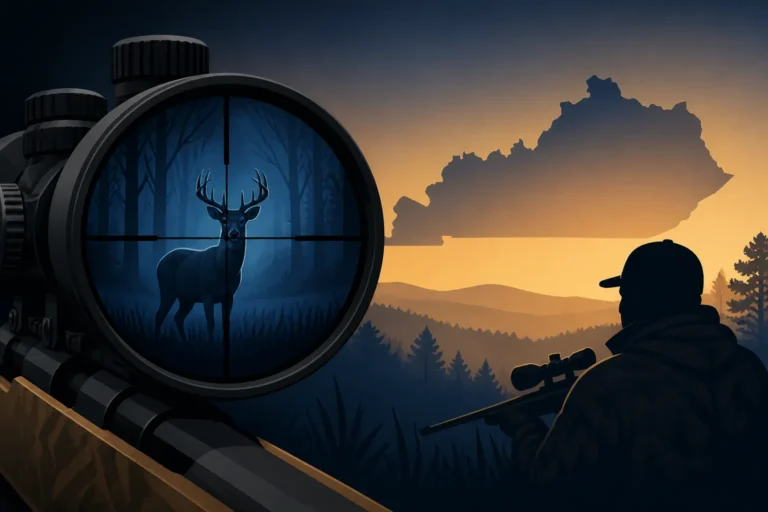
The best barrel length won't do you much good if your optics aren't suited for the environment. For thick cover, you rarely need high magnification. A low-power variable scope, something like a 1-4x, 2-7x, or 3-9x, is ideal. This allows for a wide field of view on the lowest setting for quick target acquisition in dense woods, while offering enough magnification for those slightly longer shots across a small clearing or food plot. Look for scopes with good light-gathering capabilities and a clear, uncluttered reticle, especially when hunting during early morning or late evening in Rifle Scopes for Low-Light Hollows.
Mount your scope as low as possible to the receiver for a comfortable cheek weld and a compact profile. Quick-detach scope rings can also be handy if you ever need to remove your optic in the field or want to swap between different setups. Additionally, a compact, reliable rangefinder is a smart accessory. Even in thick woods, knowing your exact distance to a deer, especially if you're navigating undulating terrain, can prevent misses and ensure ethical shots. Always remember to practice with your entire setup – rifle, scope, and sling – to become proficient before hitting the woods. A truly well-prepared hunter relies on more than just the rifle itself; they rely on their knowledge and their full complement of gear, which includes everything from their Boots for Kentucky Hollows and Creek Bottoms to their Slings for a Long Daniel Boone Forest Walk.
Disclaimer
This article is for general informational purposes only and does not constitute professional advice. Laws, prices and regulations vary by location and change over time. Consult a qualified professional for guidance on your specific situation.