Treestand Safety Gear for Steep Ground
Hunting from a treestand on Kentucky's often steep and unpredictable terrain can feel like you're constantly fighting gravity, and it's easy to get complacent or cut corners when you're tired, cold, or just eager to get to your spot. But the hard truth is that falls from elevated stands are a leading cause of serious injury, and sometimes even fatalities, for hunters. This guide is all about equipping you with the right knowledge and the absolute essential safety gear to ensure you climb high, hunt hard, and return home safely, especially when tackling those challenging, sloped setups.
The Non-Negotiable Core: Full-Body Harnesses and Continuous Attachment
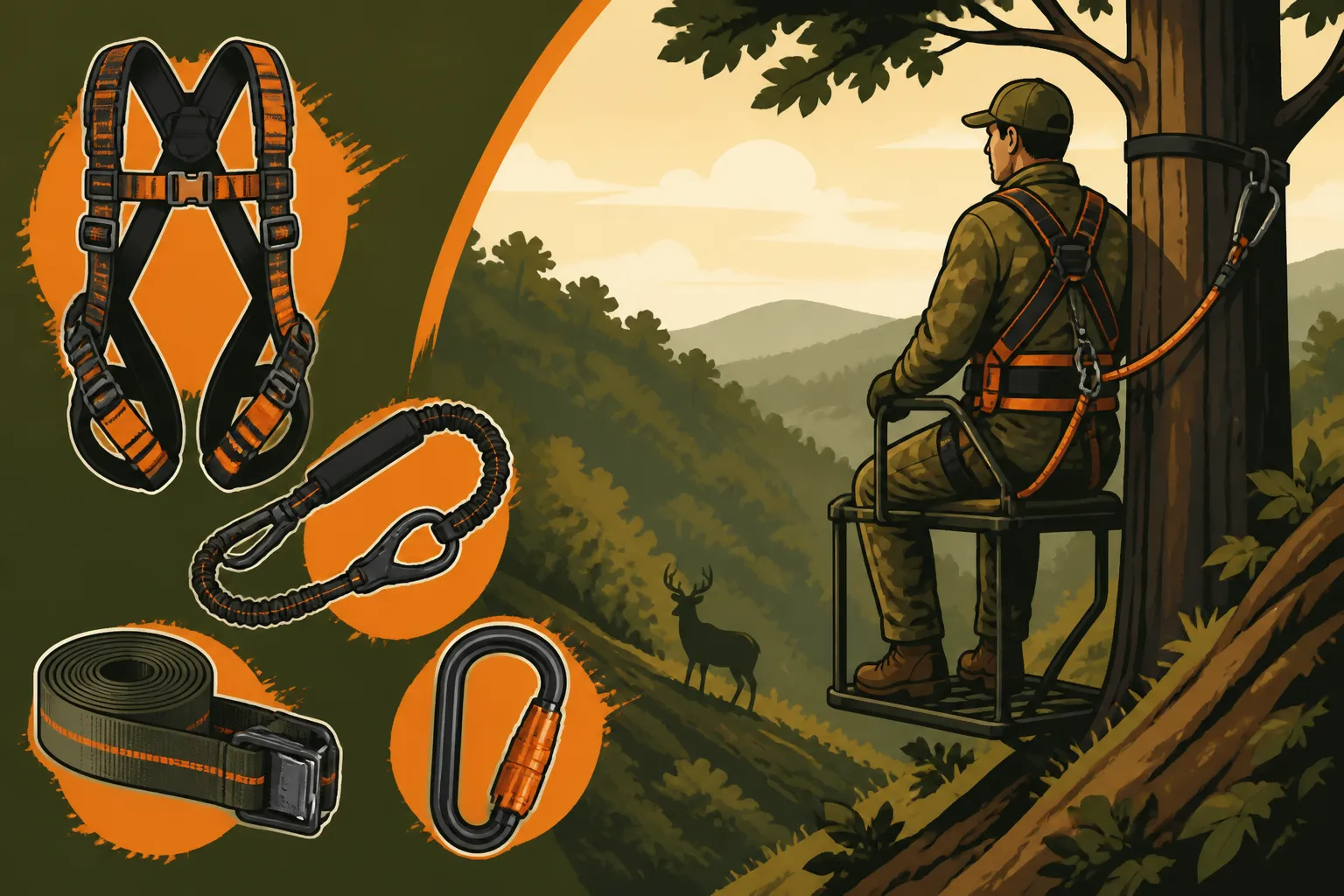
Let's just get this out of the way upfront: if you're hunting from any elevated position, a full-body harness isn't optional; it's absolutely mandatory. I know, I know. They can feel bulky, restrictive, and sometimes even a little inconvenient, especially when you're trying to layer up for a brisk November morning or when navigating thick brush on a steep hillside. But trust me, that momentary discomfort is nothing compared to the life-altering consequences of a fall. Your harness, combined with a proper lifeline system, is the single most critical piece of safety gear you own. This is especially true when you’re hanging a stand on an Eastern Kentucky Ridge where the ground might be a good 20 feet away vertically, but another 50 feet away horizontally down a steep slope if you were to fall.
Understanding Your Full-Body Harness
A modern full-body harness is designed to distribute impact forces across your entire body, protecting your vital organs and spine in the event of a fall. It's not like the old-school chest harnesses that could cause serious injury to your ribs or internal organs. When you put it on, ensure all straps are snug but not cutting off circulation. You should be able to slide a flat hand under the straps, but not a clenched fist. Pay close attention to the leg straps – these are crucial for keeping you upright and preventing you from slipping out. Many hunters find that a vest-style harness integrates better with their hunting clothes, making it feel less cumbersome. No matter the style, always check for frays, cuts, or worn stitching before each season.
Think about the unique challenges of Kentucky hunting, especially in the colder months. You might be wearing several layers of clothing to stay warm during a Cold-Weather Sitting Strategy in Kentucky, which can make a harness feel even more awkward. Practice putting your harness on over your hunting clothes at home, so you're not fumbling in the dark before dawn. The goal is for it to become second nature, something you do without even thinking, like checking your rifle's safety.
The Lifeline and Prusik Knot System
The full-body harness is only half the equation. The other, equally vital, half is the continuous lifeline system. This is what truly keeps you connected to the tree from the moment your feet leave the ground until you're safely back down. The standard setup involves a long rope that you secure around the tree above your stand, then tie a prusik knot onto it. This prusik knot is designed to slide freely when you're moving it intentionally but will cinch tight and arrest your fall instantly if you slip.
Imagine you're climbing up to your stand on a particularly tricky tree, perhaps one with some slippery bark after a rain shower, a common occurrence during Hunting the Kentucky Rut in Early November. Without a lifeline, if your foot slips or a climbing stick breaks, you're going all the way down. With a lifeline, you simply slide the prusik knot up as you climb, and if a fall occurs, it catches you within a few inches. This continuous attachment is the gold standard for treestand safety. It's easy to forget about, especially when you're trying to be quiet, but that moment of forgetfulness can be catastrophic. Make sure the rope is rated for outdoor use and matches the weight limits of your harness.
Lineman's Belt for Setup and Take Down
The lineman's belt is another critical piece of gear, particularly when you're actually hanging or removing a treestand on steep terrain. This short, adjustable strap allows you to secure yourself to the tree with both hands free, which is absolutely essential when you're wrestling with a heavy stand, tightening straps, or installing Climbing Sticks for Kentucky Hardwoods. On a steep slope, maintaining your balance while trying to maneuver a stand is incredibly difficult and dangerous.
I can't stress this enough: never try to hang a stand without using a lineman's belt. It gives you stability and prevents a fall while your hands are busy. You simply wrap it around the tree, clip it to your harness, adjust the length, and you're secure. This frees you up to work safely, whether you're securing a ladder stand, a climbing stand, or a hang-on stand to a tricky tree on a hillside. It's a small piece of gear that makes a huge difference in safety during the most vulnerable part of your treestand hunt – the setup. This is where tools like onX Layers for Kentucky Land Status or GoHunt can come in handy for scouting potential stand locations and understanding the topography before you even carry your gear in.
Essential Accessories for Added Security
While the full-body harness and continuous lifeline are your primary defense, several other pieces of gear can significantly enhance your safety and well-being in a treestand, especially on uneven ground. Don't overlook these; they can literally be lifesavers.
Suspension Relief Device
This little gadget is arguably as important as your harness, especially if you find yourself suspended after a fall. Suspension trauma, also known as "harness hang syndrome," is a real danger. If you're suspended motionless for too long, blood can pool in your legs, leading to organ damage, unconsciousness, and even death. A suspension relief device, often a small strap or loop that attaches to your harness, allows you to stand up in your harness, relieving pressure on your femoral arteries and keeping blood flowing.
You deploy it after a fall, stepping into the loops to push yourself up and alleviate pressure. Every minute counts if you're suspended, so knowing how to use this device quickly is critical. Practice deploying it at ground level so you're not trying to figure it out under duress after a fall. It's a simple, inexpensive addition that could prevent a bad situation from becoming fatal.
Properly Rated Climbing Sticks or Steps
Your means of getting up and down the tree are just as important as your harness. On steep ground, the angle of the tree and the unevenness of the earth below make every step critical. Using old, worn, or homemade climbing aids is a recipe for disaster. Invest in factory-made, properly rated climbing sticks or steps, and inspect them regularly for any signs of wear, cracks, or rust. Climbing Sticks for Rough Bark need to be particularly robust.
When installing them, ensure they are securely fastened to the tree and stable. On a hillside, you might need to adjust their placement more carefully to ensure a level step. Never skip steps, and always ensure three points of contact (two hands, one foot or one hand, two feet) as you ascend or descend. Remember that mud on your boots, ice, or wet bark can make climbing treacherous, so taking your time and being methodical is key. Consider carrying Rubber Boots for Bottomland Walking or boots with excellent traction for better grip on varied terrain.
Haul Ropes
It might seem basic, but a haul rope is an indispensable safety tool. Never, ever climb into or out of your treestand with your bow, crossbow, or rifle in your hands. It compromises your balance, occupies your hands, and increases the risk of a fall, not to mention potentially damaging your expensive gear. A simple, sturdy rope allows you to safely pull your gear up to your stand once you're secured, and lower it before you descend.
Make sure your haul rope is long enough for your stand height and strong enough to handle your heaviest piece of gear. Attach your weapon securely to the rope, climb up, attach your harness to your lifeline, then pull your gear up. Reverse the process when you're ready to leave. This simple practice dramatically reduces the risk of fumbling and falling. It's a small step that can prevent a big accident, particularly if you're already winded from climbing up a steep grade to your Treestand Setups in Daniel Boone National Forest.
Here's a quick checklist to help you keep track of your essential treestand safety gear:
| Gear Item | Purpose | Key Considerations |
|---|---|---|
| Full-Body Harness | Distributes fall impact, protects vital organs | Snug fit, no frays, inspect buckles, comfortable over layers |
| Continuous Lifeline | Keeps you attached to the tree from ground to stand | Proper length, secure attachment above stand, prusik knot functionality, regular inspection |
| Lineman's Belt | Hands-free safety during stand setup/takedown | Adjustable length, strong clips, always use when hands are busy with the stand |
| Suspension Relief Device | Prevents suspension trauma after a fall | Easy deployment, practice using it, crucial for prolonged suspension |
| Rated Climbing Aids | Safe ascent and descent to and from the stand | Sturdy, factory-made, secure attachment, regular inspection for wear/damage, appropriate for tree type |
| Haul Rope | Safely raises/lowers gear, keeps hands free during climbing | Sufficient length/strength, secure attachment to gear, always use for weapons/packs |
Pre-Season Checks and In-Field Practices
Having the right gear is only half the battle; knowing how to use it, maintaining it, and practicing safe habits are equally crucial. On steep Kentucky ground, where footing can be treacherous and a recovery difficult, these practices become even more important.
Thorough Gear Inspection
Before the season even begins, take the time to thoroughly inspect all your treestand safety gear. This isn't just a quick glance; it's a dedicated session. Look for:
- Harness: Check all webbing for frays, cuts, tears, or excessive wear, especially where straps go through buckles. Inspect stitching for any looseness or unraveling. Ensure all buckles, clasps, and D-rings are free of rust, corrosion, and deformities, and that they function smoothly.
- Lifeline and Lineman's Belt: Examine the ropes for nicks, cuts, frays, and weak spots. Look at the prusik knot itself for any signs of wear from use. Check the carabiners or clips for proper function and rust.
- Climbing Aids: For sticks, check welds, attachment straps, and steps for any damage or bending. For screw-in steps, look for rust, stripped threads, or bends.
- Stand Itself: Don't forget the stand. Check all straps, cables, welds, and nuts/bolts. Replace anything that looks suspect.
Remember, exposure to sunlight, rain, sweat, and extreme temperatures can degrade materials over time. Even if a piece of gear looks fine, if it's many years old, it might be time to replace it. Think of it as an investment in your life.
Practice Your Setup and Recovery
This is a step many hunters skip, but it's incredibly valuable. Before you're actually in the field, practice putting on your harness, attaching your lifeline, and climbing a small, accessible tree near your home. Go through the motions of hooking into your stand, and most importantly, simulate a fall.
Hang from your harness a few feet off the ground and practice deploying your suspension relief device. Get comfortable with it. Understand what it feels like to be suspended and how to use the device to relieve pressure. This practice builds muscle memory and confidence, so if a real fall ever happens, you'll react instinctively rather than panicking. It also helps you understand how long you might be able to hang comfortably, giving you an idea of how quickly you might need to self-rescue or call for help. Being prepared for this scenario, especially on remote public land areas such as Hunting the Redbird Ranger District or Finding Ground Others Walk Past, could be the difference between life and death.
Communicating Your Hunt Plan
Hunting, especially from a treestand in remote areas, often means being out of cell service. That's why communicating your hunt plan with someone you trust is paramount. Before you head out, tell someone:
- Where you're going: Be specific. Use landmarks, or better yet, share a pinpointed map location from an app like GoHunt. This level of detail is crucial if rescue services need to find you.
- When you expect to be back: Give a realistic return time.
- Who to call if you don't check in: Provide contact numbers for emergency services or local wardens if you don't return by your specified time.
- What you'll be doing: Mention you'll be in a treestand, which implies a higher risk if something goes wrong.
This isn't about being overly cautious; it's about being responsible. If you were to fall and become incapacitated, no one would know where to look. In a state like Kentucky, with vast tracts of rugged wilderness in places like the Big South Fork Kentucky Side Access, this simple step can save your life. You can even use the mapping features of apps like GoHunt to share your exact treestand locations with your emergency contacts, ensuring they have the most precise information possible.
Maintaining Your Equipment and Your Mindset
Hunting from treestands in Kentucky, particularly on its many steep hillsides and ridgelines, demands respect for the elevation and the environment. Your safety gear is your insurance policy, but like any policy, it's only good if it's current and you understand its terms.
Proper Storage and Care
Just like you wouldn't leave your rifle out in the rain, your treestand safety gear needs proper care. Store your harness, lifeline, and lineman's belt in a cool, dry place away from direct sunlight, chemicals, and pests. UV radiation can degrade webbing and ropes over time, weakening their integrity. If your gear gets wet or dirty, clean it according to the manufacturer's instructions and allow it to air dry completely before storing. Never use harsh chemicals or detergents that could damage the synthetic fibers.
Regular cleaning and proper storage extend the life of your equipment and ensure it's ready when you need it most. It also gives you another opportunity to inspect everything for wear and tear, catching potential issues before they become dangerous. This meticulous approach is part of being a prepared hunter, whether you're chasing deer during Kentucky's Statewide Modern Gun Season or just scouting out new ground.
Developing a Safety Mindset
Ultimately, treestand safety isn't just about the gear; it's about a mindset. It's about recognizing the inherent risks of hunting from elevated positions and taking proactive steps to mitigate them. Complacency is the enemy of safety. That feeling of "I've done this a thousand times" can be the most dangerous thought you have.
Every time you climb into a stand, treat it like the first time. Double-check your harness, ensure your lifeline is properly attached, and take your time. On steep ground, where uneven steps or muddy conditions are common, rushing can lead to a misstep. Don't be afraid to abort a hunt if conditions feel unsafe—if there's ice on your steps, or if you feel unwell. Your life is worth far more than any deer.
Consider these habits:
- Always use a haul rope: No exceptions, no matter how light your gear is.
- Maintain three points of contact: When climbing or descending, always have two hands and one foot, or one hand and two feet, in contact with the climbing aid or tree.
- Stay connected from the ground up: Your lifeline should be attached before your feet leave the ground and remain attached until your feet are back on terra firma.
- Check the weather: High winds, freezing rain, or heavy snow can make climbing extremely hazardous. Be aware of Wind and Thermals on a Kentucky Ridge and how they might affect your stand.
- Listen to your gut: If a setup feels unstable, or the tree doesn't look sound, find another spot.
A safety mindset means prioritizing your well-being over everything else. It means being disciplined enough to always use your gear correctly, even when it's inconvenient. After all, the best hunt is always the one where everyone comes home safe.
Disclaimer
This article is for general informational purposes only and does not constitute professional advice. Laws, prices and regulations vary by location and change over time. Consult a qualified professional for guidance on your specific situation.