Thermal and Night Vision Rules in Kentucky
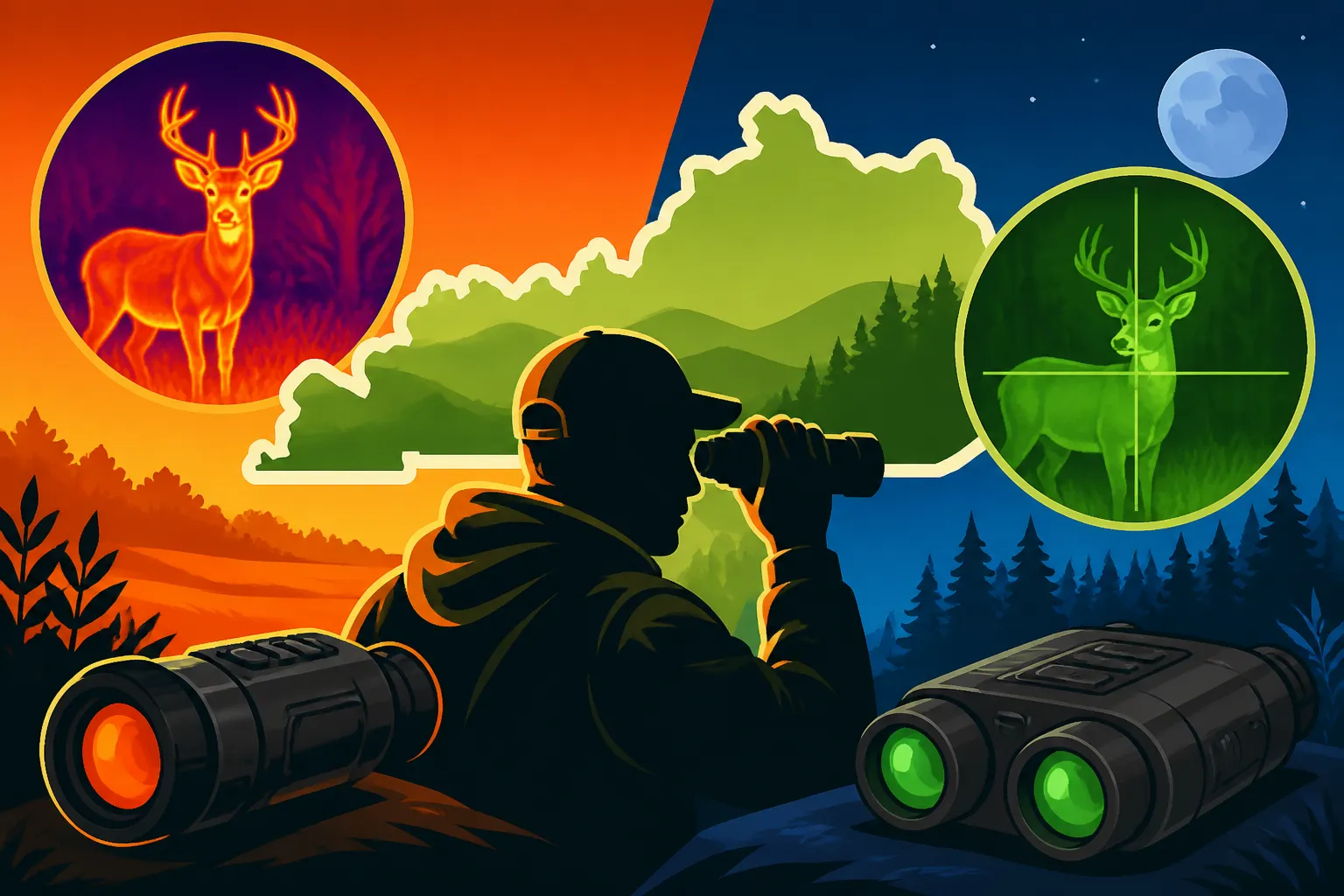
It's a common scenario: you're scrolling through social media or watching a hunting show, and suddenly you see hunters using incredible thermal or night vision devices. They make spotting game look effortless, especially in low light or complete darkness. Immediately, a question pops into your head: "Can I use that here in Kentucky?" The allure is undeniable, promising an edge you might feel you're missing. But the truth is, the rules around these advanced optics in the Bluegrass State are far more nuanced than many realize, and misunderstanding them can land you in serious trouble. This guide will walk you through Kentucky's regulations on thermal and night vision equipment, helping you understand what's legal, what's not, and why these distinctions exist.
The General Rules: Hunting Big Game and Small Game
Let's cut to the chase: for most traditional hunting seasons in Kentucky, especially when it comes to big game like deer, elk, or bear, the use of thermal imaging or night vision devices mounted on a weapon is generally prohibited. This rule is rooted deeply in the principles of fair chase and maintaining an ethical hunting standard. Kentucky's wildlife regulations aim to ensure that game animals have a reasonable chance to evade hunters, and advanced optics that turn night into day or reveal body heat greatly diminish that chance.
Imagine sitting in your favorite treestand during archery season, the light fading fast as twilight deepens. Without thermal, you're relying on your natural vision, perhaps some good quality binoculars, and your understanding of deer movement. You're waiting for that buck to step into a shooting lane before legal shooting light ends. Now, picture having a thermal scope. That buck, previously a shadowy form, would suddenly become a glowing target, visible long after you'd normally have to pack up. This significant advantage is precisely why the Kentucky Department of Fish and Wildlife Resources (KDFWR) has put these restrictions in place for most game animals. It's about preserving the challenge and the traditions of hunting. These devices are incredibly effective, almost too effective, when considering fair chase for typical hunting scenarios.
Exceptions to the Rule: Predator and Furbearer Hunting
While the general rule against thermal and night vision for big game holds firm, there are notable exceptions that hunters often overlook or misunderstand. Kentucky's regulations treat predator and furbearer hunting differently, recognizing the need for effective management of these species, especially those that can cause damage to livestock or property.
For species like coyotes, bobcats, foxes, and other furbearers, the use of night vision and thermal imaging devices is permitted, particularly when hunting at night. This exception makes a lot of sense if you think about it. Coyotes, for example, are largely nocturnal, and trying to effectively hunt them without some form of night optics is incredibly challenging, if not impossible, in many situations. Their populations can be robust, and controlling them helps protect deer fawns, turkey poults, and domestic animals. This distinction highlights that wildlife management often involves balancing recreational hunting opportunities with population control needs and landowner concerns. Just be absolutely certain of your target and what lies beyond it when using these devices at night, as misidentification can have severe consequences. Always verify your target thoroughly. You can learn more about specific regulations in Kentucky Coyote Hunting Season Rules.
Landowner Privileges for Nuisance Wildlife
Beyond specific species regulations, there's another crucial area where night vision and thermal might come into play: landowner defense. If you're a landowner experiencing significant depredation from certain species, the KDFWR often has provisions that allow for specialized methods of take, which may include night hunting with advanced optics. These situations are usually case-by-case and require specific permits or communication with the KDFWR. It’s not a blanket authorization; rather, it’s a tool for specific, documented nuisance issues. For instance, if you have coyotes consistently preying on your calves or lambs, and traditional daytime hunting isn't effective, working with the KDFWR might open up options for nighttime control. This isn't about recreational hunting but about protecting agricultural interests. Always consult directly with the KDFWR to understand the exact permissions and limitations for your specific situation.
Scouting and Observation Without a Weapon
Here’s an important clarification that many hunters miss: merely possessing or using thermal or night vision for observation or scouting is generally not illegal, provided it's not mounted to a weapon and you're not actively hunting a prohibited species with it. You can use these devices to locate game, understand their nocturnal patterns, or even track a blood trail after legal shooting hours (though recovering game after dark often has its own set of rules and ethical considerations).
Think about it: you might use a thermal monocular to scan a field edge from a distance before dawn, just to see if deer are moving in the area. Or perhaps you're out shed hunting, and you want to see if any deer are bedded nearby before you stumble upon them. This kind of observational use is often permissible. The key distinction is the "weapon-mounted" aspect and the intent to harvest. If the device gives you an unfair advantage at the moment of taking game, that's where the line is typically drawn. Tools like the GoHunt app are fantastic for understanding property lines and land types during the day, and a handheld thermal could complement that scouting by revealing hidden activity in low light without ever being part of the hunt itself.
The "Why" Behind the Rules: Fair Chase, Safety, and Perception
Understanding why these rules are in place can often help hunters better adhere to them. It's not just about making things difficult; there are solid ethical and practical reasons.
Preserving Fair Chase
The concept of "fair chase" is a cornerstone of ethical hunting in North America. It dictates that game animals should have a reasonable chance to escape. Hunting is not merely about killing; it's about the pursuit, the challenge, and the connection to nature. Thermal and night vision scopes provide such a significant technological advantage that they can strip away much of that challenge, essentially turning hunting into a highly efficient harvesting exercise rather than a test of skill, patience, and knowledge of the outdoors. This perspective is vital for maintaining the integrity of hunting as a sport and a conservation tool.
Public Perception and Hunter Ethics
Hunting operates with a "social license." This means that the privilege to hunt is granted by society, and it can be revoked if public opinion turns against it. Widespread use of technologies perceived as "unfair" or "over-the-top" can quickly erode public support for hunting. Images of hunters easily picking off animals in pitch darkness using advanced military-grade optics can be jarring to non-hunters and can fuel negative perceptions. By restricting these devices for most game, wildlife agencies like KDFWR are also safeguarding the future of hunting by ensuring it remains ethically defensible in the public eye. Ethical considerations around technology are often debated, and hunters themselves often hold strong opinions on what constitutes a fair advantage.
Safety Concerns
While less frequently cited than fair chase, safety also plays a role, especially in crowded public hunting areas. The ability to identify targets clearly and definitively is paramount for hunter safety. In low light or darkness, thermal and night vision can enhance target recognition, but they also bring new challenges. What if a thermal image picks up a heat signature, but the background or other environmental factors make positive identification of a legal animal, or what's behind it, impossible? Misidentification could lead to accidents. The KDFWR generally prefers that hunters rely on clear visual identification within legal shooting hours, minimizing risks associated with shooting at indistinct targets. Familiarizing yourself with Kentucky Public Land Hunting Hours is critical for legal and safe hunting.
Staying Legal: Your Responsibility
The onus is always on the hunter to know and follow the current regulations. "I didn't know" is never an acceptable defense when facing a wildlife violation.
Checking Current Kentucky Regulations
Wildlife regulations are not static; they can change. New technologies emerge, populations shift, and public feedback influences policy. Therefore, it is absolutely essential to consult the most current Kentucky Hunting and Trapping Guide published by the KDFWR. This guide is updated annually and is the definitive source for all legal regulations, including those pertaining to equipment. You can usually find it online on the KDFWR website, or pick up a physical copy wherever hunting licenses are sold. Do not rely solely on online forums, social media, or even a friend's interpretation of the rules, as information can quickly become outdated.
Here’s a simplified breakdown of common thermal/night vision scenarios in Kentucky:
| Activity / Species | Weapon-Mounted Thermal/Night Vision | Handheld Thermal/Night Vision for Scouting/Observation |
|---|---|---|
| Deer, Elk, Bear | Generally Illegal | Generally Legal (if not mounted to weapon/hunting) |
| Turkey, Small Game | Generally Illegal | Generally Legal (if not mounted to weapon/hunting) |
| Coyote, Bobcat, Fox (Predators) | Legal | Legal |
| Furbearers (e.g., raccoon, opossum) | Legal (for specific species/seasons) | Legal |
| Tracking Wounded Game (after legal hours) | Generally Legal (for observation, not taking) | Generally Legal |
| Landowner Nuisance Control | Potentially Legal (with KDFWR approval/permit) | Potentially Legal |
Always verify current regulations with the Kentucky Department of Fish and Wildlife Resources.
The Role of Hunter Education
Even if you're an experienced hunter, staying informed is part of your ongoing hunter education. If you're new to hunting, or bringing a first-timer out, understanding these rules is crucial. Hunter education courses in Kentucky cover not just firearm safety but also ethical hunting practices and basic regulations. While they might not delve into the minute details of every new piece of technology, they instill the principle that you must know the law. For those curious about learning more about general hunting ethics and rules, the Kentucky Hunter Education Requirements page is a great place to start.
Penalties for Violations
Ignoring these rules can have serious consequences. Using illegal equipment, like a thermal scope for deer hunting, could result in hefty fines, confiscation of your hunting equipment (including the device itself, and potentially your firearm or bow), loss of hunting privileges, and even jail time for severe or repeat offenses. Wildlife violations are taken seriously in Kentucky, and game wardens are well-versed in detecting illegal methods. It's simply not worth the risk. Understanding Kentucky Wildlife Violation Penalties can give you a clear picture of what's at stake.
Responsible Use of Technology
For activities where thermal and night vision are legal, such as predator hunting, responsible use remains paramount. Just because you can use it doesn't mean you should abandon all other ethical considerations.
Positive Identification is Key
Even with advanced optics, 100% positive identification of your target and what's beyond it is non-negotiable. Thermal shows heat signatures, but it doesn't always show fine details like antler points, species-specific markings, or a fence line beyond the animal. Night vision amplifies ambient light but can still create a monochromatic, sometimes grainy, image. Always take extra steps to ensure you know precisely what you're aiming at before pulling the trigger, especially when hunting at night. No shot is worth risking a mistake, whether it's shooting the wrong animal or endangering others.
Environmental Awareness
Kentucky's varied terrain, from the steep hollows of Daniel Boone National Forest to the open fields of Western Kentucky, presents different challenges. Using thermal or night vision in extremely dense cover, even for legal species, can still be risky if you cannot guarantee a clear shot path and backstop. Always be aware of your surroundings, potential hazards, and where your bullet or arrow will travel. Remember, a tool like GoHunt or other mapping resources can help you understand the terrain even in the dark by providing a mental picture of the topography and cover.
Public Land Versus Private Land
The rules regarding thermal and night vision apply consistently across both public and private lands in Kentucky. However, access to public lands often means navigating more potential human presence. When hunting predators with thermal on public land, be extra vigilant about other outdoor enthusiasts who might be out after dark. You'll want to be sure you are far from any camping areas or hiking trails. This is another reason why it's so important to be familiar with Finding Ground Others Walk Past and generally understanding hunting pressure, even at night.
Using thermal and night vision equipment in Kentucky hunting is a complex topic with clear lines drawn for ethical, safety, and wildlife management reasons. While the allure of these advanced optics is strong, the responsible hunter understands that adherence to the law and ethical principles always comes first. Always check the current KDFWR regulations, know your target and its surroundings, and choose to hunt in a way that respects the game, the land, and the future of hunting in Kentucky.
Disclaimer
This article is for general informational purposes only and does not constitute professional advice. Laws, prices and regulations vary by location and change over time. Consult a qualified professional for guidance on your specific situation.