Sleds and Drags for Ridge Country
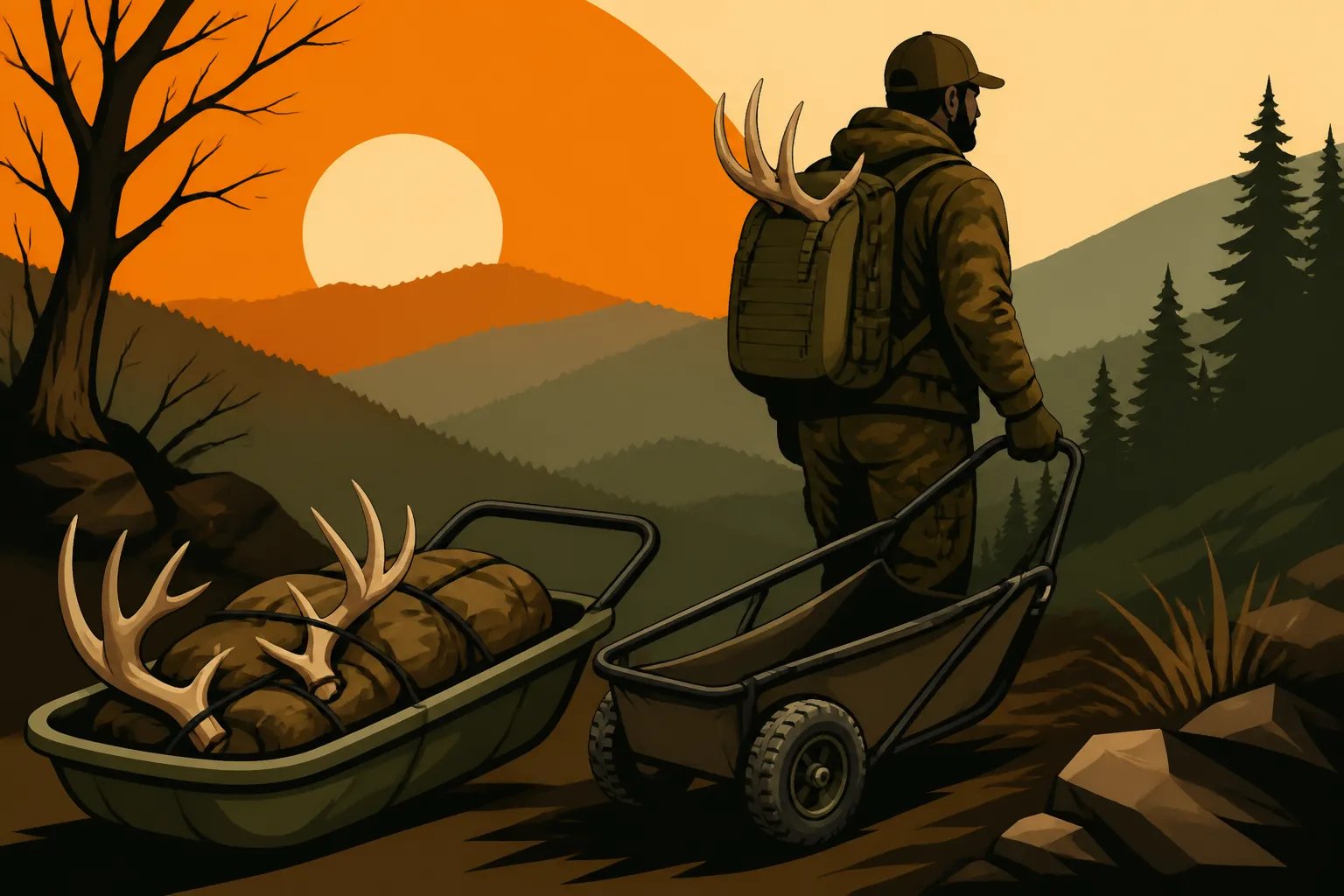
There's nothing quite like the rush of a successful hunt in Kentucky's rugged ridge country, but that euphoria can quickly turn to dread when you stare down a steep hollow at a downed deer. The reality of moving a mature whitetail buck or a hefty doe out of a remote, unforgiving landscape is a grueling task that many hunters underestimate. This guide is all about making that challenging retrieve a little less daunting by exploring the ins and outs of game sleds and drags – your best allies when gravity and terrain seem to be working against you.
The Unique Challenges of Kentucky Ridge Country
Anyone who has spent time hunting the eastern or central Kentucky hills knows that this isn't flatland hunting. The landscape is beautiful, no doubt, with its sweeping vistas and deep, timbered hollows, but it's also incredibly demanding on the body, especially after a successful shot.
Steep Inclines and Declines
Imagine you've just put down a fantastic buck near the bottom of a steep incline on a Daniel Boone National Forest ridge. The adrenaline is pumping, but then the cold reality sets in: you have to get that animal from the shaded creek bottom all the way up to a ridge-top logging road. The ground itself is often slick with fallen leaves, loose dirt, or even a thin layer of mud. Maintaining your footing, especially while pulling hundreds of pounds of dead weight, is a full-body workout that tests every muscle. Descending can be just as treacherous, with the risk of losing control and having the deer, or yourself, take an uncontrolled slide down the hill. We've all been there, struggling with a simple rope, hands burning, feet slipping, wondering if we should have just quartered the deer on the spot. But sometimes, especially early in the season or in less-than-ideal weather, you want to get the whole animal out. This is where dedicated tools become indispensable.
Dense Underbrush and Obstacles
Kentucky's ridge country isn't just steep; it's often incredibly thick. Think about those briar patches that seem to grab at your every step, the tangled honeysuckle, or the downed timber that's accumulated over years. Even an animal that's dressed out and lighter can get hung up on a small log or a stubborn sapling. Without a proper sled or drag system, every single one of these obstacles becomes a frustrating, energy-sapping battle. You might drag the deer a few feet, only for its antlers to snag on a low branch or its body to wedge against a rock. Then you're stopping, lifting, untangling, and starting all over again, burning precious energy and daylight. This is especially true when hunting areas like the Cumberland Mountains, where the woods can be notoriously dense.
Remote Access and Long Hauls
Many of Kentucky's best public hunting lands, like those within Daniel Boone National Forest, offer vast, remote areas that are far from vehicle access. You might walk a mile or more to reach your stand or still-hunt a ridge for hours before encountering game. While this offers incredible solitude and a true wilderness experience, it also means that a successful harvest can necessitate an extremely long haul back to the truck. Carrying a heavy pack, your weapon, and then trying to drag a deer often means multiple trips or an overnight stay if you're not prepared. The thought of a long, arduous drag through difficult terrain can even make some hunters pass on a shot if they're not confident in their retrieval plan. It's a real dilemma, and it highlights why proper gear isn't just a convenience, but a necessity for safe and efficient game retrieval.
Why a Game Sled is a Ridge Hunter's Best Friend
When faced with the daunting prospect of moving a deer through challenging Kentucky terrain, a game sled isn't just an accessory; it's a fundamental piece of gear that can turn an impossible task into a manageable one.
Reducing Friction and Effort
The primary benefit of a game sled comes down to basic physics: reducing friction. When you drag a deer directly on the ground, the entire surface area of its body, especially the fur, creates significant resistance against whatever surface you're pulling it over. Every leaf, every twig, every patch of mud or rock grabs and holds. A good game sled, typically made from durable, slick plastic or polyethylene, acts as a low-friction barrier between the animal and the ground. It allows the deer to glide over obstacles rather than getting hung up. This difference is immediately noticeable, especially on a longer haul or when traversing tricky spots. Instead of constantly battling the terrain, you're channeling your effort primarily into forward motion. You'll find yourself making much more consistent progress, even up those grueling inclines.
Protecting Your Harvest
Beyond making the drag easier, a sled performs a critical function in preserving the quality of your hard-earned venison. When a carcass is dragged directly, it picks up all sorts of debris: dirt, mud, leaves, pine needles, and even small stones. This contamination not only makes the butchering process messier but can also introduce bacteria, potentially impacting the meat's flavor and shelf life. A sled keeps the entire animal elevated off the ground, encapsulating it from the worst of the elements. It prevents the hide from tearing or becoming excessively abraded from sharp rocks or rough roots, which can be an issue if you plan to get your hide tanned. A clean harvest is a good harvest, and a sled is one of the best ways to ensure that the meat from your Kentucky whitetail reaches your table in prime condition.
Versatility for Different Terrains
Kentucky's weather and terrain are incredibly varied, and a good game sled proves its worth across the spectrum. While often associated with snow, sleds excel on wet leaves, which can be surprisingly slick, allowing the sled to glide efficiently. On dry leaves, they still offer a significant advantage over direct dragging. When you hit muddy patches in creek bottoms or low-lying areas, the sled keeps the deer relatively clean and prevents it from bogging down. Even over rocky ground, the durable plastic acts as a shield, protecting the animal's hide and making it easier to maneuver over uneven surfaces. Some larger, more robust sleds can even double as gear haulers on the way into your spot, allowing you to bring in more essential items for a comfortable hunt, especially if you're hunting deeper in the woods. You can stack your Packs for a Daniel Boone Forest Day Hunt or a portable treestand inside for easy transport before the real work begins.
The Power of a Good Drag or Harness System
While a sled provides the crucial low-friction surface, the other half of the equation for efficient game retrieval is how you actually connect yourself to that load. A well-designed drag or harness system is often overlooked, but it's just as vital as the sled itself, particularly when traversing steep or uneven ground.
Ergonomics and Weight Distribution
Imagine trying to drag a heavy deer with just a rope held in your hands. Your grip fatigues quickly, your back takes all the strain, and you have no free hands for balance or to carry your rifle or bow. This is where a proper drag or harness system shines. Instead of concentrating all the pulling force on your hands or a single point on your back, these systems distribute the weight across your strongest muscle groups: your shoulders, chest, and hips. A vest-style shoulder harness, for instance, mimics a small backpack, allowing you to lean into the pull with your entire upper body. A sturdy waist belt with a drag strap uses your core and leg strength, keeping your hands free to grab saplings for balance, push off obstacles, or safely carry your weapon. This ergonomic design drastically reduces fatigue, prevents specific muscle groups from burning out, and minimizes the risk of injury. It means you can tackle those long, steep pulls through areas like eastern Kentucky ridges with greater control and less overall exhaustion.
Solo Hunting Advantages
For many of us, hunting is a solitary pursuit. We venture out alone, relish the quiet, and often find ourselves a long way from help when the moment of truth arrives. A quality drag or harness system, especially when paired with a game sled, empowers the solo hunter to retrieve even a large deer without assistance. Trying to manhandle a mature buck by yourself up a steep, muddy slope with just a rope is not only incredibly difficult but also potentially dangerous. A harness allows you to maintain balance, control the load, and take deliberate, powerful steps. You can use your entire body weight, not just your arm strength, to move the animal. It might still be slow going, requiring frequent breaks, but it becomes achievable. This capability is liberating for solo hunters, allowing them to pursue game in more remote and challenging terrain without the constant worry of how they'll get their trophy out. It truly transforms the logistical nightmare of a solo harvest into a rewarding test of grit and preparation.
Partnering Up for Easier Retrieval
While excellent for solo efforts, drag and harness systems truly excel when you can enlist a hunting partner. With two people, the combined effort dramatically reduces the strain on each individual. One person can pull from the front, setting the pace and navigating obstacles, while the other can push from the back or assist with lifting over particularly stubborn terrain. A simple, robust drag rope with handles on both ends allows for easy two-person pulling, or even three if you can connect multiple points to the sled. When you're attempting a challenging retrieval, such as Dragging a Deer Out of a Steep Hollow, coordination is key. With a solid harness on the lead person and strong drag handles for the follower, you can communicate, maintain a steady pace, and tackle obstacles far more effectively than either hunter could alone. It means you can cover ground faster, reducing the time the animal is exposed to the elements and allowing you to get back to camp or home sooner, with less wear and tear on your bodies.
Choosing the Right Sled and Drag for Your Hunt
Navigating the various options for game retrieval can feel a bit overwhelming, but understanding the key features and types of sleds and drags will help you select the perfect setup for your Kentucky hunting adventures.
Sled Features and Considerations
When picking out a game sled, you're looking for a balance of durability, size, and ease of use.
- Size: Sleds come in various lengths and widths. For typical Kentucky whitetails, a sled between 60 and 80 inches long is usually sufficient. A smaller sled might be lighter but could leave parts of a larger deer exposed, especially the head or legs, to snag on brush. Larger sleds offer more protection and can handle bigger animals, but they can be more cumbersome to carry in when empty. If you're hunting in the elk restoration zone and somehow manage to draw a tag, you might need something truly substantial, or even consider quartering the animal.
- Material: Most quality game sleds are made from robust polyethylene plastic. Look for a material that is flexible enough to bend over uneven terrain without cracking in cold weather, but rigid enough to maintain its shape and offer protection. Thicker gauge plastic will generally last longer but will also be heavier.
- Attachment Points: Good sleds will have pre-drilled holes or molded attachment points around the perimeter, especially at the front. This allows you to thread a heavy-duty rope for pulling and to secure the animal inside the sled with additional straps or cordage. Look for reinforced eyelets or strong molded loops.
- Portability: Remember, you have to get the sled into your hunting area. Some sleds are designed to be rolled up or folded for easier transport. Others might be rigid but lightweight enough to strap to your pack or carry over your shoulder without too much hassle. Consider the length of your walk-in and the terrain you'll encounter on your way to your stand.
Drag and Harness Types
The pulling mechanism is just as important as the sled itself.
- Simple Rope Drags: A strong, heavy-duty rope is the simplest form of drag. Look for synthetic ropes that are less likely to rot or fray. Having a loop tied at one end or a sturdy handle allows for easier pulling by hand, but this is the least ergonomic option for long distances or heavy loads.
- Shoulder Harnesses: These resemble a vest or a small backpack, distributing the pulling force across both shoulders and your back. Many come with adjustable straps to fit various body types and allow you to lean into the load, using your body weight more effectively. They are excellent for single-person drags, freeing up your hands for balance or carrying your weapon.
- Waist Belts with Drag Straps: A heavy-duty waist belt with a strong attachment point for a drag strap or rope is another popular option. This focuses the pulling power on your hips and legs, which are powerful muscle groups, again leaving your hands free. Some hunters find these more comfortable than shoulder harnesses, especially if they are already carrying a heavy pack.
- Combined Systems: Many hunters combine a high-quality sled with a dedicated shoulder or waist harness for optimal efficiency. The sled provides the low friction, and the harness provides the ergonomic pulling power.
- GoHunt and other reputable outdoor retailers offer a wide selection of these specialized retrieval tools. It’s worth exploring their product descriptions and user reviews to find what best fits your hunting style and the specific challenges of your Kentucky hunting grounds.
DIY Solutions and Field Expedients
Sometimes, despite our best intentions, we find ourselves without the perfect gear. Knowing how to improvise can save a hunt.
- Tarps or Contractor Bags: In a pinch, a heavy-duty tarp or a thick contractor bag can serve as a makeshift sled. Lay the deer on the tarp, wrap it up, and secure it with rope or even your belt. While not as slick or durable as a purpose-built sled, it's far better than nothing, especially for keeping the animal clean.
- Makeshift Drags: Your belt, extra rope from your pack, or even sturdy tree vines can be used to create a basic drag. The key is to create a loop that allows you to pull without constantly gripping a thin line, which will quickly become painful. You can tie a stick into a loop of rope to create a handle, for example.
- Limitations: While these field expedients can work, they often come with limitations. They might tear, offer less friction reduction, or be less comfortable to use. They are best for shorter, less challenging retrieves. A purpose-built sled and drag system, like those you can research on GoHunt, are always superior for minimizing effort and maximizing the safety and cleanliness of your harvest, especially if you're venturing deep into Hunting Eastern Kentucky Coalfield Country where rough terrain is the norm.
| Sled/Drag Type | Pros | Cons | Ideal Use Case |
|---|---|---|---|
| Game Sled (Rigid) | Low friction, protects carcass, durable | Bulky to carry in, can be heavy | Long hauls over varied terrain, protecting meat, solo or group retrieval |
| Game Sled (Foldable) | More portable to carry in, protects carcass | Less durable than rigid, less stable with heavy loads | Medium hauls, easier pack-in, solo or group retrieval |
| Shoulder Harness | Ergonomic, frees hands, distributes weight | Can restrict upper body movement, some learning curve | Solo retrieval, steep inclines, uneven ground, paired with a sled |
| Waist Belt Drag | Uses strong leg/hip muscles, frees hands | Less comfortable for some, can ride up/down | Solo retrieval, long, flatter drags, paired with a sled |
| Simple Rope Drag | Lightweight, easy to pack, inexpensive | Poor ergonomics, hand fatigue, less control | Short, easy drags, emergency use, group pulls with multiple ropes |
| Tarp/Bag (DIY) | Extremely portable, keeps clean (somewhat) | Tears easily, higher friction, less control | Emergency only, very short drags, flat ground, light animals |
Mastering the Art of Game Retrieval in Steep Terrain
Having the right gear is only half the battle; knowing how to use it effectively and strategically can make all the difference when you're facing a tough retrieve in Kentucky's challenging landscape.
Scouting for Extraction Routes
The most effective game retrieval starts long before you even pull the trigger. Savvy hunters spend time scouting not just for game sign, but also for the easiest ways to get an animal out. This is particularly crucial in steep, broken country. Before the season, or even during your hunt, take note of potential "escape routes" or retrieval corridors. These might be:
- Saddles and Ridge Lines: Often, the easiest path between two hollows is over a saddle. Ridge lines, while sometimes long, can offer gentler slopes than plunging straight down into a valley.
- Old Logging Roads and ATV Trails: These are golden. Even if overgrown, they provide a much smoother, less obstructed path than raw timber. Keep an eye out for these on your maps.
- Contour Lines: Use mapping apps like the Kentucky Hunt Fish App or a good old-fashioned topographical map. Identify areas where contour lines are spread farther apart, indicating a less steep slope. Sometimes, adding a little distance to your drag by going around a particularly steep bluff can save hours of grueling effort and keep you safer.
- Natural Breaks: Look for areas with less dense underbrush, fewer rock outcroppings, or sections where the timber is more open.
By having a mental (or even marked on your GPS) plan for extraction, you can orient your shot to drop an animal closer to an easier path, or at least avoid the absolute worst places. This proactive approach is a cornerstone of responsible hunting in demanding terrain.
Safe and Efficient Techniques
Even with the best sled and harness, retrieving a deer from steep country is hard work. Doing it safely and efficiently means employing smart techniques.
- Descending: When pulling downhill, gravity is your friend, but also your foe. The key is controlled descent. With the deer in the sled, position yourself in front, facing uphill, and slowly back down the slope. This allows you to brace yourself, control the speed, and use your legs to absorb shock. If using a two-person drag, the person in front acts as an anchor, while the person behind can push and guide. Keep your body low, use trees or saplings for handholds, and take small, deliberate steps. Watch your footing carefully, especially on loose leaves or wet ground, to prevent an uncontrolled slide.
- Ascending: This is often the most grueling part. Take short pulls, then rest. Use natural benches, downed logs, or sturdy trees to brace yourself between pulls. When working uphill, face forward, lean into your harness, and use your leg power. If you have a partner, one can pull while the other pushes from behind, or you can take turns. Don't be afraid to take frequent, short breaks. Stay hydrated, even in cold weather. It's not a race; it's about steady, safe progress.
- Navigating Obstacles: For larger logs or rocks, you might need to lift the front of the sled over them. If the sled has sides, this helps prevent the deer from tumbling out. For dense brush, sometimes it's easier to lift the animal a bit to glide over the top, or have a partner clear a path. If possible, go around obstacles rather than trying to power through them. Remember the importance of proper footwear for Boots for Kentucky Hollows and Creek Bottoms to maintain grip and support.
Post-Retrieval Care and Maintenance
Once your prize is safely back at the truck, your work isn't quite done. Proper care of your retrieval gear will ensure it lasts for many seasons to come.
- Cleaning: Immediately after use, clean your sled and drag system. Deer blood, hair, mud, and leaves can dry and become difficult to remove. A simple hose-down with water, perhaps with a mild soap, will usually suffice. Make sure to get into any crevices on the sled and thoroughly rinse your harness and ropes.
- Inspection and Repair: While cleaning, inspect your gear for any damage. Check the sled for cracks, especially around attachment points. Look for fraying on ropes or straps, or worn stitching on harnesses. It's much better to identify and repair minor damage now than to discover a broken strap when you're two miles deep in the woods with a deer on the ground.
- Storage: Once clean and dry, store your sled and drag system in a cool, dry place out of direct sunlight. UV rays can degrade plastic and synthetic fabrics over time. Hanging harnesses can prevent creases and extend their life. Proper storage ensures your gear is ready for action the next time you head out for Hunting the Kentucky Rut in Early November or Hunting Kentucky's Record Elk Herd, confident that you have the means to get your animal out.
Disclaimer
This article is for general informational purposes only and does not constitute professional advice. Laws, prices and regulations vary by location and change over time. Consult a qualified professional for guidance on your specific situation.