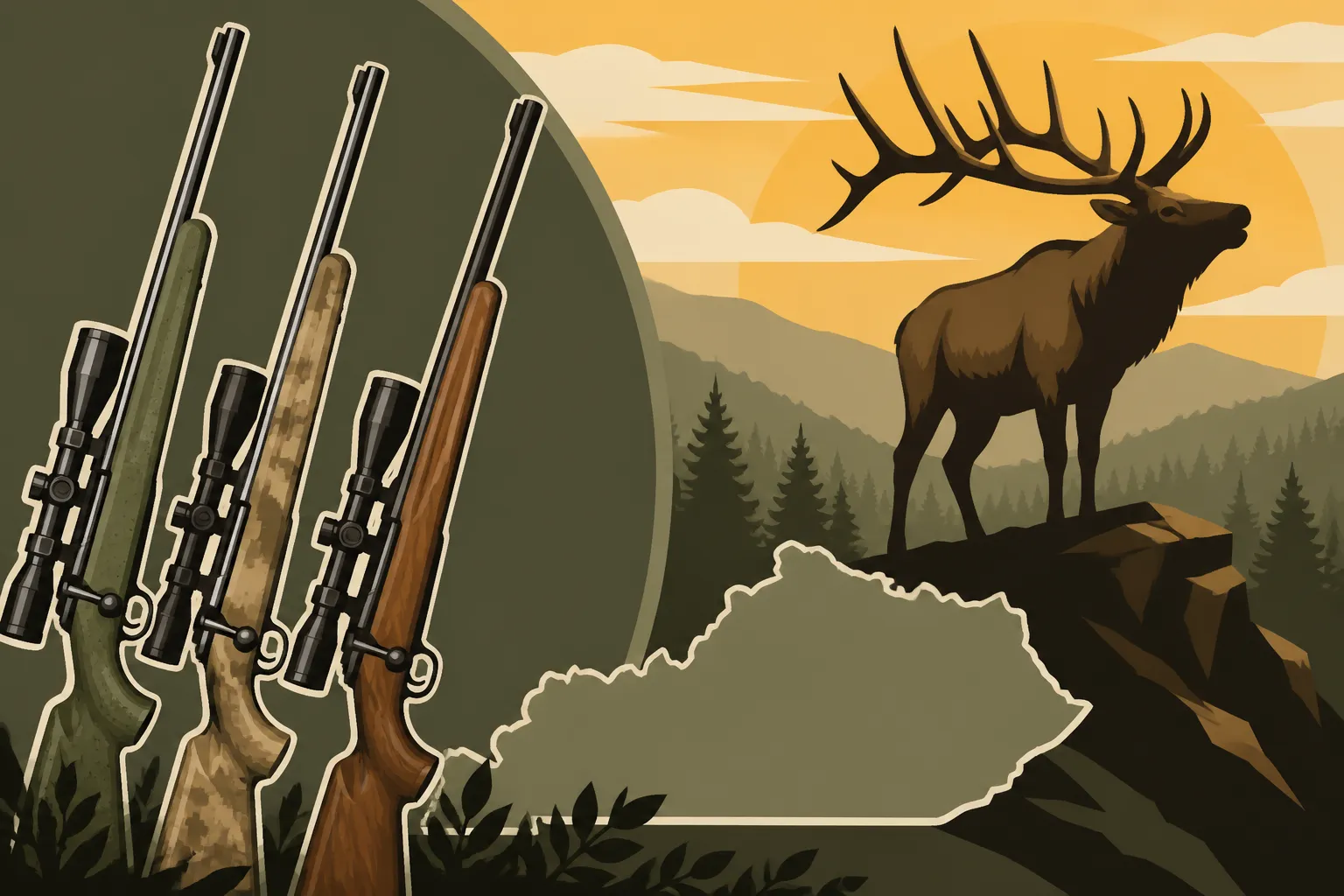
Rifles Built for a Southeastern Elk Hunt
Hunting Kentucky's majestic elk can be an experience unlike any other, but it comes with its own unique challenges, particularly when it comes to choosing the right rifle. Many hunters coming from deer country might think their go-to whitetail rifle is sufficient, only to find themselves under-gunned or ill-prepared for the sheer size and rugged habitat of Kentucky's elk. This guide will help you understand the specific demands of a southeastern Kentucky elk hunt and how to build a rifle system that gives you the best chance for success.
The Unique Demands of Kentucky Elk Hunting
Let's face it, taking down a Kentucky elk isn't like dropping a whitetail in a food plot. These animals are significantly larger, tougher, and often found in some of the most challenging terrain our state has to offer. Ignoring these realities when selecting your rifle is a recipe for disappointment, or worse, a lost animal. It's crucial to approach this with the respect and preparation an animal of this magnitude deserves.
Understanding Kentucky's Elk Terrain
Kentucky's elk herd thrives in the rugged, reclaimed strip-mine lands and dense, mountainous forests of our southeastern counties, particularly within the designated Elk Restoration Zone. We're talking about areas with steep hillsides, thick brush, deep hollers, and often, very limited visibility. You might be climbing rocky inclines one moment and navigating through chest-high briars the next. This isn't flat, open plains hunting. The environment itself dictates much of what you'll need in a rifle.
Imagine an early morning, still-hunting through a thick stand of timber on a cold November day, when you suddenly spot a bull at 75 yards through a small window in the trees. Your shot will be quick, likely off-hand or with a hastily deployed shooting stick, and it needs to be precise. Later that same day, you might be glassing an open, reclaimed meadow, spotting an elk at 300 yards. Your rifle needs to be versatile enough to handle both these scenarios and everything in between. The weight and maneuverability of your chosen firearm become paramount when you're covering miles on foot in this unforgiving landscape. Trust me, every extra pound feels like five after a few hours of climbing.
Shot Distances and Target Zones
While Kentucky doesn't have the vast, open vistas of some western elk states, you can still encounter a wide range of shot distances. In the dense timber and thickets, shots might be as close as 50 yards. However, when an elk breaks cover onto a reclaimed mine bench or crosses a clear-cut, those distances can easily stretch to 250, 300, or even 400 yards. You need a rifle that can consistently deliver lethal energy at these extended ranges.
An elk’s vitals are a much larger target than a deer’s, but they are also protected by heavier bone and muscle. Your bullet needs to penetrate deeply to reach the lungs and heart. A marginal hit on a whitetail might result in a long track, but a marginal hit on a 700-pound bull elk can mean a lost animal and a lot of heartache. This is why caliber choice and bullet construction are so critical. You're not just looking to "hit" the elk; you're looking to anchor it cleanly and quickly, especially in terrain where tracking can be a nightmare. It’s a lot to consider, but getting it right ensures a more ethical hunt. Hunting Kentucky's Record Elk Herd is a great resource to get a sense of what you're up against.
Key Rifle Caliber Considerations for Kentucky Elk
Choosing the right caliber for a Kentucky elk hunt is one of the most debated topics among hunters. There's a fine line between having enough power and having excessive recoil that affects your accuracy. The goal is to maximize terminal performance while maintaining shot placement confidence.
The "Minimum" vs. "Optimal" Caliber Debate
When discussing minimums, many would point to calibers around the .270 Winchester or 7mm-08 Remington as suitable for elk, especially with modern bullet technology. These calibers can be effective with careful shot placement and premium bullets, particularly for cow elk or close-range bull encounters. However, relying on a "minimum" can leave you feeling underprepared when that once-in-a-lifetime bull steps out at an awkward angle or longer range. For Kentucky's robust bull elk, aiming for an "optimal" caliber provides a much greater margin for error and quicker, more humane kills.
The optimal range generally starts with calibers like the .30-06 Springfield, .300 Winchester Magnum, .338 Winchester Magnum, or even the 7mm Remington Magnum. These cartridges deliver significantly more energy and penetrate deeper, making them far more forgiving if your shot isn't absolutely perfect. Remember, a bigger animal often means more stress and adrenaline, and anything that helps you make a clean kill is worth considering. This is where researching Rifle Calibers for Kentucky Elk becomes absolutely essential before you commit to a purchase.
Popular and Proven Calibers
Let's dive into some of the workhorse calibers that Kentucky elk hunters consistently rely on:
- 30-06 Springfield: Often called the "universal hunting cartridge," the .30-06 is a fantastic choice for Kentucky elk. It offers a good balance of power, manageable recoil, and a wide array of excellent bullet options. It's readily available, and most hunters are familiar with its characteristics. You can find heavier bullet weights (180-200 grains) that perform admirably on elk. It’s a classic for a reason.
- 7mm Remington Magnum: This cartridge provides a flatter trajectory and higher velocities than the .30-06, making it excellent for those longer shots across reclaimed clearings. It uses smaller diameter bullets, but they tend to be very efficient and offer fantastic penetration. Recoil is a bit snappier than the .30-06, but still manageable for most shooters.
- 300 Winchester Magnum: When you want more "thump," the .300 Win Mag delivers. It's a powerful cartridge, known for its flat trajectory and high energy delivery at extended ranges. It's a solid choice for big bulls, but the recoil is noticeably heavier, so make sure you're comfortable and proficient with it. Practicing with this caliber is non-negotiable to ensure accuracy under pressure.
- 338 Winchester Magnum: If you want absolute authority, the .338 Win Mag is a top-tier elk slayer. It hits incredibly hard and provides tremendous penetration. It's certainly not for the faint of heart due to significant recoil, but for those who can shoot it accurately, it's an exceptional choice for the biggest of bulls. You will seldom hear stories of a .338 Win Mag being "too much" gun for a Kentucky elk.
Ammunition Selection for Elk
Choosing the right ammunition is just as critical as selecting the right caliber. Not all bullets are created equal, especially when it comes to taking down an animal as large as an elk. You'll want to prioritize premium, controlled-expansion bullets designed for large game.
Here are the key characteristics to look for:
- Controlled Expansion: You want a bullet that expands reliably but doesn't fragment excessively. Bullets like Nosler AccuBond, Hornady InterBond, Barnes TSX/TTSX, Swift A-Frame, or Federal Premium Trophy Bonded Tip are excellent examples. These bullets are designed to retain a high percentage of their weight, ensuring deep penetration through muscle and bone to reach the vital organs. Avoid varmint or thin-jacketed deer bullets; they simply won't cut it.
- Bullet Weight: For elk, lean towards the heavier end of the spectrum for your chosen caliber. For a .30-06, think 180 grains or even 200 grains. For a 7mm Rem Mag, 160-175 grains. Heavier bullets retain energy better at longer distances and offer superior penetration.
- Consistency: Once you find a bullet that performs well in your rifle and meets the expansion criteria, stick with it. Practice extensively with that exact load. Consistency in your ammunition choice helps build confidence and familiarity, which is invaluable when a trophy bull steps out. When you're using a planning tool like GoHunt to scout areas in the Elk Zone, you want to be utterly confident in your gear.
| Caliber | Common Bullet Weights (Grains) | Pros | Cons |
|---|---|---|---|
| .270 Winchester | 130-150 | Light recoil, flat trajectory | Marginal for large bulls, requires premium bullets |
| 7mm-08 Remington | 140-160 | Light recoil, good for smaller hunters | Marginal for large bulls, limited range for elk |
| .30-06 Springfield | 165-200 | Versatile, proven, manageable recoil, widely available | Not as flat-shooting as magnums |
| 7mm Remington Magnum | 160-175 | Flat trajectory, high energy, excellent penetration | Snappier recoil than .30-06, can be loud |
| .300 Winchester Magnum | 180-200+ | Powerful, flat-shooting, strong energy retention | Significant recoil, not ideal for recoil-sensitive shooters |
| .338 Winchester Magnum | 200-250+ | Maximum stopping power, deep penetration | Heavy recoil, heavier rifles often needed |
Rifle Features That Matter in the Elk Zone
Beyond caliber, the rifle itself plays a huge role in your success and comfort. A poorly balanced rifle, a flimsy stock, or a barrel that's too long can turn a challenging hunt into a miserable one. Kentucky's elk country will test your gear, so make sure your rifle is up to the task.
Weight, Balance, and Maneuverability
When you're climbing those steep hills and navigating through dense rhododendron thickets, every ounce matters. A heavy rifle might feel stable on the bench, but it becomes a lead weight after a few hours of hiking. Conversely, a rifle that's too light can be harder to hold steady for off-hand shots, especially after you've been exerting yourself.
The sweet spot for an elk rifle often lies in the 7-8.5 pound range without optics. This allows for comfortable carry, but still provides enough mass to absorb some recoil and aid in steady aiming. Balance is also key; a rifle that feels natural in your hands and shoulders quickly will be a huge asset when a quick shot presents itself. Consider a good quality sling, too, as it will be your best friend for long treks. Check out Slings for a Long Daniel Boone Forest Walk for some excellent options.
Barrel Length and Twist Rate
Barrel length is a trade-off between velocity and maneuverability. Longer barrels generally provide slightly higher muzzle velocities, which can translate to better ballistic performance at longer ranges. However, a 26-inch barrel can be a real hindrance in dense cover, constantly snagging on branches and making quick transitions difficult. For Kentucky's typical elk habitat, a 22-inch to 24-inch barrel is often a more practical choice. It offers a good compromise, still delivering excellent velocity with magnum cartridges while remaining much more agile in the woods.
Twist rate refers to how quickly the rifling in the barrel rotates the bullet. It's crucial for stabilizing heavier, longer bullets. Most factory rifles in magnum calibers will have appropriate twist rates for elk-specific bullet weights, so this is usually less of a concern unless you're handloading or using specialty bullets. Just ensure that the bullet weight you choose for your factory rifle matches the recommended twist rate to ensure optimal accuracy.
Stock Materials and Durability
Your rifle stock needs to be able to withstand the bumps, scrapes, and occasional falls that are almost inevitable when hunting in rugged country. Synthetic stocks made from materials like fiberglass, carbon fiber, or modern polymers are often preferred over wood for elk hunting. They are generally lighter, impervious to changes in temperature and humidity (which can cause wood stocks to warp and affect accuracy), and far more durable.
While a beautiful walnut stock certainly has its appeal, the practicalities of an elk hunt often favor a robust synthetic option. You'll be crossing creeks, scrambling over rocks, and pushing through thorny brush. A composite stock will handle these abuses without complaint, allowing you to focus on the hunt itself. Brands like GoHunt often feature custom rifle builds with these durable stock options, recognizing the needs of serious backcountry hunters.
Optics and Accessories to Complement Your Elk Rifle
A powerful rifle is only as good as the shooter behind it, and the tools that help that shooter see clearly and estimate range accurately are just as vital. Don't skimp on your optics for an elk hunt; they are your eyes in the field.
Choosing the Right Scope Magnification
For an elk hunt in Kentucky, a versatile scope is key. While high magnification might seem appealing for long shots, too much power can be a detriment in close-quarters encounters or low light. A common and highly effective magnification range is a 3-9×40, 3-10×40, or even a 4-12×40/44.
- Lower Magnification (3x-4x): This is your bread and butter for navigating dense timber. It provides a wide field of view, making it easy to acquire a moving target quickly. In the dim light of early morning or late evening, lower magnification also allows more light gathering, giving you a brighter sight picture.
- Higher Magnification (9x-12x): Useful for those longer shots across clearings or for making a precise shot when an elk is feeding calmly. It allows you to place your crosshairs exactly where they need to be.
The important thing is clarity and reliability. Invest in a reputable brand with good light transmission, robust construction, and reliable tracking adjustments. You don't want your scope to fog up or lose zero after a tumble. For more on this, look into Rifle Scopes for Low-Light Hollows.
Enhancing Accuracy with Bipods and Slings
Even with the steadiest hands, a solid rest can dramatically improve your accuracy, especially on longer shots or after an exhausting climb.
- Bipods: A lightweight, detachable bipod can be a game-changer. Brands like Harris or Magpul make excellent bipods that can be quickly deployed when you have time to set up for a shot from a prone or sitting position. This removes a lot of human error from the equation, providing rock-solid stability. Just remember to practice deploying it quickly and silently.
- Shooting Sticks: In timber or situations where going prone isn't an option, a good set of shooting sticks (monopod, bipod, or tripod) can provide crucial stability. They are lighter and quicker to deploy than a bipod in some scenarios, making them ideal for broken terrain.
- Slings: A well-padded, comfortable sling is not just for carrying your rifle; it can also be used as a shooting aid. By looping your arm through the sling, you can create tension that stabilizes your hold for a more accurate shot, particularly from kneeling or standing positions. Don't underestimate the versatility of a good sling.
Rangefinders: A Non-Negotiable Tool
In Kentucky's varied terrain, accurately judging distance can be surprisingly difficult, especially when you factor in elevation changes. A laser rangefinder is an absolute must-have for elk hunting. It removes all guesswork, giving you precise yardage to your target.
Many modern rangefinders also offer angle compensation, which is incredibly useful in hilly country. Shooting uphill or downhill changes the effective ballistic distance, and an angle-compensating rangefinder will give you the "shoot-to" distance, not just the straight-line distance. This is critical for making ethical, precise shots. You'll want one that's quick, easy to use with one hand, and has good glass for clear viewing, particularly in challenging light conditions. Forget trying to estimate; Rangefinders in Thick Eastern Kentucky Cover is a perfect example of why you'll need one.
Preparing Your Rifle for the Hunt
Having the right rifle and gear is only half the battle. The other half is ensuring that your entire system is meticulously prepared and that you are proficient with it. This means more than just a quick trip to the shooting range.
Zeroing and Ballistics
Before you even think about stepping foot in the elk woods, your rifle needs to be perfectly zeroed. While a 100-yard zero is a common starting point, for elk, you might consider a slightly farther zero, like 200 yards, to flatten your trajectory and minimize holdover at common hunting distances.
- Practice at Varying Distances: Don't just shoot at 100 yards. Practice at 200, 300, and even 400 yards if your hunting area might present those shots. Know your bullet's drop at these ranges. Use a ballistic calculator to print out a drop chart specific to your ammunition and rifle.
- Shoot from Hunting Positions: Bench rest shooting is great for confirming zero, but how often do you shoot an elk from a bench? Practice shooting from kneeling, sitting, and standing positions, ideally with a bipod or shooting sticks. Simulate hunting scenarios. This helps build muscle memory and confidence.
- Cold Bore Shots: Your first shot from a cold barrel can sometimes land slightly differently than subsequent shots. If possible, confirm your cold bore shot accuracy. That first shot in the field is usually the most important. To learn more about getting your rifle dialed in, check out Zeroing at 100 Yards for Ridge Hunting.
Field Maintenance and Reliability
Kentucky's weather can be unpredictable. You might start a hunt in dry, crisp air and end it in a cold, steady rain. Your rifle needs to be able to perform reliably regardless of conditions.
- Cleaning and Lubrication: A clean, well-lubricated rifle is a reliable rifle. Before the hunt, give your rifle a thorough cleaning and apply a light coat of lubricant to all moving parts. However, avoid over-lubrication, which can attract dirt and grime.
- Weatherproofing: If your rifle isn't already weatherproofed, consider applying a protective coating or taking steps to ensure moisture doesn't get into critical areas. Make sure your optics are fog-proof and O-ring sealed.
- Checking Tightness: Before each hunt, quickly check all screws on your scope mounts, rings, and stock. Loose screws can dramatically affect accuracy. A small torque wrench set for your scope rings is a great investment. This simple check can save you a lot of frustration in the field. When you're spending good money on a permit and a trip, you want to make sure every piece of your gear is working optimally, and this includes your rifle.
Remember, the goal isn't just to buy a rifle; it's to build a reliable, accurate system that you trust completely when that once-in-a-lifetime Kentucky elk steps into your crosshairs.
Disclaimer
This article is for general informational purposes only and does not constitute professional advice. Laws, prices and regulations vary by location and change over time. Consult a qualified professional for guidance on your specific situation.