Ground Blind Rules on Kentucky WMAs
It's incredibly frustrating when you're ready to hit the woods, you've got your ground blind packed, and then that nagging doubt creeps in: what are the specific rules for setting this up on public land, especially a Kentucky WMA? You don't want to get a citation or worse, lose your blind because you unknowingly broke a regulation. This guide is here to clear up that confusion, diving deep into everything you need to know about using ground blinds legally and responsibly on Kentucky Wildlife Management Areas.
Understanding Kentucky's WMA Regulations for Ground Blinds
Kentucky's Wildlife Management Areas are incredible resources, offering hunters diverse landscapes from eastern Kentucky ridges to western Kentucky bottomlands. But with that access comes a responsibility to follow the rules, which are put in place to ensure fair chase, protect wildlife, and manage the land sustainably for everyone. Ground blinds, while a fantastic tool for concealment, have specific regulations you absolutely must understand before heading afield.
The General Rule: Temporary or Portable
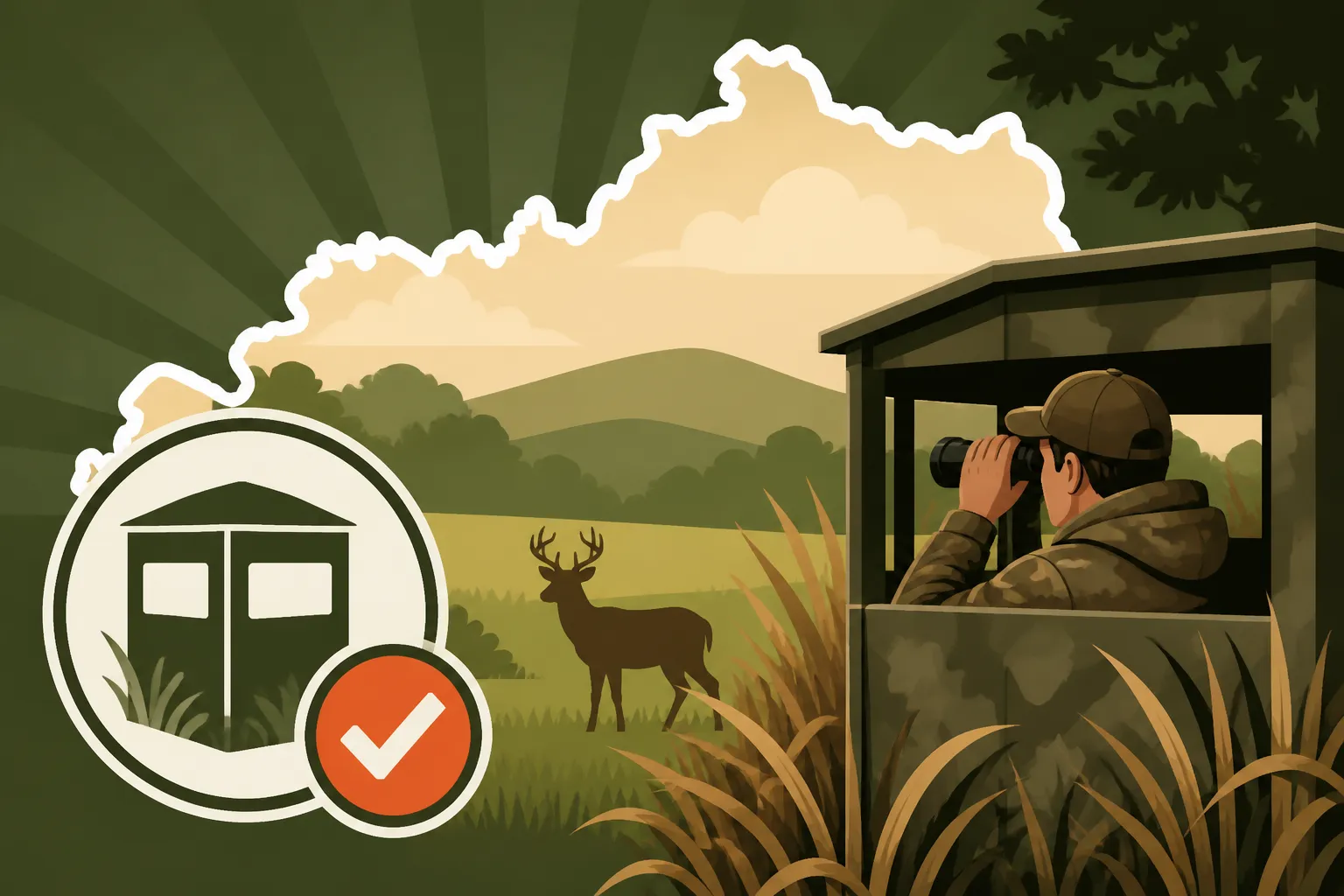
The golden rule for ground blinds on Kentucky WMAs is that they must be temporary or portable. What does this really mean in practice? It's pretty straightforward: you cannot construct a permanent blind. This isn't your grandfather's deer stand built out of two-by-fours and plywood that stays up year-round. We're talking about commercially manufactured pop-up blinds, natural ground blinds made from gathered materials, or even just a well-chosen patch of thick brush. The key is that it shouldn't leave a lasting footprint or become a fixture on the landscape.
Think about it this way: if you can't easily set it up and take it down within a reasonable amount of time, it's probably not considered temporary. This often means your blind should be made of fabric, mesh, or other lightweight, collapsible materials. If you're out Hunting Western Kentucky Bottomland Deer, a portable blind is perfect for tucking into a fencerow or a thicket. The whole idea is to prevent hunters from essentially "claiming" a spot indefinitely or creating structures that detract from the natural environment, not to mention posing potential hazards once they start to break down over time. It's about maintaining the integrity of the public land experience for all who use it.
Labeling Your Blind: Why It Matters
One of the most frequently overlooked, yet critical, regulations for ground blinds on Kentucky WMAs is the labeling requirement. You absolutely must display your name and Kentucky Department of Fish and Wildlife Resources (KDFWR) ID number clearly on your blind. Forgetting this step is an easy way to run afoul of a conservation officer, and trust me, they patrol these areas diligently. It's frustrating to think you've done everything right, only to realize you missed a small but important detail that could lead to your blind being confiscated.
This labeling serves a couple of crucial purposes. First, it helps conservation officers identify ownership. If a blind is found out of season, left for an extended period, or in a restricted area, they can contact the owner. Second, it promotes accountability. Knowing your blind is identifiable encourages you to follow all the rules, from proper placement to timely removal. To properly label your blind, use a weatherproof tag, a piece of durable tape, or even a permanent marker directly on a non-visible part of the blind itself. Ensure the writing is legible and won't wash off in the rain or fade with sun exposure. A laminated card zip-tied to a blind hub is a great option. This simple act can save you a lot of headache and ensures you're a responsible user of our shared public lands.
Placement and Duration: Key Considerations for Your Ground Blind
Beyond simply being portable and labeled, where you put your blind and how long it stays there are equally important aspects of WMA ground blind rules. These regulations are designed to minimize long-term impact on the land and ensure fair access for all hunters. It’s a delicate balance between allowing hunters effective concealment and protecting the natural resources.
How Long Can Your Blind Stay Out?
This is where many hunters get tripped up. While the exact duration can sometimes vary by specific WMA or even by the type of season (some WMAs have special rules for quota hunts, for instance), the general guideline for temporary structures like ground blinds on most Kentucky WMAs is that they should not be left unattended for more than 72 hours. Furthermore, all blinds must be removed at the close of the hunting season for which they were used. You can't just leave your blind out from archery season all the way through until the late muzzleloader week in December, hoping it'll still be there next year.
Imagine you're planning a weekend hunt on a WMA near Green River Lake Public Hunting Ground. You set up your blind on Friday morning, hunt through Saturday, and plan one last sit on Sunday. That's perfectly fine. However, if you leave that blind there until the following Friday, you're likely exceeding the allowable unattended period, making it susceptible to removal by KDFWR staff. These rules are in place not just to prevent clutter, but also to ensure fairness. No one hunter should be able to permanently "reserve" a prime hunting location year after year. It also helps prevent blinds from becoming derelict, broken-down eyesores that pollute the landscape and pose a hazard to wildlife. Always consult the current hunting guide or the specific WMA regulations for precise dates and rules, as these can be updated.
Impact on Habitat and Public Access
When you're choosing a spot for your ground blind, it's not just about what the deer are doing; it's also about respecting the habitat and ensuring public access remains unimpeded. You might find that perfect little thicket or pinch point, but consider the broader impact. Blinds should be set up in a way that doesn't damage vegetation unnecessarily. Avoid cutting down live trees or excessive pruning to make space. While a little natural camouflage is fine, clear-cutting an area for your blind is definitely not. The idea is to blend in, not to alter the landscape significantly.
Furthermore, ensure your blind isn't blocking main trails, access roads, or creating a bottleneck for other hunters, hikers, or even wildlife. Kentucky's public lands are multi-use, and while hunting is a primary activity, others also enjoy these areas. A blind that's too close to a marked trail or obstructs a common travel path for other users can create conflict or even be a safety issue. Imagine trying to navigate a dark trail after a morning hunt and stumbling over an unmarked blind. It's essential to practice a "leave no trace" ethos. When you pack up your blind, ensure you take out all your trash, any flagging tape, or other signs of your presence. Let's keep our WMAs pristine for everyone, including the animals we pursue.
Special WMA Considerations and Best Practices
Kentucky is blessed with a diverse array of Wildlife Management Areas, each with its unique characteristics, challenges, and sometimes, specific regulations. What might be perfectly acceptable on one WMA could be against the rules on another. Being a successful and responsible hunter means doing your homework beyond the general statewide guidelines.
WMA-Specific Rules: Always Check First
This cannot be stressed enough: always check for WMA-specific rules before you go. While the general rules about temporary, labeled blinds apply broadly, some WMAs might have additional, more restrictive regulations. For instance, some areas designated for Kentucky Elk Quota Hunt Rules might have different rules regarding blinds, or a specific WMA might have particular restrictions during youth firearms seasons. Certain areas might be "walk-in only" zones where even bringing in a portable blind might be challenging, or they might have specific setup distance requirements from property lines or roads.
The best way to stay informed is to consult the KDFWR website. They often have individual pages for each WMA, detailing any unique rules or closures. A fantastic tool for this is Scouting With the Kentucky Hunt Fish App. This app often provides interactive maps with boundaries, rules, and contact information for individual WMAs. You can even use mapping services like onX Hunt or GoHunt, which often integrate public land boundaries and sometimes even WMA-specific overlay information, helping you understand where you are and what rules might apply. For example, while the Peabody WMA generally allows portable blinds, certain units within it might have unique restrictions during certain managed hunts. Never assume; always verify. It saves you a lot of potential headaches and ensures your hunt is legal and ethical.
Security and Respecting Other Hunters
Let's be realistic: leaving gear on public land, even if it's properly labeled, always carries some inherent risk. Unfortunately, blind theft or damage can happen, and it's a frustrating part of public land hunting. While there's no foolproof method to prevent this, ensuring your blind is well-hidden and not easily accessible from roads or popular trails can help. Don't leave valuables inside, and consider adding a small lock to the zippers if possible, though this won't deter a determined thief.
Beyond security, there's also the unwritten code of ethics when it comes to shared spaces. If you arrive at your chosen spot and find another hunter has already set up a legal, labeled ground blind, even if it's not currently occupied, respect their space. The same goes if someone sets up near your established blind. Public land is first-come, first-served, and while it's frustrating to have someone crowd your spot, maintaining respectful distances and communicating (if appropriate and safe) can prevent conflicts. Understanding Hunting Pressure on Kentucky Public Land means recognizing that sometimes, you just have to adapt or find a new spot. It's about being a good steward of both the land and the hunting community.
Enforcement and Avoiding Common Mistakes
Knowing the rules is one thing, but understanding the consequences of breaking them and actively avoiding common pitfalls is what truly makes for a responsible and stress-free hunting experience. The Kentucky Department of Fish and Wildlife Resources takes WMA regulations seriously, and ignorance of the rules is rarely an excuse.
What Happens if You Break the Rules?
Conservation officers are out there, and they're not just looking for poachers. They're also ensuring compliance with WMA regulations, including those pertaining to ground blinds. If you're found to be in violation, the consequences can range from a warning to significant penalties. These might include confiscation of your blind, monetary fines, or even the loss of your hunting privileges for a period. Imagine going through all the effort of a hunt, only to have your gear seized because you forgot to put your ID on your blind or left it out too long. It's a disheartening scenario that's entirely avoidable.
Conservation officers have the authority to remove and dispose of blinds that are left unattended beyond the legal limits, are improperly labeled, or are in violation of other WMA-specific rules. They prioritize the long-term health and accessibility of these lands for everyone. It's not about being punitive; it's about maintaining order and fairness. So, before you leave your blind for an extended period, or if you're unsure about a specific WMA's regulations, take the time to double-check. It's far better to err on the side of caution than to face a citation or lose your gear.
Common Pitfalls and How to Avoid Them
Even experienced hunters can make mistakes, especially when regulations vary or seem complicated. Here are some of the most common pitfalls related to ground blind use on Kentucky WMAs and how you can easily avoid them:
- Forgetting to Label: This is probably the easiest and most common mistake. Always have your name and KDFWR ID number clearly displayed. Make it a habit: as soon as you buy a new blind, label it.
- Leaving Blinds Out Too Long: Respect the 72-hour rule or any WMA-specific time limits. If you can't retrieve it, don't deploy it. Plan your hunts to ensure you can get your blind out when required, or coordinate with a hunting buddy.
- Setting Up in Restricted Areas: Always check WMA maps and rules for areas that might be off-limits, such as safety zones, food plot closures, or specific units with unique managed hunt rules. Kentucky Public Land Hunting Hours are also important to respect for when you can even be in the woods.
- Not Packing Out Trash: This should be a given for any outdoor activity, but it's especially critical on public land. Leave no trace. This includes empty calls, spent shotgun shells, food wrappers, and especially any remnants of your blind if it breaks down.
- Damaging Vegetation: While a little trimming might be necessary for shooting lanes, avoid excessive cutting of live trees or shrubs to accommodate your blind. Use existing cover as much as possible.
To help you remember, here's a quick summary of common issues and their solutions:
| Common Ground Blind Violation | How to Avoid It |
|---|---|
| No Name/KDFWR ID Label | Attach a weatherproof tag with your info; write directly on blind with permanent marker. |
| Blind Left Unattended Over 72 Hours | Plan retrieval within 72 hours; remove immediately after season closure. |
| Setting Up in a Restricted Zone | Check KDFWR WMA-specific rules and maps (e.g., Scouting With the Kentucky Hunt Fish App) before hunting. |
| Damaging Live Vegetation for Setup | Utilize existing natural cover; minimal trimming; do not cut down trees. |
| Leaving Litter/Blind Debris Behind | Pack out everything you pack in; inspect the area around your blind before leaving. |
| Obstructing Trails/Public Access | Position blind away from main trails; ensure clear passage for others. |
| Not Knowing Specific WMA Rules | Always verify specific WMA regulations on the KDFWR website or app. |
| Missing Blaze Orange Requirements | Ensure proper Kentucky Blaze Orange Requirements are met when entering/exiting your blind. |
By understanding and adhering to these rules, you'll not only stay on the right side of the law but also contribute to a positive and sustainable hunting culture on Kentucky's amazing Wildlife Management Areas.
Disclaimer
This article is for general informational purposes only and does not constitute professional advice. Laws, prices and regulations vary by location and change over time. Consult a qualified professional for guidance on your specific situation.