Timber Cuts and Where Deer Move After
It can feel incredibly frustrating when you've spent months scouting a prime deer hunting spot in Kentucky, only to find a fresh timber cut has completely changed the landscape just before season opens. That familiar thicket or bedding area might be gone, replaced by a maze of downed trees and disturbed earth. But don't despair! Timber cuts, while initially disruptive, often create incredible new opportunities for deer hunters if you understand how deer react and adapt. This guide will help you decipher the impact of different timber operations and give you practical strategies for finding and hunting whitetails in these dynamic environments.
Understanding the Immediate Impact of a Timber Cut
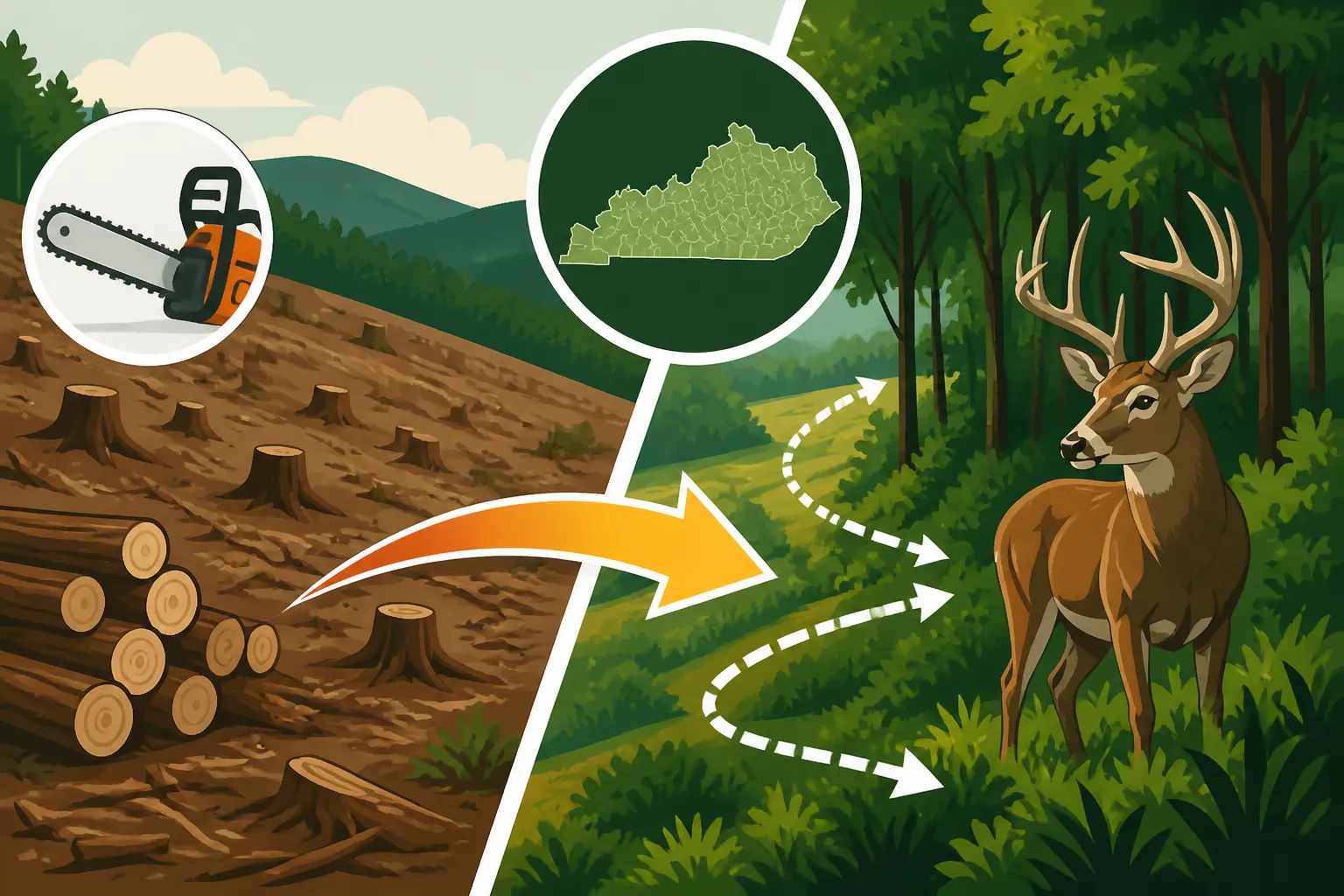
When loggers move into an area, it's a huge event for the local deer population. The sheer noise, human presence, and heavy machinery disrupt everything. Initially, deer will often flee the immediate vicinity, seeking quieter, undisturbed cover. This immediate displacement can make a previously reliable hunting spot feel barren for a while. However, this flight is usually temporary, especially if quality cover and food are still within their home range, or if the cut itself starts to offer new resources.
Initial Disruption and Temporary Flight
Imagine you're a deer, quietly browsing in your favorite patch of woods, and suddenly chainsaws are roaring, trees are crashing, and big machines are rumbling through your living room. Your first instinct, quite naturally, is to get out of there. Deer are creatures of habit and security, and logging operations obliterate that sense of stability. They'll often move to adjacent blocks of timber, thicker creek bottoms, or even small, overlooked woodlots they might not typically frequent. This temporary displacement might last a few days or even a couple of weeks, depending on the intensity and duration of the logging activity. Hunters who encounter a fresh cut during this phase might conclude the deer are "gone," but usually, they've just shifted their patterns. It's a critical time to be patient and to expand your scouting efforts into nearby undisturbed areas, especially those offering dense cover or overlooked food sources.
New Cover and Browse Opportunities
While the initial disturbance pushes deer out, the aftermath of a timber cut quickly begins to draw them back in. All that sunlight hitting the forest floor after the canopy is opened up encourages an explosion of new growth. We're talking about briars, young saplings, forbs, and grasses – all prime browse for whitetails. These aren't just snack bars; they also create incredibly dense, secure bedding cover almost immediately. A clear-cut, for instance, might look like a wasteland to the human eye, but to a deer, it’s a smorgasbord and a fortress in the making. The tops of felled trees also provide instant horizontal cover, and deer will often bed down right next to or within these piles, especially as they begin to dry and compact. It’s a rapid transformation from old-growth forest floor to a buffet and bedroom all in one.
Long-Term Habitat Changes and Deer Adaptation
The real magic of timber cuts for deer hunting often unfolds in the years following the initial logging. What begins as disruption quickly matures into prime deer habitat, offering security, food, and breeding opportunities that mature, closed-canopy forests simply can't provide. This long-term adaptation by the deer herd is what truly makes understanding timber cuts a game-changer for Kentucky hunters.
The Early Successional Habitat Boom
Early successional habitat is a fancy way of describing young, regenerating forest, and it's deer heaven. After a few growing seasons, a cut-over area will be bursting with saplings, thorny bushes like greenbrier, sumac, wild grape, and countless other plants that provide both exceptional food and nearly impenetrable cover. This isn't just a slight increase in forage; it's a monumental shift in the carrying capacity of the land. Deer thrive in these environments because they offer everything they need within a small area: security cover to bed down in, abundant browse to eat throughout the day, and places to escape predation.
Think about a block of Daniel Boone National Forest that was logged five years ago. What was once mature, open timber might now be a chest-high jungle of regenerating hardwoods and softwoods. Bucks will utilize these areas heavily for bedding, especially during the rut when they're seeking secure places to rest between chasing does. Does will raise their fawns in these dense thickets, knowing the young ones are well hidden. As hunters, these are the places we need to identify and key in on. Where Daniel Boone Forest Bucks Bed often directly correlates with these younger, denser timber cuts.
Bedding, Browsing, and Security Cover
Deer essentially need three things: food, water, and cover. Timber cuts, especially clear-cuts or heavy select cuts, initially disrupt these but quickly enhance two out of three significantly. The new growth provides incredible browse, drawing deer in to feed. The density of this new growth, particularly in areas that are 3-10 years post-cut, creates outstanding security cover. It's difficult for predators (including humans) to move through quietly, offering deer a strong advantage. They can bed down in these areas and feel relatively safe, watching and listening without being easily seen.
This means that instead of just feeding in open areas at dusk and dawn, deer will often spend much of their daylight hours within the cut-over areas, moving subtly between pockets of food and bedding. This changes hunting strategies dramatically. You're no longer just looking for trails leading to a food plot; you're looking for subtle deer movement patterns within the thicket itself. Finding these patterns often involves intense scouting, looking for rub lines or scrape lines along a logging road, or trails leading into the densest parts of the regrowth. You might even find Scrape Lines Along a Logging Road within these areas.
Scouting and Hunting Strategies for Timber Cuts
Okay, so we know timber cuts can be deer magnets, but how do you actually hunt them effectively? It requires a different approach than still-hunting mature timber or watching a wide-open field. It's about reading the new landscape, understanding deer behavior in thick cover, and leveraging modern tools to your advantage.
Reading the Regenerating Forest
When you first step into a timber cut that's a few years old, it can feel overwhelming. It's thick, thorny, and often disorienting. However, there are clues everywhere if you know what to look for. Start by looking for the subtle deer trails that weave through the regenerating growth. These trails might not be as pronounced as those in mature timber, but they'll be there, often leading to pockets of particularly desirable browse or more open areas within the thicket.
Pay close attention to topography as well. Deer will still use natural funnels, saddles, and ridge lines, even if the vegetation has changed dramatically. A small knoll within a clear-cut might offer a slight elevation advantage, making it a preferred bedding spot. Look for transitions where the regenerating forest meets mature timber, agricultural fields, or even a creek bottom. These edges are natural travel corridors. You're essentially looking for patterns of movement and usage, just in a much denser environment. Don't be afraid to get in there and spend some time slowly walking, looking for fresh droppings, tracks, and chewed-on browse. This is where Reading Kentucky Mud for Fresh Deer Movement becomes incredibly valuable.
Focusing on Edges and Transition Areas
Deer love edges. Period. And timber cuts create an abundance of them. The transition zone where a clear-cut meets an older stand of timber is often a superhighway for deer movement. They'll stage in the security of the mature woods before slipping into the cut to feed, or vice versa. These edges are fantastic places to set up a stand or blind, particularly where you see heavy trail activity, rub lines, or scrapes.
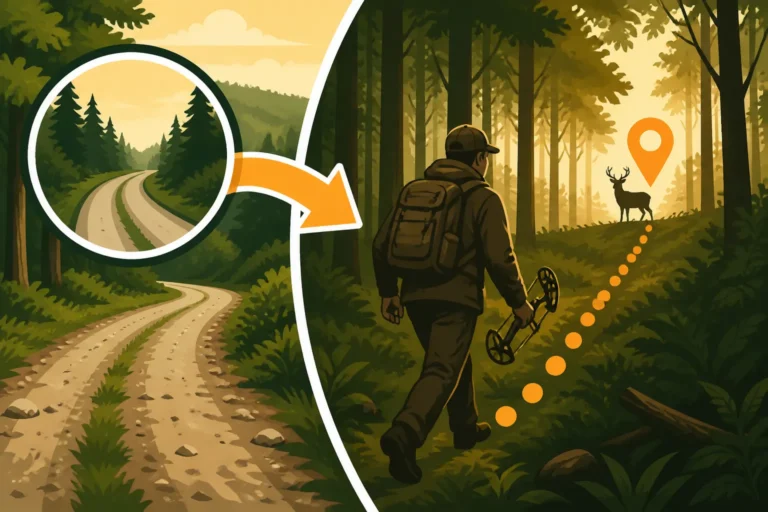
Also, consider the edges created by logging roads and skid trails. While these were once paths for heavy machinery, they quickly become travel routes for deer, especially if they're not heavily used by humans. Deer will often walk parallel to these trails, just inside the cover, or cross them at specific points. These open lanes also offer shooting opportunities that the dense growth usually prohibits. Think about hunting an area like Hunting a Clear-Cut Regrowth Edge where these dynamics are in full play.
Leveraging Technology for Scouting
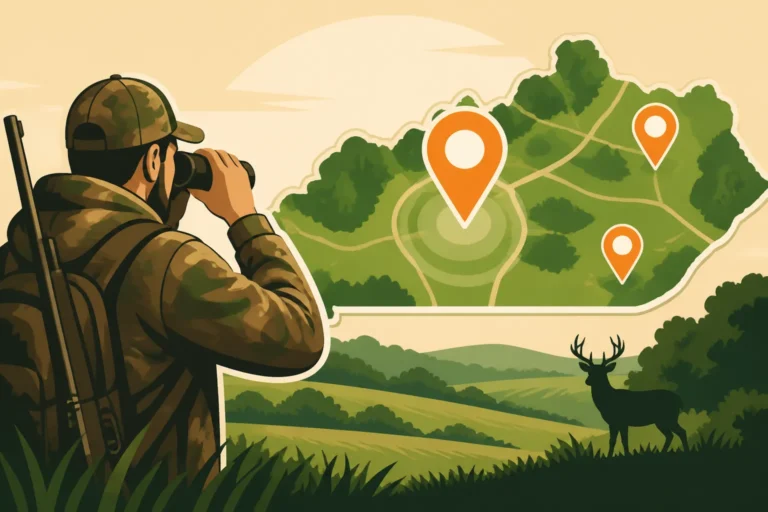
In these complex, often disorienting environments, technology can be your best friend. Mapping applications are invaluable for understanding the layout of timber cuts, especially on public land.
- onX Hunt: Tools like onX Hunt allow you to view aerial imagery that often shows the distinct boundaries of timber cuts, even those that are several years old and have grown up. You can mark potential bedding areas, travel corridors, and transition lines directly on the map. This helps you visualize the terrain and plan your approach long before you ever step foot in the woods. You can even see property lines, which is crucial if you're hunting near private land.
- GoHunt: While often associated with Western big game, GoHunt's mapping features also provide excellent aerial views and topo maps that can help you identify subtle terrain features within a timber cut that deer might favor. Overlaying different map layers can reveal hidden benches, small creek drainages, or slight changes in elevation that might concentrate deer movement.
Using these tools, you can virtually scout an area, identify potential access routes that minimize disturbance, and pinpoint areas that deserve on-the-ground investigation. This saves countless hours of aimless wandering through thick cover and lets you focus your efforts where they're most likely to pay off. Scouting With the Kentucky Hunt Fish App is another fantastic resource provided by the state that can often highlight public land boundaries and sometimes even habitat treatment areas, including timber sales.
Types of Timber Cuts and Their Deer Impact
Not all timber cuts are created equal. The method of harvest significantly influences how the habitat changes and, consequently, how deer respond. Understanding these distinctions will help you better predict deer behavior and tailor your hunting strategy.
| Type of Timber Cut | Description | Immediate Deer Impact | Long-Term Deer Impact | Best Hunting Strategy |
|---|---|---|---|---|
| Clear-Cut | All trees in a designated area are removed, leaving an open expanse. | High disturbance, initial displacement. | Rapid growth of dense early successional habitat; excellent cover and browse for years. | Hunt edges, interior trails, and key transition zones 2-10 years post-cut. |
| Select Cut | Only specific, usually mature, trees are removed, leaving most of the canopy intact. | Moderate disturbance; less widespread displacement. | Increased light to forest floor; promotes understory growth and enhances existing browse. | Hunt within the thinned woods, focusing on new browse and subtle deer trails. |
| Thinning | Smaller, less desirable trees are removed to promote growth of remaining trees. | Low to moderate disturbance. | Opens canopy slightly, improves forest health, some increased understory. | Focus on improved visibility and enhanced browse areas within the stand. |
| Logging Roads / Skid Trails | Paths created for machinery access and log extraction. | High disturbance during use. | Become permanent travel corridors for deer, often quickly grown over with grass and weeds. | Set up stands overlooking these paths, especially where they cross natural funnels or dense cover. |
Clear-Cuts: Total Reset, Future Bounty
A clear-cut is exactly what it sounds like: a section of forest where virtually all trees are harvested. Initially, these areas can look devastating. It's a massive open space, often filled with piles of slash (limbs, tops) and churned-up earth. Deer will definitely avoid this fresh chaos.
However, give it a few years, and a clear-cut transforms into some of the best deer habitat imaginable. The complete removal of the canopy allows sunlight to absolutely flood the forest floor, triggering an explosion of herbaceous plants, saplings, and shrubs. Within 2-3 years, a clear-cut will be a dense, chest-high jungle of prime deer browse and impenetrable bedding cover. As these areas mature (5-15 years post-cut), they become even thicker, offering incredible thermal protection in winter and shade in summer. This is often Hunting a Clear-Cut Regrowth Edge gold, as deer will spend all day bedded deep within the cut, only moving to the edges to browse or transition to other areas. If you find a clear-cut that's a few years old, you've found a potential hotspot.
Select Cuts: Subtle Changes, Enhanced Understory
Select cutting involves removing only a portion of the trees, often the most mature or valuable ones, while leaving the majority of the forest canopy intact. This is a more subtle approach than clear-cutting, and its impact on deer is also more nuanced. The immediate disturbance is less severe, so deer are less likely to abandon the area completely.
In the long term, select cuts allow more sunlight to reach the forest floor without completely eliminating the overhead cover. This encourages the growth of an enhanced understory – more browse, more low-level cover – within the existing timber stand. It essentially improves the quality of the habitat without creating an entirely new landscape. Deer will appreciate the increased forage and slightly thicker bedding options, but it won't be the impenetrable fortress of a clear-cut. Hunting select cuts often involves more traditional still-hunting or stand placement along natural travel corridors, as the increased visibility allows for longer shots than in a clear-cut.
Thinning Operations: Opening the Canopy
Forest thinning is similar to a select cut but typically focuses on removing smaller, less healthy, or less desirable trees to promote the growth of the remaining stand. It’s done for forest health and timber value rather than immediate harvest of all mature trees. The impact on deer is generally positive, but again, subtle.
Thinning opens the canopy just enough to allow some additional sunlight to reach the forest floor, stimulating new growth without creating dense, early successional habitat. It can improve the amount of browse available and make a previously "park-like" forest a bit more appealing to deer. Hunters might find that deer use thinned areas more consistently for browsing during daylight hours, as the added understory provides a bit more security than before the operation. The main benefit to hunters is often improved visibility within the stand, making it easier to spot deer moving through.
Logging Roads and Skid Trails
While not a "cut" in themselves, logging roads and skid trails are an inevitable part of any timber operation, and they quickly become important features for deer movement. During active logging, these are zones of heavy disturbance. Once logging ceases, however, they transform into natural travel corridors.
Deer will use these relatively open lanes to move between feeding and bedding areas. Often, they'll travel just inside the tree line, using the edge for security while still moving efficiently. These roads can also be choked with new growth (grasses, briars, small saplings) once logging ends, turning them into linear food plots. Hunters should pay close attention to where logging roads intersect with natural terrain features like saddles, creek crossings, or funnels. These pinch points can be excellent ambush locations. Also, look for where the main logging roads branch off into smaller skid trails that penetrate deeper into dense cover. These are often primary entry and exit points for deer.
Disclaimer
This article is for general informational purposes only and does not constitute professional advice. Laws, prices and regulations vary by location and change over time. Consult a qualified professional for guidance on your specific situation.