Kentucky Coyote Diet in Farm Country
It's easy to look out across a Kentucky farm field, see a coyote slinking along the treeline, and immediately jump to conclusions about what it's up to. For many farmers and landowners, that sight instantly conjures images of lost livestock or a diminished deer population. But understanding what these intelligent, adaptable predators actually eat in our agricultural landscapes is crucial for managing their presence and easing those worries. This guide will take a deep dive into the diverse diet of Kentucky coyotes living in farm country, shedding light on their surprising adaptability and the nuanced role they play in the ecosystem.
The Opportunistic Hunter: Understanding Kentucky Coyote Behavior
Coyotes in Kentucky's farm country are survivors, pure and simple. They aren't picky eaters, and that's precisely what makes them so successful in environments shaped by human activity. While we often think of them as strictly meat-eaters, their diet is far more varied than you might imagine, shifting constantly with the seasons and what's readily available.
Generalist Predators in an Agricultural Landscape
Think of a Kentucky coyote as a jack-of-all-trades when it comes to finding food. Unlike highly specialized predators that rely on one or two main prey species, coyotes are true generalists. This means they can exploit a vast array of food sources, from the smallest mouse scurrying through a hayfield to the occasional unfortunate deer fawn. This adaptability is precisely why they thrive in farm country, where a mix of open fields, woodlots, creek bottoms, and human habitations offers a smorgasbord of opportunities.
A farmer might observe fresh coyote tracks near their chicken coop one morning, leading them to believe their poultry is the primary target. While it's true that an unprotected flock can be tempting, that same coyote might spend the rest of its week feasting on voles in the distant pasture or scavenging a deer carcass left along a logging road. Their presence isn't always an indictment of their intentions; it's often simply a reflection of their keen ability to find easy calories wherever they can. Understanding a coyote's diet often starts with understanding the landscape, and mapping tools can reveal key features like creek bottoms, field edges, and woodlots where prey congregates, which is why resources like GoHunt can be invaluable for observing potential habitat.
Seasonal Shifts and Food Availability
A coyote's menu isn't static; it's a dynamic reflection of the natural world around it, changing dramatically with Kentucky's four distinct seasons. What's abundant in spring might be scarce in winter, and coyotes are masters at adjusting their feeding habits to match. This seasonal flexibility is key to their survival and why you might see them exhibiting different behaviors throughout the year.
In spring, with the arrival of new life, coyotes might focus on vulnerable young animals. This includes newborn fawns, which can be an easy target for an opportunistic coyote. As summer progresses, their diet often incorporates more plant matter, like berries, wild fruits, and even agricultural crops such as corn or watermelons, especially when other food sources are less plentiful. Fall brings a bounty of nuts and fruits, alongside the increased activity of rodents preparing for winter, making these small mammals a prime target. Then, in the lean winter months, scavenging becomes a critical part of their strategy, relying heavily on carrion from animals that didn't survive the colder temperatures or vehicle collisions.
Primary Prey in Kentucky Farm Country
While coyotes are generalists, certain food sources make up the bulk of their diet in Kentucky's agricultural areas. These aren't always the animals that farmers might immediately suspect, and recognizing their primary prey helps us understand their ecological role.
The Unsung Rodent Control Squad
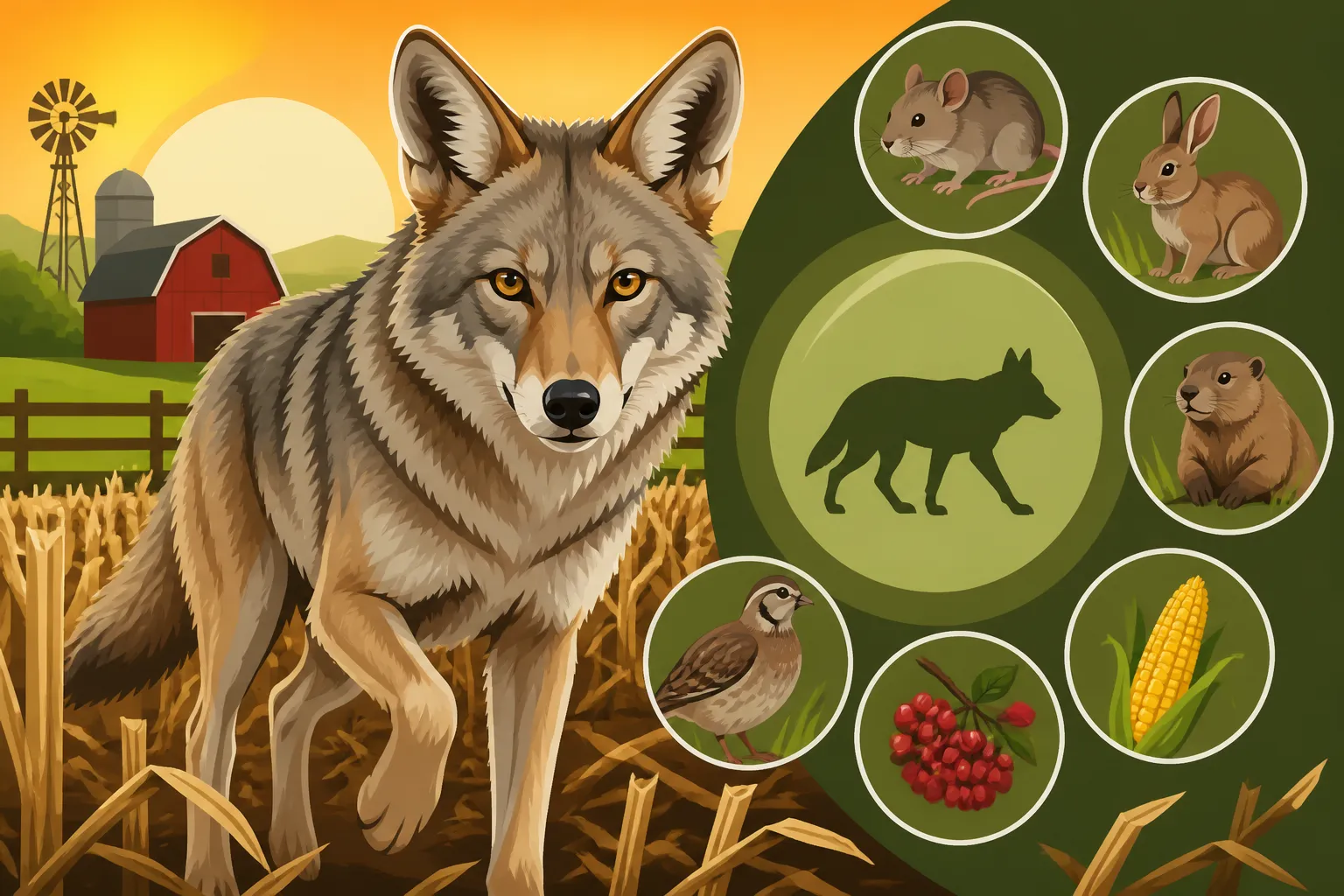
Believe it or not, the vast majority of a coyote's diet in farm country is made up of small mammals. Think mice, voles, rats, shrews, and even larger rodents like groundhogs and muskrats. These critters are abundant in fields, fencerows, and brushy areas, providing a consistent and relatively easy food source for coyotes. Farmers might lament a coyote's presence, but these animals are actually performing a valuable service, keeping populations of agricultural pests in check.
Imagine a farmer battling a vole infestation in their hayfield or a constant struggle with mice in their grain storage. While traps and poisons have their place, a resident coyote family can patrol these areas, effectively reducing rodent numbers naturally. This isn't to say coyotes are domesticated pest control, but their natural foraging habits often align with a farmer's interests in reducing rodent damage. Their presence can actually reduce the need for other pest management strategies, illustrating a beneficial, albeit often unappreciated, aspect of their ecological role. When trying to understand where coyotes might be hunting these small prey, mapping tools like GoHunt can help identify areas of dense cover or field edges where rodents thrive. You can even check out Kentucky Squirrel and Rabbit Populations to see what other small game they might be after.
Deer Fawns and Livestock Concerns
Now, let's address the big concern for many: deer and livestock. It’s true, coyotes will prey on deer fawns. This usually happens in the spring and early summer when fawns are born and are most vulnerable. However, studies show that fawns typically represent a smaller percentage of a coyote’s overall diet compared to small mammals, especially when other food sources are abundant. Coyotes are opportunistic; they'll take the easiest meal. A wobbly newborn fawn, separated from its mother, is an easier target than a healthy, alert adult deer. For hunters, it's important to understand this dynamic, as it influences deer herd health.
When it comes to livestock, the concern is very real, especially for smaller animals like chickens, lambs, or young calves. While not a daily occurrence for most coyotes, an unsecured chicken coop or a pasture with vulnerable young animals can certainly attract attention. Farmers often face significant economic loss from predation, and it's a frustration that's entirely valid. However, preventative measures can greatly reduce these incidents. Understanding what draws coyotes to livestock areas, like easy access or unsecured feed, is the first step in prevention. For more on this, you might find Kentucky Coyote Attacks on Livestock helpful.
The Scavengers and Foragers of Farmland
Beyond active predation, coyotes are incredibly adept at utilizing other food sources that most people might overlook. Their scavenging and foraging habits are crucial to their survival and highlight their incredible adaptability.
Carrion: An Easy Meal
One of the most significant and often underestimated components of a Kentucky coyote's diet, especially in farm country, is carrion – dead animals. This could be anything from roadkill deer, unfortunate livestock that succumbed to illness, or even smaller animals that died naturally. For a coyote, finding a carcass is like hitting the jackpot; it's a meal that requires no chase, no struggle, and minimal energy expenditure. This becomes even more vital during the colder months when live prey might be harder to come by or when they're conserving energy.
This scavenging role is actually quite beneficial for the ecosystem. Coyotes act as nature's cleanup crew, removing carcasses that could otherwise become breeding grounds for disease or attract other less desirable scavengers. They help cycle nutrients back into the environment and reduce the visual impact of roadkill. When you see a coyote near a recent road-killed deer, it’s not necessarily a sign that it killed the deer, but rather that it’s taking advantage of an easy and important food source. Knowing where these potential food sources exist can also be beneficial for those interested in Coyote Calling in Kentucky Farm Country.
Fruits, Berries, and Agricultural Crops
It often surprises people to learn that coyotes aren't strictly carnivorous. A significant portion of their diet, particularly during the warmer months, can consist of plant material. This includes wild berries like blackberries and persimmons, apples fallen from trees, and a variety of other fruits and seeds. But in farm country, this also extends to agricultural crops. They are known to raid cornfields, feast on watermelons, pumpkins, or cantaloupes, and even browse on various grasses and clover.
This dietary breadth is another testament to their adaptability. When animal protein is less available or when plant-based foods are plentiful and easy to access, coyotes will readily incorporate them into their diet. This foraging behavior underscores their generalist nature and their ability to extract calories from nearly any available source. While this can sometimes lead to minor crop damage, it’s rarely a primary concern for farmers compared to livestock predation or rodent issues. Understanding what's growing in different sections of a property, perhaps by using the detailed land cover maps on GoHunt, can provide clues to where coyotes might be foraging.
Human-Associated Food Sources
In areas where farm country borders more suburban or residential zones, coyotes become even more opportunistic, sometimes relying on human-generated food sources. This might include raiding garbage cans that aren't secured, feasting on pet food left out on porches, or even exploring gardens for fruits and vegetables. These easy calories can draw coyotes closer to human dwellings, which can lead to increased conflicts or concerns.
While a coyote preferring your trash to a rabbit might seem less threatening, it habituates them to human presence and can make them bolder, potentially increasing the risk of conflicts with pets or small livestock. It's a reminder that managing human food sources, even in rural settings, plays a role in managing wildlife behavior. Properly securing garbage, feeding pets indoors, and removing fallen fruit from orchards can help keep coyotes focused on natural food sources and maintain a healthy distance.
Implications for Farmers and Hunters
Understanding the specific diet of Kentucky coyotes in farm country has direct implications for both agricultural practices and hunting strategies. It helps to move beyond simple assumptions and develop more effective approaches.
Managing Conflicts and Coexistence
For farmers, the key to managing coyotes isn't necessarily eradication, which is often an impossible and ultimately self-defeating goal given their reproductive rates and adaptability. Instead, it’s about deterrence and coexistence. Since coyotes are opportunistic, removing easy access to vulnerable livestock or tempting food sources is paramount. This means using secure fencing, especially electric fencing for smaller animals, bringing livestock into barns at night, and ensuring pet food and garbage are not left accessible. Guardian animals like donkeys, llamas, or specific dog breeds can also be effective deterrents, providing protection for vulnerable herds.
Recognizing that a coyote's presence doesn't automatically mean your chickens are doomed can reduce initial panic. Instead, observing their patterns and identifying what might be attracting them can lead to targeted, humane, and more effective management strategies. Understanding their foraging habits, which can be scouted on platforms like GoHunt by looking at different land types and potential food sources, can inform where to focus your preventative efforts. If you're looking for strategies, you might want to read Kentucky Coyote Attacks on Livestock for some practical advice.
Coyote Hunting and Population Dynamics
For hunters, coyotes offer a year-round challenge and an exciting pursuit, especially considering Kentucky Coyote Hunting Season Rules allow for extensive opportunities. Hunting coyotes can certainly help reduce local populations, especially in areas where conflicts with livestock or deer fawns are a significant concern. However, it's a common misconception that simply "killing a few coyotes" will eliminate them from an area or drastically boost deer numbers. Coyotes have an incredible ability to rebound, increasing litter sizes and pup survival when their numbers are depressed. This phenomenon is known as compensatory reproduction.
Therefore, coyote hunting, while a valid and exciting form of sport, is most effective as a management tool when part of a consistent, long-term strategy rather than a one-off effort. It's also important to consider the methods, whether calling them in or night hunting. Coyote Calling in Kentucky Farm Country delves into techniques, while Night Hunting Rules for Kentucky Coyotes provides crucial regulations. Understanding their diet can help hunters predict where coyotes will be, whether they're keying in on a field edge for rodents, a creek bottom for deer fawns, or a remote area with carrion.
| Season | Primary Food Sources (Farm Country) | Secondary Food Sources (Farm Country) | Management Considerations |
|---|---|---|---|
| Spring | Rodents (voles, mice, rabbits), Deer Fawns, Turkey Poults | Insects, young plant shoots | Protect young livestock/poultry, secure fawns. |
| Summer | Rodents, Wild Berries/Fruits, Insects, Agricultural Crops | Carrion, small birds | Secure gardens/crops, maintain deterrence for livestock. |
| Fall | Rodents, Hard Mast (acorns, nuts), Wild Fruits | Carrion (roadkill), small game | Be aware of increased activity as food sources change. |
| Winter | Carrion (deer carcasses, livestock), Rodents (dense cover) | Scavenged agricultural waste, sparse berries | Critically important for cleanup, less predation pressure on live stock. |
Disclaimer
This article is for general informational purposes only and does not constitute professional advice. Laws, prices and regulations vary by location and change over time. Consult a qualified professional for guidance on your specific situation.