Kentucky Cottontail Population Trend
There’s a special kind of nostalgia that washes over many of us when we think about rabbit hunting in Kentucky. It’s often the first type of hunting a youngster experiences, or the kind of pursuit that evokes memories of crisp fall mornings, barking beagles, and the satisfying weight of a cottontail in the game bag. But lately, many hunters have noticed that the bunnies aren't quite as thick as they used to be, leading to genuine frustration and concern about the future of this cherished tradition. This guide aims to pull back the curtain on the Kentucky cottontail population trend, exploring the factors at play and what we, as hunters and conservationists, can do to help.
The Enduring Appeal of Rabbit Hunting in Kentucky
For generations, pursuing cottontails has been more than just a hunt; it's been a rite of passage, a social event, and a crucial way to put wild game on the family table. There’s something inherently simple and exciting about it, whether you’re walking fencerows with a scattergun and a couple of eager beagles, or stalking thickets in late winter. This kind of hunting connects us to a simpler time, a period when small game was a primary target for sustenance and sport. The thrill of a rabbit bursting from cover, the chase through briars, and the satisfying crunch of fried rabbit at the end of the day – these are deep-seated traditions that define a significant part of Kentucky’s outdoor heritage.
Kentucky's landscape, with its mix of farmland, small woodlots, fencerows, and brushy creek bottoms, historically provided ideal habitat for cottontails. They're resilient little creatures, adapting to various environments, which made them widespread and plentiful. This abundance meant that even a casual hunter could often find success close to home, without needing extensive gear or travel. It fostered a grassroots hunting culture that many of us still cherish today. It's why so many of us feel a pang of worry when we notice fewer rabbits scurrying across the fields or hear less barking from the dog boxes on opening day. We want to ensure that future generations can experience the same joy and connection to the land that we did. For more on this traditional pursuit, check out Running Beagles on Kentucky Cottontails.
Deciphering Kentucky's Cottontail Population Trend: A Closer Look
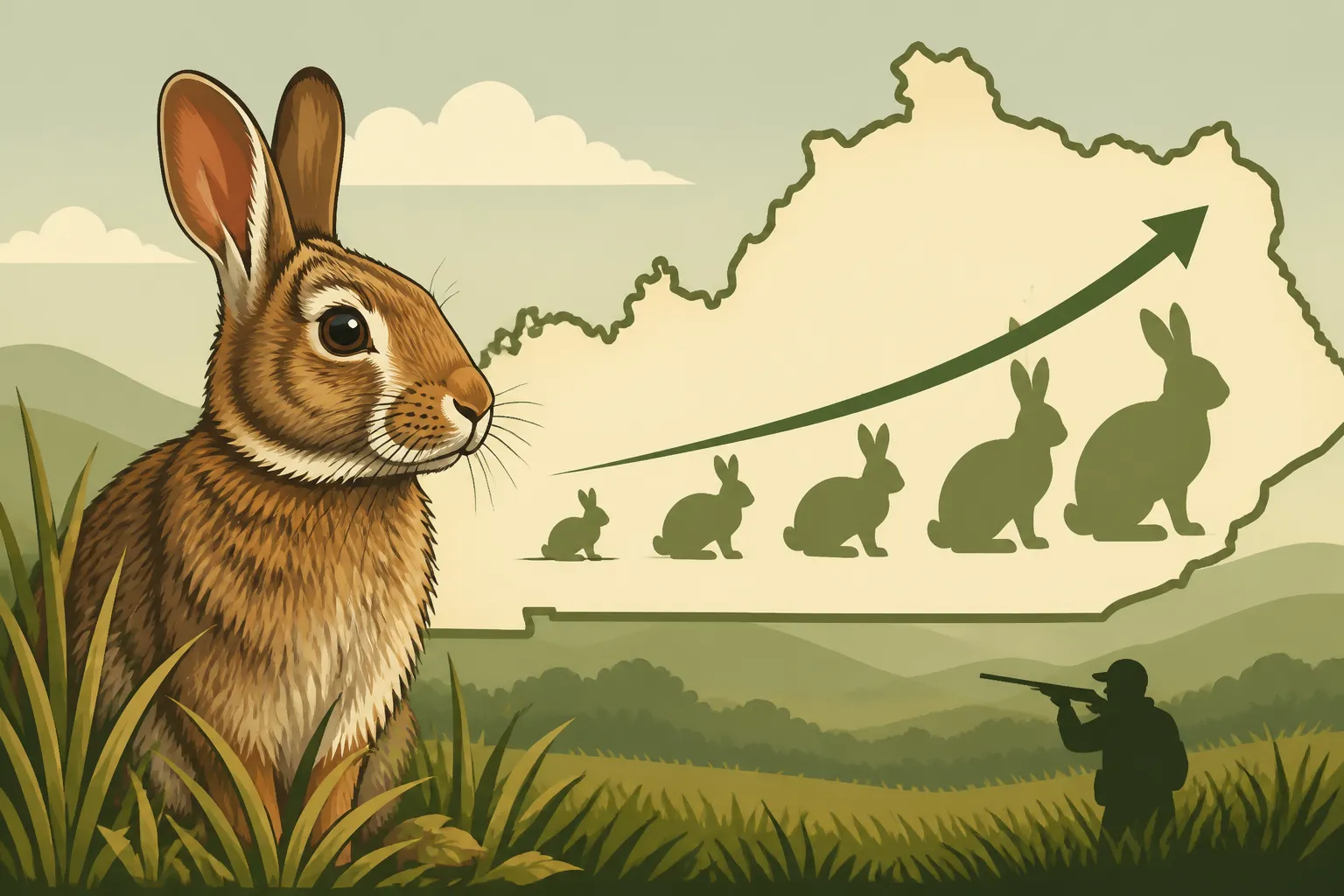
The general consensus among hunters and wildlife biologists in Kentucky points to a long-term decline in cottontail populations across much of the state. While there might be localized hotspots where numbers remain robust, the overall trend suggests a struggle for these adaptable small game animals. This isn’t a unique problem to Kentucky; similar declines have been observed in many agricultural states throughout the Midwest and Southeast. It’s a complex issue with multiple contributing factors, not a single smoking gun. Understanding these shifts often starts with good research, whether through state wildlife reports or even community-driven platforms that track game movements, akin to what you might explore on resources like GoHunt.
Habitat Loss and Fragmentation
This is arguably the most significant factor affecting Kentucky's cottontail population. Cottontails thrive in what's often referred to as "early successional habitat"—think overgrown fields, brushy fencerows, briar patches, regenerating clear-cuts, and the edges where different habitat types meet. They need dense cover for protection from predators, open areas for foraging on grasses and forbs, and plenty of escape routes.
Unfortunately, modern land management practices have drastically reduced this type of habitat. Intensive agriculture, with its focus on large, monoculture fields, has eliminated many fencerows and brushy edges that once crisscrossed the landscape. When farms clear out hedgerows to maximize acreage for crops like corn and soybeans, they also eliminate crucial travel corridors and bedding areas for rabbits. Development, both urban sprawl and suburban expansion, further fragments remaining patches of suitable habitat. A small woodlot that once connected to a larger brushy field might now be surrounded by houses and roads, isolating rabbit populations and making them more vulnerable. Hunters trying to find good rabbit ground might have to look harder to find those vital transition zones, making the hunt for rabbits feel a lot like Working a Fencerow for Late-Season Deer to find a travel corridor.
Even in forested areas, changing timber practices can play a role. While clear-cuts provide excellent early successional habitat for a few years, they eventually grow into dense, mature timber that offers little to a cottontail. The key is a mosaic of different successional stages, something that’s becoming less common. Without a diverse blend of cover and food sources, rabbits struggle to find everything they need to survive and reproduce.
Predation and Environmental Pressures
While habitat loss weakens populations at their foundation, increased predation pressure can be the final straw for vulnerable rabbit numbers. Kentucky has a healthy and thriving population of predators that naturally prey on cottontails. Coyotes, foxes, bobcats, various raptors (hawks and owls), and even house cats can take a significant toll, especially on young rabbits. In areas where habitat is fragmented or sparse, rabbits have fewer places to hide, making them easier targets. It's a natural cycle, but when rabbit numbers are already depressed due to other factors, heavy predation can prevent them from rebounding.
Consider a scenario where a fencerow, once wide and tangled with briars, is now a narrow strip of weeds. A cottontail living there has fewer options when a hawk swoops down or a coyote patrols. This makes every encounter more lethal. While we can't (and shouldn't) eliminate predators, healthy rabbit populations need adequate cover to cope with natural predation. When rabbit numbers are low, hunters might even feel a subtle shift in the general wildlife population, noticing other small game like squirrels or quail also facing similar pressures. Hunters might find information about various species and their interactions invaluable on platforms like GoHunt, helping them understand these broader ecological trends.
Disease and Weather Fluctuations
Cottontails, like all wildlife, are susceptible to various diseases and parasites that can impact their health and survival rates. Tularemia, for example, is a bacterial disease that can affect rabbits and other small mammals, and while not always widespread, localized outbreaks can reduce populations. External parasites like fleas and ticks can also weaken animals, making them more vulnerable to other stresses.
Weather, particularly extreme weather events, also plays a critical role. Severe winters with prolonged cold and deep snow can make it difficult for rabbits to find food and shelter, leading to increased mortality. Conversely, unusually wet springs can be detrimental to young rabbits (kits), as nests can be flooded, or damp conditions can promote disease. Droughts in summer can impact forage quality and availability. While rabbits are generally resilient to a certain extent, sustained or extreme weather patterns, combined with already compromised habitat, can hit populations hard. Hunters are keenly aware of how these environmental factors shape the success of a season, whether it’s deer after a Poor Acorn Year or turkeys impacted by spring rains.
Hunting Pressure (A Minor Factor)
Compared to habitat loss and predation, regulated hunting pressure generally has a minimal impact on overall cottontail populations. Kentucky's Kentucky Small Game Season Rules are designed to allow for sustainable harvest, typically opening in the fall and running through late winter, after the primary breeding season. Cottontails are prolific breeders, producing multiple litters per year. As long as sufficient habitat and food sources are available, their reproductive capacity allows them to bounce back quickly.
However, in areas where populations are already very low due to other factors, even light hunting pressure could feel more impactful to the individual hunter. The key is recognizing that hunters are often the first to notice declines and are usually the most vocal advocates for conservation. They have a vested interest in healthy populations. For details on season dates, refer to Kentucky Rabbit Season Status.
How Hunters and Conservationists Can Support Kentucky's Cottontails
Despite the challenges, there's a lot we can do to help reverse the negative trend in Kentucky's cottontail populations. It requires a collective effort from landowners, hunters, and conservation organizations, focusing primarily on habitat improvement.
Implementing Habitat Improvement Projects
The most direct and effective way to help cottontails is to create and enhance the early successional habitat they desperately need. Even small efforts on private land can make a big difference when aggregated across the landscape.
Here are some practical strategies:
- Fencerow and Field Edge Management: Instead of clearing fencerows, let them grow wild with native shrubs, briars, and tall grasses. Create buffer strips along field edges where crops aren't planted, allowing natural vegetation to flourish. These areas provide food, cover, and safe travel corridors.
- Brush Piles: Creating brush piles is simple and highly effective. Stack fallen limbs, tree tops, and cut brush into dense piles. These offer immediate, secure shelter from predators and harsh weather. Make sure they're large enough to offer genuine protection.
- Native Plantings: Plant native grasses, wildflowers, and shrub thickets that provide both food and cover. Species like blackberry, sumac, and dogwood are excellent choices. Consult local extension offices for recommendations on plants native to your area.
- Controlled Burns and Disking: On larger properties, carefully managed prescribed burns or disking can set back plant succession, creating the dense, young growth that rabbits favor. This requires expertise and proper permitting.
- Hedgerow Restoration: Where possible, restore or plant new hedgerows to connect existing patches of habitat. This reduces fragmentation and allows rabbit populations to move more freely and safely.
Landowners can explore programs offered by the Kentucky Department of Fish and Wildlife Resources (KDFWR) or federal agencies like the Natural Resources Conservation Service (NRCS) which often provide technical and financial assistance for habitat projects. Many hunters use mapping tools, some similar to what you’d find on GoHunt, to identify potential areas for habitat work, studying aerial photos to pinpoint existing cover and plan improvements.
| Habitat Feature | Benefit for Cottontails | Importance Scale (1-5) | Example |
|---|---|---|---|
| Dense Brush Piles | Escape cover from predators, winter shelter | 5 | Stacked tree limbs, cut briars, old Christmas trees |
| Thick Fencerows | Travel corridors, feeding areas, predator protection | 4 | Overgrown blackberry, honeysuckle, small trees |
| Tall Grass & Weeds | Forage, nesting sites, concealment | 3 | Unmowed field edges, conservation buffers |
| Small Woodlots | Additional cover, mast (if present), diverse plant life | 3 | Scattered hardwoods, cedar thickets |
| Shrub Thickets | Year-round cover, browse in winter | 4 | Sumac patches, dogwood stands, wild rose |
Sustainable Hunting Practices
As hunters, we play a vital role beyond just habitat work. By adhering to regulations and practicing ethical hunting, we ensure the sport remains viable.
- Adhere to Bag Limits and Seasons: Always follow the KDFWR's established Kentucky Small Game Season Rules and bag limits. These are set based on biological data to prevent overharvest.
- Focus on Public Lands with Good Habitat: While private land access is key, utilize Kentucky's public lands, especially those specifically managed for small game. Kentucky Wildlife Management Areas are often good places to start your research. Just remember to always be aware of potential Hunting Pressure on Kentucky Public Land.
- Mentorship: Introduce new hunters, especially youth, to rabbit hunting. A great experience can foster a lifelong appreciation for conservation. Kentucky Hunter Education Requirements are a great first step for new hunters. Sharing the tradition helps ensure its future, even if the numbers aren't what they once were.
- Report Habitat Concerns: If you observe significant habitat destruction or unusual declines, report them to KDFWR. Your observations as a boots-on-the-ground hunter are invaluable.
The decline in Kentucky's cottontail population is a call to action, not just for hunters but for anyone who cherishes the state's natural heritage. By understanding the causes and actively engaging in habitat restoration and conservation, we can help ensure that the familiar sight of a cottontail darting across a field, and the joyous sound of beagles on a hot track, remain a vibrant part of Kentucky's future.
Disclaimer
This article is for general informational purposes only and does not constitute professional advice. Laws, prices and regulations vary by location and change over time. Consult a qualified professional for guidance on your specific situation.