Deer Drives With Three or Four Hunters
There's nothing quite as frustrating as having a perfect piece of deer habitat in mind for a drive, only to realize you've only got a couple of buddies available. Many hunters assume you need a small army to effectively move deer, leading to missed opportunities when you're short-staffed. This guide is all about overcoming that challenge, showing you how to execute successful, safe, and efficient deer drives across Kentucky with just three or four hunters, maximizing your chances even with a smaller crew.
The Fundamentals of Small-Group Deer Drives in Kentucky
Deer drives, even with larger groups, are a nuanced art, but they become a whole different beast when you're working with only three or four people. You can't just mimic the "every man for himself" charge that some bigger camps employ. Instead, every hunter needs to be acutely aware of their role, the terrain, and the predictable (and unpredictable) movements of whitetails. It's about precision and strategy, not just brute force.
Why a Small Team Requires Different Tactics
When you're running a drive with only three or four hunters, you simply don't have the human wall to cover every possible escape route or push every deer. This means you have to be incredibly selective about the size and shape of the area you're trying to drive. Large, sprawling blocks of timber are usually out of the question because deer will inevitably slip through gaps in your line or circle back behind the drivers. Think smaller, more defined parcels of land where natural pinch points, thick cover, or barriers like roads, creeks, or steep ravines can help funnel deer.
The key here is efficiency and intelligent placement. Instead of relying on a broad front, you're leveraging the landscape and deer behavior. You might choose to drive a narrow finger of timber, a thick briar patch on a ridge, or a dense bedding area bordered by open fields. Your limited number of drivers means you have to maximize their impact by putting them in spots where they'll directly encounter deer or effectively push them in a desired direction. This often involves slowing down the drive significantly to allow deer to filter out naturally rather than stampeding them.
Another critical consideration with a smaller team is how you manage the wind and thermals. With fewer hunters, deer are more likely to pick up your scent or hear your approach, especially in the quieter timber of Kentucky's fall. Understanding how wind carries scent through hollows and over ridges is paramount. You'll want to position your standers downwind or crosswind of the expected escape routes, and your drivers might need to work into the wind to keep their scent from alerting deer prematurely, pushing them towards the standers. This takes careful planning, but it's much easier to coordinate with a smaller, more agile team.
Essential Roles and Responsibilities
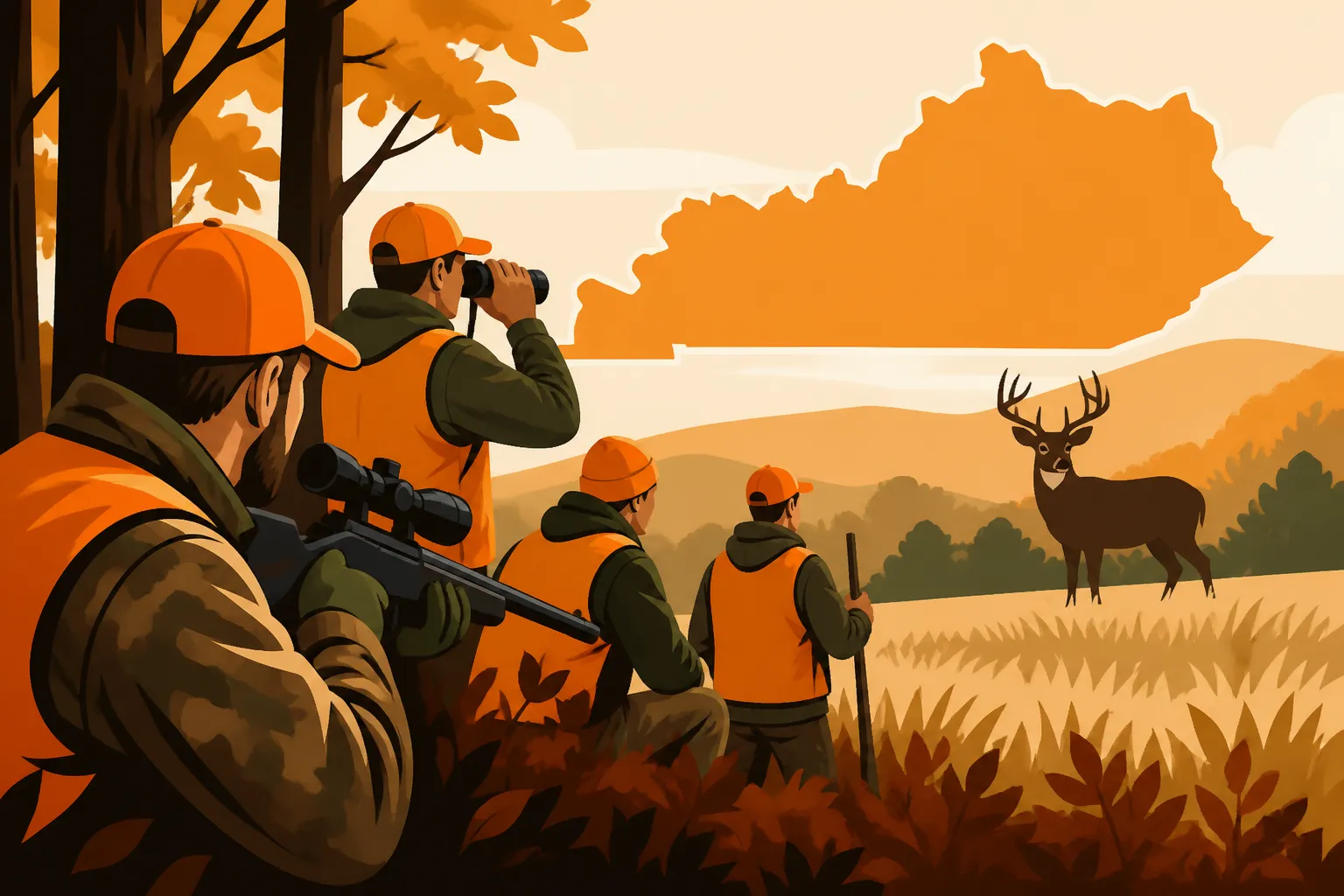
With only 3-4 hunters, assigning clear roles and ensuring everyone understands their part is non-negotiable. Typically, you'll have "drivers" and "standers." The drivers are the ones pushing through the cover, while the standers are positioned to intercept deer that are pushed out. The exact split will depend on the terrain and the number of hunters, but a common setup might be one or two drivers and two or three standers.
If you have three hunters, a 1-2 split (one driver, two standers) or a 2-1 split (two drivers, one stander) could work depending on the drive. For four hunters, a 2-2 split (two drivers, two standers) or even a 1-3 split (one driver, three standers) might be most effective. The driver's primary responsibility is to move through the pre-determined area, making enough noise or presence to get deer moving without scaring them into a full sprint. They need to pay attention to deer sign, cover, and their fellow hunters' positions. Their movement should be deliberate and controlled.
The standers, on the other hand, are the interceptors. Their role is arguably the most critical and requires immense patience and discipline. They must get to their stands quietly, maintain silence, and be absolutely motionless. Their job is to cover their assigned shooting lanes, remain vigilant for any movement, and be ready for a quick, ethical shot. Crucially, standers need to understand the potential escape routes for deer and anticipate where a pushed deer might try to sneak past. This means selecting a stand location that offers clear shooting lanes but also some natural cover to break up their silhouette. Sometimes, using a ground blind on Kentucky public land can be a great option for a stander, offering concealment and comfort.
Scouting and Planning Your Drive
Successful small-group deer drives aren't about luck; they're about meticulous scouting and planning. You're trying to outsmart an animal that lives and breathes in its environment, and with fewer boots on the ground, your preparation needs to be top-notch. This is where modern tools and old-fashioned woodsman skills truly merge.
Identifying Suitable Terrain and Cover
Before you even think about setting up a drive, you need to find the right spot. With only three or four hunters, you're looking for smaller, contained areas where deer are likely to be bedding or feeding, and where natural features will help funnel them. Think about areas with a clear "start" and "end" point for the drive. Good examples include a thicket on a point leading into a wider hollow, a narrow strip of woods between two open fields, or a dense bedding area nestled against a creek or impassable steep bluff. You want the terrain to work for you, limiting the deer's options and directing them toward your standers.
Utilize tools like a GPS mapping app (GoHunt is excellent for this) to analyze topographical maps and aerial imagery. Look for changes in elevation, creek drainages, logging roads, and variations in timber density. These features often create natural funnels or barriers that deer will follow or avoid. For instance, a saddle between two ridges provides an ideal scenario for Hunting a Ridge-Top Saddle for Rutting Bucks or a drive, as deer typically cross these low points. Pay close attention to recent deer sign: fresh tracks, droppings, and rubs will tell you if deer are actively using the area. If you're on public land, especially in places like Daniel Boone National Forest, understanding where Daniel Boone Forest bucks bed will give you a massive advantage.
In Western Kentucky bottomland deer often frequent, you might target thick river bottoms or swampy areas where deer seek refuge. In Eastern Kentucky, focus on benches, hollows, and fingers of timber on hillsides where deer might be bedding down. Consider the time of day and recent weather. Deer behavior changes dramatically with pressure, food availability, and weather fronts. If it's been cold, deer might be bedded in sun-exposed thickets. If it's warm, they might favor cooler, shadier spots near water. Always be thinking like a deer.
Mapping Out the Drive Route and Stand Placements
Once you've identified a promising piece of ground, the next step is to draw out your plan. Again, a good mapping app is indispensable here. Start by marking the boundaries of your drive. Then, identify the likely escape routes for the deer. These might be trails leading out of a thicket, low spots in a ridge, or breaks in a fenceline. These escape routes are where your standers need to be positioned. Remember, deer will almost always take the path of least resistance when pressured, so understanding these escape routes is key to a successful drive.
Next, mark the entry points for your drivers. With fewer drivers, you might have one person making a broad sweep or two people working parallel lines through the cover. Consider the wind direction carefully; your standers should ideally be downwind or crosswind of the deer's anticipated travel. Also, think about the sun's position – you don't want a stander staring directly into the morning or evening sun, hindering their visibility. When you're Reading Aerial Photos for Eastern Kentucky Deer, you're often looking for these subtle features that dictate stand placement.
Safety is paramount, so visually identify clear shooting lanes for your standers and make sure they know exactly where their fellow hunters are positioned. No shot should ever be taken toward another hunter. This means clear communication is essential, especially when Deer Drives With Three or Four Hunters are involved. Before the drive begins, everyone should review the map, understand their role, and confirm the locations of all participants. A quick walk-through of the stand locations, if practical and quiet, can also be beneficial to ensure everyone is on the same page regarding shooting zones and safety arcs.
Executing the Drive for Maximum Success
Once your plan is laid out, it's time to put it into action. The execution phase is where preparation meets reality, and even the best-laid plans can go awry without proper coordination and a keen understanding of deer behavior. With a small team, every step matters more.
Communication and Safety Protocols
Clear and concise communication is the backbone of any successful deer drive, but it becomes absolutely critical with a small group. You can't see everyone, and you're covering less ground, so knowing where everyone is and what they're doing is vital for both success and safety. Two-way radios are almost a requirement for small-group drives. They allow drivers to update standers on deer movement, and standers to confirm their positions or alert drivers to changes. Before the drive even starts, establish clear codes or phrases, such as "buck out left" or "doe moving slowly ahead," to convey information quickly and efficiently.
Safety must always be the first priority. Before you step foot in the woods, everyone needs to be wearing adequate blaze orange or blaze pink, as required by Kentucky law for firearms seasons. Even during archery seasons when drives are often employed, wearing orange is a smart safety measure, especially if you have drivers walking. Establish strict shooting lanes and ensure every hunter knows where their partners are located. Never shoot in the direction of another hunter or outside your safe zone of fire. When Tracking a Deer Through Kentucky Leaf Litter after a shot, always unload your weapon before moving into thick cover, especially if other hunters are still in the area. A small team means you have fewer eyes, so diligence in these safety aspects prevents accidents.
It’s also crucial to have a designated start and end signal for the drive. This ensures everyone begins and finishes simultaneously, preventing a stander from being in a position they shouldn't be in when a driver moves into their area. For example, a driver might give a radio call saying "Starting the push now," and all standers confirm they are in position. At the end, once the drivers have reached the standers or a pre-determined boundary, a "Drive complete" radio call signals that all weapons should be made safe, and hunters can move to recover game or regroup.
The Driver's Approach and Pace
The role of the driver in a small-group drive is extremely important. You're not just walking through the woods; you're orchestrating the movement of deer. With only one or two drivers, you need to be very intentional about your path and your pace. Instead of a fast, noisy push, think slow, deliberate, and a bit noisy. You want to make enough noise to get deer up from their beds and moving, but not so much that they panic and blow out of the area at full speed, potentially running through your standers' shooting windows too quickly or breaking through an unforeseen gap.
Vary your pace, pausing frequently. These pauses are crucial because deer will often stop and try to figure out what's pressuring them. When you pause, they might take a step or two, thinking the threat has passed, allowing your standers a better opportunity for a shot. Use natural contours of the land, like pushing along a specific ridge or through a thick creek bottom, to your advantage. Your goal is to gently nudge deer toward the standers, giving them time to react. If you're Hunting a Funnel Between Two Hollows, you'd want your drivers to push from the wider end, compressing the deer into the narrowest point where standers are waiting.
Pay attention to Wind and Thermals on a Kentucky Ridge. If the wind is swirling or unpredictable, it makes the driver's job even harder, as deer can pick up scent from unexpected directions. Try to drive in a way that keeps your scent from preceding you into the area where standers are located. Sometimes, one driver can act as a "flanker," moving along the edge of the thick cover to keep deer from veering off course, while the main driver pushes through the densest bedding area. This coordinated movement, even with just two drivers, can be surprisingly effective.
The Standers' Patience and Awareness
As a stander in a small-group drive, your primary assets are patience, stealth, and acute awareness. You've positioned yourself at a strategic pinch point or escape route, and now it's time to become one with the woods. Get to your stand quietly and well before the drive begins, minimizing any disturbance. Once there, remain absolutely still and silent. Even small movements or noises can alert an incoming deer, causing it to change direction or stop just out of range.
Your eyes and ears are your most powerful tools. Don't just stare straight ahead; constantly scan your surroundings, looking for any subtle movement – a flicking ear, a horizontal line in the vertical timber, the glint of an antler. Listen intently for approaching footsteps, rustling leaves, or the snap of a twig. Deer often slip out quietly, not crashing through the woods. Many times, you’ll hear them before you see them. If you're Setting Up on a Western Kentucky Field Edge, you need to be watching not just the field but also the wood line where deer are likely to emerge.
Be ready for the shot at all times. This means having your rifle shouldered, or your bow at the ready, whenever you anticipate deer entering your shooting lane. With fewer drivers, deer might come out slower and more cautiously, sometimes pausing just inside the timber line before committing to crossing an open area. Use any available cover to break up your silhouette, and be prepared to take an ethical shot quickly and decisively when the opportunity arises. Remember to stay focused until the "drive complete" signal is given; you never know when a straggler might sneak out the back.
| Role | Primary Responsibilities | Key Actions | Considerations for Small Groups (3-4 Hunters) |
|---|---|---|---|
| Driver(s) | Move deer from cover towards standers; maintain safety | Walk slowly, create intermittent noise, watch for deer movement | Fewer drivers mean smaller drive areas. Focus on dense cover, funnels. Slower pace is critical to avoid blowing deer. |
| Stander(s) | Intercept deer pushed by drivers; ensure safe shot | Arrive quietly, remain still/silent, scan, be ready for shot | Maximize strategic placement at known escape routes. Focus on vigilance and clear shooting lanes. Patience is key. |
Post-Drive Considerations and Lessons Learned
The drive doesn't end when the shot is fired or the last hunter exits the woods. What happens next, and how you learn from the experience, is just as crucial for future success. This final phase often determines whether you recover your game and how effectively you can refine your small-group tactics.
Tracking and Recovery
So, you or one of your buddies got a shot off. Now what? Even with a perfect shot, deer rarely drop in their tracks. That's especially true when they're already moving or feeling pressured from a drive. The immediate reaction is to rush in, but patience is your friend here. If the deer was hit well and didn't fall immediately, give it some time, especially if it was a marginal hit. A good rule of thumb is 30 minutes to an hour for a well-placed lung shot, and longer for gut shots (4-6 hours, or even until morning if shot late in the evening). Pressuring a wounded deer too soon can push it further, making recovery much harder.
Before you start tracking, mark the exact spot where the deer was standing when shot, and where it was last seen. Use flagging tape, a hat, or a bright piece of gear. With a small group, you can designate one person to stay at the last known spot while others start looking for the blood trail. When Tracking a Deer Through Kentucky Leaf Litter, pay attention to even the smallest speck of blood, disturbed leaves, broken twigs, or scuff marks. Walk slowly, scanning the ground carefully. If the trail becomes sparse, spread out your small team slightly to grid search the area, but always maintain visual or verbal contact.
Kentucky terrain can be unforgiving, with steep hollows, thick briar patches, and dense stands of timber. Dragging a deer out of a steep hollow can be a monumental task, even for a few strong hunters. Consider using a deer sled or game cart if the terrain allows. If you're on public land, remember that ATVs are often restricted to designated trails. Knowing how to efficiently field dress a deer in cold weather or warm weather is also critical, especially if you have a long haul back to the truck. This helps cool the meat and makes the drag easier.
Analyzing and Adapting Your Strategy
Every drive, successful or not, offers valuable lessons. Once the excitement (or disappointment) subsides, take some time to debrief with your hunting partners. What worked well? What didn't? Did the deer exit where you expected them to? Did the drivers push effectively? Were the standers positioned optimally? Be honest and analytical; this feedback loop is how you'll improve your small-group drive strategy.
Review your mapping app data from the drive. Where did you place the drivers and standers? What were the deer's actual escape routes? Did they use a different funnel than anticipated? Maybe you discovered a subtle low spot in a ridge you hadn't noticed on the map, or a thicket the deer preferred over the one you focused on. Use this information to refine your understanding of that specific piece of ground. Over time, you'll build an invaluable knowledge base for future hunts. Scouting Kentucky Public Land Before Season is not just a pre-season activity; it's an ongoing process that continues throughout your hunting endeavors.
Don't be afraid to tweak your tactics based on conditions. Perhaps the wind shifted unexpectedly, or you encountered more hunting pressure on Kentucky public land than anticipated. Next time, you might adjust your drive path, change stander locations, or even try a different piece of cover. With a small, agile team, you have the flexibility to adapt more quickly than a large, unwieldy group. Learning to read the subtle cues of the environment and the deer's reactions is what transforms a basic deer drive into an effective, consistent strategy for bringing home venison, even with just a few dedicated hunters.
Disclaimer
Hunting is an inherently dangerous activity. Always prioritize safety, follow all local, state, and federal hunting regulations, and ensure you have the proper licenses and permits before heading afield. This guide provides general information and recommendations, but individual circumstances and conditions may vary. Always exercise good judgment and consult with experienced professionals when in doubt.