Deer Sleds for Ridge Country
If you've ever found yourself staring down a steep Kentucky hollow after dropping a magnificent deer, feeling the dread creep in about the mile-long, uphill drag ahead, you know the struggle is real. The rough terrain, fallen timber, and rocky creek beds can turn a moment of triumph into an absolute back-breaking nightmare. This guide is all about making that grueling recovery a whole lot easier by introducing you to the magic of deer sleds, specifically designed to conquer the unique challenges of Kentucky's ridge country.
The Agony of the Drag: Why Traditional Methods Fall Short in Kentucky's Hills
Let's be honest, few things are as physically demanding as hauling a field-dressed deer through dense woods and over uneven ground. You're exhausted, adrenaline is wearing off, and now you have the Herculean task of moving hundreds of pounds of dead weight back to your vehicle. While a simple rope might suffice in flat, open fields, Kentucky's rugged topography demands a more strategic approach.
The Brutal Reality of Steep Terrain
Kentucky's landscape is a beautiful tapestry of rolling hills, deep hollows, and sharp ridges, especially in regions like Daniel Boone National Forest or the Cumberland Mountains. Picture this: you've made a perfect shot on a mature buck, only for it to run down into a steep, laurel-choked ravine. Now, not only do you have to get yourself down there, but you have to figure out how to get that deer out. Dragging directly on the ground means every root, every rock, every fallen log becomes a major obstacle. You're constantly getting snagged, having to lift, pull, and contort your body into awkward positions, risking slips, falls, and injuries that can put you out of commission for the rest of the season. It’s a battle against gravity, friction, and sheer exhaustion that often leaves hunters battered, bruised, and swearing they’ll never hunt that spot again.
The physical toll of this kind of dragging is immense. It's not just your back; your shoulders, knees, and even your grip can give out. The energy expenditure is through the roof, and if you're hunting alone, the task can feel almost impossible. Even with a partner, navigating a heavy deer through thick brush and up a slippery incline can test the limits of your endurance and friendship. Many a successful hunt has ended with a half-hearted drag job, leaving the hunter utterly drained and focused more on the suffering than the satisfaction of the harvest.
Protecting Your Harvest: Avoiding Contamination and Damage
Beyond the physical strain, dragging a deer directly on the ground poses significant risks to the quality of your hard-earned venison. As you pull the carcass, it inevitably picks up dirt, leaves, mud, and whatever else the forest floor has to offer. This contamination can not only make field dressing and butchering a much messier affair but also introduce bacteria that can compromise the meat. While you can trim away some of the affected areas, it's still a headache you'd rather avoid after all your effort.
Furthermore, direct dragging can cause physical damage to the deer. The hide can get torn or abraded by sharp rocks and stumps, which is a particular concern if you plan on caping the animal for a mount. More importantly, repeated impacts and friction can bruise the meat, especially in areas like the hindquarters or shoulders. Bruised meat isn't just unsightly; it can affect the flavor and texture, leading to unnecessary waste. When you've put in the time, scouting, and skill to harvest an animal, the last thing you want is to compromise the quality of the meat due to a difficult extraction.
Enter the Deer Sled: Your Back's Best Friend in the Bluegrass State
This is where the deer sled truly shines, transforming a dreaded task into a manageable one. Imagine a smooth, low-friction surface that glides over obstacles instead of getting hung up on them. That's the core principle behind these ingenious tools, and they've become an indispensable part of many Kentucky hunters' gear bags.
What Exactly is a Deer Sled and How Does It Work?
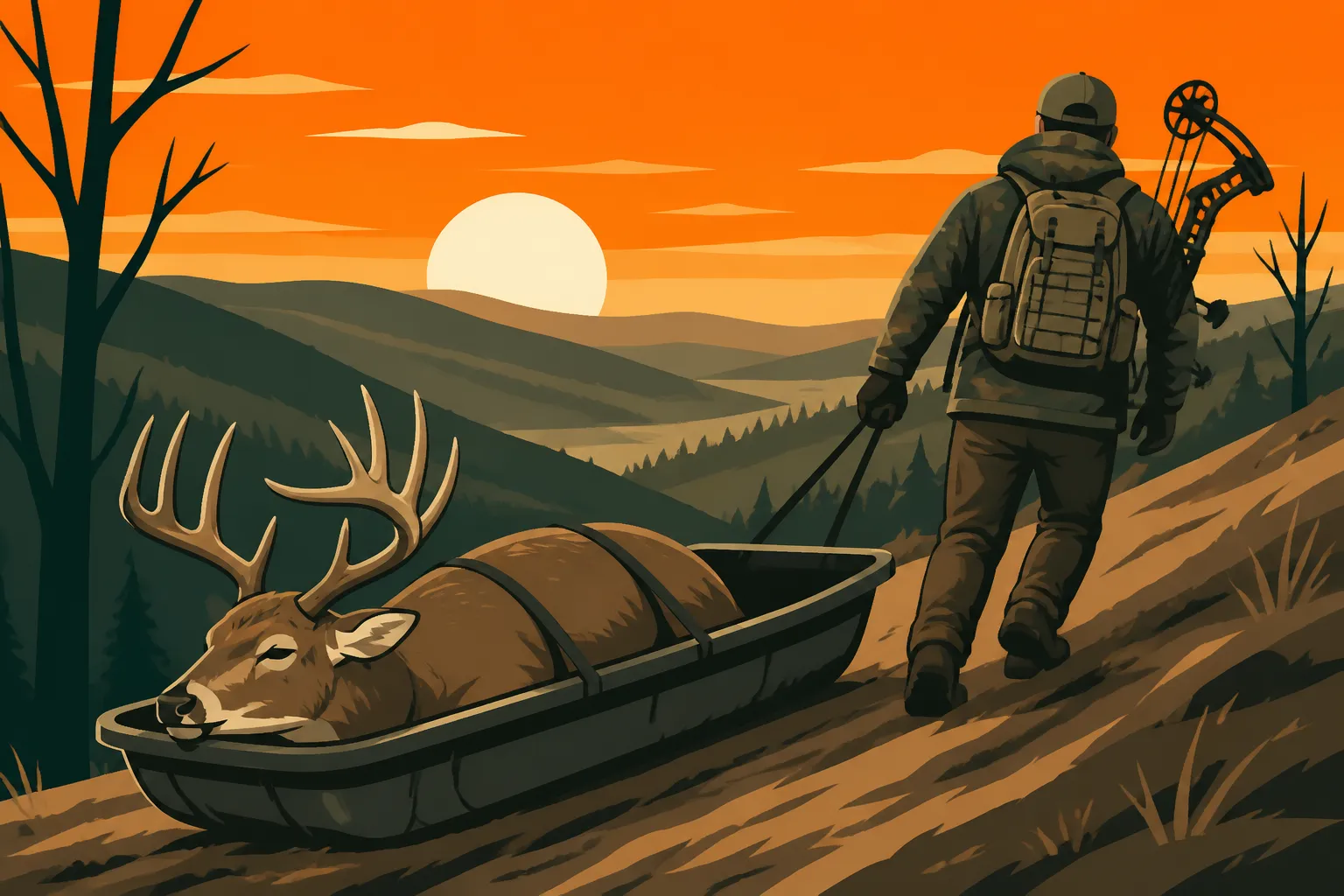
At its most basic, a deer sled is a robust, usually shallow, pan-shaped device typically made from durable polyethylene plastic. Think of a heavy-duty, oversized snow sled, but designed for pulling weight over rough terrain rather than gliding down snow. The key to its effectiveness lies in its smooth, slick bottom and often slightly upturned front lip, which allows it to slide over rocks, roots, brush, and uneven ground with significantly less friction than a deer carcass itself.
The deer is placed inside the sled, often secured with ropes or bungees, and then pulled by one or more hunters. The wide, flat base distributes the weight, preventing the sled from sinking into soft ground or mud, and the slick material drastically reduces the effort required to move the load. Many modern sleds feature molded ridges or channels on the bottom to enhance rigidity and tracking, preventing the sled from veering off course too much on slopes. They often come with reinforced attachment points or pre-drilled holes for threading a sturdy drag rope, and some even include built-in handholds for extra stability when navigating tricky spots.
Key Benefits of Using a Deer Sled on Kentucky's Ridges
The advantages of a deer sled in Kentucky's challenging terrain are manifold, and once you try one, you'll wonder how you ever managed without it.
First and foremost is the reduced effort you'll expend. The difference in pulling a deer directly versus pulling it in a sled is like night and day. Friction is the enemy of dragging, and a good sled drastically minimizes it. What once required two strong people might now be doable for one, or what took one person an hour might now take half the time with less strain. This means you have more energy left for the rest of your hunt or for getting home safely after dark. It’s a game-changer for solo hunters or those tackling notoriously difficult extraction routes.
Secondly, a sled ensures cleanliness and protection for your harvest. By cradling the deer within its shell, the sled keeps the carcass off the dirty ground, minimizing contact with mud, leaves, and debris. This is absolutely critical for maintaining the hygiene and quality of the meat, especially on warmer early season hunts or if you have a long way to go. It also protects the hide from scrapes and tears, preserving its integrity for tanning or taxidermy. Thinking about Meat Care Gear for Kentucky Hunters, a sled is just as important as good knives and game bags for keeping your venison in top condition.
Finally, sleds offer remarkable speed and versatility. A faster extraction means less time exposed to the elements, less risk of spoilage, and more time celebrating your success. And don't limit your sled's use just to deer! These robust tools are fantastic for hauling other bulky or heavy items, whether it's bags of corn for a feeder, firewood for camp, or even other hunting gear to a remote stand location. I've even seen hunters use smaller sleds to haul out turkeys after a successful Kentucky Spring Turkey Season Rules hunt when they don't want to get the bird's feathers messed up.
Different Types of Deer Sleds for Different Scenarios
Just like there are different types of rifles or bows for various hunting styles, deer sleds come in a variety of designs to suit different needs and preferences. Understanding these differences can help you pick the perfect one for your typical Kentucky hunt.
You'll generally find small, lightweight models that are incredibly portable. These are often narrower and shorter, designed for single deer, especially in areas where you might need to carry the sled in a fair distance. They're excellent for maneuverability through tight timber and thick brush, making them ideal for navigating the dense undergrowth often found in Eastern Kentucky's ridges and hollows. If you’re usually targeting average-sized whitetails and often hunt alone, a compact sled might be your best bet, especially if you prioritize easy carry over massive capacity.
Then there are larger, more robust sleds built for bigger bucks, multiple deer, or situations where you have a hunting partner. These models offer more surface area and deeper sides, providing greater protection and stability for larger animals. They are fantastic if you're hunting in areas known for trophy bucks or if you anticipate needing to haul out a significant amount of weight, perhaps even bringing back some other gear at the same time. The downside is they can be bulkier and heavier to transport to your hunting spot, so consider your access points. When planning your hunt, a tool like GoHunt can be invaluable for visualizing the terrain and potential exit routes, helping you decide if a larger sled's bulk is worth the hauling capacity on those long drags. Knowing if you're facing deep hollows or gentler slopes can really inform your gear choice.
You also have the choice between rigid and flexible sleds. Rigid sleds maintain their shape, offering superior protection and making it easier to load and secure a deer. They're excellent for very rough terrain where punctures are a concern. Flexible sleds, often made of a slightly thinner plastic, can be rolled or folded up, making them incredibly easy to pack into a backpack. While they might not offer the same level of structural protection as rigid models, their portability is unmatched for hunters who venture deep into the backcountry. Consider the typical distances you walk and the ruggedness of your hunting spots when making this choice.
| Sled Type | Ideal Use Case | Pros | Cons |
|---|---|---|---|
| Small, Rigid | Single deer, thick cover, solo hunts | Highly maneuverable, good protection, durable | Limited capacity, can be bulky to carry to spot |
| Large, Rigid | Big bucks, multiple deer, partner hunts, rough terrain | High capacity, excellent protection, very durable | Heavier, less maneuverable in tight spots, harder to pack |
| Flexible/Roll-up | Deep backcountry, minimalist hunters, small game | Extremely portable, lightweight, easy to pack | Less protection, can be harder to load/secure, less rigid |
Choosing the Right Deer Sled for Your Kentucky Hunt
Selecting the perfect deer sled isn't just about grabbing the first one you see. You need to consider the specific challenges of Kentucky hunting, from the rocky outcrops of the Daniel Boone National Forest to the muddy bottomlands of Western Kentucky. Your choice should complement your hunting style, the type of terrain you frequent, and the size of the game you pursue.
Material and Durability: Built to Withstand the Wilds
When you're pulling a heavy deer over jagged rocks, through tangled briars, and across abrasive gravel, the material your sled is made from is paramount. You need something that can take a beating and keep going. Most quality deer sleds are constructed from high-density polyethylene (HDPE) or similar specialized, rugged plastics. This material is chosen for its exceptional strength-to-weight ratio, its flexibility in cold weather (preventing cracking), and its naturally slick surface, which is key to reducing friction.
Look for a sled with adequate thickness in its material. A thicker plastic will be more resistant to punctures from sharp sticks or rocks, and it will hold its shape better under heavy loads, preventing excessive drag. Cheaper, thinner plastics might save you a few dollars upfront, but they are far more likely to fail you in the field, tearing or breaking when you need them most. Imagine finally getting your prize buck into the sled only for it to tear on a hidden stump during your long haul off Hunting Pine Mountain Ridgelines. The frustration would be immense. Invest in a sled that feels substantial and well-constructed, with no flimsy spots.
Size and Capacity: Matching Your Harvest and Haul
The "right" size sled depends heavily on what you're hunting and how you hunt. If you're primarily pursuing Kentucky whitetails, consider the average size of the deer in your hunting area. A mature Kentucky buck can easily weigh 150-200 pounds field-dressed, and you need a sled that can comfortably accommodate its length and width without it spilling over the sides or creating additional drag points.
If you often hunt with a partner, you might opt for a larger sled that can handle a substantial animal with room to spare, allowing both of you to share the pulling duties more effectively. However, if you're a dedicated solo hunter, a more compact and manageable sled that you can easily carry in your pack to your stand location is often a better choice. Remember, the sled has to get to the deer, too. A huge sled might be great for the drag out, but if it's too cumbersome to carry into your deep woods stand on Reading a Ridge for Cumberland Deer, it defeats the purpose. Think about your typical gear load for a day hunt and how the sled will integrate into that.
Attachment Points and Rope Systems: Secure and Ergonomic Hauling
The best sled in the world is useless if you can't securely attach a rope to it and pull effectively. Pay close attention to the design of the attachment points. Look for reinforced grommets, heavy-duty molded handles, or sturdy integrated loops where you can tie off your drag rope. These points should be strong enough to withstand significant pulling force without tearing through the plastic. Poorly designed attachment points are a common failure point for cheaper sleds.
Regarding the rope system, many sleds come with a basic rope, but often upgrading to a higher-quality, longer rope with a comfortable handle or even a shoulder harness can make a world of difference. A longer rope allows you to maintain a better pulling posture, especially on steep ascents or descents, and provides some distance between you and the sled, which can be helpful in tight spots. Rope material matters too; a strong, durable nylon or polypropylene rope with good abrasion resistance is ideal. Some hunters even fashion custom harnesses that distribute the pulling load across their shoulders and chest, saving their arms and back. When you're Dragging a Deer Out of a Steep Hollow, a well-designed harness can feel like a miracle.
When planning your extraction, remember that tools like GoHunt allow you to mark potential obstacles, stream crossings, and elevation changes on your maps. Knowing these details ahead of time can help you decide if you need a particularly robust rope system or if a simpler drag rope will suffice. It also helps you identify the path of least resistance, which is always the goal when using a sled in challenging territory.
Practical Tips for Effective Sled Use in Kentucky's Ridge Country
Owning a deer sled is one thing; using it effectively to maximize its benefits is another. There are a few tricks of the trade that can make your deer recovery even smoother and safer, especially when dealing with Kentucky's diverse and often unpredictable terrain.
Loading and Securing Your Deer for the Journey
Properly loading your deer into the sled is the first step to an efficient drag. Generally, it's best to place the deer head-first into the sled, facing the direction you'll be pulling. This position often allows the sled's upturned lip to act as a natural deflector, gliding over obstacles more easily. Make sure the deer is centered as much as possible to distribute the weight evenly, which helps with stability and prevents the sled from wanting to flip or snag on one side.
Once the deer is in, secure it! This is where bungee cords or additional lengths of rope become invaluable. Loop them over the deer's body and through the sled's attachment points or even the molded handles. Tuck the deer's legs in close to its body to prevent them from catching on brush or sticking out and causing extra drag. A well-secured deer won't shift around, which can throw off your balance and make pulling much harder, particularly on uneven ground or when navigating around trees. The goal is to make the deer as compact and stable within the sled as possible, creating a single, streamlined unit ready for the journey.
Navigating Obstacles and Steep Descents
Kentucky's ridge country is rife with obstacles: fallen timber, rock piles, deep ruts, and slippery leaf litter. While a sled makes these easier, they still require some technique. When encountering a large log or rock, sometimes a quick lift of the sled's nose can help it slide over, rather than getting stuck. If you're hunting with a partner, one person can lift the front while the other pushes the back, effectively "walking" the sled over the obstruction. For particularly tricky spots, especially on public lands like those described in Treestand Setups in Daniel Boone National Forest, a short detour around the obstacle might be more efficient than trying to power through it.
Steep descents require caution. On a very slick, steep slope, an unsecured sled can build up speed quickly and get away from you, potentially damaging the deer or causing a dangerous situation. Use your drag rope to control the descent; you can wrap it around a tree or use your body weight as a brake. If you have a partner, one person can guide the front while the other acts as a "rear anchor," holding back on the sled's tail to regulate its speed. It's often safer to take steep sections slowly and deliberately, prioritizing control over speed. This deliberate approach is similar to the careful movements you'd make when Still-Hunting Eastern Kentucky Ridges.
Maintenance and Storage: Keeping Your Sled Ready
Like any piece of hunting gear, your deer sled will last longer and perform better with a little care. After each use, especially if it's been a muddy drag, give your sled a good rinse with water to remove dirt, mud, and any blood. This not only keeps it clean for the next hunt but also prevents debris from grinding into the plastic and causing unnecessary wear. Inspect the sled for any damage, such as deep gouges or cracks, especially around the attachment points. While HDPE is tough, extreme impacts can cause damage, and catching a small crack early can prevent it from worsening.
Proper storage is also important. While incredibly durable, long-term exposure to direct sunlight can potentially degrade plastics over many years. Store your sled in a cool, dry place, ideally hanging it up or leaning it against a wall to prevent it from warping or taking on an odd shape if something heavy gets placed on it. A well-maintained sled is a reliable piece of equipment that you can count on for many seasons, just like you would meticulously care for your Rifle Setups for Kentucky Deer Hunting or Bow and Crossbow Setups for Kentucky. Having it ready to go, clean and intact, means one less thing to worry about when the moment of truth arrives.
When you invest in a quality deer sled and learn to use it effectively, the daunting task of deer recovery in Kentucky's challenging ridge country becomes significantly less intimidating. It protects your back, safeguards your harvest, and allows you to focus more on the satisfaction of a successful hunt rather than the sheer agony of the drag. Happy hunting, and may your drags be easy!
Disclaimer
This article is for general informational purposes only and does not constitute professional advice. Laws, prices and regulations vary by location and change over time. Consult a qualified professional for guidance on your specific situation.