Climber Stands on Straight Trunks
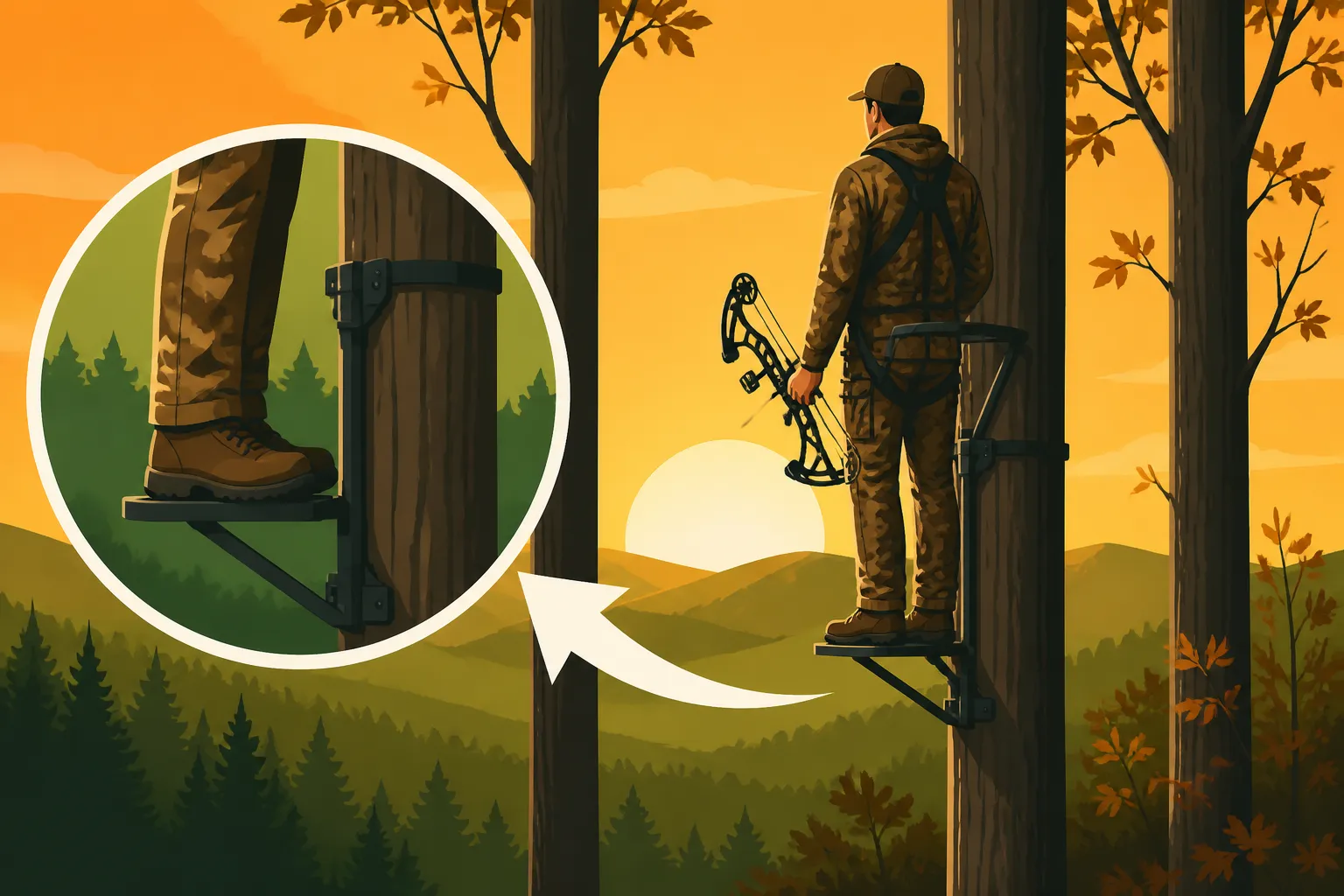
One of the most common headaches for any Kentucky hunter, especially on public land or when conditions change quickly, is finding a treestand solution that's both portable and effective. While hang-on stands require climbing sticks and ladder stands are a commitment, the often-overlooked climber stand can be a game-changer when you're faced with a sea of mature, straight-trunked timber. This guide will dive deep into why climbers are so effective in these specific situations, how to pick the perfect tree, and essential safety and hunting strategies to make the most of your mobile setup.
Why Climber Stands Shine in Kentucky's Timber
Kentucky's landscape offers a diverse array of hunting opportunities, from rolling bluegrass fields to the rugged, heavily wooded Appalachian foothills. For many public land hunters or those who like to stay mobile on private land, the sheer effort of packing in heavy gear or setting up permanent stands can be daunting. This is where the beauty of a climber stand truly comes into its own, particularly when you're targeting those vast stretches of mature timber that define so much of our state.
Portability and Quick Setup for Mobile Hunters
Let's face it, nobody wants to drag a cumbersome setup miles into the woods before dawn, especially if you're not even sure where the deer are going to be. Climber stands are designed for portability. They typically break down into two main sections that can be strapped together, worn like a backpack, and are surprisingly light compared to a hang-on with multiple climbing sticks. This makes them ideal for the "run-and-gun" hunter who wants to cover a lot of ground, react to fresh sign, or adapt to changing wind conditions without a huge investment in time or effort. Imagine scouting a new ridge, finding a fresh scrape line, and being able to set up a comfortable perch within minutes, rather than hours. This kind of flexibility is invaluable, particularly during the rut when deer patterns can be incredibly fluid.
Getting Above a Deer's Line of Sight
Deer, like most animals, are wired to look for danger horizontally. Their eyes are built to detect movement at ground level, but they're less accustomed to looking straight up into the canopy. By elevating yourself 15, 20, or even 25 feet high in a climber, you gain a significant advantage. This height not only helps you avoid detection by their keen eyesight but also helps carry your scent higher, reducing the chances of a deer winding you, especially when dealing with shifting thermals in a hollow or on a ridge. On a frosty morning when the leaves are crunchy underfoot, the ability to quietly ascend a tree and get into a position where you're nearly invisible can be the difference between a successful hunt and an empty truck. This is especially true when still-hunting Eastern Kentucky Ridges and you need to get up quickly.
Stealth and Minimal Disturbance
Unlike cutting shooting lanes for a permanent ladder stand or banging climbing sticks into a tree, setting up a climber is a relatively quiet affair. With practice, you can ascend a tree with minimal noise, creating far less disturbance in the woods. This low-impact approach is crucial on heavily hunted public lands where deer are already wary of human activity. It allows you to slip in and out of an area without leaving a significant footprint, meaning your chosen spot isn't "burned out" after a single hunt. The subtle movements required for climbing also mean you're less likely to alert nearby game, a huge benefit when you're trying to sneak into a bedding area fringe or a feeding funnel before first light.
Identifying the "Right" Trees for a Climber Stand
The biggest hurdle, and also the greatest strength, of a climber stand is its absolute reliance on finding the perfect tree. You can't just throw it on any old sapling. You need specific characteristics to ensure both safety and efficiency. This selection process is paramount to your success and, more importantly, your well-being.
Ideal Tree Characteristics for Climbers
When you're hoofing it through the woods with a climber strapped to your back, you're constantly scanning the canopy for that ideal trunk. What exactly are you looking for?
- Straight Trunks: This is non-negotiable. A climber needs a trunk that's as straight as possible, with no major bends, crooks, or excessive taper. Slight bends are manageable with some stands, but anything significant will either bind up the stand or create a dangerous angle. Think of mature oak, poplar, or maple trees often found in older stands of timber.
- Relatively Limb-Free: The section of the trunk you plan to climb needs to be clear of branches. Small nubs might be okay, but anything more than an inch or two in diameter will block your ascent. This is why mature trees with high canopies are often preferred – their lower trunks have naturally shed their limbs over time.
- Appropriate Diameter: Most climber stands have a specific range of tree diameters they can safely accommodate. Too small, and the stand won't grip securely; too large, and it won't wrap around the trunk properly. Typically, this range is somewhere between 8-20 inches, but always check your stand's manufacturer specifications. A good rule of thumb is that the tree should be able to fit comfortably within the stand's jaws without excessive stretching or pinching.
- Sturdy and Alive: This might seem obvious, but always ensure the tree is healthy and alive. Never climb a dead, decaying, or visibly diseased tree. Look for strong bark, no large hollows, and certainly no signs of major insect infestation or rot. A strong wind or your own weight could bring down a compromised tree, and you don't want to be on it when it happens.
Trees to Absolutely Avoid
Just as important as knowing what to look for, is knowing what to steer clear of. A bad tree choice can lead to a terrifying fall or, at the very least, a frustrating and wasted trip up the trunk.
- Leaning Trees: Unless you enjoy feeling perpetually off-balance and risking your stand slipping, avoid leaning trees. Gravity is not your friend here, and the stand will want to slide down the lower side of the lean, creating an unstable and dangerous platform.
- Heavily Tapered Trees: Trees that narrow dramatically as they go up can cause issues. As you ascend, the stand's sections will become looser, requiring constant readjustment and potentially leading to a slip. This is often an issue with younger, faster-growing trees or certain species.
- Rough, Shaggy Bark: While some stands can handle a bit of texture, overly shaggy or loose bark (like on some older shagbark hickories or even some mature oaks with deep furrows) can make climbing difficult and noisy. The stand's cables or chains might get hung up, or the bark itself could give way, causing a jarring slip.
- Trees with Vines or Obstructions: Kudzu, poison ivy, or dense briars wrapping around a tree not only make for an uncomfortable climb but can also hide hazards or interfere with the stand's mechanism. Always ensure your ascent path is clear.
- Dead or Decaying Trees: This cannot be stressed enough. A dead tree, even if it appears solid from the ground, could have internal rot or weak points that are invisible until you put weight on it. The risk of the tree snapping or a large limb breaking off is simply not worth it. When scouting public land, pay close attention to the health of the trees you're considering.
Using a mapping tool like GoHunt or even a standard topographic map can help you identify areas with mature timber stands that are more likely to offer these ideal characteristics. You can often see blocks of older forest, and then verify their suitability on the ground during pre-season scouting.
Safety First: Essential Climber Stand Practices
Regardless of how skilled you think you are, treestand hunting inherently comes with risks. With a climber stand, where you are actively moving up and down the tree, these risks are amplified. Prioritizing safety is not just good advice; it's a non-negotiable aspect of every hunt.
Always Wear a Full-Body Harness
This is the golden rule, and it's absolutely non-negotiable. Every time your feet leave the ground, you should be wearing a full-body harness that is properly attached to the tree. No exceptions. Modern harnesses are comfortable, lightweight, and won't hinder your movements. The moment you step into your stand, you should be tethered to the tree. If you were to slip, or if a part of your stand were to fail, that harness is your lifeline. Think of it as your hunting insurance policy. Many hunters also carry a secondary short tether or a safety line that can be attached to the tree at ground level and then moved up with you as you climb. This ensures you are always connected to the tree from the moment you leave the ground until you are safely back on terra firma. Make sure to check out our deep dive into Treestand Safety Gear for Steep Ground.
Pre-Season Inspection and Maintenance
Your climber stand is a piece of equipment that takes a beating. Before every season, and ideally before every hunt, give it a thorough once-over.
- Check all straps, cables, and chains: Look for fraying, cracks, kinks, or excessive wear. Any sign of damage means it's time for replacement.
- Inspect all welds and pivot points: Ensure there are no cracks or signs of metal fatigue. Lubricate moving parts if recommended by the manufacturer.
- Test all buckles and fasteners: Make sure they operate smoothly and lock securely.
- Review your harness: Check for torn stitching, frayed webbing, or damaged buckles. Remember, UV exposure and weather can degrade synthetic materials over time.
Regular maintenance isn't just about extending the life of your gear; it's about protecting yours. It's much easier and safer to find a problem in your garage than 20 feet up a tree in the dark.
Proper Climbing Technique
There's a rhythm to climbing, and mastering it makes the process smoother and safer.
- Start with a good base: Ensure the bottom section of your stand is firmly gripping the tree at a comfortable height.
- Attach your tether: Secure your harness tether to the tree.
- Use your legs: Stand up, using your leg muscles to lift the bottom section of the stand a few inches.
- Reseat the bottom: Let your weight settle onto the bottom section, ensuring it's firmly locked in place.
- Use your arms/upper body: Lean forward, lift the top section a few inches, and reseat it.
- Repeat: Continue this alternating motion, keeping your body close to the tree, until you reach your desired height.
- Descent: The process is reversed, keeping careful control and using smooth, controlled movements. Never try to descend too quickly.
Always maintain three points of contact (two hands and a foot, or two feet and a hand) with the stand or tree as you climb. Practice at home, close to the ground, before heading into the woods. A simple misstep or loss of rhythm can be dangerous, especially with cold hands or tired muscles.
Emergency Preparedness
Even with the best precautions, accidents can happen. Having an emergency plan is vital.
- Communicate: Always tell someone where you are going and when you expect to be back. A simple text with your specific location on a mapping app like GoHunt can be a lifesaver.
- Carry a cell phone: Keep it charged and accessible, even in an insulated, waterproof pouch.
- Emergency signaling device: A whistle or personal locator beacon (PLB) can alert others if you're injured and can't use your phone.
- Rescue device: Consider carrying a self-rescue device, like a lineman's rope or a safety line with an ascender/descender, especially if you hunt alone in remote areas. These devices allow you to safely lower yourself to the ground if you become suspended after a fall. Remember, suspension trauma is a real and serious threat if you're left hanging for an extended period.
| Tree Characteristic | Suitable for Climber Stand | Unsuitable for Climber Stand |
|---|---|---|
| Trunk Shape | Straight, minimal taper, no significant crooks or bends. | Noticeable lean, excessive taper (cone-shaped), multiple major bends. |
| Limb Structure | Free of limbs and large knots on the climbing section. | Large limbs or branches obstructing the climbing path. |
| Bark Texture | Relatively smooth or moderately furrowed bark (oak, poplar, maple). | Shaggy, loose, or deeply fissured bark (some hickories, certain old growth oaks). |
| Diameter Range | Within manufacturer's specified range (e.g., 8-20 inches). | Too small (stand won't grip), too large (stand won't wrap around). |
| Health of Tree | Live, healthy tree with strong bark and no signs of rot or disease. | Dead, decaying, visibly diseased, or hollow trees. |
| External Obstructions | Clear of dense vines, briars, or other vegetation that could interfere with climbing. | Heavily covered in thick vines (kudzu, poison ivy) or dense thorny brush. |
Maximizing Your Hunt from a Climber: Tactics and Tips
Now that you're comfortable and safe in your climber, let's talk about how to use it to its full potential to increase your chances of success. A climber stand offers a unique advantage for adapting to ever-changing conditions in the Kentucky woods.
Strategic Tree Selection Beyond "Straight"
While "straight" is crucial for the stand itself, your ultimate goal is to pick a tree that provides the best hunting advantage. This involves thinking a few steps ahead.
- Consider the wind: Always position yourself downwind or crosswind of where you expect deer to approach. No stand, no matter how high, can completely negate a swirling wind in a deer's nose. Use a wind checker before you even start climbing.
- Evaluate cover: Look for a tree with some natural cover around it, even if it's just a few leafy branches or some saplings. This breaks up your outline and makes you less conspicuous. Don't choose a lone tree in an open area unless absolutely necessary.
- Anticipate shot angles: Once you're up, you'll be shooting down. Think about what your shot opportunities will look like. Will there be brush interfering with a downward shot at close range? Is there an open lane through which deer are likely to pass? This often means finding a tree that overlooks a well-used trail, a Hunting a Funnel Between Two Hollows, or a specific food source.
- Sun position: Consider the sun's position throughout your hunt. Early morning and late evening sun can blind you or highlight your position. Try to position the tree so the sun is at your back, especially during prime hunting hours.
- Access and Exit: How will you get to and from your stand without spooking deer? Choose a tree that allows for a quiet, concealed approach and exit, especially if you're setting up near a bedding area or an active feeding zone. Entry Routes Through Standing Beans can be tricky, so thinking about the stand's placement relative to these factors is key.
Optimal Height and Stability
Finding the "right" height isn't just about getting above a deer's nose; it's about comfort, stability, and shot opportunities.
- Go high, but not too high: While getting up high can be beneficial, there's a point of diminishing returns. The higher you go, the more exaggerated your downward shot angle becomes, shrinking your vital zone on a deer. Most hunters find a sweet spot between 18-25 feet. This gets you above most deer's line of sight and scent cone, while still allowing for good shot placement.
- Level it out: Once you're at your desired height, take the time to ensure both sections of your climber are perfectly level. A wobbly or tilted stand is uncomfortable, unsafe, and will make you shift and fidget, increasing your chances of being spotted. Adjust the cables or chains as needed to get a stable, flat platform.
- Secure your stand: Many climbers allow you to cinch the cables or chains extra tight once you're at hunting height. Do this! A snug stand is a quiet stand, and it prevents any unwanted movement or noise when you shift your weight or draw your bow.
Quiet Movement and Scent Control
You've put in the effort to get high and pick the perfect tree; don't ruin it with sloppy movements or a strong human odor.
- Silence is golden: Before heading into the woods, silence your stand. Wrap noisy sections with camouflage tape, felt, or even athletic tape. Lubricate any squeaky parts. During the hunt, move slowly and deliberately. If you need to shift, do it slowly and quietly. Any sudden, unnatural sound will send deer bolting.
- Scent control is still king: Even elevated, your scent will eventually drift. Use scent-eliminating sprays, wash your hunting clothes in unscented detergent, and store them in airtight containers. Avoid strong-smelling foods or drinks in your stand. Remember the wind and thermals are constantly changing, especially in varied terrain like Kentucky's ridges and hollows.
- Minimize gear: A climber is about mobility, so don't overload yourself. Bring only essential gear: your weapon, a rangefinder, binoculars, a call, and perhaps a small snack and water. A quiet pack, like those designed for a Packs for a Daniel Boone Forest Day Hunt, is ideal. The less you have to fumble with, the quieter and more efficient you'll be.
Using a climber stand effectively in Kentucky's diverse timber is an art form that blends careful preparation with tactical execution. By understanding its advantages, rigorously adhering to safety protocols, and employing smart hunting strategies, you can unlock new hunting opportunities and experience the satisfaction of a successful, self-sufficient hunt in our beautiful state.
Disclaimer
This article is for general informational purposes only and does not constitute professional advice. Laws, prices and regulations vary by location and change over time. Consult a qualified professional for guidance on your specific situation.