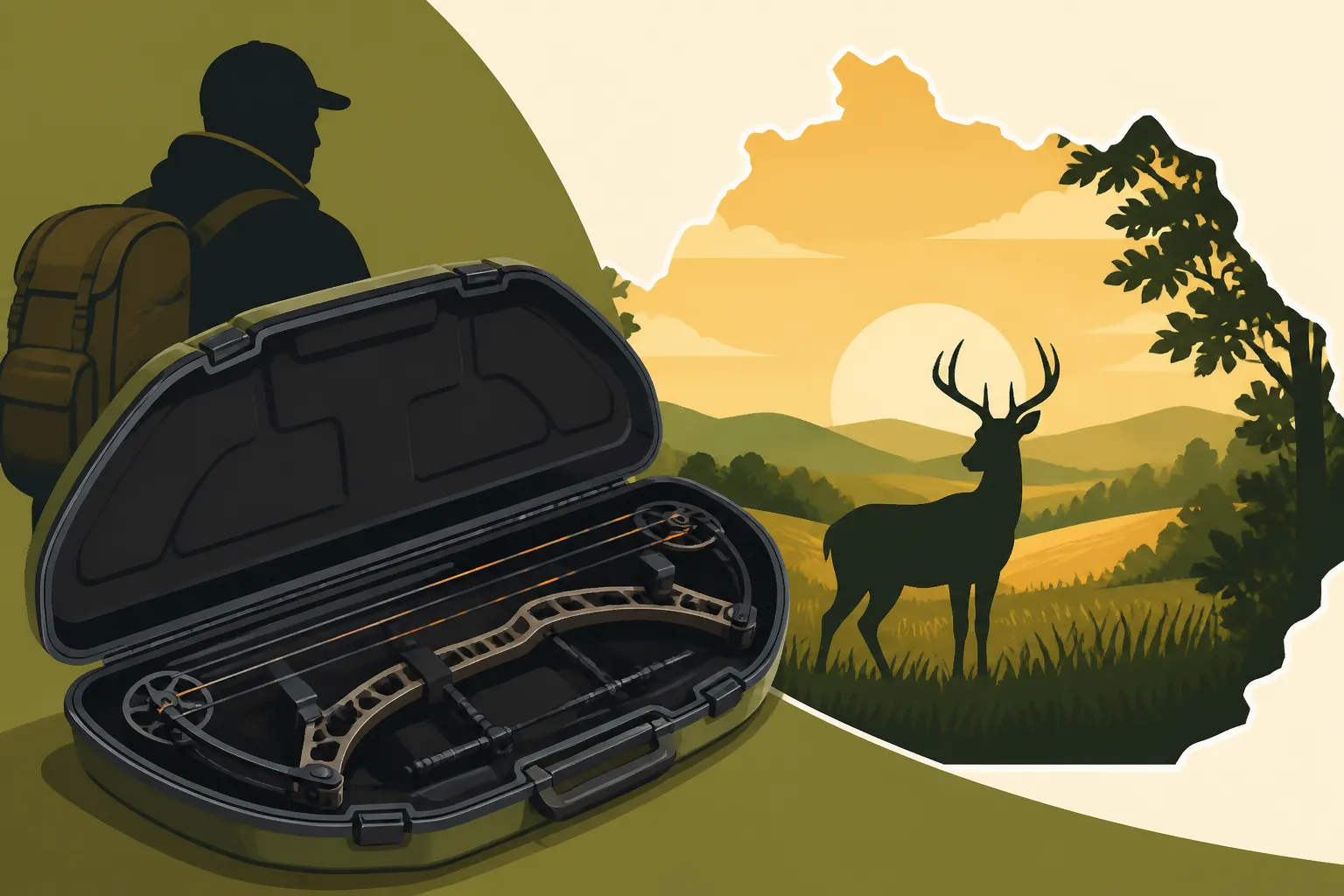
Bow Cases for Travel to Kentucky
Traveling to hunt in Kentucky is an exciting prospect, but the last thing any hunter wants is to arrive with damaged gear. Your bow, a precision instrument that represents a significant investment and countless hours of practice, needs robust protection from the moment you leave home until you set up your stand. This guide will walk you through everything you need to know about choosing and packing the perfect bow case for your Kentucky hunting adventure, ensuring your equipment arrives safe and sound, ready for the woods.
Understanding Your Bow Case Needs for Kentucky Travel
Before you even start looking at specific cases, it's vital to assess your personal travel style, the type of hunting you'll be doing in Kentucky, and what level of protection your valuable equipment truly needs. Not all cases are created equal, and what works for a quick trip across town might fall woefully short for a cross-country journey or a rugged trek into the Daniel Boone National Forest.
Why a Good Bow Case is Non-Negotiable
Your bow is more than just a piece of hunting equipment; it's a finely tuned machine that relies on precision to perform. The cams, limbs, sight, and rest are all vulnerable to impacts, moisture, and even dust during transit. A damaged bow can mean a missed shot, a ruined hunt, or worse, a costly repair bill and lost time in the field. Think about the time and effort you've put into setting up your Bow and Crossbow Setups for Kentucky – a quality case safeguards that investment. Without proper protection, a slight bump in the truck bed, a drop during loading, or rough handling by baggage services can throw your setup out of tune, bend a cam, or crack a limb. You simply can't afford to take chances with your primary hunting tool.
Beyond physical damage, a good case also provides security. Modern bows are expensive, and unfortunately, they can be targets for theft. A lockable case adds a layer of deterrence, giving you peace of mind when your gear is out of your immediate sight, whether it's in the back of your truck at a gas station or checked as luggage at an airport. Moreover, in Kentucky's varied climate, from crisp autumn mornings to rainy November days, protecting your bow from moisture and dust is crucial. Even a little rust or grit can impair performance, and a good case forms the first line of defense against the elements.
Types of Bow Cases and Their Primary Uses
The market offers a range of bow cases, each designed for different levels of protection and modes of transport. Understanding the distinction between them is key to making an informed choice for your trip to Kentucky.
Hard Cases: These are the heavy-duty champions of bow protection. Typically constructed from rugged plastics or composite materials, hard cases feature rigid exteriors and dense foam interiors that are often customizable to cradle your bow perfectly. They excel at absorbing impacts, resisting punctures, and providing a strong barrier against dust and moisture. If you plan on flying into Kentucky, a hard case is almost certainly going to be your best bet, as they are designed to withstand the rigors of airline baggage handling. They are also ideal for long road trips where your gear might be exposed to bumps, vibrations, or crammed in with other equipment.
Soft Cases: On the other end of the spectrum are soft cases. Made from durable fabrics like Cordura or ballistic nylon, these cases are lighter, more flexible, and easier to store when not in use. While they offer good protection against scratches, minor bumps, and general abrasion, they don't provide the same level of impact resistance or structural integrity as hard cases. Soft cases are excellent for transporting your bow short distances in the back seat of a vehicle, carrying it a brief walk to the stand, or for hunters who prioritize lightweight and low-profile gear. They often come with exterior pockets for accessories, adding a layer of convenience. However, they are generally not suitable for air travel or situations where your bow might endure significant forces.
Choosing between these often comes down to balancing protection with portability and convenience. For a multi-day hunt traversing different terrains, you might even consider using both: a hard case for the primary journey to Kentucky, and a soft case for daily transport once you're on the ground at your hunting location.
Key Features to Look for in a Travel Bow Case
Once you understand the general types of cases, it's time to dive into the specifics. A truly effective bow case for travel isn't just a box; it's a carefully engineered piece of gear with features designed to protect your investment and simplify your journey.
Protection and Construction Materials
The foundation of any good bow case is its ability to protect your gear. This starts with the materials and design. For hard cases, look for high-impact resistant polymers like polypropylene or injection-molded resins. These materials can withstand significant force without cracking or deforming, crucial for protecting against drops or heavy items falling on your case. Pay attention to the rigidity of the shell – you want minimal flex. Another critical protective feature, especially when hunting in Kentucky where weather can change quickly, is weather sealing. O-ring gaskets along the lid create a watertight and dust-proof seal, keeping rain, snow, and fine dust out of your case. You don't want your sight pins rusting or your string getting gritty after a damp night.
Inside the case, the quality of the foam is paramount. High-density, closed-cell foam is ideal as it provides superior cushioning and resists moisture absorption. Many hard cases come with pick-and-pluck foam that allows you to customize the interior to precisely fit your bow, ensuring it doesn't shift during transit. Some higher-end cases offer pre-cut inserts specifically molded for popular bow models, or adjustable padded walls to secure your bow firmly in place. For soft cases, look for thick padding, especially around critical areas like cams and limbs, and durable outer fabrics that resist tears and abrasion from brush or rough surfaces.
Security and Portability
Traveling with valuable gear means security should be a top concern. For hard cases, robust, heavy-duty latches are essential. Look for cases with multiple latches that engage securely and prevent accidental opening. Many cases are designed with reinforced padlock points, allowing you to use TSA-approved locks if you're flying. Remember, if you're checking your bow on an airline, a TSA-approved lock is mandatory, allowing security personnel to open it without damaging your case.
Portability is another major factor, especially if you'll be navigating airports, hotel lobbies, or uneven terrain. Cases with built-in wheels can be a lifesaver, transforming a heavy, awkward load into something manageable. Look for sturdy, inline skate-style wheels that can handle various surfaces. Comfortable, ergonomic carrying handles are also important, ideally positioned to balance the case when lifted. Some hard cases even offer multiple handles, making it easier for two people to carry. For soft cases, a comfortable, padded shoulder strap or even backpack-style straps can make a big difference when walking into your hunting spot, particularly if you're taking advantage of public lands like those detailed in Scouting Kentucky Public Land Before Season.
Storage and Organization
A good bow case doesn't just protect your bow; it helps you organize all the small, but critical, accessories that go along with it. Many cases feature dedicated storage compartments or pockets. For hard cases, this might mean integrated tubes for arrows, slots for broadhead boxes, or compartments for your release, rangefinder, and other essentials. Some even have space for a quiver to remain attached or stored internally.
Soft cases often excel in external storage, with multiple zippered pockets that can hold field dressing kits, grunt tubes, extra release aids, or even your Packs for a Daniel Boone Forest Day Hunt essentials. Consider how much gear you typically carry and how you prefer to organize it. A well-designed case will keep everything secure, prevent items from rattling around and potentially damaging your bow, and make it easy to find what you need quickly when you're setting up for the hunt. For instance, having a dedicated spot for your allen wrenches to make a quick sight adjustment can save you a lot of frustration in the field.
Choosing the Right Case for Your Kentucky Adventure
Kentucky offers diverse hunting opportunities, from rolling bluegrass fields to rugged eastern mountains. Your travel method and destination within the state should heavily influence your bow case selection.
Flying into Kentucky with Your Bow
If your journey involves air travel, your choice of bow case becomes significantly more critical. Airlines have specific regulations for transporting firearms and archery equipment, and your case must meet these requirements. The most crucial factor is usually a hard-sided case that is lockable. The case must be able to withstand the rough and tumble of baggage handling. Many manufacturers specifically label their cases as "airline approved" or "TSA compliant." You'll need to use TSA-approved locks, which allow airport security personnel to open the case for inspection without damaging your locks or the case itself.
When checking in, you'll typically need to declare your bow at the ticket counter. It will then be processed as a "declared fragile item" or similar. Always check with your specific airline well in advance of your flight for their exact policies and any size or weight restrictions. Packing your broadheads separately in a secure container inside your case is also a good practice. While air travel is convenient, the potential for damage is high, making a robust, lockable hard case an absolute must. You'll want to ensure your bow is secured inside to prevent any movement within the case that could lead to bent sights or damaged cams during transit.
Road Tripping Across the Bluegrass State
Driving to your Kentucky hunting destination offers more flexibility but still demands a thoughtful approach to bow protection. Whether you're traveling from a neighboring state or simply crossing Kentucky for Hunting Western Kentucky Bottomland Deer, your bow will be exposed to different elements and movements.
For vehicle transport, both hard and soft cases can work, but their suitability depends on how and where you'll store your bow. If it's in the cab, secured and away from other gear, a padded soft case might suffice. It's lighter and easier to maneuver. However, if your bow will be in the bed of a truck, especially uncovered, a hard case is highly recommended. It will protect against dust, road grime, rain, and impacts from other shifting cargo. Even if covered, bumps and vibrations can take a toll. Consider how much space you have in your vehicle. Hard cases can be bulky, while soft cases are more forgiving with tight spaces. Ensure your chosen case fits comfortably without being forced, as this can put undue stress on your bow or the case itself.
Considerations for Backcountry Hunts
Kentucky has vast public lands, including portions of the Daniel Boone National Forest, where accessing remote areas means covering significant ground on foot. If you're planning a backcountry hunt, perhaps targeting an elusive buck in Where Daniel Boone Forest Bucks Bed, the weight and bulk of your bow case become paramount once you leave the vehicle.
While a hard case might get your bow to the trailhead, you'll likely want a more streamlined solution for the actual hike into your stand. Many hunters opt for a durable soft case that can be easily lashed to a frame pack or carried comfortably for extended periods. Look for cases with robust zippers, external pockets for quick access to essentials, and padded straps. Some minimalist designs simply protect the bow's cams and strings while leaving the limbs exposed, reducing weight and bulk.
When scouting these remote locations using tools like GoHunt, which helps you identify potential hunting spots and access routes, you're constantly thinking about how you'll get your gear in and out. This forward-thinking approach should extend to your bow case. A case that is too heavy or cumbersome for a multi-mile trek can quickly become a liability, draining your energy before the hunt even begins. Consider a lightweight, weather-resistant soft case for day-to-day use in the field, even if you use a hard case for the initial drive to Kentucky.
Here’s a quick comparison to help you weigh your options:
| Feature | Hard Bow Case | Soft Bow Case |
|---|---|---|
| Primary Use | Air travel, vehicle transport, long trips | Short trips, vehicle interior, walking to stand |
| Protection | Excellent (impact, puncture, weather) | Good (scratches, minor bumps, dust) |
| Security | High (lockable latches, reinforced points) | Moderate (zipper locks, less structural) |
| Durability | Very High (rigid shell) | Moderate (fabric, less rigid) |
| Portability | Can be bulky, often with wheels | Lightweight, easy to carry, backpack options |
| Storage | Integrated compartments, custom foam | External pockets, less internal organization |
| Weather Seal | Excellent (O-ring gaskets) | Minimal to Good (water-resistant fabric) |
| Cost | Generally Higher | Generally Lower |
Packing Your Bow Case Like a Pro
Having the right case is only half the battle; how you pack it makes all the difference. Proper packing ensures maximum protection and prevents damage to your bow and accessories during transit.
Securing Your Bow and Accessories
The goal when packing is to eliminate all movement within the case. For hard cases with pick-and-pluck foam, take your time to create a snug, custom fit for your bow. Ensure the cams are fully supported and the limbs are cradled without being stressed. The sight and rest are particularly vulnerable, so make sure they are well-padded and not in a position to be struck. Some hunters even remove their sights and store them in a smaller, padded accessory pouch within the case for extra protection. If your case uses straps, cinch them down firmly but don't overtighten them to avoid stressing your limbs.
For soft cases, pay extra attention to padding around the cams, riser, and sight. Use clothing, towels, or dedicated padded inserts to fill any voids. Never just toss your bow in; every movement inside the case is an opportunity for damage. Arrow storage is also crucial. Many cases have integrated arrow tubes or separate compartments. If not, consider a separate arrow tube to protect your shafts and fletchings. Loose arrows can rattle around, get bent, or damage other gear.
Essential Items to Include
Beyond the bow itself, your case should be a well-stocked extension of your hunting kit. Think about what you absolutely cannot hunt without and what might be difficult to replace on short notice in a rural Kentucky town.
- Allen Wrench Set: Indispensable for tightening screws on your sight, rest, or quiver. Loose components can throw off your accuracy or even fall off.
- Spare Release Aid: A broken or lost release can end your hunt. Having a backup is cheap insurance.
- Broadheads (in a secure box): Keep them sharp and protected, and away from your bow string.
- String Wax and Lube: Essential for maintaining your string and cables, especially in varying humidity.
- Small Repair Kit: A few spare D-loops, nocks, and possibly a string serving tool can save a hunt.
- Rangefinder: Keep it protected from impacts.
- Small Flashlight or Headlamp: Always useful, especially when walking in or out of your hunting spot in the dark.
- License and Permits: While you'll likely carry these on your person, having a backup copy in a waterproof bag in your case isn't a bad idea, especially after navigating the requirements for Kentucky Hunting Licenses and What They Cost.
- Bow Tuning Tools: If you have any specific tools for micro-adjustments to your sight or rest, include them.
Packing smart means you're prepared for almost anything the Kentucky woods might throw at you. A little extra thought at home can prevent a lot of headaches in the field.
Investing in a quality bow case and packing it properly is an investment in your hunt itself. It ensures your precision equipment arrives ready for action, allowing you to focus on the thrill of the chase rather than worrying about damaged gear. Whether you're flying across the country or just driving to a local WMA, choosing the right case for your specific travel needs will safeguard your investment and contribute to a successful, stress-free hunting experience in Kentucky.
Disclaimer
This article is for general informational purposes only and does not constitute professional advice. Laws, prices and regulations vary by location and change over time. Consult a qualified professional for guidance on your specific situation.