8×42 Versus 10×42 in the Woods
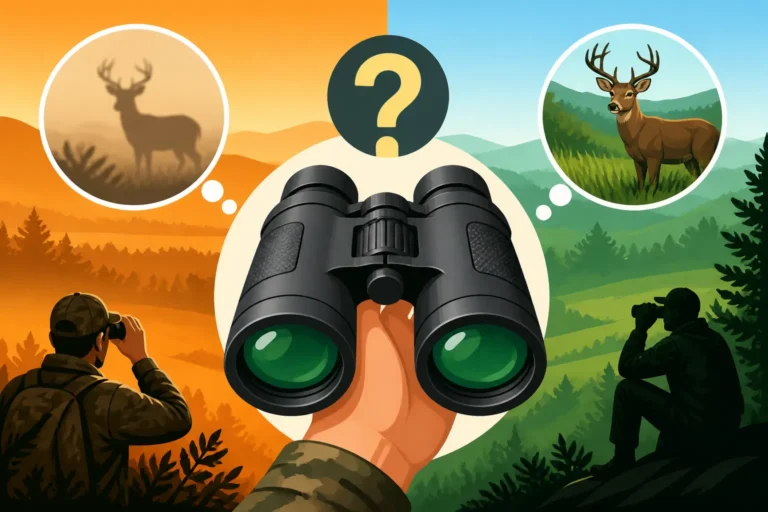
Choosing the right binoculars can feel like a real head-scratcher, especially when you're trying to outfit yourself for the diverse landscapes of Kentucky. It’s a common frustration, isn't it? You see those numbers – 8×42, 10×42 – and wonder if the extra magnification is truly worth it, or if you'll sacrifice too much stability and brightness in our often-thick timber. This guide is here to unravel that mystery, helping you understand the real-world differences between these popular binocular choices so you can confidently pick the pair that best suits your hunting style and the wild places you love to explore.
Understanding Binocular Specifications: What Do the Numbers Mean?
Before we dive into the nitty-gritty of each binocular type, it's essential to grasp what those numbers like "8×42" or "10×42" actually signify. They're not just arbitrary figures; they tell you a whole lot about how the optics will perform in the field. Understanding these basic specs is the first step to making an informed decision, and it’s something many folks overlook in their rush to compare brands or prices.
Magnification The First Number
The first number, in our case "8x" or "10x," refers to the binocular's magnification power. Simply put, an 8x binocular makes an object appear eight times closer than it would to your naked eye, while a 10x binocular makes it appear ten times closer. So, if a deer is 200 yards away, an 8x optic makes it look like it's 25 yards away, and a 10x optic brings it in to appear like it's just 20 yards.
Now, on paper, that extra 2x magnification from a 10x sounds like a clear win, right? You want to see things closer. But hold your horses, because more magnification isn't always better, especially when you're tucked away in a dense Kentucky hollow or perched in a swaying treestand. Higher magnification amplifies not just the image, but also any hand shake or movement, making it harder to hold a steady view. It also narrows your field of view, which we'll discuss next. Think of it like trying to zoom in too far on your phone camera; everything gets shaky and you lose the bigger picture.
Objective Lens Diameter The Second Number
The second number, "42mm" in both our examples, indicates the diameter of the objective lenses in millimeters. These are the large lenses at the front of your binoculars, the ones facing away from your eyes. The objective lenses are crucial because they're responsible for gathering light. A larger objective lens can collect more light, which translates to a brighter, clearer image, especially in low-light conditions.
For hunting, this is a huge deal. How many times have you been out at dawn or dusk, trying to pick out the outline of a deer in the shadows? That's when every bit of light gathering capability counts. A 42mm objective lens is a fantastic all-around size, offering a good balance between light transmission and overall binocular size and weight. While larger objective lenses (like 50mm or 56mm) would gather even more light, they also make the binoculars bulkier and heavier, which can be a real drag when you're hiking through the Daniel Boone National Forest Hunting or trying to stay nimble.
Exit Pupil and Brightness Factor
Okay, now let's combine those two numbers to get something called the "exit pupil," which is a critical factor for brightness. The exit pupil is the diameter of the column of light that actually enters your eye when you look through the binoculars. You calculate it by dividing the objective lens diameter by the magnification. So, for an 8×42, the exit pupil is 42mm / 8 = 5.25mm. For a 10×42, it's 42mm / 10 = 4.2mm.
Why does this matter? Well, in broad daylight, your eye's pupil typically constricts to around 2-3mm, so both 8×42 and 10×42 will provide more than enough light. But as light fades at dawn or dusk, your pupils dilate to let in more light, sometimes up to 5-7mm in younger individuals. If your binocular's exit pupil is smaller than your eye's dilated pupil, you're essentially looking through a dimmer window. The 8×42, with its larger 5.25mm exit pupil, will deliver a noticeably brighter image in those critical low-light moments compared to the 10×42's 4.2mm, especially for hunters with naturally larger pupils. This difference can be the deciding factor between spotting that hidden buck and walking right past him.
The 8×42: Your Workhorse for Close to Mid-Range Hunting
The 8×42 binocular has earned its reputation as a true workhorse for many hunters, particularly those of us who spend a lot of time in environments where the shots aren't typically 300 yards across an open field. Kentucky's diverse terrain, from the dense undergrowth of the eastern mountains to the thick river bottoms of the west, often means closer encounters and quick reactions. This is where the 8×42 truly shines, offering a balance of stability, brightness, and a wide perspective that can be invaluable.
Wider Field of View and Stability
One of the most immediate benefits of an 8×42 is its wider field of view (FOV). This means you see a broader area through the binoculars compared to a 10x magnification. When you're Still-Hunting Eastern Kentucky Ridges or trying to pick apart a brushy hillside for a tucked-away deer, that wider view helps immensely in scanning and spotting game that might be partially obscured. You're less likely to "tunnel vision" and miss something just outside your immediate focus.
Furthermore, the lower 8x magnification provides a much more stable image. Even if you have the steadiest hands in the world, trying to hold 10x binoculars perfectly still for extended periods, especially when your heart is pounding, is tough. That amplified shakiness can cause eye fatigue and make it harder to discern fine details. With an 8×42, the image is inherently steadier, allowing for more comfortable and prolonged glassing. This reduced handshake is a huge advantage when you're trying to follow a subtly moving animal through thick timber or stay on a squirrel bounding through treetops.
Brighter Image and Low-Light Performance
As we touched on with the exit pupil, the 8×42 generally delivers a brighter image, particularly when the sun starts to dip below the horizon or before it fully crests in the morning. That larger column of light entering your eye means you can often see more detail and color definition in dim conditions. For hunters, these are often the most productive times to be in the woods, the golden hours when deer are most active.
Imagine you're set up on a Treestand Setups in Daniel Boone National Forest as twilight descends. That extra bit of brightness from your 8×42 could mean the difference between positively identifying a legal buck's antlers in a shadowy thicket or simply seeing a dark shape and having to pass on the shot. It gives you precious extra minutes of usable glassing time, allowing you to confidently make decisions in those critical, low-light situations that often define a successful hunt.
Compactness and Ease of Use in Dense Cover
While both 8×42 and 10×42 binoculars typically share the same objective lens size, the slightly less complex optical system required for 8x magnification can sometimes lead to marginally lighter and more compact designs. This might seem like a small detail, but when you're lugging gear all day long, every ounce counts. A lighter, more streamlined binocular feels better around your neck or in your pack.
More importantly, the ease of use with an 8×42 in dense cover is a huge plus. When you're trying to glass a deer at 50 yards through a tangle of saplings and briars, a 10x binocular might actually be too much magnification, making it hard to find the animal and keep it in view. The wider FOV and greater stability of the 8×42 make it much quicker and more natural to acquire targets in close quarters, which is often the reality when Hunting Western Kentucky Bottomland Deer or navigating the thick transitional zones where game likes to hide. You can snap them up to your eyes, quickly find what you're looking for, and put them back down with minimal fuss.
The 10×42: Reaching Out in Open Country and Long Draws
While the 8×42 is a fantastic all-rounder, there are definitely situations and hunting styles where the increased magnification of a 10×42 truly comes into its own. If your hunting involves more expansive views, longer distances, or you're specifically targeting game that demands precise identification from afar, the 10×42 could be your preferred choice.
Enhanced Magnification for Detail at Distance
The primary advantage of a 10×42 binocular is, undeniably, its ability to bring distant objects into sharper, more detailed focus. That extra 2x magnification over an 8×42 means you can discern finer features at greater ranges. This is particularly valuable when you're trying to count points on an antler across a sprawling food plot, identify if that turkey in the distant field has a beard long enough to justify a stalk, or pick out a small part of an animal hidden behind brush way off on another ridge.
Think about glassing a powerline cut from a ridge top, or scanning a vast agricultural field for early morning or late evening movement. With a 10×42, you're much more likely to spot subtle details like an ear twitch, a deer's leg, or the glint of an antler tip that an 8x might just blur into the background. For scouting expansive areas, especially on larger public lands or Hunting Kentucky's Record Elk Herd where you might be glassing open meadows, that magnification can be a game-changer for evaluating game before committing to a long approach.
Sacrifices in Field of View and Stability
However, that enhanced magnification doesn't come without trade-offs. As mentioned earlier, a 10x binocular will have a narrower field of view compared to an 8x. This means you see less of the surrounding area through the lenses, making it harder to scan broad landscapes quickly or to track fast-moving animals. When a whitetail busts through the timber right in front of you, a narrower FOV can make it much more challenging to follow its path, if you can even get it in your view to begin with.
The stability factor is also more pronounced. The slightest tremor in your hands is magnified tenfold, leading to a shaky image. This can cause eye fatigue and make it difficult to focus on fine details, especially after a long hike or when your adrenaline is pumping. To get the most out of a 10×42, you'll often find yourself needing to rest your elbows on your knees, brace them against a tree, or even use a tripod, which isn't always practical for every hunting situation. This is a common frustration for hunters who want the power but find themselves struggling to keep the image steady enough for effective glassing.
Practical Applications in Kentucky's Varied Terrain
Despite these compromises, there are certainly scenarios in Kentucky where a 10×42 can be the superior tool. If you frequently hunt areas with large open fields, such as those found in many parts of Western Kentucky, or if you're targeting deer or elk across expansive clear-cuts and distant ridge lines, the 10x power will serve you well. Being able to pick apart distant cover and evaluate animals from a safe distance is a huge tactical advantage.
Imagine you're hunting in Kentucky's elk restoration zone, glassing a large, reclaimed mine land meadow. The ability of a 10×42 to reach out and confirm antler size or even distinguish an elk from a distant cow grazing in a field of cattle can save you a lot of wasted boot leather. Similarly, if you're hunting farmland where deer might be feeding hundreds of yards away in a standing cornfield, a 10×42 will give you the edge in observation. However, for most timber hunting, especially if you're focused on Reading a Ridge for Cumberland Deer in dense, steep terrain, the wider view and stability of an 8×42 often win out. It truly comes down to where and how you spend the majority of your hunting time.
Making the Choice for Your Kentucky Hunt
So, after all this discussion, how do you actually decide between an 8×42 and a 10×42? The answer isn't a simple "one is better than the other," because the best binocular for you is the one that fits your personal hunting style, your preferred terrain, and your physical comfort. It’s about weighing those pros and cons against your specific needs, not just what the marketing might tell you.
| Feature | 8×42 Binoculars | 10×42 Binoculars |
|---|---|---|
| Magnification | 8x (Objects appear 8x closer) | 10x (Objects appear 10x closer) |
| Field of View | Wider (Easier to scan and track) | Narrower (More focused, harder to scan) |
| Image Stability | More stable (Less hand shake, less eye fatigue) | Less stable (More hand shake, tripod often beneficial) |
| Low-Light Brightness | Brighter (Larger exit pupil for dawn/dusk) | Slightly dimmer (Smaller exit pupil) |
| Detail at Distance | Good for mid-range | Excellent for long-range detail |
| Ease of Use | Quicker target acquisition, comfortable prolonged use | Requires steadier hold or rest for clarity |
| Typical Terrain Use | Dense woods, thickets, still-hunting, treestands | Open fields, powerlines, clear-cuts, long-distance glassing |
Matching Binoculars to Your Primary Hunting Style
Start by taking an honest look at how and where you hunt most often. Are you primarily a still-hunter, quietly slipping through the timber, where quick target acquisition and a broad field of view are paramount? Do you spend most of your time in a treestand overlooking dense woods, needing to spot subtle movement in shadows at medium ranges? If so, the 8×42 might be your ideal companion. Its wider FOV and superior stability make it excellent for scanning and quickly acquiring game in those closer, more dynamic scenarios. Scouting Kentucky Public Land Before Season with an 8×42 can be easier when you're busting brush and looking for subtle sign.
However, if your hunting grounds lean more towards expansive cattle pastures, large crop fields, or steep, open ridge lines where you're glassing for deer or elk hundreds of yards away, then the 10×42's increased magnification could be a significant advantage. It allows you to pick apart distant terrain and assess game without having to close the distance, minimizing disturbance. If you're often Setting Up on a Western Kentucky Field Edge and watching for deer to emerge, that extra reach can save you a lot of effort.
Personal Considerations: Eye Comfort and Hand Stability
Beyond hunting style, your own physical attributes play a big role. Do you have naturally steady hands, or do you find yourself prone to a bit of shake, especially after hiking up a steep hill? If the latter, the stability of an 8×42 will be much more forgiving and lead to less eye strain. Some hunters simply find 10x too much to hold steady without a rest, making it frustrating to use effectively.
Also, consider your eyesight and how your pupils dilate in low light. As we get older, our pupils tend not to dilate as widely, meaning the difference in exit pupil between an 8×42 and a 10×42 might be less pronounced. However, if you're younger and your pupils still open wide, that larger exit pupil of the 8×42 will likely provide a brighter, more comfortable viewing experience in those crucial low-light moments. Try to consider how long you typically glass in a single session. For prolonged glassing, comfort and lack of eye strain are key, where 8x often wins.
Trying Before You Buy and Considering Budget
Ultimately, the best advice I can give is to try both magnifications if at all possible. Visit a local outdoor store and spend some time looking through different models. Step outside if you can, and try to simulate real-world conditions. Hold them up, walk around, try to pick out distant objects and close-up details. This hands-on experience will tell you more than any specifications sheet ever could. You might even find that one particular brand's 10x feels more stable to you than another's 8x due to ergonomics or weight distribution.
When you're researching, don't be afraid to look at reviews and specifications from various manufacturers. Sites like GoHunt often feature comprehensive gear reviews and comparisons that can help you understand the nuances between different optical quality levels. While specific prices change, remember that higher quality glass and coatings can make a noticeable difference in clarity, brightness, and color rendition, sometimes making a premium 8×42 outperform a budget 10×42 in overall usability. Investing in quality optics is always a good idea, as they're a tool you'll rely on for years to come.
Disclaimer
This article is for general informational purposes only and does not constitute professional advice. Laws, prices and regulations vary by location and change over time. Consult a qualified professional for guidance on your specific situation.